Wholesale chef coats that hold shape after repeated industrial washing
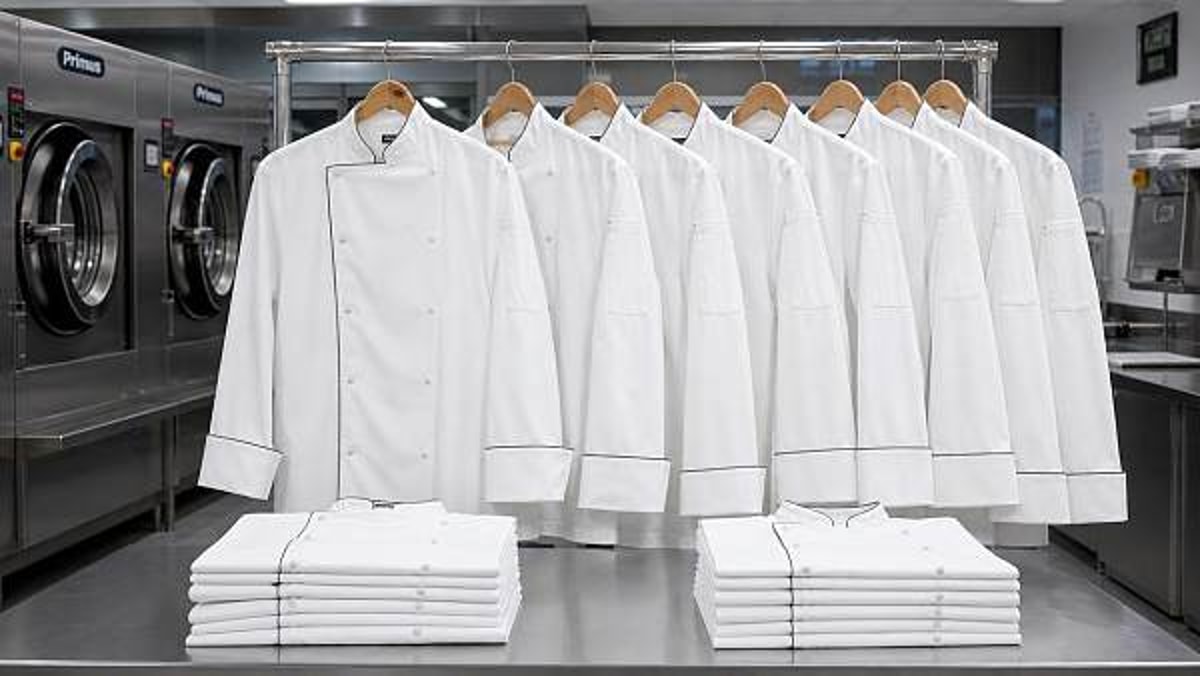
For buyers comparing wholesale chef coats, lasting structure after repeated industrial washing is a critical benchmark for performance, brand image, and long-term cost control. This guide explores how fabric blends, stitching quality, and production standards affect shape retention, helping sourcing professionals identify reliable options for demanding hospitality and foodservice environments.
Why shape retention matters differently across foodservice settings
Not every kitchen uses uniforms in the same way. A boutique restaurant may launder chef jackets less aggressively than a hospital kitchen or a large hotel banquet operation. That is why the best wholesale chef coats are not simply the lowest-cost option or the most visually appealing design. They must match the washing intensity, presentation standards, staffing turnover, and replacement cycle of the end user.
In real sourcing decisions, shape retention affects more than appearance. When collars curl, plackets twist, cuffs shrink, or shoulders lose structure, the garment starts looking unprofessional long before the fabric is fully worn out. This creates hidden costs through early replacement, inconsistent team presentation, and complaints from staff who need reliable mobility during long shifts.
For information-driven buyers, the key question is not whether wholesale chef coats are durable in general, but which construction choices are suitable for specific use environments. Industrial laundry conditions, heat exposure, bleaching routines, and frequent pressing all change the performance profile required from the garment.
Common application scenarios for wholesale chef coats
The demand for wholesale chef coats that keep their shape is strongest in high-volume operations where uniforms are part of both workflow and brand perception. The following comparison helps buyers align product specifications with use case realities.
Scenario 1: Luxury hospitality and visible kitchen teams
In luxury hospitality, chef uniforms are part of the guest experience. Open kitchens, chef’s tables, and live preparation counters expose garments to close visual inspection. In this setting, shape retention is strongly tied to brand positioning. Buyers looking for wholesale chef coats for premium hotels or fine dining groups should pay special attention to collar structure, front placket stability, and smooth drape after pressing.
A common mistake is choosing very soft fabrics that feel upscale at first touch but lose body after repeated industrial washing. Premium does not always mean delicate. For visible teams, a balanced poly-cotton blend or high-performance cotton-rich fabric with controlled shrinkage often works better than loosely woven fabric that distorts over time.
Embroidery placement also matters in this scenario. If logo areas are not properly stabilized, repeated laundering can cause puckering around the chest or sleeve, making the entire coat look misshapen. Buyers should request washed samples, not only pre-production samples.
Scenario 2: Chain restaurants focused on consistency and replacement control
For chain operators, the challenge is less about one garment looking excellent and more about hundreds or thousands of garments performing consistently. Wholesale chef coats in this environment must support size continuity, repeat manufacturing accuracy, and predictable behavior after laundering. Even small deviations in shrinkage can create operational issues when units reorder from different batches.
The most suitable options for chains are often mid-weight fabrics with proven dimensional stability and straightforward construction. Double-stitched stress points, reinforced underarm seams, and durable snap or knot fastening systems usually outperform more decorative designs. The goal is not fashion complexity but stable lifecycle cost.
Buyers should also ask whether the supplier can maintain the same fabric source over time. A chef coat that performs well in pilot rollout may become problematic if later production uses a different blend or finishing process. In large programs, supply chain consistency is as important as initial sample quality.
Scenario 3: Institutional kitchens with harsh industrial laundering
Hospitals, schools, corporate canteens, and correctional facilities often place the toughest demands on uniforms. These environments may use centralized laundry systems with high temperatures, strong detergents, bleaching agents, tunnel washers, and mechanical finishing equipment. In such operations, many wholesale chef coats fail not because of dramatic tearing, but because they gradually warp, shrink, and lose professional shape.
Here, procurement teams should prioritize measurable performance standards. Key indicators include shrinkage tolerance, seam slippage resistance, colorfastness, tensile strength, and post-wash dimensional stability. A slightly heavier, tightly controlled fabric construction often outperforms lightweight alternatives, especially when garments move through frequent wash-dry-press cycles.
Institutional buyers should also confirm whether the chef coat design is compatible with their laundry contractor’s process. Some garments look attractive on paper but are not engineered for industrial finishing. If possible, run a trial batch through the actual laundry system before committing to volume.
Scenario 4: Catering teams needing mobility and fast turnaround
Catering operations create a different kind of stress. Staff move between kitchens, event venues, transport vehicles, and temporary prep areas. Uniforms may be packed, folded, and quickly reissued. In this case, wholesale chef coats should retain shape not only after industrial washing but also after handling and short-notice use.
Features that support this scenario include lightweight yet resilient fabric, back pleats or stretch panels for movement, and a construction that resists wrinkling after folding. A coat that stays structured but feels restrictive is a poor fit for catering. Buyers should weigh body retention against comfort and speed of work.
For event-focused teams, stain release finishes can also improve lifecycle value. The more effectively oils and sauces are removed during washing, the less likely the garment will require harsh reprocessing that gradually degrades shape.
What fabric and construction choices make the biggest difference
Across all scenarios, shape retention in wholesale chef coats usually comes down to a combination of material engineering and manufacturing discipline. Buyers should evaluate the following factors together rather than in isolation.
Fabric blend
Poly-cotton blends are widely used because they balance comfort, durability, and dimensional stability. Higher polyester content often improves wrinkle resistance and shape retention, while higher cotton content can improve breathability and hand feel. The right ratio depends on the end-use environment rather than a universal ideal.
Fabric weight and weave
Very lightweight fabrics may feel cool but can lose structure quickly in harsh laundry conditions. Medium-weight fabrics with stable weave construction generally provide a better balance for industrial washing programs.
Pre-shrinking and finishing
A well-finished chef coat should be engineered to minimize distortion after repeated cleaning cycles. Buyers should request test data or ask whether pre-shrinking, resin finishing, or other stabilization treatments are used.
Pattern and seam design
Shape loss often starts at stress zones. Armholes, side seams, cuffs, and collar joins should be reinforced with suitable stitch density and balanced pattern cutting. Poor grain alignment can cause twisting even when the fabric itself is good.
How to compare suppliers by scenario, not just by price
When sourcing wholesale chef coats, price is meaningful only when measured against the actual use case. A lower-cost coat may be economical for light-duty culinary programs but expensive for heavy-duty institutional use if replacement frequency doubles. Supplier comparison should therefore follow a scenario-based checklist.
Frequent sourcing mistakes in this category
One frequent misjudgment is assuming that all industrially washable garments are equal. Many wholesale chef coats are technically washable at scale, yet not all retain shape after dozens of high-temperature cycles. Buyers need evidence of repeated wash performance, not just basic fabric claims.
Another mistake is focusing only on fabric composition while ignoring garment engineering. Two coats with the same blend can perform very differently depending on cut accuracy, stitch quality, interlining choice, and finishing process.
A third oversight is failing to involve laundry stakeholders early. Procurement teams may approve a chef coat based on appearance and price, while the laundry provider already knows the style will distort under their process. Early cross-functional review saves time and replacement cost.
FAQ for buyers researching wholesale chef coats
Are cotton chef coats always a poor choice for industrial washing?
Not always. Cotton-rich wholesale chef coats can work well in premium environments if the fabric is properly finished and the laundry process is controlled. For harsher industrial settings, blended fabrics often offer more predictable shape retention.
What should buyers ask for before placing a bulk order?
Ask for fabric specifications, shrinkage data, wash test results, post-laundry samples, seam construction details, and confirmation of repeat-order consistency. If possible, test the garments in the actual operating environment.
Is heavier fabric always better for holding shape?
No. Heavier fabric can improve structure, but excessive weight may reduce comfort and mobility. The better choice depends on whether the application is visible luxury service, high-turnover chain use, institutional processing, or mobile catering.
Final sourcing guidance based on your operating scenario
The most reliable wholesale chef coats are the ones selected with the end-use setting in mind. Hotels and open kitchens should emphasize appearance stability and premium finish. Chains should prioritize repeatability and cost per wear. Institutional kitchens should demand verified compatibility with aggressive industrial laundry conditions. Catering teams should balance structure, mobility, and fast turnaround practicality.
For sourcing professionals, the strongest next step is to build a short specification matrix tied to actual washing conditions, wear frequency, presentation expectations, and replacement timelines. When suppliers are evaluated against those real business variables, it becomes much easier to identify wholesale chef coats that will keep their shape, protect brand image, and deliver better long-term value.
Search News
Hot Articles
- Commercial KitchenStainless steel GN pans with reinforced corners last longer in busy kitchensMay 02, 2026
- Hotel Room AmenitiesMemory foam hotel mattresses: when soft comfort leads to faster saggingMay 02, 2026
- Hotel Room AmenitiesElectronic hotel door locks: battery alerts are often less simple than they seemMay 02, 2026
Popular Tags
Need ExpertConsultation?
Connect with our specialized leisureengineering team for procurementstrategies.
Recommended News
 May 02, 2026Wholesale chef coats that hold shape after repeated industrial washingWholesale chef coats that stay sharp after repeated industrial washing. Compare fabrics, stitching, and supplier standards to choose durable uniforms that protect brand image and reduce replacement costs.● Institutional Buyer
 May 02, 2026What makes non slip chef shoes comfortable for 12-hour shiftsNon slip chef shoes for 12-hour shifts should deliver lasting support, cushioning, breathability, and grip. Learn what buyers and chefs should compare before choosing.● Institutional Buyer
 May 02, 2026Kenya Marathon Record Break Sparks Carbon-Plate Shoe Export Surge to AfricaKenya Marathon Record Break sparks surge in carbon-plate shoe exports to Africa—urgent bilingual labeling compliance needed for EAC markets.● Institutional Buyer
 May 01, 2026Custom Hotel Uniforms: Where Fit Problems Usually StartCustom hotel uniforms often fail at the fit-planning stage. Learn where sizing issues start, how to compare suppliers, and how to avoid costly reorders with smarter sourcing.● Institutional Buyer
 Apr 28, 2026How to Shortlist an Office Supplies WholesalerOffice supplies wholesaler selection starts with the right criteria. Learn how to compare an office supplies supplier, distributor, or manufacturer for cost, quality, compliance, and scalable B2B sourcing.● Institutional Buyer
 Apr 28, 20262026 Office Supplies Supplier Trends to WatchExplore 2026 office supplies supplier trends and learn how every office supplies wholesaler, distributor, and manufacturer can improve sourcing, compliance, fulfillment, and OEM growth.● Institutional Buyer
 Apr 28, 2026What to Check Before Choosing an ExporterOffice supplies supplier and exporter checklist: compare quality, compliance, lead times, MOQ, and service to choose a reliable office supplies manufacturer or wholesaler with confidence.● Institutional Buyer
 Apr 28, 2026Can an Office Supplies Producer Improve MarginsCan an office supplies producer improve margins? Learn how an office supplies manufacturer, supplier, and exporter boosts profit through smarter sourcing, lean production, and OEM value.● Institutional Buyer
 Apr 28, 2026How Bulk Suppliers Handle Custom PackingOffice supplies supplier insights: learn how an office supplies wholesaler, distributor, or OEM manufacturer manages custom packing to reduce risk, control cost, and improve delivery.● Institutional Buyer
 Apr 28, 2026Office Supplies OEM Manufacturer Pros and ConsOffice supplies OEM manufacturer pros and cons explained for every office supplies supplier, wholesaler, distributor, and B2B buyer—compare cost, quality, MOQ, and delivery before sourcing.● Institutional Buyer
 Apr 28, 2026Who Needs an Office Supplies B2B SupplierOffice supplies supplier guide for procurement teams, distributors, and institutions. Learn when to choose an office supplies wholesaler or manufacturer for stable supply and better B2B sourcing.● Institutional Buyer
 Apr 28, 2026How to Avoid Risks With Office Supplies FactoriesOffice supplies supplier risk guide: learn how to vet an office supplies manufacturer, wholesaler, distributor, or factory for quality, compliance, OEM reliability, and on-time delivery.● Institutional Buyer
 Apr 27, 2026Office Supplies Manufacturer MOQ ExplainedOffice supplies manufacturer MOQ explained: compare an office supplies supplier, wholesaler, distributor, OEM manufacturer, and factory to reduce cost, improve flexibility, and source smarter.● Institutional Buyer
 Apr 27, 2026Distributor or Supplier for Fast ReordersOffice supplies supplier or distributor for fast reorders? Compare lead times, stock stability, and bulk supply options to choose a reliable office supplies B2B supplier.● Institutional Buyer
 Apr 27, 2026How Wholesalers Cut Office Supply CostsOffice supplies supplier and office supplies wholesaler solutions help cut costs through bulk buying, OEM options, and smarter sourcing. Compare distributors and manufacturers to save more.● Institutional Buyer
 Apr 27, 2026Office Supplies Supplier Pricing Red FlagsOffice supplies supplier pricing red flags explained: compare an office supplies wholesaler, distributor, or manufacturer, spot hidden risks, and choose a reliable B2B partner with confidence.● Institutional Buyer
 Apr 27, 2026How to Vet an Office Supplies ExporterOffice supplies supplier vetting made simple: learn how to assess an office supplies exporter, manufacturer, wholesaler, and distributor for quality, compliance, and reliable B2B growth.● Institutional Buyer
 Apr 27, 2026What to Ask an Office Supplies Producer FirstOffice supplies supplier screening starts with the right questions. Learn how to evaluate an office supplies manufacturer, wholesaler, or producer on quality, OEM, compliance, pricing, and delivery.● Institutional Buyer
 Apr 27, 2026How to Compare Office Supplies Bulk SuppliersCompare every office supplies supplier model—wholesaler, distributor, OEM manufacturer, and bulk supplier—to evaluate quality, compliance, lead times, and costs for smarter B2B sourcing.● Institutional Buyer
 Apr 27, 2026Is an Office Supplies OEM Manufacturer Worth ItOffice supplies OEM manufacturer or standard sourcing? Compare an office supplies supplier, wholesaler, and distributor to find the best B2B fit for cost, branding, and scalable growth.● Institutional Buyer
 Apr 27, 2026Best Office Supplies B2B Supplier for ScaleFind the best office supplies B2B supplier for scale. Compare an office supplies supplier, wholesaler, distributor, and OEM manufacturer to secure reliable bulk sourcing and growth.● Institutional Buyer
 Apr 27, 2026Office Supplies Factory Audit ChecklistOffice supplies factory audit checklist for choosing a reliable office supplies manufacturer, supplier, or OEM partner. Learn key quality, compliance, and capacity checks before sourcing.● Institutional Buyer
 Apr 27, 2026When to Work With an Office Supplies ManufacturerOffice supplies manufacturer or office supplies supplier? Learn when to source direct, compare wholesaler vs OEM options, and improve cost, quality, and supply stability.● Institutional Buyer
 Apr 27, 2026What Makes a Reliable Office Supplies DistributorDiscover what sets a reliable office supplies distributor apart. Compare an office supplies supplier, wholesaler, or B2B supplier by quality, lead times, inventory, and global delivery.● Institutional Buyer