What to Check Before Choosing an Exporter
Choosing the right office supplies exporter goes far beyond comparing prices. Whether you are evaluating an office supplies supplier, office supplies wholesaler, or office supplies manufacturer, the real decision depends on quality consistency, compliance, delivery capability, and long-term reliability. This guide outlines the key checkpoints buyers, distributors, and sourcing teams should review before selecting a trusted export partner.
For importers, institutional buyers, and channel partners, office supplies are rarely a simple low-risk category. A shipment may include notebooks, writing instruments, filing products, printer consumables, desk organizers, educational stationery, and OEM-packed items in the same order. When product lines are broad and replenishment cycles can run every 30, 60, or 90 days, exporter performance directly affects stock continuity, brand reputation, and procurement efficiency.
In B2B sourcing, the best export partner is not always the lowest bidder. A reliable office supplies exporter should demonstrate stable quality control, accurate documentation, reasonable MOQ terms, flexible packaging options, and practical communication across quotation, sampling, production, and after-sales stages. For buyers working through Global Commercial Trade, these checkpoints support more confident supplier screening and better long-term sourcing outcomes.
Start with Product Range, Quality Stability, and Category Fit
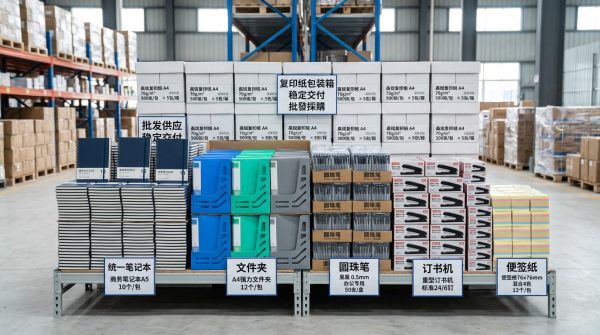
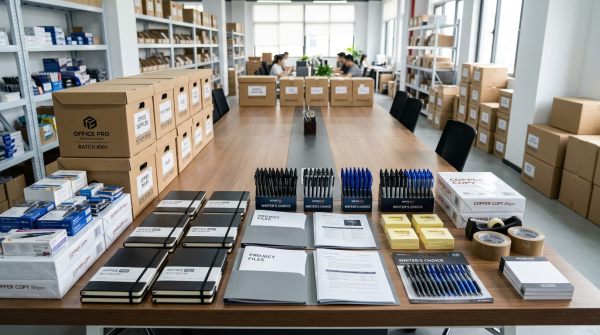
The first check is basic but often underestimated: does the exporter actually match your business model? Some office supplies exporters are strong in fast-moving stationery such as pens, markers, staplers, paper clips, and folders. Others are more capable in school and office paper products, whiteboards, archival storage, or private-label desk accessories. A distributor serving 200 to 500 retail outlets needs very different category coverage from a corporate buyer sourcing for a single campus or office group.
A broad catalog is useful, but depth matters more than page count. Ask how many SKUs are regularly exported, how many are made in-house, and which categories rely on subcontractors. If an exporter claims 3,000 SKUs but only actively manages 300 to 500 core items, that affects forecasting, consistency, and lead times. Buyers should also confirm whether replenishment is available across multiple production batches over 6 to 12 months.
What quality consistency looks like in office supplies
Quality in office supplies is not only about appearance. For notebooks, consistency includes paper weight, page count accuracy, binding strength, cover durability, and print alignment. For writing instruments, it can include ink flow, drying time, barrel finish, tip durability, and color uniformity. For filing products, buyers should evaluate plastic thickness, edge finishing, load-bearing tolerance, and closure durability after repeated use.
Small defects can become large commercial issues. A 2% mismatch in paper size, a weak carton construction, or a cap seal failure on a marker can trigger complaints across hundreds of end users. Before approving a supplier, request pre-production samples, mass-production samples, and packaging samples. For repeat programs, compare at least 2 or 3 sample batches rather than relying on one successful sample only.
Core questions to ask during early evaluation
- Which office supplies categories are your top export products by volume in the last 12 months?
- What is your standard defect tolerance for appearance, function, and packaging?
- Can you support mixed-container or mixed-SKU orders with consolidated packing lists?
- What is the typical sample lead time: 5 to 7 days, 10 to 14 days, or longer?
- Do you offer OEM, ODM, or logo customization for low-volume pilot orders?
The table below helps compare exporter fit by office supplies category and procurement use case. It is especially useful for distributors balancing assortment strategy with inventory turnover.
A good exporter will not simply say “quality is good.” They should define measurable checks by product type, explain how they manage batch variation, and show which categories are true strengths rather than catalog fillers. This saves buyers from overestimating supplier capability based on presentation alone.
Review Compliance, Documentation, and Packaging Readiness
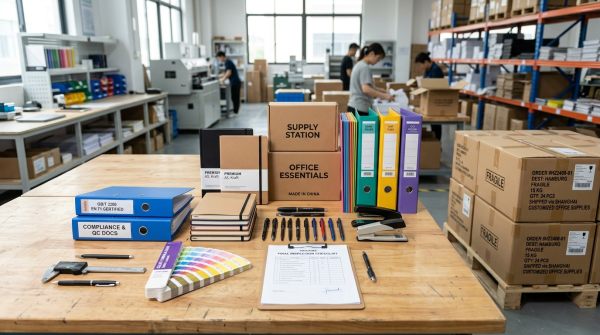
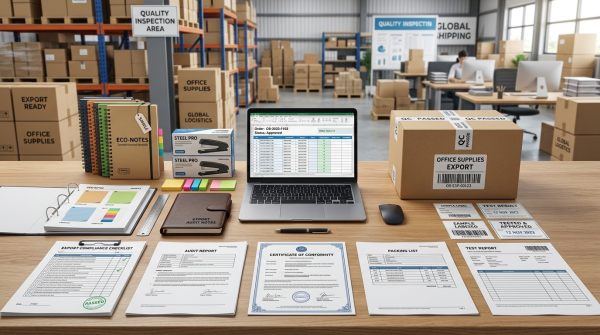
In office supplies exports, documentation errors can delay customs clearance as easily as product defects can damage customer trust. Depending on the destination market, buyers may need product specifications, material declarations, carton marks, barcode data, country-of-origin labeling, and transport-safe packaging documentation. The exporter should be familiar with these routine export requirements and able to provide documents within agreed timelines, often 3 to 5 working days after shipment confirmation.
Compliance is especially important for products used in educational, institutional, or corporate environments. Ink composition, plastic content, sharp-edge safety, and odor control can all become procurement concerns. While required standards vary by market and product type, the exporter should explain which materials are used, whether test reports are available, and how they manage change control if raw material sources shift between production cycles.
Packaging is part of product performance
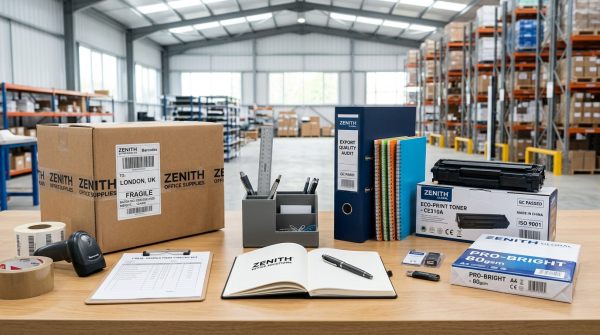
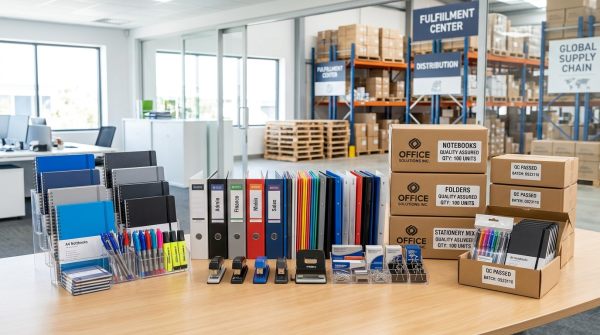
Packaging quality matters more than many buyers expect. Office supplies are often shipped in high-SKU cartons and then redistributed through wholesalers, e-commerce operations, or regional warehouses. Weak master cartons, unclear carton labeling, poor inner-pack separation, or moisture-sensitive wrapping can increase damage rates during a 20- to 35-day sea shipment. This is particularly relevant for paper products, blister-packed stationery, and fragile plastic organizers.
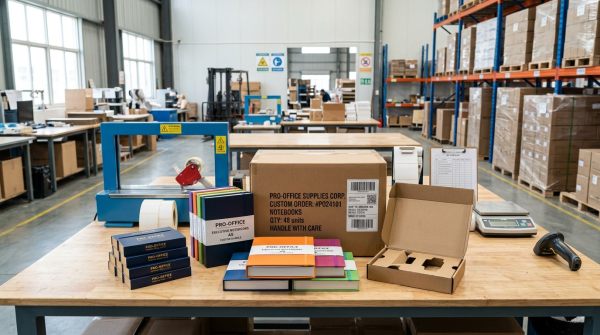
Ask the exporter how they handle retail packs, inner boxes, export cartons, palletization, and barcode placement. If you work with Amazon sellers, chain stores, or regional distributors, packaging requirements may include exact carton count rules, scannable labels, or multilingual inserts. These are not minor details; they affect receiving efficiency, resale readiness, and claims management.
Documentation and packaging checkpoint list
- Confirm whether product specifications and packing lists are standardized for each SKU.
- Check if carton labeling supports PO number, item code, quantity, gross weight, and country of origin.
- Verify whether the exporter can produce buyer-specific barcode labels and artwork approvals.
- Ask how many packaging validation rounds are usually needed before mass production; 1 to 3 rounds is common.
- Review how damaged goods claims are handled and whether photo-based claim review is accepted within 7 to 15 days.
The following table summarizes practical compliance and packaging items that procurement teams should verify before placing a first order.
Exporters that manage compliance and packaging professionally tend to produce smoother shipments, fewer disputes, and lower hidden costs. This becomes even more valuable when buyers scale from one test order to quarterly or annual programs.
Assess Production Capacity, Lead Time Control, and Supply Chain Resilience
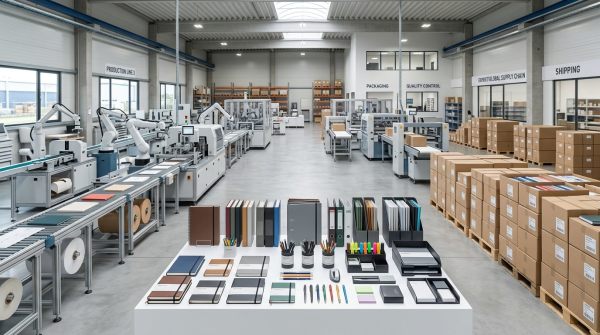
An attractive quotation means little if the exporter cannot deliver on time. Office supplies procurement is often deadline-driven, especially for back-to-school periods, fiscal-year replenishment, office move-ins, contract stationer supply, or promotional campaigns. Buyers should examine standard lead times, peak-season performance, subcontracting dependence, and raw material planning methods before onboarding an exporter.
Typical lead times in this sector can range from 15 to 25 days for simple stock items, 25 to 40 days for standard repeat orders, and 35 to 60 days for OEM packaging or mixed-category production. These are broad commercial ranges rather than fixed rules, but they help buyers identify unrealistic promises. An exporter offering a 12-day lead time for a customized mixed-SKU order may be overcommitting or depending on unstable upstream capacity.
Questions that reveal real capacity
Ask how the supplier handles rush orders, material shortages, and production scheduling conflicts. Can they reserve raw materials for forecast customers? Do they run category-specific lines or shared lines across unrelated products? If 40% to 60% of the order is outsourced, buyers should know who controls inspection, packaging accuracy, and shipment consolidation.
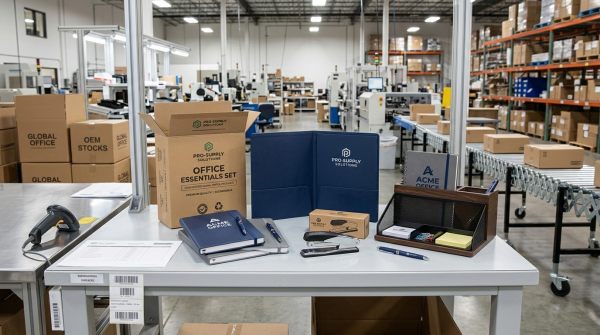
For large institutional or distributor orders, it is also useful to ask about container loading strategy. Can the exporter combine notebooks, binders, pens, and desktop products in one shipment without carton count errors? Can they support split shipment plans if 1 or 2 product lines face delay? These capabilities reduce downstream disruption and make demand planning more reliable.
Red flags in lead time discussions
- Lead times are quoted without reference to order quantity, customization level, or seasonality.
- No clear answer is given on backup suppliers for paper, plastic resin, ink, or packaging materials.
- The exporter cannot explain production bottlenecks for top-selling SKUs.
- Sampling is fast, but mass-production scheduling remains vague after PO confirmation.
- There is no milestone tracking for artwork approval, production start, inspection, and booking.
The table below can help procurement teams compare capacity-related risk when evaluating two or more office supplies exporters.
Reliable exporters do not guarantee that nothing will ever change. Instead, they show how they monitor progress, communicate early, and offer alternatives when risks appear. That operational discipline is often the difference between a one-time transaction and a dependable supply partnership.
Compare Pricing Logic, MOQ Terms, and Total Cost of Ownership
A low unit price can be misleading if it creates higher logistics cost, more defects, slower sell-through, or frequent replenishment pressure. Buyers should evaluate total cost of ownership, not just ex-works or FOB pricing. In office supplies, this includes packaging efficiency, order consolidation, defect rates, replacement handling, labeling services, and the ability to support repeat orders without requalification delays.
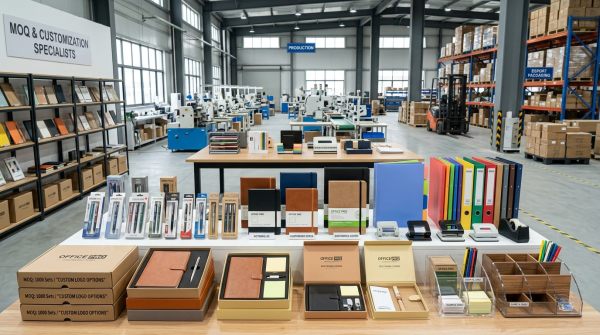
MOQ is a major decision factor. Some exporters offer low MOQs of 500 to 1,000 units for standard items but require 3,000 to 10,000 units for custom color, logo print, or retail packaging. That structure may work for importers building a private label, but it may not fit smaller distributors testing a new region. Buyers should ask whether MOQ can be split by color, assorted pack, or artwork version.
How to compare quotations correctly
When reviewing quotations, check whether prices include standard export carton packing, inner boxes, label application, and basic inspection. Also confirm currency validity, quotation validity period, payment terms, and price sensitivity to raw material fluctuations. A quotation valid for only 7 days may signal unstable material sourcing or limited pricing control.
For office supplies wholesalers and distributors, it is useful to calculate landed cost per saleable unit and per carton cube. A product that is 4% cheaper at ex-works level may become less competitive if it takes 12% more warehouse space, suffers a 1.5% higher damage rate, or requires manual relabeling before resale. Pricing decisions should therefore combine commercial and operational factors.
Pricing review checklist
- Compare unit price against specification, packing method, and defect allowance, not item name alone.
- Check whether MOQ is stated per SKU, per color, per design, or per combined order.
- Ask for at least 2 quote scenarios: standard packing and customized retail packing.
- Review payment structure, such as 30% deposit and 70% balance, and how it affects cash planning.
- Estimate reorder flexibility if demand grows by 20% to 30% after launch.
The right exporter should help you understand cost drivers rather than hiding them. Transparent pricing discussions usually indicate stronger operational maturity and fewer downstream surprises.
This is also where channel strategy matters. Distributors, resellers, and institutional procurement teams may each prioritize different cost metrics. A reseller may focus on margin per unit, while a procurement manager may care more about fulfillment reliability and claim reduction over 4 quarters.
Evaluate Communication, Service Process, and Long-Term Partnership Value
Even when product quality and pricing are acceptable, poor communication can weaken the entire sourcing program. A dependable office supplies exporter should respond clearly across the full order cycle: inquiry, quote, sampling, artwork, production confirmation, inspection, shipping documents, and after-sales support. In practical terms, buyers often expect initial response within 24 to 48 hours and issue resolution updates within 1 to 3 working days.
Communication quality is not only about speed. It is also about accuracy. Does the supplier summarize changes in writing? Are carton specs and product revisions documented? Is there a clear person responsible for each stage? For multi-SKU office supplies orders, these habits reduce preventable errors such as wrong assortments, outdated artwork, or inconsistent packaging marks.
Service indicators that matter to B2B buyers
Good exporters understand that buyers need decision-ready information. They should provide organized quotations, product photos, sample tracking, and shipment progress updates without repeated chasing. They should also know when to recommend alternatives, for example replacing a fragile retail blister with a safer box format, or adjusting carton quantity to improve loading efficiency.
Long-term value also includes development support. Can the exporter help rationalize your SKU mix? Can they suggest category bundles for schools, offices, or dealers? Can they support seasonal launches in 2 or 3 phases rather than pushing one oversized order? These capabilities are especially important for distributors and agents building portfolio depth with controlled inventory exposure.
FAQ for buyers screening office supplies exporters
How many suppliers should be shortlisted before sampling?
For most office supplies programs, shortlisting 3 to 5 exporters is practical. This gives buyers enough comparison on quality, communication, and price without creating unnecessary sampling complexity. For strategic categories such as notebooks, pens, and filing items, many buyers also keep 1 backup supplier in reserve.
What is a reasonable first-order strategy?
A first order is often best kept at a manageable size, such as 1 container, a mixed trial order, or a 60- to 90-day demand batch. This allows buyers to test product performance, carton durability, claim handling, and replenishment speed before expanding into a broader annual contract.
Should buyers prefer a manufacturer or a wholesaler?
It depends on sourcing goals. A manufacturer may offer stronger customization, process control, and repeat consistency in core product lines. A wholesaler may be better for mixed-category convenience and low-volume assortment testing. The right choice depends on whether you prioritize depth, flexibility, or consolidation.
For organizations sourcing through Global Commercial Trade, these service and partnership factors are often what separate a merely acceptable exporter from a strategically valuable one. Strong suppliers support not only transactions, but also planning, risk control, and commercial growth.
Build a Practical Exporter Selection Framework Before You Commit
Before issuing a long-term purchase order, procurement teams should convert evaluation findings into a simple scorecard. This makes supplier decisions more consistent across departments such as purchasing, commercial review, quality control, and distribution management. A useful framework typically includes 5 to 7 weighted criteria: product fit, quality stability, compliance readiness, lead time control, commercial terms, communication, and after-sales handling.
Weighting can vary by business model. A regional distributor may assign 25% to category fit and replenishment reliability, while an institutional buyer may assign 30% to compliance and delivery accuracy. What matters is that each exporter is assessed using the same logic rather than informal impressions from a single quote or one well-prepared sales presentation.
Suggested 6-step selection process
- Define product scope, order frequency, packaging format, and destination market requirements.
- Shortlist 3 to 5 exporters based on category specialization and export experience.
- Request quotations, samples, and documentation for direct comparison.
- Score each supplier on quality, service, compliance, and commercial terms.
- Place a controlled first order and review shipment accuracy, claim rate, and response time.
- Approve quarterly or annual cooperation only after the first cycle performs as expected.
The table below provides a practical scorecard format that can be adapted for office supplies sourcing programs.
This structured approach reduces sourcing risk and creates a stronger basis for negotiation. It also helps buyers explain supplier choices internally, especially when the selected office supplies exporter is not the cheapest option but clearly offers better stability and operational value.
Choosing an exporter should ultimately support business continuity, not just order placement. If you are reviewing office supplies suppliers, wholesalers, or manufacturers for upcoming tenders, private-label development, or distribution expansion, use these checkpoints to filter out avoidable risk early. To explore tailored sourcing insights, product-matching support, or exporter evaluation guidance for office and educational supplies, contact Global Commercial Trade and get a solution aligned with your market, category mix, and procurement goals.
Search News
Hot Articles
- Stage Lighting & Truss2026 FIBA Women's World Cup Draw Sparks LED Timing Screen Upgrade DemandApr 28, 2026
- Pro Stage AudioKenyan Marathon WR Break Drives Demand for Timing Chips & Track SensorsApr 28, 2026
- Smart Campus Tech2026 Shanghai Smart Campus Expo: VR Teaching Devices Gain ITU & ISO/IEC 23053 CertificationApr 28, 2026
Popular Tags
Need ExpertConsultation?
Connect with our specialized leisureengineering team for procurementstrategies.
Recommended News
 Apr 28, 2026How to Shortlist an Office Supplies WholesalerOffice supplies wholesaler selection starts with the right criteria. Learn how to compare an office supplies supplier, distributor, or manufacturer for cost, quality, compliance, and scalable B2B sourcing.● Institutional Buyer
 Apr 28, 20262026 Office Supplies Supplier Trends to WatchExplore 2026 office supplies supplier trends and learn how every office supplies wholesaler, distributor, and manufacturer can improve sourcing, compliance, fulfillment, and OEM growth.● Institutional Buyer
 Apr 28, 2026What to Check Before Choosing an ExporterOffice supplies supplier and exporter checklist: compare quality, compliance, lead times, MOQ, and service to choose a reliable office supplies manufacturer or wholesaler with confidence.● Institutional Buyer
 Apr 28, 2026Can an Office Supplies Producer Improve MarginsCan an office supplies producer improve margins? Learn how an office supplies manufacturer, supplier, and exporter boosts profit through smarter sourcing, lean production, and OEM value.● Institutional Buyer
 Apr 28, 2026How Bulk Suppliers Handle Custom PackingOffice supplies supplier insights: learn how an office supplies wholesaler, distributor, or OEM manufacturer manages custom packing to reduce risk, control cost, and improve delivery.● Institutional Buyer
 Apr 28, 2026Office Supplies OEM Manufacturer Pros and ConsOffice supplies OEM manufacturer pros and cons explained for every office supplies supplier, wholesaler, distributor, and B2B buyer—compare cost, quality, MOQ, and delivery before sourcing.● Institutional Buyer
 Apr 28, 2026Who Needs an Office Supplies B2B SupplierOffice supplies supplier guide for procurement teams, distributors, and institutions. Learn when to choose an office supplies wholesaler or manufacturer for stable supply and better B2B sourcing.● Institutional Buyer
 Apr 28, 2026How to Avoid Risks With Office Supplies FactoriesOffice supplies supplier risk guide: learn how to vet an office supplies manufacturer, wholesaler, distributor, or factory for quality, compliance, OEM reliability, and on-time delivery.● Institutional Buyer
 Apr 27, 2026Office Supplies Manufacturer MOQ ExplainedOffice supplies manufacturer MOQ explained: compare an office supplies supplier, wholesaler, distributor, OEM manufacturer, and factory to reduce cost, improve flexibility, and source smarter.● Institutional Buyer
 Apr 27, 2026Distributor or Supplier for Fast ReordersOffice supplies supplier or distributor for fast reorders? Compare lead times, stock stability, and bulk supply options to choose a reliable office supplies B2B supplier.● Institutional Buyer
 Apr 27, 2026How Wholesalers Cut Office Supply CostsOffice supplies supplier and office supplies wholesaler solutions help cut costs through bulk buying, OEM options, and smarter sourcing. Compare distributors and manufacturers to save more.● Institutional Buyer
 Apr 27, 2026Office Supplies Supplier Pricing Red FlagsOffice supplies supplier pricing red flags explained: compare an office supplies wholesaler, distributor, or manufacturer, spot hidden risks, and choose a reliable B2B partner with confidence.● Institutional Buyer
 Apr 27, 2026How to Vet an Office Supplies ExporterOffice supplies supplier vetting made simple: learn how to assess an office supplies exporter, manufacturer, wholesaler, and distributor for quality, compliance, and reliable B2B growth.● Institutional Buyer
 Apr 27, 2026What to Ask an Office Supplies Producer FirstOffice supplies supplier screening starts with the right questions. Learn how to evaluate an office supplies manufacturer, wholesaler, or producer on quality, OEM, compliance, pricing, and delivery.● Institutional Buyer
 Apr 27, 2026How to Compare Office Supplies Bulk SuppliersCompare every office supplies supplier model—wholesaler, distributor, OEM manufacturer, and bulk supplier—to evaluate quality, compliance, lead times, and costs for smarter B2B sourcing.● Institutional Buyer
 Apr 27, 2026Is an Office Supplies OEM Manufacturer Worth ItOffice supplies OEM manufacturer or standard sourcing? Compare an office supplies supplier, wholesaler, and distributor to find the best B2B fit for cost, branding, and scalable growth.● Institutional Buyer
 Apr 27, 2026Best Office Supplies B2B Supplier for ScaleFind the best office supplies B2B supplier for scale. Compare an office supplies supplier, wholesaler, distributor, and OEM manufacturer to secure reliable bulk sourcing and growth.● Institutional Buyer
 Apr 27, 2026Office Supplies Factory Audit ChecklistOffice supplies factory audit checklist for choosing a reliable office supplies manufacturer, supplier, or OEM partner. Learn key quality, compliance, and capacity checks before sourcing.● Institutional Buyer
 Apr 27, 2026When to Work With an Office Supplies ManufacturerOffice supplies manufacturer or office supplies supplier? Learn when to source direct, compare wholesaler vs OEM options, and improve cost, quality, and supply stability.● Institutional Buyer
 Apr 27, 2026What Makes a Reliable Office Supplies DistributorDiscover what sets a reliable office supplies distributor apart. Compare an office supplies supplier, wholesaler, or B2B supplier by quality, lead times, inventory, and global delivery.● Institutional Buyer
 Apr 27, 2026Office Supplies Wholesaler vs DistributorOffice supplies wholesaler vs distributor: learn how an office supplies supplier, distributor, or manufacturer impacts pricing, lead time, and growth—choose the best B2B sourcing model.● Institutional Buyer
 Apr 27, 2026How to Choose an Office Supplies SupplierLearn how to choose the right office supplies supplier by comparing an office supplies wholesaler, distributor, manufacturer, or B2B supplier for quality, price, delivery, and growth.● Institutional Buyer
 Apr 24, 2026How to Pick Educational Supplies by AgeEducational supplies by age: discover how commercial furniture, sensory playground designs, playground safety, climbers, borders, music accessories, hotel tables and amusement equipment improve ROI.● Institutional Buyer
 Apr 24, 2026Educational Supplies That Schools Reorder MostEducational supplies schools reorder most: from commercial furniture support and music accessories to playground safety, playground borders, and sensory playground essentials—discover high-demand categories buyers need year-round.● Institutional Buyer