Office Supplies Manufacturer MOQ Explained
Choosing the right office supplies manufacturer starts with understanding MOQ. Whether you are comparing an office supplies supplier, office supplies wholesaler, or office supplies OEM manufacturer, minimum order quantity directly affects cost, customization, and supply flexibility. This guide explains how MOQ works, what factors influence it, and how buyers, distributors, and sourcing teams can evaluate the best office supplies factory or exporter for long-term B2B success.
In B2B office supplies procurement, MOQ is not just a number on a quotation sheet. It influences tooling decisions, packaging formats, lead times, inventory pressure, and even the viability of a new product launch. For importers, institutional buyers, and regional distributors, understanding MOQ helps reduce sourcing risk and improves negotiation outcomes.
This matters even more when buyers are comparing standard catalog items with private label, OEM, or ODM programs. A low MOQ may support market testing, while a higher MOQ may unlock better unit pricing, stable material sourcing, and stronger branding control. The right decision depends on product category, sales velocity, and commercial goals.
For buyers working through a global sourcing hub such as GCT, MOQ should be evaluated together with production capability, compliance readiness, and long-term supply reliability. A supplier offering flexible quantities but inconsistent delivery may be less valuable than a factory with structured MOQ tiers, clear quality control, and repeatable export performance.
What MOQ Means in the Office Supplies Industry
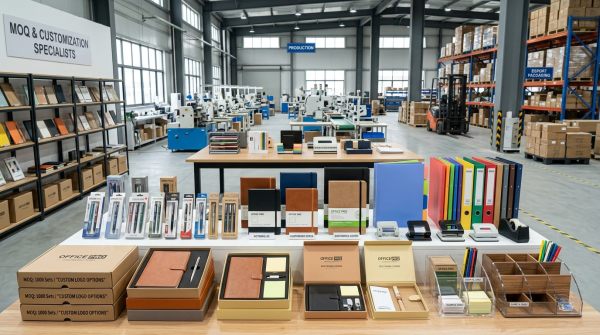
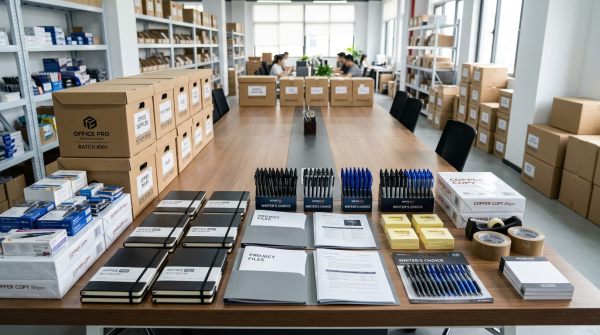
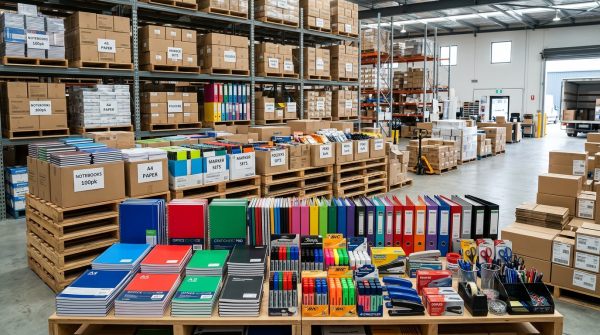
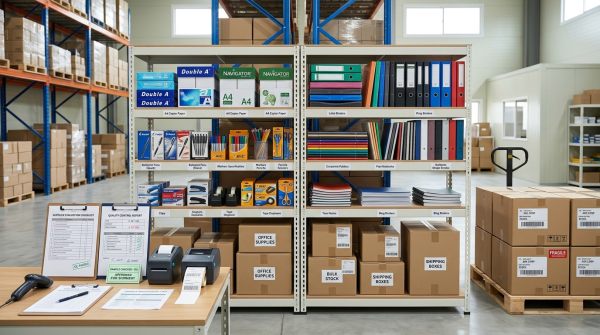
MOQ, or minimum order quantity, is the smallest quantity a manufacturer is willing to produce or sell per order, per SKU, or per customization setup. In office supplies, MOQ can apply to simple items such as ballpoint pens, staplers, file folders, markers, notebooks, desk organizers, or whiteboard accessories. The threshold may be expressed as 500 pieces, 1,000 sets, 100 cartons, or even one full container depending on the product.
The office supplies sector includes a wide range of manufacturing processes. Plastic injection products, paper-based stationery, metal components, and mixed-material desktop accessories all carry different setup costs. For example, a stock pen design may have an MOQ of 1,000 to 3,000 units, while a custom molded desk accessory may start at 5,000 to 10,000 units if new tooling or color matching is required.
Buyers often confuse MOQ with order value or container utilization. In practice, an office supplies factory may set one MOQ for production efficiency and another for export handling. A supplier may accept 2,000 notebooks for production, but require 5,000 units total across mixed designs to optimize packaging, palletization, and freight cost. That distinction matters when comparing multiple office supplies exporters.
MOQ also varies by sourcing model. A trading company may combine smaller quantities from several factories, while a direct office supplies manufacturer usually focuses on production line efficiency. OEM and ODM projects typically carry the highest MOQ because they involve logo printing, packaging design, artwork approval, sample cycles, and sometimes mold development that can take 2 to 6 weeks before mass production begins.
Common MOQ Structures Buyers Should Recognize
When reviewing quotations, procurement teams should identify whether MOQ is based on one product, one color, one size, one logo version, or one packaging configuration. This affects how easily a buyer can build a complete office supplies assortment for schools, offices, dealers, or institutional projects.
- Per SKU MOQ: common for notebooks, folders, and binders where each size or format runs separately.
- Per color MOQ: typical for plastic office supplies such as trays, holders, and clips.
- Per logo MOQ: applies to promotional pens, markers, and private label stationery.
- Per packaging MOQ: relevant when retail boxes, barcode labels, or multilingual manuals are required.
The table below shows how MOQ typically differs across office supplies categories. These are common commercial ranges, not fixed market rules, and should be confirmed with each office supplies supplier.
The key takeaway is that MOQ should always be read in context. A low threshold is useful for pilot orders, but it may come with fewer customization options, higher unit pricing, or longer replenishment risk if materials are not reserved for future batches.
Why Manufacturers Set MOQ and What Drives the Number
An office supplies manufacturer does not choose MOQ arbitrarily. The figure usually reflects a mix of material purchasing, machine setup time, labor allocation, wastage control, and packaging economics. If a production line takes 3 hours to switch colors, calibrate printing, and test assembly, the factory needs enough volume to spread those fixed costs across the order.
Raw materials are another major factor. Paper mills, plastic resin suppliers, and ink vendors often sell in standard batch sizes. If a notebook factory must buy paper by tonnage or a pen factory must source refill components in lots of 10,000 pieces, the downstream MOQ for the buyer naturally rises. This is especially common in custom office supplies manufacturing, where a unique material or finish cannot be shared easily with other clients.
Customization is one of the strongest MOQ drivers. A standard stock item with one-color logo printing may have a relatively low threshold, while a fully branded office supplies OEM project may require separate artwork approval, Pantone matching, private packaging, barcode labeling, and carton mark customization. Each added element creates a setup cost that needs to be absorbed by the order size.
Lead time commitments also influence MOQ. Factories that promise 15 to 30 day production windows often need stable planning across multiple workshops. Small fragmented orders can disrupt line balancing and increase the risk of missed export schedules. As a result, some office supplies exporters prefer higher MOQs but can deliver more predictably in peak seasons such as back-to-school or year-end corporate gifting periods.
Key Cost Components Behind MOQ
Procurement teams can negotiate more effectively when they understand which cost components are fixed and which are variable. That insight helps distinguish between a rigid MOQ and a flexible one.
- Tooling or mold allocation, especially for plastic and metal office accessories.
- Printing plate or artwork setup for logos, retail graphics, or branded sleeves.
- Material batch minimums, such as paper stock, plastic masterbatch, or packaging inserts.
- Labor and line changeover, which become inefficient below a certain production run.
- Export packing and carton optimization, often linked to pallet or container loading ratios.
A Practical Buyer View
If a supplier states an MOQ of 5,000 units, buyers should ask what would happen at 3,000 units. In many cases, the factory can still produce, but the unit price may rise by 8% to 20%, or customization choices may be reduced. Sometimes the supplier will accept a smaller first order if future annual volume is expected to reach 20,000 to 50,000 units. This is where commercial credibility and sourcing strategy become important.
For GCT-oriented sourcing evaluation, the better question is not only “What is your MOQ?” but also “What cost or process assumption makes that MOQ necessary?” A supplier that explains this clearly is usually easier to work with during forecasting, replenishment, and SKU expansion.
How MOQ Impacts Pricing, Customization, and Supply Flexibility
MOQ has a direct impact on landed cost. In office supplies wholesale, a higher order quantity often reduces the unit manufacturing price because setup costs, packaging costs, and quality inspection overhead are spread across more pieces. However, the cheapest unit price is not always the best procurement decision if inventory turns are slow or warehousing costs are high.
Customization also scales with MOQ. A buyer ordering 1,000 stock notebooks may only receive basic logo printing and standard cartons. At 3,000 to 5,000 units, the same office supplies factory may offer custom cover textures, branded belly bands, inner page variations, or multilingual packaging. At even higher levels, a distributor may qualify for exclusive molds, region-specific assortments, or improved artwork options.
Flexibility is the trade-off. A lower MOQ can support new market entry, promotional campaigns, or dealer testing across 3 to 5 cities. It also limits inventory exposure if product acceptance is uncertain. On the other hand, low MOQ orders may face longer lead times during peak season because factories prioritize larger runs that utilize capacity more efficiently.
Buyers should also think in terms of assortment planning. It may be better to place one mixed order of 8,000 units across 4 related office supplies SKUs if the manufacturer allows shared packaging or combined material sourcing. This can improve both freight utilization and merchandising flexibility for dealers or institutional tenders.
Comparing Low, Medium, and High MOQ Strategies
The following comparison helps buyers evaluate which MOQ approach fits their business model, whether they are importers, distributors, or project procurement teams.
In many office supplies categories, the best solution is a phased approach: start with a moderate MOQ for validation, then move to larger replenishment orders after 60 to 90 days of sales data. This creates a more sustainable sourcing model than choosing only the lowest threshold available.
How to Evaluate an Office Supplies Manufacturer Beyond MOQ
MOQ should never be the sole selection criterion. A buyer choosing an office supplies supplier should also review production specialization, consistency across batches, communication speed, export handling, and documentation quality. A factory with a slightly higher MOQ but stable output may outperform a low-MOQ vendor that struggles with print consistency, carton labeling, or shipment scheduling.
Product category fit is essential. Some factories are strong in paper stationery, others in molded plastic storage items, and others in writing instruments or metal mechanisms. Asking one supplier to produce every office item may lead to uneven quality. Distributors often achieve better results by sourcing core categories from specialist manufacturers and consolidating logistics later.
Commercial buyers should also verify sample handling and approval processes. A reliable office supplies OEM manufacturer should define how many sample rounds are included, whether digital proofs are provided within 3 to 7 days, and what tolerance applies to color, dimensions, or print placement. These details reduce disputes when moving from sample to bulk order.
Another important factor is replenishment discipline. Many procurement teams focus on the first order and overlook the second and third. The better supplier is the one that can maintain similar material quality, packaging specifications, and lead times across multiple cycles, not just deliver one attractive quote.
Buyer Evaluation Checklist
The checklist below helps purchasing managers and business evaluators compare office supplies factories in a more structured way.
For GCT-focused sourcing projects, this broader evaluation framework is especially useful because it aligns supplier comparison with commercial execution, not just headline pricing. That helps importers, procurement teams, and channel partners make decisions that hold up over multiple order cycles.
Negotiation Tactics, Common Mistakes, and FAQ for B2B Buyers
Many buyers assume MOQ is non-negotiable, but that is not always true. What matters is how the request is framed. If a distributor can share an annual forecast, agree to standard packaging, or combine multiple SKUs with the same material family, the office supplies manufacturer may offer more flexibility. Negotiation works best when both parties are solving a production planning problem, not only bargaining on price.
A common mistake is pushing for the smallest possible order while also requesting extensive customization. These two demands often conflict. If a buyer needs custom box design, Pantone color control, and exclusive branding, the supplier must recover setup costs somewhere. In many cases, reducing artwork complexity or accepting one standard insert can lower the effective MOQ more easily than asking for a deep price concession.
Another mistake is ignoring total supply chain cost. A 12% lower unit price on a 10,000-piece order may look attractive, but if only 40% of stock sells in the first quarter, the buyer may absorb extra warehousing, insurance, and working capital costs. The better decision may be a medium MOQ with faster replenishment every 30 to 45 days.
Buyers should also establish order review checkpoints. Before confirming bulk production, verify artwork approval, barcode mapping, carton dimensions, shipping marks, and acceptable quality criteria. A disciplined 5-step confirmation process can prevent expensive rework and shipping delays.
Practical Ways to Reduce MOQ Pressure
- Use stock materials or standard colors for the first order, then upgrade branding on the second run.
- Bundle related SKUs into one production plan if the factory supports mixed cartons or shared packaging.
- Offer a 6- to 12-month volume forecast to support better material planning.
- Request tiered pricing at 1,000, 3,000, and 5,000 units instead of one quote point only.
- Discuss repeat-order terms early, including material reservation or rolling production windows.
How do I know if an MOQ is reasonable?
Compare the MOQ against the product type, customization level, and lead time. For stock office stationery, 500 to 2,000 pieces may be normal. For private label desk accessories or metal mechanism items, 3,000 to 10,000 pieces may be commercially reasonable. Ask the supplier which setup or material cost is driving the threshold.
Can a wholesaler offer lower MOQ than a factory?
Yes. An office supplies wholesaler or trading company can sometimes combine demand from multiple buyers and break bulk quantities. This may reduce minimums, but unit pricing can be higher and customization options may be narrower than buying directly from an office supplies factory.
What is better for a new distributor: low MOQ or better price?
For a new distributor, lower commercial risk usually matters more in the first 1 or 2 order cycles. A moderate MOQ that allows product testing and channel feedback is often safer than overcommitting for the lowest possible unit price. Once monthly sell-through is stable, larger replenishment orders make more sense.
How long is a typical office supplies production cycle?
For standard items, production often takes 15 to 30 days after sample approval and deposit confirmation. Custom OEM projects may take 30 to 60 days, especially when packaging development, mold adjustment, or multiple artwork revisions are involved. Peak season can extend schedules, so forecast planning is important.
Understanding MOQ gives buyers a stronger foundation for comparing office supplies manufacturers, wholesalers, OEM partners, and exporters. The most effective sourcing decision balances unit cost, customization depth, delivery reliability, and future replenishment flexibility rather than chasing the lowest threshold alone.
For procurement teams, distributors, and business evaluators working in office and educational supplies, a structured MOQ review can improve negotiation quality, reduce inventory risk, and support more scalable supplier relationships. If you are assessing a new office supplies factory or planning a branded product line, now is the time to map MOQ against your actual sales plan, packaging needs, and order cadence.
To explore sourcing options with clearer commercial benchmarks, consult GCT for deeper supplier evaluation perspectives, tailored procurement guidance, and category-specific office supplies solutions. Contact us today to discuss your sourcing goals, request a customized approach, or learn more about long-term B2B supply strategies.
Search News
Hot Articles
- Stage Lighting & Truss2026 FIBA Women's World Cup Draw Sets LED Timing Screen RequirementsApr 27, 2026
- Hotel Room AmenitiesIranian Delegation’s Ritual Gesture at Sanya ASG Sparks Mideast Hospitality Procurement ShiftApr 27, 2026
- Arcade & VR MachinesSnooker World Championship 'China Derby' Drives VR Viewing DemandApr 27, 2026
Popular Tags
Need ExpertConsultation?
Connect with our specialized leisureengineering team for procurementstrategies.
Recommended News
 Apr 27, 2026Office Supplies Manufacturer MOQ ExplainedOffice supplies manufacturer MOQ explained: compare an office supplies supplier, wholesaler, distributor, OEM manufacturer, and factory to reduce cost, improve flexibility, and source smarter.● Institutional Buyer
 Apr 27, 2026Distributor or Supplier for Fast ReordersOffice supplies supplier or distributor for fast reorders? Compare lead times, stock stability, and bulk supply options to choose a reliable office supplies B2B supplier.● Institutional Buyer
 Apr 27, 2026How Wholesalers Cut Office Supply CostsOffice supplies supplier and office supplies wholesaler solutions help cut costs through bulk buying, OEM options, and smarter sourcing. Compare distributors and manufacturers to save more.● Institutional Buyer
 Apr 27, 2026Office Supplies Supplier Pricing Red FlagsOffice supplies supplier pricing red flags explained: compare an office supplies wholesaler, distributor, or manufacturer, spot hidden risks, and choose a reliable B2B partner with confidence.● Institutional Buyer
 Apr 27, 2026How to Vet an Office Supplies ExporterOffice supplies supplier vetting made simple: learn how to assess an office supplies exporter, manufacturer, wholesaler, and distributor for quality, compliance, and reliable B2B growth.● Institutional Buyer
 Apr 27, 2026What to Ask an Office Supplies Producer FirstOffice supplies supplier screening starts with the right questions. Learn how to evaluate an office supplies manufacturer, wholesaler, or producer on quality, OEM, compliance, pricing, and delivery.● Institutional Buyer
 Apr 27, 2026How to Compare Office Supplies Bulk SuppliersCompare every office supplies supplier model—wholesaler, distributor, OEM manufacturer, and bulk supplier—to evaluate quality, compliance, lead times, and costs for smarter B2B sourcing.● Institutional Buyer
 Apr 27, 2026Is an Office Supplies OEM Manufacturer Worth ItOffice supplies OEM manufacturer or standard sourcing? Compare an office supplies supplier, wholesaler, and distributor to find the best B2B fit for cost, branding, and scalable growth.● Institutional Buyer
 Apr 27, 2026Best Office Supplies B2B Supplier for ScaleFind the best office supplies B2B supplier for scale. Compare an office supplies supplier, wholesaler, distributor, and OEM manufacturer to secure reliable bulk sourcing and growth.● Institutional Buyer
 Apr 27, 2026Office Supplies Factory Audit ChecklistOffice supplies factory audit checklist for choosing a reliable office supplies manufacturer, supplier, or OEM partner. Learn key quality, compliance, and capacity checks before sourcing.● Institutional Buyer
 Apr 27, 2026When to Work With an Office Supplies ManufacturerOffice supplies manufacturer or office supplies supplier? Learn when to source direct, compare wholesaler vs OEM options, and improve cost, quality, and supply stability.● Institutional Buyer
 Apr 27, 2026What Makes a Reliable Office Supplies DistributorDiscover what sets a reliable office supplies distributor apart. Compare an office supplies supplier, wholesaler, or B2B supplier by quality, lead times, inventory, and global delivery.● Institutional Buyer
 Apr 27, 2026Office Supplies Wholesaler vs DistributorOffice supplies wholesaler vs distributor: learn how an office supplies supplier, distributor, or manufacturer impacts pricing, lead time, and growth—choose the best B2B sourcing model.● Institutional Buyer
 Apr 27, 2026How to Choose an Office Supplies SupplierLearn how to choose the right office supplies supplier by comparing an office supplies wholesaler, distributor, manufacturer, or B2B supplier for quality, price, delivery, and growth.● Institutional Buyer
 Apr 24, 2026How to Pick Educational Supplies by AgeEducational supplies by age: discover how commercial furniture, sensory playground designs, playground safety, climbers, borders, music accessories, hotel tables and amusement equipment improve ROI.● Institutional Buyer
 Apr 24, 2026Educational Supplies That Schools Reorder MostEducational supplies schools reorder most: from commercial furniture support and music accessories to playground safety, playground borders, and sensory playground essentials—discover high-demand categories buyers need year-round.● Institutional Buyer
 Apr 23, 2026How to Compare Educational Supplies Beyond Unit PriceEducational supplies buying guide: compare commercial furniture, sensory playground, music accessories, and playground safety beyond unit price to cut risk and boost long-term value.● Institutional Buyer
 Apr 23, 2026Educational Supplies That Wear Out Fast in Shared UseEducational supplies wear out fast in shared spaces. Learn how commercial furniture, music accessories, playground borders, playground climbers, sensory playground systems, and playground safety solutions reduce risk and replacement costs.● Institutional Buyer
 Apr 22, 2026When Cheap Office Supplies End Up Costing MoreOffice supplies that seem cheap can cost more over time for trampoline park, indoor playground, arcade games, musical instruments, and luxury jewelry businesses—discover smarter sourcing tips.● Institutional Buyer
 Apr 22, 2026Office Supplies Costs That Quietly Add Up Over a YearOffice supplies costs can quietly rise alongside arcade games, musical instruments, indoor playground and trampoline park operations. Discover smarter sourcing to protect margins.● Institutional Buyer
 Apr 21, 2026Office supplies wholesaler terms that cause reorder problemsOffice supplies wholesaler terms can quietly trigger costly reorders. Learn how a reliable office supplies supplier should handle MOQ, lead times, substitutions, and pricing before you sign.● Institutional Buyer
 Apr 21, 2026The hidden service gaps between office supplies suppliersOffice supplies supplier insights: uncover hidden service gaps in office supplies wholesaler selection, plus sourcing links to musical instruments for bands, custom jewelry manufacturer, and indoor playground supplier.● Institutional Buyer
 Apr 24, 2026Why office supplies wholesalers vary so much on MOQ and lead timeOffice supplies supplier insights: learn why an office supplies wholesaler differs on MOQ and lead time, and compare sourcing logic across custom jewelry manufacturer and indoor playground supplier options.● Institutional Buyer
 Apr 24, 2026How to compare an office supplies supplier beyond priceCompare an office supplies supplier beyond price—evaluate quality, compliance, customization, and delivery. Learn how the right office supplies wholesaler reduces risk and boosts long-term value.● Institutional Buyer