How to Compare Office Supplies Bulk Suppliers
Choosing the right office supplies bulk supplier goes far beyond price. Whether you are evaluating an office supplies wholesaler, office supplies distributor, or office supplies OEM manufacturer, buyers need to compare product range, quality control, compliance, customization, and supply chain reliability. This guide helps procurement teams and commercial decision-makers assess the best office supplies supplier for scalable, cost-effective, and long-term B2B sourcing success.
What should buyers compare first when shortlisting an office supplies bulk supplier?
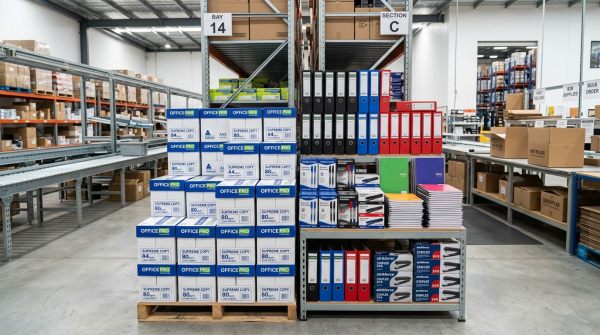
The first mistake many procurement teams make is comparing only unit price. In office supplies bulk purchasing, the true decision should start with 5 core dimensions: product breadth, quality consistency, compliance readiness, delivery capability, and commercial flexibility. A supplier with a low quote but unstable replenishment can create far higher costs over a 3–12 month procurement cycle.
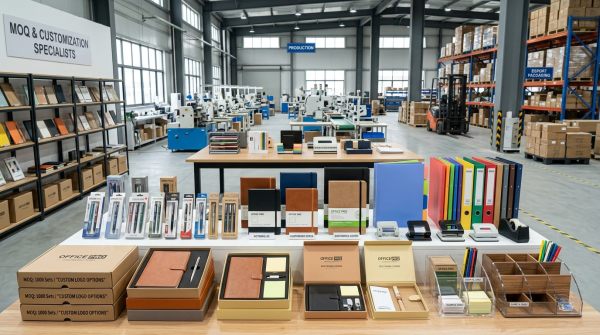
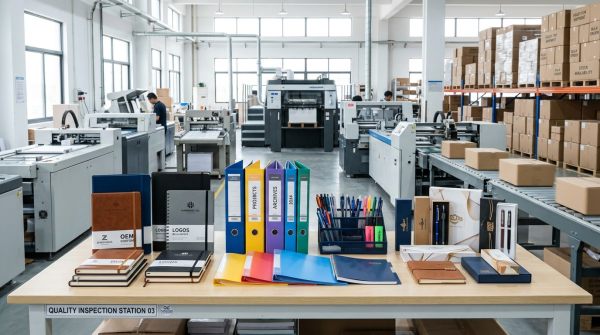
For information researchers and business evaluators, supplier type also matters. An office supplies wholesaler may offer fast-moving stock and mixed cartons. An office supplies distributor may provide stronger regional delivery and after-sales support. An office supplies OEM manufacturer may be the better fit for private label, institutional branding, or custom packaging programs with lead times of 2–6 weeks depending on complexity.
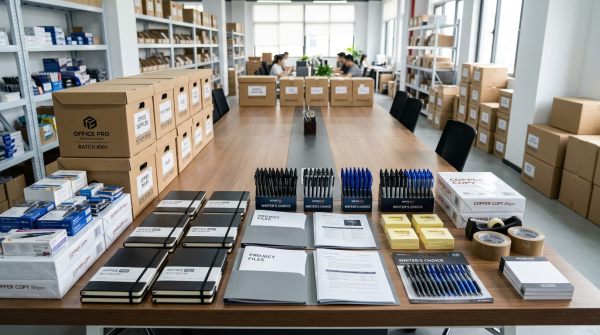
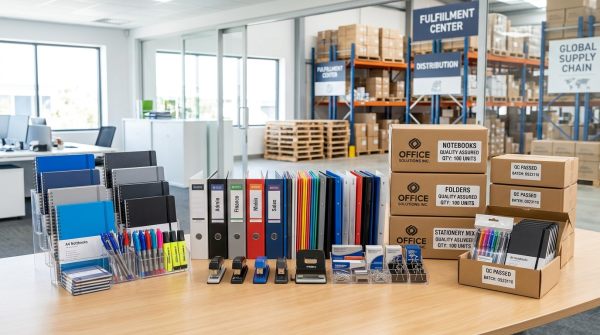
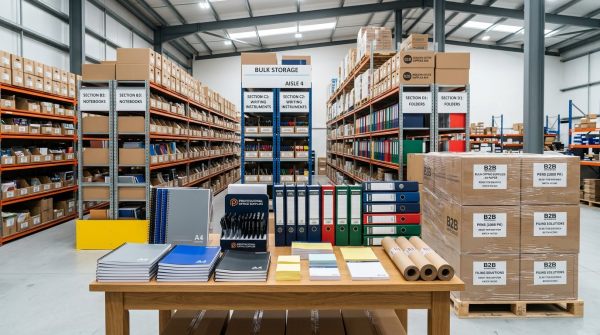
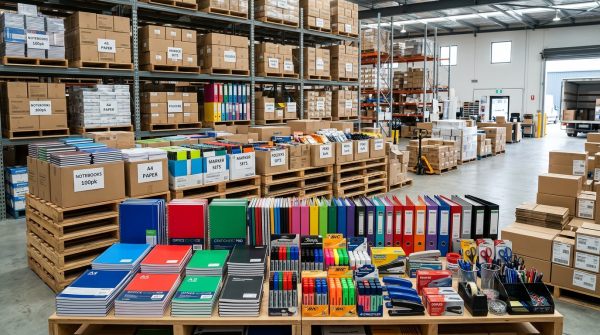
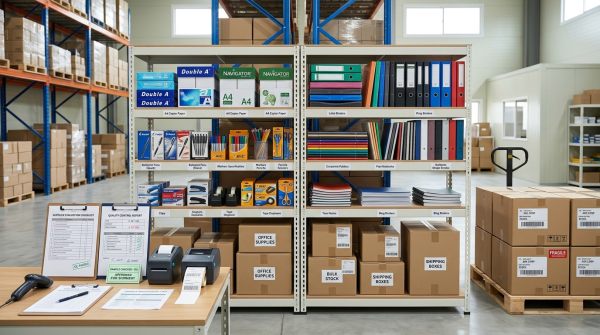
In the office and educational supplies sector, procurement is rarely about one product. Buyers often need coordinated sourcing across paper products, writing instruments, filing systems, desktop accessories, presentation materials, and school-office crossover items. This is why supplier comparison should assess category management ability, not just a single SKU quotation.
GCT supports this evaluation process by focusing on commercial-use sourcing intelligence rather than shallow product listings. For institutional buyers, hospitality groups, smart campus projects, and distribution channels, this helps narrow down suppliers that can meet specification, consistency, and long-term sourcing requirements across multiple purchasing rounds.
A practical 4-step shortlist method
- Define your buying model: stock supply, contract supply, private label, or project-based sourcing.
- Group suppliers into 3 categories: wholesaler, distributor, and OEM/ODM manufacturer.
- Request evidence for 5–8 priority SKUs, lead time ranges, MOQ terms, and packaging options.
- Run a sample and commercial review before moving into annual or quarterly purchasing agreements.
This framework reduces evaluation noise. Instead of reviewing 20 suppliers on vague claims, teams can quickly reduce the list to 3–5 suppliers that actually match the intended supply model and the required service depth.
Office supplies wholesaler vs distributor vs OEM manufacturer: which model fits your business?
Different buyer profiles require different supplier structures. A dealer expanding into fast-turn office consumables may prioritize broad stock and mixed-order efficiency. A procurement manager for a campus, corporate office network, or hospitality back office may value standardized quality and scheduled replenishment. A brand owner or importer may need OEM packaging, barcode integration, and private label support.
This is where comparison analysis becomes more useful than generic sourcing advice. Office supplies bulk suppliers are not interchangeable. Their warehouse model, packaging control, compliance familiarity, and ability to absorb seasonal demand can differ significantly, especially during back-to-school peaks, annual budgeting cycles, or quarter-end restocking windows.
The table below helps buyers compare the most common B2B office supplies sourcing models across purchasing priorities such as MOQ, customization, and fulfillment complexity.
The decision should align with your downstream business model. If your priority is fast turnover across standard stationery items, a wholesaler may be enough. If your priority is consistency across multiple office locations, a distributor may reduce fulfillment friction. If differentiation, packaging control, and margin protection matter, an OEM office supplies supplier is often the better long-term partner.
Questions to ask during supplier comparison
- Can the supplier support recurring monthly or quarterly replenishment without major SKU substitution?
- What is the MOQ by item, by carton, and by custom packaging order?
- How are stockouts, backorders, and replacement approvals handled?
- Is there a documented process for sample approval, artwork confirmation, and shipment inspection?
These questions reveal operational maturity much faster than a polished catalog. A reliable office supplies bulk supplier should answer with process detail, not generic promises.
Which procurement criteria matter most for office supplies bulk sourcing?
In office supplies procurement, selection criteria should be weighted according to risk, not convenience. For example, pens, staplers, folders, notebooks, toner-adjacent accessories, and desktop organizers all appear simple, but consistency problems can affect brand image, user experience, or administrative efficiency across hundreds or thousands of end users.
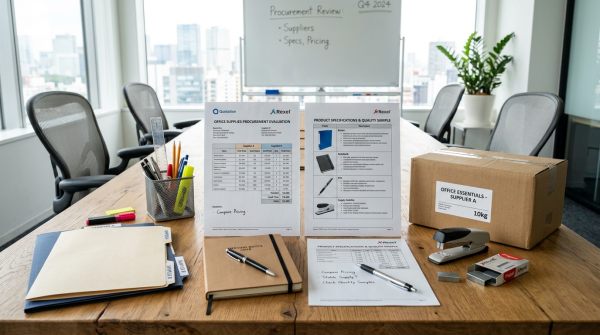
A useful approach is to score suppliers across 6 procurement dimensions: product range, quality assurance, compliance documentation, packaging and customization, delivery reliability, and communication responsiveness. Each dimension can be ranked on a 1–5 scale during vendor assessment, helping teams compare quotes against total procurement risk rather than invoice price alone.
For commercial buyers, another practical test is whether a supplier can support both routine orders and exception orders. Routine orders include standardized stationery replenishment. Exception orders include urgent logo runs, custom school-office kits, promotional bundles, or project-specific packaging. Suppliers that fail on exception handling often become bottlenecks during expansion.
The following table can be used as a procurement review sheet when comparing office supplies bulk suppliers in a structured way.
This table helps teams separate attractive quotes from dependable supply partners. In many B2B office supplies programs, delivery reliability and substitution control are worth more than a small unit price reduction, especially when internal users expect stable specifications over repeated orders.
3 high-impact checks before approval
Sample-to-bulk consistency
Ask whether the approved sample represents standard production quality. This is especially important for notebooks, binders, file folders, desk sets, and branded stationery kits where color, paper weight, print sharpness, or binding quality can shift between batches.
Lead time breakdown
Do not accept a single lead time number without clarification. Break it into 3 parts: production, packing, and shipment release. A supplier saying “15 days” may actually mean 15 days after artwork approval, deposit confirmation, and material readiness.
Packaging suitability
For distributors and agents, retail-ready or channel-ready packaging affects labor cost and shelf presentation. For institutional buyers, outer carton labeling, barcode format, and pack count accuracy matter more than visual merchandising. Confirm this early to avoid repacking costs.
How to assess compliance, quality control, and supply chain reliability?
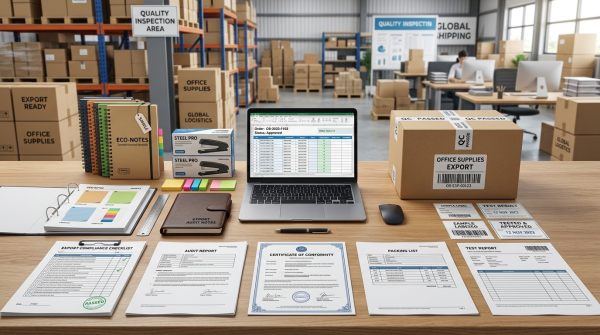
Compliance in office supplies is often underestimated because many products look low-risk. Yet material safety, labeling accuracy, packaging declarations, and destination-market documentation can still affect customs clearance, school procurement eligibility, or corporate purchasing approval. Buyers should ask for documentation relevant to the product category and target market rather than assuming all stationery is treated the same.
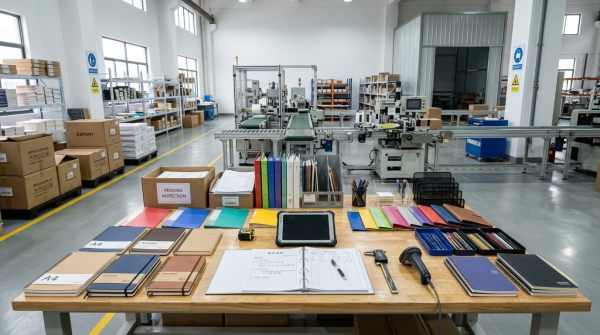
Quality control should be reviewed at 3 stages: pre-production confirmation, in-process control, and pre-shipment inspection. This is especially important for products with moving parts, adhesives, coatings, sharpened edges, or color-critical branding. A supplier that can explain its inspection checkpoints in operational language is usually more reliable than one that only claims to have “strict QC.”
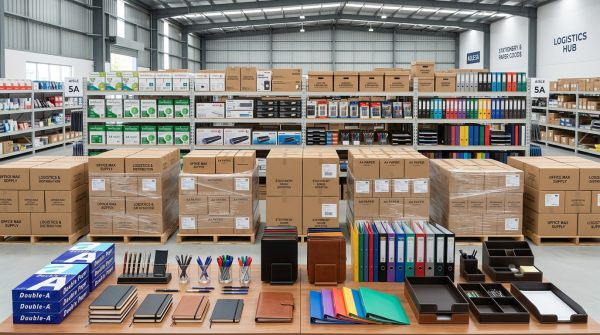
Supply chain reliability is equally critical. Buyers should ask how the supplier handles raw material fluctuations, peak season congestion, carton shortages, and production prioritization. In common office supplies programs, a stable supplier should be able to communicate standard lead time ranges such as 7–15 days for stock items and 20–45 days for customized runs, depending on order size and packaging requirements.
For procurement teams working across multiple regions, GCT adds value by helping compare suppliers not just by product catalog, but by delivery logic, compliance preparedness, and project suitability. This is especially relevant for smart campuses, hospitality back-of-house operations, dealer networks, and commercial resellers that need dependable multi-category sourcing rather than one-off trading.
Compliance and reliability checklist
- Request destination-market labeling and material documentation before placing bulk orders.
- Confirm whether the supplier supports third-party inspection or buyer-side quality checks before shipment.
- Review how defective goods, carton damage, and specification mismatch are handled contractually.
- Check whether replenishment planning can be aligned monthly, quarterly, or by seasonal demand cycles.
These measures are simple, but they reduce procurement risk significantly. In office supplies bulk sourcing, the most expensive problem is often not product cost. It is interruption, inconsistency, and the internal effort required to fix avoidable supplier issues.
What cost factors and hidden risks do buyers often overlook?
An office supplies bulk supplier should never be compared on ex-factory or quoted unit price alone. Buyers should examine total procurement cost across at least 6 components: item price, packaging cost, customization cost, freight structure, inventory risk, and operational handling cost. A cheaper supplier may create more split shipments, more repacking, or more SKU substitutions, all of which reduce purchasing efficiency.
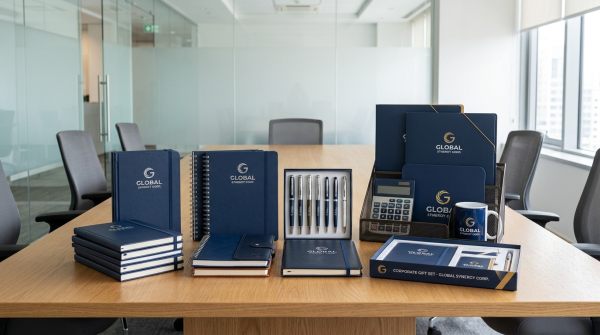
Customization can also change cost logic. For example, adding logo printing, custom header cards, private label cartons, or multi-item kit assembly usually increases setup complexity and may raise MOQ thresholds. However, in medium-to-large runs, custom programs can improve channel differentiation and reduce price competition for distributors and brand owners.
Another hidden risk is over-consolidation. Buyers sometimes prefer one supplier for all categories, but not every office supplies wholesaler is equally strong in paper, plastic, metal, and packaging-intensive items. A two-supplier structure can sometimes reduce risk if each supplier clearly owns a category group and service level.
The best sourcing decision balances visible cost with service resilience. For annual contracts, this often means reviewing not only current pricing, but also the supplier’s ability to maintain continuity over 2–4 procurement quarters.
Common cost traps in office supplies procurement
- Ignoring carton efficiency and paying more in freight because pack dimensions were not optimized.
- Approving samples without confirming that mass production uses the same material grade or finishing process.
- Choosing a low MOQ supplier that cannot support repeat orders with stable specifications.
- Overlooking communication delays, which can extend the order cycle by 3–7 days at every approval stage.
If you are a distributor, reseller, or agent, these cost traps directly affect margin. If you are a procurement officer, they affect internal service level and reorder stability. Either way, cost comparison should be operational, not just numerical.
FAQ: practical questions buyers ask when comparing office supplies suppliers
How many suppliers should we compare before making a decision?
For most B2B office supplies sourcing projects, comparing 3–5 qualified suppliers is enough if the review is structured. More than that often creates decision fatigue unless you are handling a large OEM program or a multi-country framework agreement. Focus on comparable quotes, sample quality, lead time detail, and service process clarity.
What is a reasonable lead time for office supplies bulk orders?
For standard stock items, a common range is 3–15 days depending on warehouse readiness and order volume. For private label or custom packaging office supplies, 2–8 weeks is a practical planning range. Buyers should confirm whether the lead time starts from inquiry, deposit, sample approval, or artwork approval, because this changes the real schedule.
When is an OEM office supplies manufacturer better than a wholesaler?
An OEM manufacturer is usually a better fit when you need branded packaging, stable repeat production, specification control, or margin protection through differentiation. A wholesaler is often better for immediate standard replenishment and mixed-category stocking. The right choice depends on whether your priority is speed, customization, or brand control.
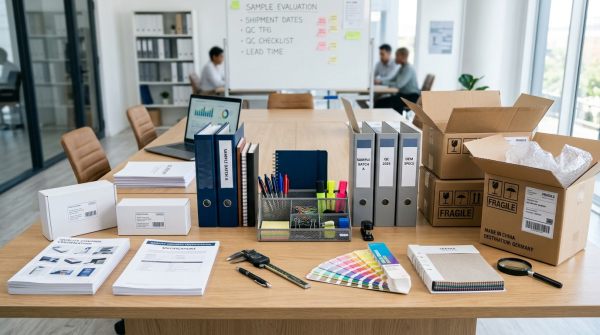
What should buyers include in a sample evaluation?
Review functionality, material feel, print clarity, pack count accuracy, carton robustness, and labeling consistency. If the order includes multiple SKUs, create a checklist with at least 6 inspection points and record observations by item. This makes later supplier comparison far more objective.
Why work with GCT when evaluating office supplies bulk suppliers?
Global Commercial Trade helps buyers move beyond fragmented online sourcing by connecting product evaluation with commercial-use intelligence. In office and educational supplies, that means looking not only at catalog coverage, but also at sourcing fit for institutional procurement, hospitality support functions, campus outfitting, dealer expansion, and private label development.
This is especially useful for teams that need to compare supplier capability across multiple variables at once: quality consistency, customization depth, compliance readiness, and delivery reliability. Instead of treating office supplies as a commodity-only purchase, GCT supports a more strategic view of long-term sourcing performance.
If you are evaluating an office supplies wholesaler, office supplies distributor, or office supplies OEM manufacturer, you can consult GCT on practical issues such as category selection, MOQ alignment, lead time planning, packaging options, sample support, and destination-market documentation needs. This helps reduce sourcing uncertainty before contract commitment.
For procurement teams, distributors, and commercial decision-makers seeking scalable sourcing, the next step should be specific. Share your target product categories, expected order volume, customization needs, required delivery window, and compliance considerations. GCT can help you compare suitable office supplies bulk suppliers, clarify specification questions, and support more confident quotation and supplier review discussions.
What you can discuss with us
- Product selection across stationery, filing, desktop, presentation, and mixed office supply categories.
- Supplier comparison for standard stock, contract supply, or OEM/private label projects.
- Lead time confirmation, sample arrangements, MOQ planning, and packaging customization.
- Documentation review, destination-market requirements, and quotation communication support.
If your goal is to build a reliable, cost-aware, and scalable office supplies sourcing program, start with a structured comparison. A better supplier decision today can improve service quality, inventory control, and procurement efficiency over every reorder cycle that follows.
Search News
Hot Articles
- Stage Lighting & Truss2026 FIBA Women's World Cup Draw Sets LED Timing Screen RequirementsApr 27, 2026
- Hotel Room AmenitiesIranian Delegation’s Ritual Gesture at Sanya ASG Sparks Mideast Hospitality Procurement ShiftApr 27, 2026
- Arcade & VR MachinesSnooker World Championship 'China Derby' Drives VR Viewing DemandApr 27, 2026
Popular Tags
Need ExpertConsultation?
Connect with our specialized leisureengineering team for procurementstrategies.
Recommended News
 Apr 27, 2026Office Supplies Manufacturer MOQ ExplainedOffice supplies manufacturer MOQ explained: compare an office supplies supplier, wholesaler, distributor, OEM manufacturer, and factory to reduce cost, improve flexibility, and source smarter.● Institutional Buyer
 Apr 27, 2026Distributor or Supplier for Fast ReordersOffice supplies supplier or distributor for fast reorders? Compare lead times, stock stability, and bulk supply options to choose a reliable office supplies B2B supplier.● Institutional Buyer
 Apr 27, 2026How Wholesalers Cut Office Supply CostsOffice supplies supplier and office supplies wholesaler solutions help cut costs through bulk buying, OEM options, and smarter sourcing. Compare distributors and manufacturers to save more.● Institutional Buyer
 Apr 27, 2026Office Supplies Supplier Pricing Red FlagsOffice supplies supplier pricing red flags explained: compare an office supplies wholesaler, distributor, or manufacturer, spot hidden risks, and choose a reliable B2B partner with confidence.● Institutional Buyer
 Apr 27, 2026How to Vet an Office Supplies ExporterOffice supplies supplier vetting made simple: learn how to assess an office supplies exporter, manufacturer, wholesaler, and distributor for quality, compliance, and reliable B2B growth.● Institutional Buyer
 Apr 27, 2026What to Ask an Office Supplies Producer FirstOffice supplies supplier screening starts with the right questions. Learn how to evaluate an office supplies manufacturer, wholesaler, or producer on quality, OEM, compliance, pricing, and delivery.● Institutional Buyer
 Apr 27, 2026How to Compare Office Supplies Bulk SuppliersCompare every office supplies supplier model—wholesaler, distributor, OEM manufacturer, and bulk supplier—to evaluate quality, compliance, lead times, and costs for smarter B2B sourcing.● Institutional Buyer
 Apr 27, 2026Is an Office Supplies OEM Manufacturer Worth ItOffice supplies OEM manufacturer or standard sourcing? Compare an office supplies supplier, wholesaler, and distributor to find the best B2B fit for cost, branding, and scalable growth.● Institutional Buyer
 Apr 27, 2026Best Office Supplies B2B Supplier for ScaleFind the best office supplies B2B supplier for scale. Compare an office supplies supplier, wholesaler, distributor, and OEM manufacturer to secure reliable bulk sourcing and growth.● Institutional Buyer
 Apr 27, 2026Office Supplies Factory Audit ChecklistOffice supplies factory audit checklist for choosing a reliable office supplies manufacturer, supplier, or OEM partner. Learn key quality, compliance, and capacity checks before sourcing.● Institutional Buyer
 Apr 27, 2026When to Work With an Office Supplies ManufacturerOffice supplies manufacturer or office supplies supplier? Learn when to source direct, compare wholesaler vs OEM options, and improve cost, quality, and supply stability.● Institutional Buyer
 Apr 27, 2026What Makes a Reliable Office Supplies DistributorDiscover what sets a reliable office supplies distributor apart. Compare an office supplies supplier, wholesaler, or B2B supplier by quality, lead times, inventory, and global delivery.● Institutional Buyer
 Apr 27, 2026Office Supplies Wholesaler vs DistributorOffice supplies wholesaler vs distributor: learn how an office supplies supplier, distributor, or manufacturer impacts pricing, lead time, and growth—choose the best B2B sourcing model.● Institutional Buyer
 Apr 27, 2026How to Choose an Office Supplies SupplierLearn how to choose the right office supplies supplier by comparing an office supplies wholesaler, distributor, manufacturer, or B2B supplier for quality, price, delivery, and growth.● Institutional Buyer
 Apr 24, 2026How to Pick Educational Supplies by AgeEducational supplies by age: discover how commercial furniture, sensory playground designs, playground safety, climbers, borders, music accessories, hotel tables and amusement equipment improve ROI.● Institutional Buyer
 Apr 24, 2026Educational Supplies That Schools Reorder MostEducational supplies schools reorder most: from commercial furniture support and music accessories to playground safety, playground borders, and sensory playground essentials—discover high-demand categories buyers need year-round.● Institutional Buyer
 Apr 23, 2026How to Compare Educational Supplies Beyond Unit PriceEducational supplies buying guide: compare commercial furniture, sensory playground, music accessories, and playground safety beyond unit price to cut risk and boost long-term value.● Institutional Buyer
 Apr 23, 2026Educational Supplies That Wear Out Fast in Shared UseEducational supplies wear out fast in shared spaces. Learn how commercial furniture, music accessories, playground borders, playground climbers, sensory playground systems, and playground safety solutions reduce risk and replacement costs.● Institutional Buyer
 Apr 22, 2026When Cheap Office Supplies End Up Costing MoreOffice supplies that seem cheap can cost more over time for trampoline park, indoor playground, arcade games, musical instruments, and luxury jewelry businesses—discover smarter sourcing tips.● Institutional Buyer
 Apr 22, 2026Office Supplies Costs That Quietly Add Up Over a YearOffice supplies costs can quietly rise alongside arcade games, musical instruments, indoor playground and trampoline park operations. Discover smarter sourcing to protect margins.● Institutional Buyer
 Apr 21, 2026Office supplies wholesaler terms that cause reorder problemsOffice supplies wholesaler terms can quietly trigger costly reorders. Learn how a reliable office supplies supplier should handle MOQ, lead times, substitutions, and pricing before you sign.● Institutional Buyer
 Apr 21, 2026The hidden service gaps between office supplies suppliersOffice supplies supplier insights: uncover hidden service gaps in office supplies wholesaler selection, plus sourcing links to musical instruments for bands, custom jewelry manufacturer, and indoor playground supplier.● Institutional Buyer
 Apr 24, 2026Why office supplies wholesalers vary so much on MOQ and lead timeOffice supplies supplier insights: learn why an office supplies wholesaler differs on MOQ and lead time, and compare sourcing logic across custom jewelry manufacturer and indoor playground supplier options.● Institutional Buyer
 Apr 24, 2026How to compare an office supplies supplier beyond priceCompare an office supplies supplier beyond price—evaluate quality, compliance, customization, and delivery. Learn how the right office supplies wholesaler reduces risk and boosts long-term value.● Institutional Buyer