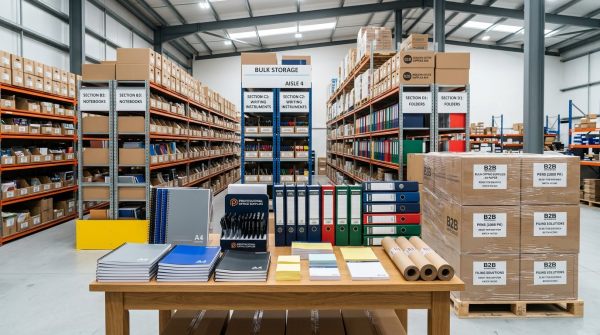
Office Supplies Factory Audit Checklist
Choosing the right office supplies factory starts with a rigorous audit process. Whether you are evaluating an office supplies manufacturer, office supplies supplier, or office supplies OEM manufacturer, a clear checklist helps buyers verify quality systems, compliance, production capacity, and export reliability. This guide outlines the key audit points procurement teams, distributors, and B2B sourcing professionals should review before selecting a trusted office supplies B2B supplier.
What should an office supplies factory audit actually cover?
An effective office supplies factory audit is not limited to a quick site visit or a document review. For buyers of notebooks, filing products, writing instruments, desktop organizers, adhesive items, and school-office consumables, the audit should examine at least 5 core dimensions: legal identity, production capability, quality control, compliance management, and shipment readiness.
This matters because office supplies often look simple but involve broad material categories, multiple subcontracting steps, and variable packaging requirements. A factory producing PP folders, paper notebooks, and metal staplers may use different incoming material controls, different inspection methods, and different lead times within the same plant. That complexity makes a checklist essential for procurement teams and commercial evaluators.
For importers and distributors, the main risk is not only poor product quality. The bigger issue is mismatch between claimed capability and actual execution. A supplier may quote a 20–30 day production cycle, yet rely on outside vendors for printing, injection molding, plating, or carton conversion. Without an audit, buyers may discover these dependencies only after order confirmation.
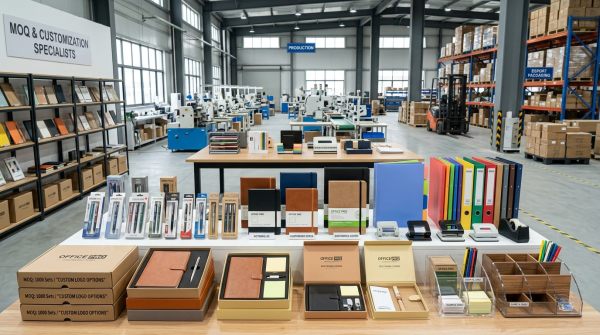
GCT helps buyers reduce this uncertainty by focusing on sourcing intelligence rather than generic supplier listings. In the office and educational supplies sector, this means looking beyond brochures and checking whether an office supplies OEM manufacturer can consistently support customization, seasonal demand spikes, export labeling, and compliance documentation across 2–4 production stages.
Core audit areas buyers should map before the visit
Before the onsite or remote audit starts, buyers should define the product scope and order scenario. An audit for commodity office supplies differs from one for branded retail packs or institutional bulk supply. The checklist should match the intended channel: wholesale distribution, tender supply, contract furnishing, or OEM private label.
- Business legitimacy: registration, export license status, production address consistency, and ownership structure.
- Manufacturing footprint: in-house processes, outsourced processes, production lines, machine count, and shift arrangement.
- Quality system: incoming inspection, in-process checks, final AQL practice, lot traceability, and corrective action records.
- Compliance readiness: material declarations, packaging standards, labeling review, and market-specific documentation.
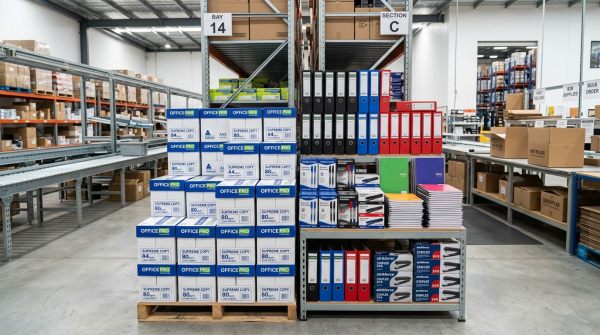
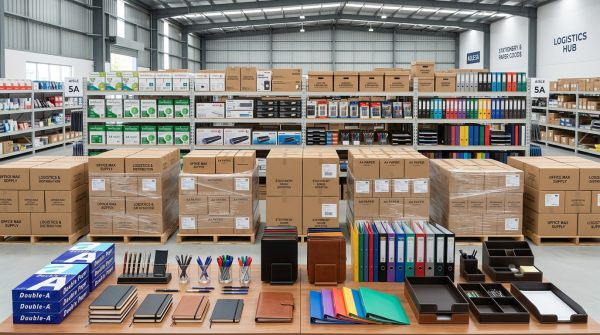
- Delivery execution: warehouse control, carton marking accuracy, loading process, and typical lead time stability.
A strong office supplies supplier should be able to show records for at least the last 6–12 months, including sample approvals, production reports, complaint handling, and shipment files. If documentation exists only for one recent customer or one pilot order, buyers should treat capability claims with caution.
Why this matters in B2B office supplies sourcing
In office supplies procurement, small defects often create large operational costs. A binder with inconsistent ring alignment, a marker with ink leakage, or a carton with incorrect barcode placement can disrupt retail distribution or institutional rollout. Even when the unit price is low, the cost of rework, return, or delayed launch can be significant across hundreds or thousands of cartons.
That is why commercial buyers should audit against business risk, not just unit cost. The real question is whether the factory can deliver repeatable output over multiple purchase cycles, often every quarter or every season, while maintaining packaging consistency and compliance readiness for different markets.
How to evaluate factory capability, process control, and production capacity
Capability assessment should begin with product-process matching. Buyers should verify whether the office supplies factory has equipment and operators suited to the exact items being sourced. A plant that mainly assembles simple stationery kits may not be suitable for precision metal punching, hardcover binding, or complex OEM packaging programs.
Production capacity should also be checked in practical terms. Instead of asking only for monthly volume, ask how many lines are dedicated to your category, how many shifts run during peak season, and what percentage of work is subcontracted. In many office supplies categories, the difference between nominal and usable capacity is substantial during back-to-school or year-end promotion periods.
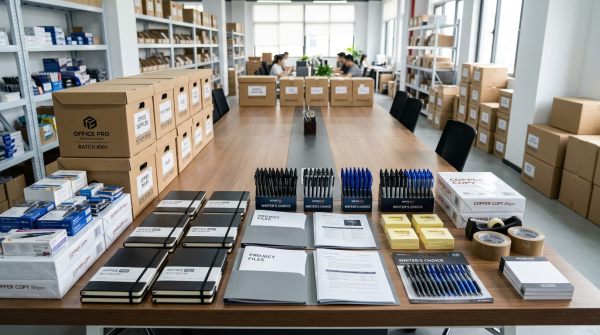
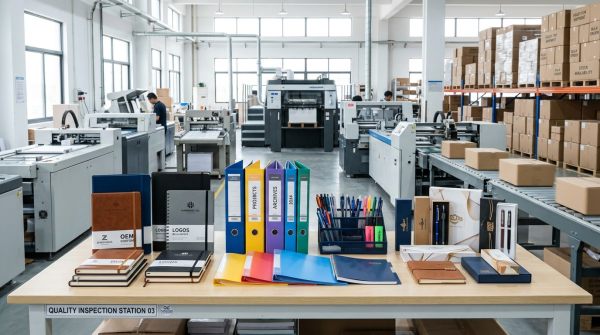
A reliable office supplies manufacturer should explain production flow step by step. For example, paper-based items may involve printing, ruling, cutting, folding, stitching, binding, packing, and palletization. Plastic organizers may involve resin storage, molding, trimming, assembly, decoration, and packaging. Each step creates a separate quality checkpoint.
Procurement teams should also inspect bottlenecks. In many factories, the slowest stages are not the main line but color matching, custom printing approval, blister sealing, manual assortment, or export carton preparation. If one bottleneck limits output to 3,000–5,000 sets per day, the quoted line capacity may not reflect actual delivery performance.
Factory audit checklist for production and quality review
The table below helps buyers compare what should be checked during an office supplies factory audit and why each point matters for B2B supply reliability.
The goal is not to demand perfect paperwork from every factory. The goal is to confirm whether the supplier can identify defects early, isolate affected lots, and keep delivery performance within an acceptable range such as 2–6 weeks, depending on product complexity and customization level.
Questions that reveal real manufacturing depth
Many buyers ask how many workers the factory has. A better question is how many trained operators are assigned to the product family you need. Another useful check is how long sample-to-mass-production conversion usually takes. For standard office supplies, this may be 7–15 days; for private-label sets or mixed-material items, it can extend to 3–5 weeks.
You should also ask for examples of quality incidents and the corrective actions taken. A supplier that can describe a root-cause process, operator retraining, tooling adjustment, and follow-up verification usually has stronger control than one that simply states there were no issues.
GCT’s sourcing perspective is especially useful here because it frames audits around commercial usability. Buyers do not just need production; they need production that supports repeat reorder business, regional distribution, and brand presentation across catalogs, tenders, campuses, offices, and specialty retail channels.
Which compliance, documentation, and export checks should buyers prioritize?
Compliance in office supplies is often underestimated because many items are viewed as low-risk consumer goods. In reality, requirements vary by material, intended user group, packaging type, and destination market. A factory audit should therefore verify not only what documents exist, but whether the supplier understands which documents apply to which SKU.
For example, paper products may require fiber-related declarations or packaging compliance records. Writing instruments and plastic accessories may require material safety documentation. Products intended for children, schools, or broad retail distribution may face stricter chemical or labeling expectations than bulk office-only items. Buyers should not assume one declaration covers the entire product range.
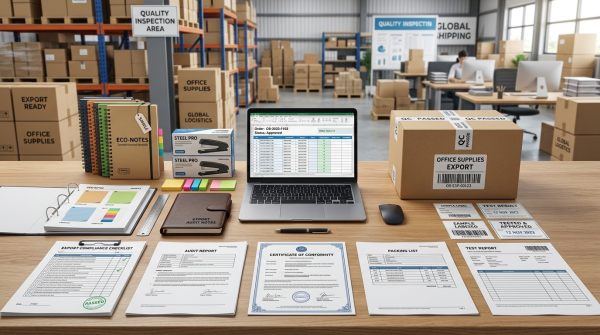
A practical export audit should review 4 documentation layers: company documents, product specifications, test or declaration files where applicable, and shipping-mark consistency. Even when third-party lab reports are used, the buyer should confirm that the report scope, sample description, and issue date match the current production version.
Distributors and agents should pay special attention to labeling and packaging artwork control. Barcode mismatch, multilingual warning omissions, carton mark errors, or missing country-of-origin statements can delay customs clearance or retail receiving, even when the product itself is acceptable.
Compliance review table for office supplies sourcing
The following table summarizes common compliance checkpoints that procurement and business evaluation teams should include when auditing an office supplies supplier for export readiness.
For buyers managing multiple SKUs across several markets, documentation discipline is often the difference between a scalable supplier and a transactional one. A capable office supplies B2B supplier should keep document revisions aligned with samples, production orders, and shipment marks, not in separate uncontrolled files.
What to do when documents are incomplete
Incomplete documentation is not always a deal breaker, but it should trigger a corrective action plan. Buyers can request a 3-step closure process: identify missing files, assign a deadline such as 5–10 working days, and require updated versions before deposit payment or before mass production release.
If the missing items involve key market-entry requirements, do not rely on verbal assurances. Instead, freeze artwork approval, sample sign-off, or shipment booking until documentation is verified. This is especially important for office supplies programs involving private label, school channels, or chain retail distribution.
How can buyers compare office supplies factories and make a safer sourcing decision?
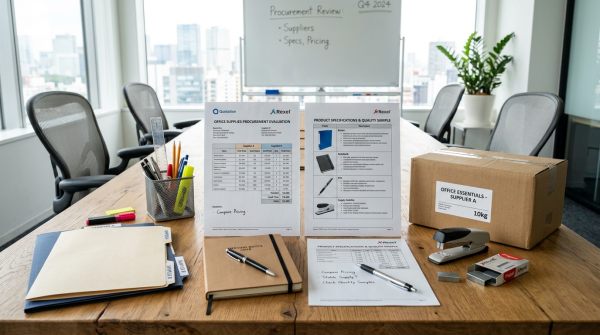
Comparing factories becomes difficult when quotations appear similar. The safer approach is to score suppliers across quality, capacity, compliance, communication, and customization fit. For office supplies sourcing, buyers should avoid choosing solely on the lowest FOB quote because service gaps often appear later in sample revision speed, packaging errors, or replenishment delays.
A useful method is to create a weighted comparison sheet with 5–7 decision factors. For example, a distributor focused on stable replenishment may give more weight to lead time control and final inspection records. A private-label importer may place more weight on artwork handling, packaging precision, and MOQ flexibility.
Buyers should also compare commercial responsiveness. During an audit, note whether the factory can provide BOM-level clarification, clear sample timelines, and realistic corrective action deadlines. A supplier that responds within 24–48 hours with organized evidence is often easier to manage than one that provides attractive pricing but vague follow-up.
GCT adds value at this stage by helping commercial buyers interpret supplier capability in the context of actual sourcing goals. That includes aligning factory findings with channel strategy, customization demand, target market expectations, and long-term procurement planning rather than treating audits as a one-time compliance exercise.
Practical comparison criteria for supplier shortlisting
The checklist below can help information researchers, procurement staff, and distributors move from audit findings to shortlist decisions without losing sight of commercial priorities.
- Match product category to real factory strengths. Do not assume one plant is equally strong in paper, plastic, and metal office supplies.
- Check sample consistency against production evidence. A good pre-production sample is useful only if line control can replicate it across the full order.
- Review lead time in layers: sampling, raw material preparation, bulk production, packaging, and shipment booking.
- Assess communication quality. Clear issue logs and revision tracking often predict smoother project execution.
- Confirm whether the supplier can support low-volume trial orders, mixed SKU programs, or annual contracts depending on your route to market.
In many sourcing projects, the best choice is not the factory with the largest site or the broadest catalog. It is the supplier whose process discipline fits your product mix, your delivery cycle, and your quality tolerance threshold. That is the logic a good office supplies factory audit should support.
Common mistakes in office supplies supplier evaluation
One common mistake is treating all stationery items as standard commodities. In reality, color accuracy, pack count integrity, smooth writing performance, binding strength, and shelf presentation can all influence end-user satisfaction and channel acceptance. Another mistake is ignoring subcontracting because the factory visit looked organized.
A third mistake is approving a supplier without checking how complaints are handled. Ask for examples from the last 12 months. If the factory cannot show containment action, root cause, and preventive action, future problem resolution may be slow and costly.
FAQ: procurement questions buyers often ask before approving an office supplies manufacturer
How long does an office supplies factory audit usually take?
For a focused audit covering one product family, a remote document review may take 1–3 working days, while an onsite audit often takes half a day to 1 full day. If the order includes multiple categories such as paper products, plastic organizers, and writing instruments, buyers should allow more time for process verification and warehouse checks.
The best practice is to separate the audit into 3 parts: document review, facility walkthrough, and closing discussion. That structure helps commercial teams confirm findings quickly and assign corrective actions without delaying sourcing decisions.
What are the most important red flags during an audit?
Key red flags include inconsistent factory address information, heavy reliance on undisclosed subcontractors, missing incoming inspection records, outdated product specifications, and unclear carton marking control. Another warning sign is when the sales team and factory team give different answers about MOQ, lead time, or customization capability.
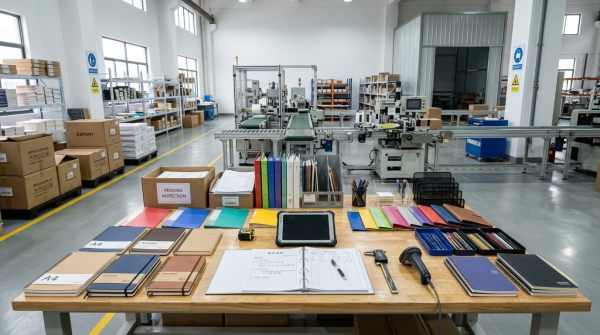
Buyers should also watch for poor lot segregation in finished goods areas. If approved stock, rework stock, and pending-inspection stock are mixed together, shipment mistakes become more likely, especially in high-SKU office supplies programs.
Can a smaller office supplies OEM manufacturer still be a good partner?
Yes, if the supplier has clear process control, category specialization, and realistic capacity planning. Smaller factories can perform well in niche items, private label development, or flexible mixed-order production. The key is whether they can maintain quality documentation, stable subcontractor management, and delivery discipline over repeated orders.
For many distributors, a smaller but specialized office supplies supplier is preferable to a large general factory that treats the category as secondary. The audit should test control depth, not just factory size.
How often should approved suppliers be re-audited?
A common practice is to review key suppliers annually, or every 12 months, with interim checks when there is a major product change, compliance issue, ownership change, or repeated shipment problem. For strategic suppliers handling large seasonal volumes, buyers may also add quarterly performance reviews covering defect rates, on-time delivery, and complaint closure speed.
Re-audits do not always need to be full audits. A targeted review of 4–6 critical items can be enough if the supplier has already demonstrated stable performance and transparent reporting.
Why work with GCT when screening office supplies factories?
Global Commercial Trade supports buyers who need more than a supplier list. In office and educational supplies sourcing, the challenge is often translating commercial goals into practical factory screening criteria. That includes matching product complexity, compliance requirements, packaging expectations, and delivery windows to the right manufacturing profile.
For information researchers, GCT helps narrow the field with category-relevant sourcing intelligence. For procurement managers, the value lies in structured evaluation logic. For business assessment teams and channel partners, the benefit is clearer comparison across factory capability, OEM suitability, export readiness, and long-term supply reliability.
If you are assessing an office supplies manufacturer, office supplies OEM manufacturer, or office supplies B2B supplier, we can help you review audit priorities before sampling or order placement. This can include product category fit, checklist design, supplier comparison criteria, documentation review points, and risk areas tied to your target market or distribution model.
You can contact GCT to discuss sample planning, customization feasibility, expected lead time ranges such as 2–6 weeks, packaging and labeling checkpoints, MOQ considerations, document readiness, and quotation comparison. This makes the audit process more actionable and helps your team move from supplier screening to confident sourcing decisions with fewer avoidable surprises.
Search News
Hot Articles
- Stage Lighting & Truss2026 FIBA Women's World Cup Draw Sets LED Timing Screen RequirementsApr 27, 2026
- Hotel Room AmenitiesIranian Delegation’s Ritual Gesture at Sanya ASG Sparks Mideast Hospitality Procurement ShiftApr 27, 2026
- Arcade & VR MachinesSnooker World Championship 'China Derby' Drives VR Viewing DemandApr 27, 2026
Popular Tags
Need ExpertConsultation?
Connect with our specialized leisureengineering team for procurementstrategies.
Recommended News
 Apr 27, 2026Office Supplies Manufacturer MOQ ExplainedOffice supplies manufacturer MOQ explained: compare an office supplies supplier, wholesaler, distributor, OEM manufacturer, and factory to reduce cost, improve flexibility, and source smarter.● Institutional Buyer
 Apr 27, 2026Distributor or Supplier for Fast ReordersOffice supplies supplier or distributor for fast reorders? Compare lead times, stock stability, and bulk supply options to choose a reliable office supplies B2B supplier.● Institutional Buyer
 Apr 27, 2026How Wholesalers Cut Office Supply CostsOffice supplies supplier and office supplies wholesaler solutions help cut costs through bulk buying, OEM options, and smarter sourcing. Compare distributors and manufacturers to save more.● Institutional Buyer
 Apr 27, 2026Office Supplies Supplier Pricing Red FlagsOffice supplies supplier pricing red flags explained: compare an office supplies wholesaler, distributor, or manufacturer, spot hidden risks, and choose a reliable B2B partner with confidence.● Institutional Buyer
 Apr 27, 2026How to Vet an Office Supplies ExporterOffice supplies supplier vetting made simple: learn how to assess an office supplies exporter, manufacturer, wholesaler, and distributor for quality, compliance, and reliable B2B growth.● Institutional Buyer
 Apr 27, 2026What to Ask an Office Supplies Producer FirstOffice supplies supplier screening starts with the right questions. Learn how to evaluate an office supplies manufacturer, wholesaler, or producer on quality, OEM, compliance, pricing, and delivery.● Institutional Buyer
 Apr 27, 2026How to Compare Office Supplies Bulk SuppliersCompare every office supplies supplier model—wholesaler, distributor, OEM manufacturer, and bulk supplier—to evaluate quality, compliance, lead times, and costs for smarter B2B sourcing.● Institutional Buyer
 Apr 27, 2026Is an Office Supplies OEM Manufacturer Worth ItOffice supplies OEM manufacturer or standard sourcing? Compare an office supplies supplier, wholesaler, and distributor to find the best B2B fit for cost, branding, and scalable growth.● Institutional Buyer
 Apr 27, 2026Best Office Supplies B2B Supplier for ScaleFind the best office supplies B2B supplier for scale. Compare an office supplies supplier, wholesaler, distributor, and OEM manufacturer to secure reliable bulk sourcing and growth.● Institutional Buyer
 Apr 27, 2026Office Supplies Factory Audit ChecklistOffice supplies factory audit checklist for choosing a reliable office supplies manufacturer, supplier, or OEM partner. Learn key quality, compliance, and capacity checks before sourcing.● Institutional Buyer
 Apr 27, 2026When to Work With an Office Supplies ManufacturerOffice supplies manufacturer or office supplies supplier? Learn when to source direct, compare wholesaler vs OEM options, and improve cost, quality, and supply stability.● Institutional Buyer
 Apr 27, 2026What Makes a Reliable Office Supplies DistributorDiscover what sets a reliable office supplies distributor apart. Compare an office supplies supplier, wholesaler, or B2B supplier by quality, lead times, inventory, and global delivery.● Institutional Buyer
 Apr 27, 2026Office Supplies Wholesaler vs DistributorOffice supplies wholesaler vs distributor: learn how an office supplies supplier, distributor, or manufacturer impacts pricing, lead time, and growth—choose the best B2B sourcing model.● Institutional Buyer
 Apr 27, 2026How to Choose an Office Supplies SupplierLearn how to choose the right office supplies supplier by comparing an office supplies wholesaler, distributor, manufacturer, or B2B supplier for quality, price, delivery, and growth.● Institutional Buyer
 Apr 24, 2026How to Pick Educational Supplies by AgeEducational supplies by age: discover how commercial furniture, sensory playground designs, playground safety, climbers, borders, music accessories, hotel tables and amusement equipment improve ROI.● Institutional Buyer
 Apr 24, 2026Educational Supplies That Schools Reorder MostEducational supplies schools reorder most: from commercial furniture support and music accessories to playground safety, playground borders, and sensory playground essentials—discover high-demand categories buyers need year-round.● Institutional Buyer
 Apr 23, 2026How to Compare Educational Supplies Beyond Unit PriceEducational supplies buying guide: compare commercial furniture, sensory playground, music accessories, and playground safety beyond unit price to cut risk and boost long-term value.● Institutional Buyer
 Apr 23, 2026Educational Supplies That Wear Out Fast in Shared UseEducational supplies wear out fast in shared spaces. Learn how commercial furniture, music accessories, playground borders, playground climbers, sensory playground systems, and playground safety solutions reduce risk and replacement costs.● Institutional Buyer
 Apr 22, 2026When Cheap Office Supplies End Up Costing MoreOffice supplies that seem cheap can cost more over time for trampoline park, indoor playground, arcade games, musical instruments, and luxury jewelry businesses—discover smarter sourcing tips.● Institutional Buyer
 Apr 22, 2026Office Supplies Costs That Quietly Add Up Over a YearOffice supplies costs can quietly rise alongside arcade games, musical instruments, indoor playground and trampoline park operations. Discover smarter sourcing to protect margins.● Institutional Buyer
 Apr 21, 2026Office supplies wholesaler terms that cause reorder problemsOffice supplies wholesaler terms can quietly trigger costly reorders. Learn how a reliable office supplies supplier should handle MOQ, lead times, substitutions, and pricing before you sign.● Institutional Buyer
 Apr 21, 2026The hidden service gaps between office supplies suppliersOffice supplies supplier insights: uncover hidden service gaps in office supplies wholesaler selection, plus sourcing links to musical instruments for bands, custom jewelry manufacturer, and indoor playground supplier.● Institutional Buyer
 Apr 24, 2026Why office supplies wholesalers vary so much on MOQ and lead timeOffice supplies supplier insights: learn why an office supplies wholesaler differs on MOQ and lead time, and compare sourcing logic across custom jewelry manufacturer and indoor playground supplier options.● Institutional Buyer
 Apr 24, 2026How to compare an office supplies supplier beyond priceCompare an office supplies supplier beyond price—evaluate quality, compliance, customization, and delivery. Learn how the right office supplies wholesaler reduces risk and boosts long-term value.● Institutional Buyer