Office Supplies Wholesaler vs Distributor
Choosing between an office supplies wholesaler and an office supplies distributor can directly affect pricing, inventory flow, and market reach. For buyers, dealers, and sourcing teams, understanding how an office supplies supplier, office supplies manufacturer, or office supplies B2B supplier fits into the supply chain is essential for smarter procurement and long-term growth. This guide explains the key differences and helps you evaluate the right sourcing model.
What is the real difference between a wholesaler and a distributor in office supplies?
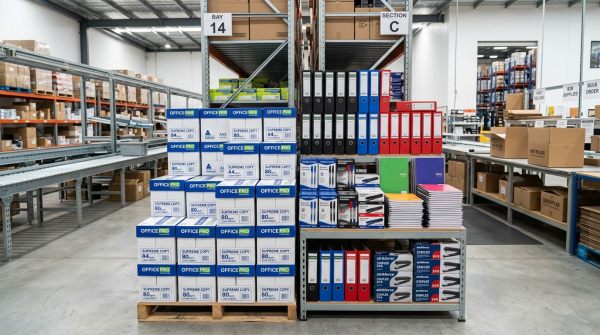
In the office supplies industry, the terms wholesaler and distributor are often used interchangeably, but they usually serve different commercial functions. A wholesaler typically buys in bulk from multiple office supplies manufacturers or large import channels, then resells mixed inventory to retailers, project buyers, resellers, and regional traders. A distributor, by contrast, often works in a more structured channel model, sometimes with territory coverage, brand authorization, product training responsibilities, or after-sales coordination.
For procurement teams, this distinction matters because the sourcing path affects at least 4 key areas: unit cost, SKU depth, replenishment speed, and channel support. If your priority is broad assortment across stationery, filing products, writing instruments, desk accessories, and educational office items, a wholesaler may offer better purchasing flexibility. If your priority is stable brand representation, clearer lead times, and coordinated market development, a distributor may be the stronger partner.
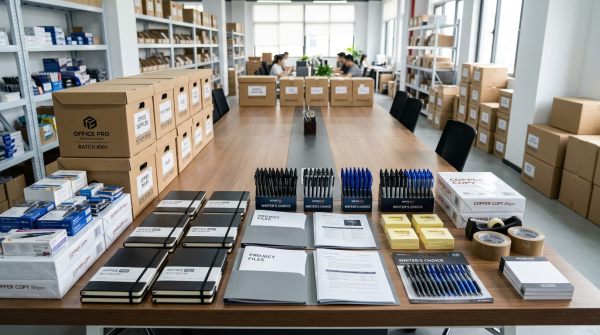
An office supplies wholesaler is commonly more transaction-driven. Buyers can often consolidate 20 to 200 SKUs in one order, especially for mixed cartons or seasonal replenishment. A distributor is more likely to support a defined product line, sales policies, stock planning cycles, and channel management rules. This becomes important when a dealer wants predictable restocking every 2 to 4 weeks rather than opportunistic spot buying.
For information researchers and business evaluators, the key question is not which model is better in general, but which model aligns with your commercial objective. A school procurement project, a corporate office setup, an e-commerce reseller, and a national dealer network may all require different sourcing structures. This is exactly where market intelligence from GCT becomes useful: it helps buyers compare sourcing roles not just by price, but by supply chain fit, compliance demands, and expansion potential.
How the office supplies supply chain usually works
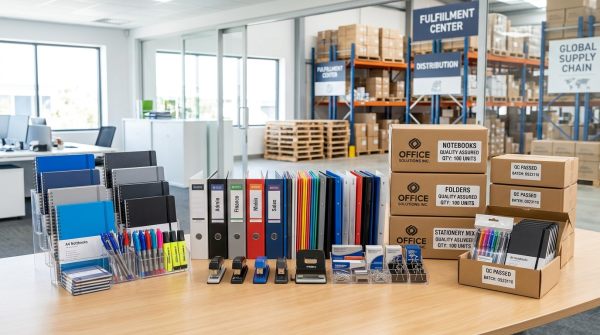
In a typical B2B chain, the office supplies manufacturer produces standardized or customized product ranges, such as notebooks, binders, folders, markers, staplers, shredders, or desktop organizers. Those goods may then move through an office supplies distributor, an office supplies wholesaler, or directly to institutional buyers. The route depends on order volume, market maturity, import capability, and whether the buyer needs branding, packaging adaptation, or regional service.
- Manufacturer to distributor: often used for branded lines, territory development, and long-term channel building.
- Manufacturer to wholesaler: often used for large-volume circulation, mixed-category trading, and fast stock turnover.
- Wholesaler to dealer or retailer: suitable for frequent replenishment, lower MOQs, and multi-brand assortment.
- Distributor to project buyer: suitable for structured supply contracts, compliance review, and recurring demand forecasts.
In practical sourcing, many companies use hybrid models. For example, a regional seller may buy commodity office stationery from a wholesaler and source premium writing products or specific filing systems from a distributor. This blended approach can reduce risk during seasonal peaks, especially before back-to-school periods or annual corporate procurement rounds.
Which sourcing model fits your purchasing scenario better?
Different office supplies purchasing scenarios create different expectations for pricing, stock depth, customization, and service. A buyer setting up a new business center may need 50 to 80 core SKUs delivered within 7 to 15 days. A national dealer may focus more on quarterly supply continuity, margin protection, and product line expansion. That is why scenario-based evaluation is more useful than relying on a generic wholesaler versus distributor definition.
The table below compares common office supplies sourcing scenarios and shows where a wholesaler or distributor usually performs better. It is not a rigid rule, but it helps procurement teams match channel structure with demand complexity, order rhythm, and brand expectations.
The comparison shows a simple pattern: wholesalers usually win on assortment and flexibility, while distributors often win on structure and market support. For procurement professionals, the best model depends on whether your current risk sits in pricing, continuity, compliance, or channel growth.
When a wholesaler is usually the better choice
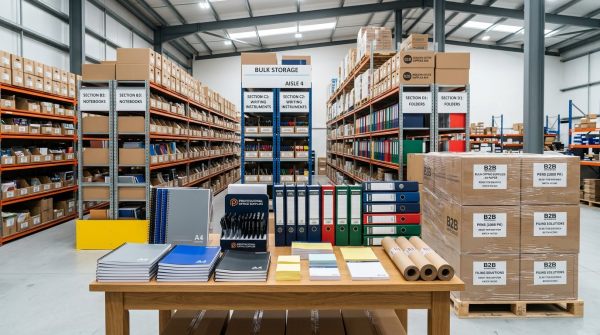
Choose an office supplies wholesaler when you need mixed items in one shipment, lower initial commitment, or rapid replenishment for fast-moving products. This is common for traders, local dealers, and contract suppliers serving small and medium offices. If your catalog changes often or your demand is difficult to forecast beyond 30 to 60 days, wholesaler flexibility can protect cash flow.
Wholesalers are also useful when you need to compare multiple office supplies suppliers before building a stable sourcing plan. They can function as a market-testing channel, helping you learn which product groups generate repeat demand. For example, one region may show stronger rotation in filing supplies, while another may move more desk accessories and whiteboard consumables.
When a distributor is usually the better choice
Choose an office supplies distributor when your business depends on consistency. This includes recurring purchase contracts, government or institutional supply, branded product continuity, and coordinated service expectations. A distributor can also be a better fit when you need sales materials, market development support, or cleaner communication with a specific manufacturer.
For dealers and agents, a distributor may provide more predictable stocking policy and territorial logic. That becomes important once your operation grows from ad hoc purchasing to structured monthly or quarterly planning. In many cases, the distributor relationship supports better product lifecycle management, especially for categories where packaging updates, labeling accuracy, or safety documentation matter.
What should procurement teams compare beyond unit price?
A frequent mistake in office supplies sourcing is to compare only headline prices. In reality, total procurement value depends on 5 core dimensions: MOQ, fill rate, lead time, defect handling, and document readiness. A lower price from an office supplies wholesaler may still create higher operational cost if stock-outs lead to emergency orders, split shipments, or unsuitable substitutes.
Business evaluators should ask how the supplier performs over a full purchasing cycle of 3 to 6 months. Can they maintain consistent packaging? Can they deliver mixed SKUs in one consolidated schedule? Can they support sample review before rolling out 1,000 to 5,000 units across multiple sites? These practical questions often matter more than small differences in ex-warehouse price.
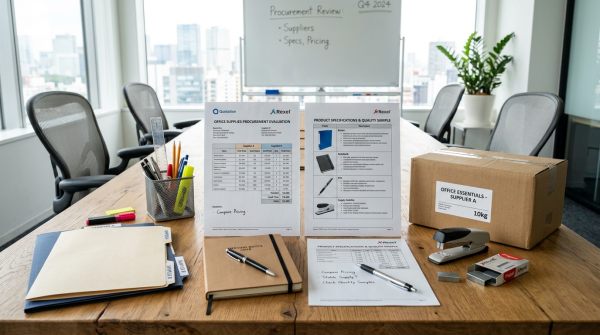
The table below gives a structured procurement checklist for comparing an office supplies wholesaler, distributor, and direct manufacturer route. It is especially useful for sourcing managers, dealer principals, and project buyers who need a defensible commercial evaluation process.
This framework helps teams compare suppliers on operational reality, not just proposal language. It also shows why GCT emphasizes supplier intelligence and sourcing structure: in commercial procurement, the wrong route can slow growth even when the quoted price looks attractive.
A 6-point checklist before you place an office supplies B2B order
- Confirm whether your demand is stock-based or project-based. This determines whether a wholesaler or distributor should lead.
- Review MOQ by SKU and by total order value. Low MOQ on one item does not always mean low MOQ on the shipment.
- Check replenishment frequency. Weekly, monthly, and quarterly procurement models need different supply discipline.
- Ask for packaging details, carton count, and labeling method, especially for multi-branch distribution.
- Verify document readiness, such as product specifications, material declarations, and shipping records where applicable.
- Define a returns or defect handling process before the first commercial order, not after a complaint appears.
These 6 checks are simple, but they reduce common procurement friction. They are especially useful when comparing several office supplies suppliers that appear similar on paper but differ sharply in execution quality.
How do lead time, compliance, and service support affect the final decision?
In office supplies procurement, service quality is often invisible until something goes wrong. A delayed delivery of basic stationery may seem minor, but if it affects a campus opening, a branch rollout, or a managed office contract, the financial impact can be much larger than the product value. That is why professional buyers look at service nodes, not just product lists.
Typical lead time ranges depend on the sourcing route. In-stock wholesaler orders may move in 3 to 10 business days domestically, while distributor-managed replenishment may follow a more regular 2 to 4 week cycle. Direct factory orders, especially for customized notebooks, branded folders, or private-label desk items, can require 3 to 8 weeks depending on artwork approval, production planning, and shipment mode.
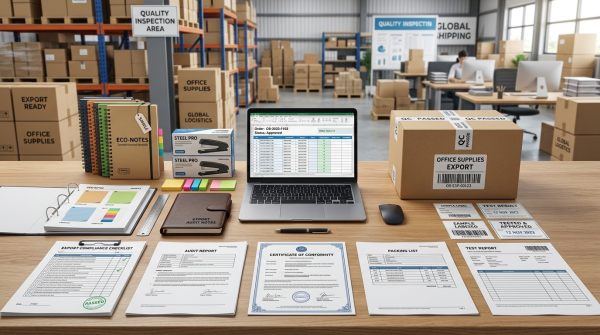
Compliance also matters. Not every office supply category has the same documentation burden, but institutional buyers often ask for clear material descriptions, packaging details, and product consistency. For school supplies, archives, filing systems, and workspace accessories, buyers may also review labeling accuracy, basic safety suitability, and restricted-substance expectations depending on destination market rules.
GCT’s advantage in this area is not limited to supplier discovery. It helps buyers and channel partners interpret sourcing options through commercial space requirements, procurement logic, and cross-border supply realities. That is especially relevant when a project combines aesthetic consistency, recurring supply, and documentation review across several item groups.
Common service gaps buyers should identify early
- Unclear stock status: available quantity, reserved inventory, and incoming shipment timing are not the same thing.
- Inconsistent pack configuration: carton counts may change between sample stage and live orders.
- Weak issue resolution: if claim handling takes more than 7 to 10 days, branch supply continuity may suffer.
- Poor master data control: mismatched SKU codes, descriptions, or barcodes can disrupt ERP and warehouse operations.
These service gaps are common in fragmented office supplies sourcing. A disciplined distributor may handle them better, but a strong wholesaler with mature stock management can also perform well. The real task is to test process reliability before scale-up.
A practical 4-step evaluation process
First, define your purchase pattern: one-time project, monthly replenishment, or channel expansion. Second, request a sample SKU matrix with price, MOQ, stock status, and delivery estimate. Third, evaluate one trial order covering 10 to 20 representative SKUs. Fourth, review fill rate, packaging accuracy, response speed, and document quality before signing a broader supply plan.
This 4-step method is particularly effective for distributors, agents, and sourcing teams entering a new regional market. It helps prevent overcommitment to a channel partner that looks strong commercially but lacks execution discipline.
Common misconceptions and buyer questions
Many buyers assume an office supplies wholesaler is always cheaper than a distributor. That is not always true. For low-volume mixed orders, the wholesaler may provide better flexibility. But for repeat purchases over 3 or 4 cycles, a distributor may reduce hidden cost through fewer shortages, cleaner replenishment, and better brand alignment. The lowest invoice does not always produce the lowest operating cost.
Another misconception is that direct factory buying is automatically the best B2B strategy. In reality, many office supplies manufacturers are efficient for private label, large contracts, or standardized export programs, but they may not be ideal for fragmented orders, urgent replenishment, or broad category purchasing. A manufacturer excels in production depth, not always in channel convenience.
Below are several frequently asked questions that often arise during office supplies sourcing reviews. They are especially relevant for procurement managers, business analysts, and channel partners comparing a wholesaler, a distributor, and a direct supplier model.
How do I choose between an office supplies wholesaler and distributor for a new market?
If you are testing a new market, start with the model that limits inventory risk. In most cases, that means a wholesaler for mixed-SKU experimentation or a distributor for structured brand entry. Your first 60 to 90 days should focus on product movement, reorder behavior, and customer acceptance, not just front-end pricing.
What lead time is normal for office supplies B2B supply?
For stock items, domestic lead time often falls within 3 to 10 business days. Imported or consolidated orders may take 2 to 6 weeks depending on customs, shipment mode, and warehouse planning. Customized office supplies can take 3 to 8 weeks or longer if artwork, packaging proofs, or material confirmation are involved.
What should dealers and agents pay most attention to?
Dealers and agents should prioritize 5 areas: pricing stability, reorder consistency, channel overlap risk, product data accuracy, and support for market expansion. A supplier with strong products but unclear channel policy can create conflict later, especially when multiple resellers target the same region or customer segment.
Is a wholesaler suitable for institutional procurement?
Yes, if the wholesaler can provide stable inventory, consistent specifications, and the required purchase documentation. However, for annual contracts, education systems, or multi-site office programs, a distributor may offer better continuity and coordination. The choice depends less on label and more on operating capability.
Why work with GCT when evaluating office supplies suppliers, wholesalers, and distributors?
For commercial buyers, the challenge is rarely just finding a seller. The harder task is identifying the right supply structure for the business objective. GCT supports this process by combining category-focused intelligence, sourcing visibility, and commercial decision context across office and educational supplies. That means buyers can assess not only who supplies a product, but how that supplier fits into a long-term procurement model.
This is especially valuable for hospitality groups, institutional buyers, project developers, and channel partners that need more than transactional trading. An office rollout, smart campus procurement plan, or multi-site commercial supply program often involves 3 to 5 decision layers: product suitability, supply reliability, compliance readiness, packaging practicality, and procurement timing. GCT helps align those layers before costly mistakes appear.
If you are comparing an office supplies wholesaler vs distributor, GCT can help clarify which sourcing route best supports your current stage, whether that is market testing, recurring replenishment, private label development, or regional channel growth. Instead of evaluating suppliers in isolation, you can review them through actual use cases, category strategy, and project requirements.
You can contact GCT to discuss practical sourcing topics such as product selection, sample planning, typical lead time ranges, MOQ structure, OEM or ODM suitability, packaging configuration, compliance expectations, and quote comparison. If you are a dealer, distributor, or procurement team building a reliable office supplies B2B supply chain, a structured consultation can save weeks of trial and reduce avoidable purchasing risk.
What you can consult with us about
- Whether a wholesaler, distributor, or direct manufacturer is the better sourcing route for your office supplies program.
- How to evaluate MOQ, delivery cycle, and product mix for 10, 50, or 200 SKU purchasing plans.
- How to plan samples, pilot orders, and supplier comparison before a larger annual or quarterly commitment.
- How to assess customization options, packaging needs, and documentation requirements for institutional or channel supply.
- How to compare quotations in a way that reflects total procurement value rather than invoice price alone.
If your team needs a clearer sourcing path for office stationery, filing systems, desk accessories, educational supply items, or private-label office products, GCT can support the next step with category-focused guidance and supplier evaluation logic that is grounded in real B2B purchasing practice.
Search News
Hot Articles
- Stage Lighting & Truss2026 FIBA Women's World Cup Draw Sets LED Timing Screen RequirementsApr 27, 2026
- Hotel Room AmenitiesIranian Delegation’s Ritual Gesture at Sanya ASG Sparks Mideast Hospitality Procurement ShiftApr 27, 2026
- Arcade & VR MachinesSnooker World Championship 'China Derby' Drives VR Viewing DemandApr 27, 2026
Popular Tags
Need ExpertConsultation?
Connect with our specialized leisureengineering team for procurementstrategies.
Recommended News
 Apr 27, 2026Office Supplies Manufacturer MOQ ExplainedOffice supplies manufacturer MOQ explained: compare an office supplies supplier, wholesaler, distributor, OEM manufacturer, and factory to reduce cost, improve flexibility, and source smarter.● Institutional Buyer
 Apr 27, 2026Distributor or Supplier for Fast ReordersOffice supplies supplier or distributor for fast reorders? Compare lead times, stock stability, and bulk supply options to choose a reliable office supplies B2B supplier.● Institutional Buyer
 Apr 27, 2026How Wholesalers Cut Office Supply CostsOffice supplies supplier and office supplies wholesaler solutions help cut costs through bulk buying, OEM options, and smarter sourcing. Compare distributors and manufacturers to save more.● Institutional Buyer
 Apr 27, 2026Office Supplies Supplier Pricing Red FlagsOffice supplies supplier pricing red flags explained: compare an office supplies wholesaler, distributor, or manufacturer, spot hidden risks, and choose a reliable B2B partner with confidence.● Institutional Buyer
 Apr 27, 2026How to Vet an Office Supplies ExporterOffice supplies supplier vetting made simple: learn how to assess an office supplies exporter, manufacturer, wholesaler, and distributor for quality, compliance, and reliable B2B growth.● Institutional Buyer
 Apr 27, 2026What to Ask an Office Supplies Producer FirstOffice supplies supplier screening starts with the right questions. Learn how to evaluate an office supplies manufacturer, wholesaler, or producer on quality, OEM, compliance, pricing, and delivery.● Institutional Buyer
 Apr 27, 2026How to Compare Office Supplies Bulk SuppliersCompare every office supplies supplier model—wholesaler, distributor, OEM manufacturer, and bulk supplier—to evaluate quality, compliance, lead times, and costs for smarter B2B sourcing.● Institutional Buyer
 Apr 27, 2026Is an Office Supplies OEM Manufacturer Worth ItOffice supplies OEM manufacturer or standard sourcing? Compare an office supplies supplier, wholesaler, and distributor to find the best B2B fit for cost, branding, and scalable growth.● Institutional Buyer
 Apr 27, 2026Best Office Supplies B2B Supplier for ScaleFind the best office supplies B2B supplier for scale. Compare an office supplies supplier, wholesaler, distributor, and OEM manufacturer to secure reliable bulk sourcing and growth.● Institutional Buyer
 Apr 27, 2026Office Supplies Factory Audit ChecklistOffice supplies factory audit checklist for choosing a reliable office supplies manufacturer, supplier, or OEM partner. Learn key quality, compliance, and capacity checks before sourcing.● Institutional Buyer
 Apr 27, 2026When to Work With an Office Supplies ManufacturerOffice supplies manufacturer or office supplies supplier? Learn when to source direct, compare wholesaler vs OEM options, and improve cost, quality, and supply stability.● Institutional Buyer
 Apr 27, 2026What Makes a Reliable Office Supplies DistributorDiscover what sets a reliable office supplies distributor apart. Compare an office supplies supplier, wholesaler, or B2B supplier by quality, lead times, inventory, and global delivery.● Institutional Buyer
 Apr 27, 2026Office Supplies Wholesaler vs DistributorOffice supplies wholesaler vs distributor: learn how an office supplies supplier, distributor, or manufacturer impacts pricing, lead time, and growth—choose the best B2B sourcing model.● Institutional Buyer
 Apr 27, 2026How to Choose an Office Supplies SupplierLearn how to choose the right office supplies supplier by comparing an office supplies wholesaler, distributor, manufacturer, or B2B supplier for quality, price, delivery, and growth.● Institutional Buyer
 Apr 24, 2026How to Pick Educational Supplies by AgeEducational supplies by age: discover how commercial furniture, sensory playground designs, playground safety, climbers, borders, music accessories, hotel tables and amusement equipment improve ROI.● Institutional Buyer
 Apr 24, 2026Educational Supplies That Schools Reorder MostEducational supplies schools reorder most: from commercial furniture support and music accessories to playground safety, playground borders, and sensory playground essentials—discover high-demand categories buyers need year-round.● Institutional Buyer
 Apr 23, 2026How to Compare Educational Supplies Beyond Unit PriceEducational supplies buying guide: compare commercial furniture, sensory playground, music accessories, and playground safety beyond unit price to cut risk and boost long-term value.● Institutional Buyer
 Apr 23, 2026Educational Supplies That Wear Out Fast in Shared UseEducational supplies wear out fast in shared spaces. Learn how commercial furniture, music accessories, playground borders, playground climbers, sensory playground systems, and playground safety solutions reduce risk and replacement costs.● Institutional Buyer
 Apr 22, 2026When Cheap Office Supplies End Up Costing MoreOffice supplies that seem cheap can cost more over time for trampoline park, indoor playground, arcade games, musical instruments, and luxury jewelry businesses—discover smarter sourcing tips.● Institutional Buyer
 Apr 22, 2026Office Supplies Costs That Quietly Add Up Over a YearOffice supplies costs can quietly rise alongside arcade games, musical instruments, indoor playground and trampoline park operations. Discover smarter sourcing to protect margins.● Institutional Buyer
 Apr 21, 2026Office supplies wholesaler terms that cause reorder problemsOffice supplies wholesaler terms can quietly trigger costly reorders. Learn how a reliable office supplies supplier should handle MOQ, lead times, substitutions, and pricing before you sign.● Institutional Buyer
 Apr 21, 2026The hidden service gaps between office supplies suppliersOffice supplies supplier insights: uncover hidden service gaps in office supplies wholesaler selection, plus sourcing links to musical instruments for bands, custom jewelry manufacturer, and indoor playground supplier.● Institutional Buyer
 Apr 24, 2026Why office supplies wholesalers vary so much on MOQ and lead timeOffice supplies supplier insights: learn why an office supplies wholesaler differs on MOQ and lead time, and compare sourcing logic across custom jewelry manufacturer and indoor playground supplier options.● Institutional Buyer
 Apr 24, 2026How to compare an office supplies supplier beyond priceCompare an office supplies supplier beyond price—evaluate quality, compliance, customization, and delivery. Learn how the right office supplies wholesaler reduces risk and boosts long-term value.● Institutional Buyer