How to Choose an Office Supplies Supplier
Choosing the right office supplies supplier can directly impact cost control, delivery reliability, and long-term business efficiency. Whether you are comparing an office supplies wholesaler, distributor, manufacturer, or office supplies B2B supplier, the key is to evaluate product range, compliance, customization, and supply chain strength. This guide helps buyers, dealers, and sourcing teams identify dependable partners and make smarter purchasing decisions.
If you are selecting an office supplies supplier, the main question is not simply who offers the lowest price. The better question is: which supplier can consistently support your purchasing needs with the right products, stable quality, dependable lead times, and commercial flexibility? For procurement teams, distributors, and evaluation managers, the best supplier is usually the one that reduces operational risk while improving total purchasing efficiency over time.
What buyers are really looking for in an office supplies supplier
When users search for how to choose an office supplies supplier, they are usually trying to make a practical sourcing decision. They want to compare potential partners, avoid unreliable vendors, and understand what standards actually matter in B2B purchasing.
For most target readers, the biggest concerns are clear:
- Can the supplier provide a complete and relevant product range?
- Are prices competitive beyond the first quotation?
- Can they deliver consistently and on time?
- Do they meet quality, safety, and compliance requirements?
- Can they support bulk orders, customization, or private label needs?
- Are they financially and operationally reliable for long-term cooperation?
That means the decision should focus less on generic brand claims and more on measurable supplier capability. A reliable office supplies wholesaler or manufacturer should help you maintain continuity, not create extra work for your purchasing team.
Start with the supplier type: wholesaler, distributor, manufacturer, or B2B sourcing partner
Not every office supplies supplier plays the same role in the supply chain. Choosing the wrong type of partner can lead to mismatched expectations on pricing, lead time, customization, and minimum order quantity.
Wholesalers are often suitable for buyers who need broad product access and flexible volume purchasing. They may stock many categories and support fast replenishment, but customization options can be limited.
Distributors are useful when you need regional availability, branded product access, after-sales coordination, and structured delivery support. They often work well for recurring orders and multi-location fulfillment.
Manufacturers are the best fit when you need OEM, ODM, private label, product development, or tighter cost control at scale. They may offer stronger pricing and customization, but often require larger order volumes and longer production planning.
Office supplies B2B suppliers or sourcing hubs can be valuable when buyers need a broader sourcing network, supplier comparison, category intelligence, or support in evaluating international supply options.
Before requesting quotes, define what you actually need: stock supply, branded products, private label, institutional procurement, dealer support, or long-term manufacturing cooperation. This will narrow your shortlist quickly and improve quote quality.
How to assess product range without being misled by a large catalog
A large catalog looks impressive, but it does not automatically mean a supplier is a good fit. Buyers should focus on category relevance, stock consistency, and whether the supplier can support the product mix needed for their business model.
Ask these practical questions:
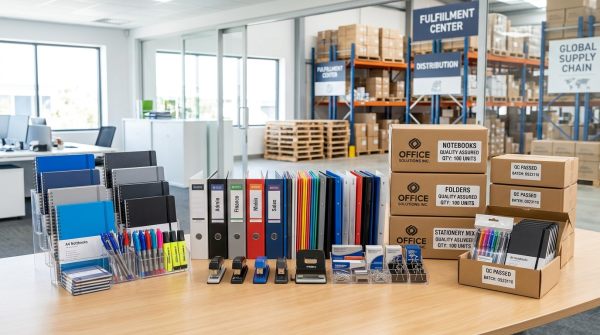
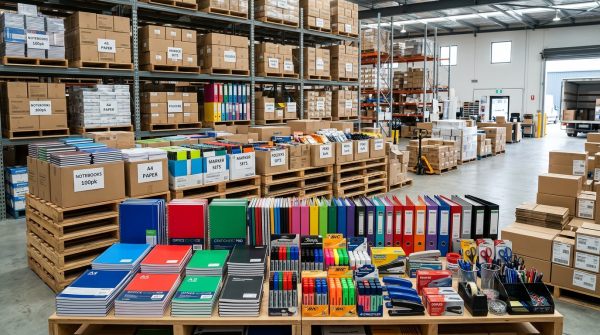
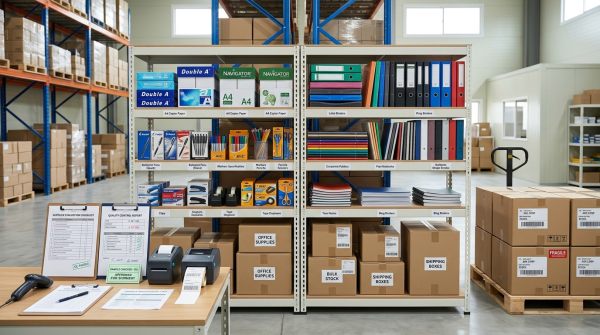
- Do they cover your core categories, such as paper products, writing instruments, filing, desk accessories, school and educational items, or office technology consumables?
- Are best-selling SKUs regularly available?
- Can they support both standard and premium product tiers?
- Do they have seasonal or institutional supply capability for schools, offices, or commercial projects?
- Can they consolidate multiple product categories into fewer shipments?
For distributors and resellers, assortment strategy matters even more. A supplier with fewer but more dependable categories can be more valuable than one with thousands of low-availability items. Product depth, replenishment reliability, and category specialization often matter more than catalog size.
Price matters, but total cost matters more
Many buyers start by comparing unit prices. That is understandable, but in office supplies procurement, total cost of ownership is usually a better decision framework.
A low quotation can become expensive if it causes delayed deliveries, inconsistent quality, excess replacement rates, or fragmented shipments. When comparing suppliers, evaluate:
- Base unit pricing
- Volume discount structure
- Freight terms and packaging efficiency
- MOQ requirements
- Payment terms
- Returns and claim handling process
- Administrative efficiency in ordering and invoicing
For example, a supplier offering slightly higher pricing but better fill rates, stronger packaging, and fewer quality issues may reduce your overall procurement cost. This is especially important for procurement departments managing large recurring orders or distributors serving downstream clients who expect stable availability.
Delivery reliability is often the real deciding factor
In many B2B purchasing decisions, delivery performance becomes more important than price after the first few orders. Office supplies are often recurring operational essentials. If supply is interrupted, it affects workplace continuity, customer commitments, and internal administrative efficiency.
To assess delivery reliability, ask for data where possible:
- Average production lead time
- On-time delivery rate
- Order fill rate
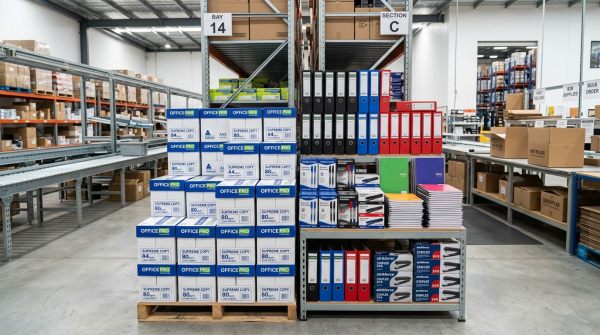
- Inventory capacity for repeat items
- Backup production or sourcing arrangements
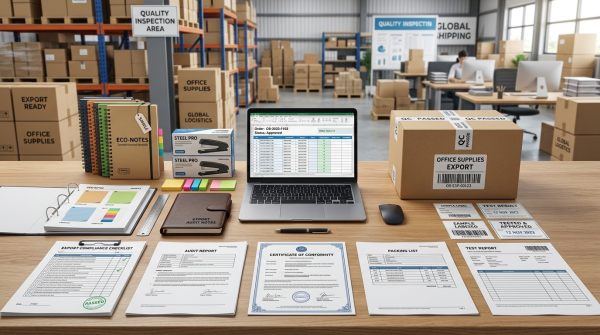
- Export experience and shipping coordination capability
If the supplier serves international buyers, check whether they understand documentation, customs requirements, labeling, and shipping terms. A supplier with strong logistics coordination can significantly reduce supply chain friction, especially for cross-border procurement.
Quality control and compliance should never be assumed
For office and educational supplies, quality and compliance can affect user safety, brand reputation, and institutional purchasing approval. Buyers should not assume that all products in the category meet the same standards.
Key areas to review include:
- Raw material consistency
- Product testing procedures
- Environmental and safety compliance
- Applicable market certifications
- Batch traceability
- Packaging durability and labeling accuracy
This is particularly important for buyers supplying schools, government projects, educational institutions, and large office environments. If products involve inks, plastics, adhesives, coatings, or electronic accessories, request documentation relevant to your market. A qualified office supplies manufacturer or distributor should be able to provide compliance records with clarity and speed.
Customization and private label: when supplier capability becomes a competitive advantage
For dealers, distributors, and brand owners, customization can be more than a nice-to-have. It can improve margins, strengthen customer retention, and differentiate product offerings in a crowded market.
If customization matters, assess whether the supplier can support:
- Private label packaging
- Custom product specifications
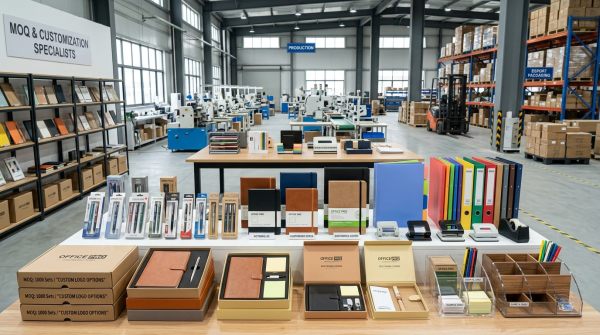
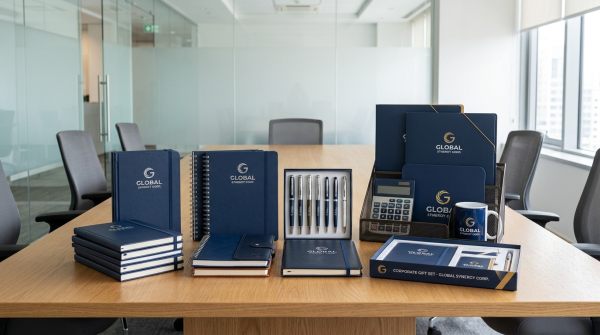
- Logo printing and branded presentation
- Color, material, or design variation
- Retail-ready packaging or institutional bulk packaging
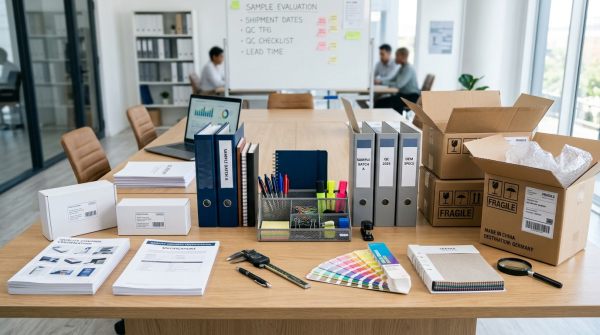
- Sample development and approval process
However, not all suppliers who claim customization have real development capability. Ask about tooling, design support, sampling timelines, artwork requirements, QC controls for custom orders, and previous project experience. The goal is to confirm execution ability, not just marketing language.
How to evaluate supplier strength before signing a long-term agreement
A supplier may look good in a quotation sheet but still be weak in execution. Before entering a long-term relationship, buyers should conduct a practical business evaluation.
Focus on these areas:
- Business stability: years in operation, export history, client structure, and production continuity
- Operational capability: factory capacity, warehouse support, sourcing network, and internal quality systems
- Communication efficiency: response time, clarity, problem-solving speed, and account management quality
- Commercial transparency: clear quotations, realistic lead times, documented specifications, and honest limitation disclosure
- Reputation: client references, case studies, trade history, and dispute handling record
A trial order is often one of the best evaluation tools. It allows you to test product consistency, packaging, documentation accuracy, delivery commitment, and after-sales responsiveness before scaling up.
Questions procurement teams should ask before choosing a supplier
To make supplier evaluation more objective, use a structured question list during discussions. Useful questions include:
- Which product categories are your strongest and most stable?
- What are your standard lead times and peak-season lead times?
- What is your average order fulfillment rate?
- Can you provide references from similar buyers or markets?
- How do you handle defective products or claims?
- What compliance documents can you provide for my market?
- Do you support OEM, ODM, or private label projects?
- What is your MOQ by SKU and by order?
- Can you consolidate mixed-category orders efficiently?
- What payment terms are available for long-term partners?
These questions help reveal whether a supplier is truly prepared for professional B2B cooperation or simply focused on closing an initial order.
Red flags that suggest an office supplies supplier may not be dependable
Some warning signs appear early if you know what to watch for. Buyers should be cautious when a supplier:
- Provides inconsistent product specifications
- Cannot clearly explain lead times or stock status
- Avoids sharing compliance documents
- Offers prices that are unusually low without explanation
- Responds slowly or vaguely to technical questions
- Changes terms frequently during negotiation
- Has no clear claim or after-sales process
- Cannot support sampling or small validation orders
These issues often lead to larger problems later, such as quality disputes, delayed shipments, or hidden cost increases. In commercial sourcing, predictability is a major part of value.
How to make the final decision with a practical scorecard
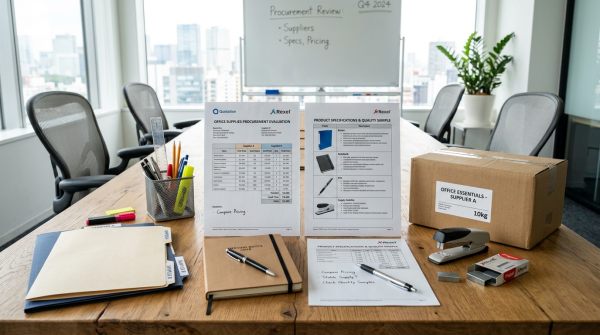
If you are comparing multiple office supplies suppliers, create a weighted scorecard instead of relying on intuition alone. This is especially useful for procurement teams and business evaluators who need to justify decisions internally.
Your scorecard can include:
- Product range fit
- Price competitiveness
- Delivery reliability
- Quality assurance
- Compliance readiness
- Customization capability
- Communication quality
- Commercial terms
- Scalability for future demand
Assign different weights based on your business priorities. For example, a distributor may prioritize assortment and fulfillment speed, while a private label buyer may place greater weight on manufacturing control and customization ability. A structured comparison reduces bias and supports better long-term purchasing outcomes.
Conclusion: choose the supplier that reduces risk and supports growth
The best office supplies supplier is not simply the cheapest or the largest. It is the partner that matches your business model, supports your operational needs, and performs consistently across pricing, quality, delivery, and service.
For information researchers, procurement teams, commercial evaluators, and channel partners, the smartest approach is to assess supplier type first, then compare product relevance, total cost, compliance, logistics strength, and long-term cooperation potential. A dependable office supplies wholesaler, distributor, manufacturer, or office supplies B2B supplier should make purchasing easier, not more uncertain.
When evaluated carefully, the right supplier becomes more than a vendor. They become part of your supply chain strategy, helping you improve efficiency, protect margins, and serve your market with greater confidence.
Search News
Hot Articles
- Stage Lighting & Truss2026 FIBA Women's World Cup Draw Sets LED Timing Screen RequirementsApr 27, 2026
- Hotel Room AmenitiesIranian Delegation’s Ritual Gesture at Sanya ASG Sparks Mideast Hospitality Procurement ShiftApr 27, 2026
- Arcade & VR MachinesSnooker World Championship 'China Derby' Drives VR Viewing DemandApr 27, 2026
Popular Tags
Need ExpertConsultation?
Connect with our specialized leisureengineering team for procurementstrategies.
Recommended News
 Apr 27, 2026Office Supplies Manufacturer MOQ ExplainedOffice supplies manufacturer MOQ explained: compare an office supplies supplier, wholesaler, distributor, OEM manufacturer, and factory to reduce cost, improve flexibility, and source smarter.● Institutional Buyer
 Apr 27, 2026Distributor or Supplier for Fast ReordersOffice supplies supplier or distributor for fast reorders? Compare lead times, stock stability, and bulk supply options to choose a reliable office supplies B2B supplier.● Institutional Buyer
 Apr 27, 2026How Wholesalers Cut Office Supply CostsOffice supplies supplier and office supplies wholesaler solutions help cut costs through bulk buying, OEM options, and smarter sourcing. Compare distributors and manufacturers to save more.● Institutional Buyer
 Apr 27, 2026Office Supplies Supplier Pricing Red FlagsOffice supplies supplier pricing red flags explained: compare an office supplies wholesaler, distributor, or manufacturer, spot hidden risks, and choose a reliable B2B partner with confidence.● Institutional Buyer
 Apr 27, 2026How to Vet an Office Supplies ExporterOffice supplies supplier vetting made simple: learn how to assess an office supplies exporter, manufacturer, wholesaler, and distributor for quality, compliance, and reliable B2B growth.● Institutional Buyer
 Apr 27, 2026What to Ask an Office Supplies Producer FirstOffice supplies supplier screening starts with the right questions. Learn how to evaluate an office supplies manufacturer, wholesaler, or producer on quality, OEM, compliance, pricing, and delivery.● Institutional Buyer
 Apr 27, 2026How to Compare Office Supplies Bulk SuppliersCompare every office supplies supplier model—wholesaler, distributor, OEM manufacturer, and bulk supplier—to evaluate quality, compliance, lead times, and costs for smarter B2B sourcing.● Institutional Buyer
 Apr 27, 2026Is an Office Supplies OEM Manufacturer Worth ItOffice supplies OEM manufacturer or standard sourcing? Compare an office supplies supplier, wholesaler, and distributor to find the best B2B fit for cost, branding, and scalable growth.● Institutional Buyer
 Apr 27, 2026Best Office Supplies B2B Supplier for ScaleFind the best office supplies B2B supplier for scale. Compare an office supplies supplier, wholesaler, distributor, and OEM manufacturer to secure reliable bulk sourcing and growth.● Institutional Buyer
 Apr 27, 2026Office Supplies Factory Audit ChecklistOffice supplies factory audit checklist for choosing a reliable office supplies manufacturer, supplier, or OEM partner. Learn key quality, compliance, and capacity checks before sourcing.● Institutional Buyer
 Apr 27, 2026When to Work With an Office Supplies ManufacturerOffice supplies manufacturer or office supplies supplier? Learn when to source direct, compare wholesaler vs OEM options, and improve cost, quality, and supply stability.● Institutional Buyer
 Apr 27, 2026What Makes a Reliable Office Supplies DistributorDiscover what sets a reliable office supplies distributor apart. Compare an office supplies supplier, wholesaler, or B2B supplier by quality, lead times, inventory, and global delivery.● Institutional Buyer
 Apr 27, 2026Office Supplies Wholesaler vs DistributorOffice supplies wholesaler vs distributor: learn how an office supplies supplier, distributor, or manufacturer impacts pricing, lead time, and growth—choose the best B2B sourcing model.● Institutional Buyer
 Apr 27, 2026How to Choose an Office Supplies SupplierLearn how to choose the right office supplies supplier by comparing an office supplies wholesaler, distributor, manufacturer, or B2B supplier for quality, price, delivery, and growth.● Institutional Buyer
 Apr 24, 2026How to Pick Educational Supplies by AgeEducational supplies by age: discover how commercial furniture, sensory playground designs, playground safety, climbers, borders, music accessories, hotel tables and amusement equipment improve ROI.● Institutional Buyer
 Apr 24, 2026Educational Supplies That Schools Reorder MostEducational supplies schools reorder most: from commercial furniture support and music accessories to playground safety, playground borders, and sensory playground essentials—discover high-demand categories buyers need year-round.● Institutional Buyer
 Apr 23, 2026How to Compare Educational Supplies Beyond Unit PriceEducational supplies buying guide: compare commercial furniture, sensory playground, music accessories, and playground safety beyond unit price to cut risk and boost long-term value.● Institutional Buyer
 Apr 23, 2026Educational Supplies That Wear Out Fast in Shared UseEducational supplies wear out fast in shared spaces. Learn how commercial furniture, music accessories, playground borders, playground climbers, sensory playground systems, and playground safety solutions reduce risk and replacement costs.● Institutional Buyer
 Apr 22, 2026When Cheap Office Supplies End Up Costing MoreOffice supplies that seem cheap can cost more over time for trampoline park, indoor playground, arcade games, musical instruments, and luxury jewelry businesses—discover smarter sourcing tips.● Institutional Buyer
 Apr 22, 2026Office Supplies Costs That Quietly Add Up Over a YearOffice supplies costs can quietly rise alongside arcade games, musical instruments, indoor playground and trampoline park operations. Discover smarter sourcing to protect margins.● Institutional Buyer
 Apr 21, 2026Office supplies wholesaler terms that cause reorder problemsOffice supplies wholesaler terms can quietly trigger costly reorders. Learn how a reliable office supplies supplier should handle MOQ, lead times, substitutions, and pricing before you sign.● Institutional Buyer
 Apr 21, 2026The hidden service gaps between office supplies suppliersOffice supplies supplier insights: uncover hidden service gaps in office supplies wholesaler selection, plus sourcing links to musical instruments for bands, custom jewelry manufacturer, and indoor playground supplier.● Institutional Buyer
 Apr 24, 2026Why office supplies wholesalers vary so much on MOQ and lead timeOffice supplies supplier insights: learn why an office supplies wholesaler differs on MOQ and lead time, and compare sourcing logic across custom jewelry manufacturer and indoor playground supplier options.● Institutional Buyer
 Apr 24, 2026How to compare an office supplies supplier beyond priceCompare an office supplies supplier beyond price—evaluate quality, compliance, customization, and delivery. Learn how the right office supplies wholesaler reduces risk and boosts long-term value.● Institutional Buyer