Luxury Jewelry B2B in 2026: What Changes?
In 2026, luxury jewelry B2B is no longer defined mainly by product beauty or brand cachet. For buyers, distributors, and commercial evaluators, the real change is operational: tighter sourcing standards, shorter development cycles, stronger customization demand, and higher expectations for traceability, compliance, and delivery reliability. Whether the need is custom jewelry design for branded projects, custom luxury jewelry for hospitality groups, or luxury jewelry wholesale for specialty retail, the strongest suppliers will be the ones that combine design capability with commercial discipline.
For most B2B buyers, the key question is not simply “What is trending?” but “Which suppliers can help us launch profitable, compliant, premium collections with less risk?” In that sense, 2026 is a filtering year. The market is rewarding partners that can prove material integrity, support low-to-medium batch customization, protect margins, and adapt quickly to regional demand across men’s and women’s luxury accessories.
What is actually changing in luxury jewelry B2B in 2026?
The biggest shift is that luxury jewelry B2B is becoming more procurement-driven without losing its design focus. Buyers still want exceptional aesthetics, but purchase decisions are increasingly tied to sourcing transparency, responsiveness, and the supplier’s ability to support multi-market commercialization.
Several forces are driving this change:
- Higher traceability expectations: Buyers want clearer documentation on metals, gemstones, plating, origin declarations, and production controls.
- Faster customization cycles: Hospitality groups, retailers, and collaborative brands want custom jewelry design delivered in shorter timeframes.
- Lower tolerance for supply disruption: Delayed launches and inconsistent quality now carry greater commercial costs.
- Demand diversification: Growth is coming not only from traditional jewelry retail, but also from hotels, concept stores, gifting programs, cruise retail, premium events, and fashion partnerships.
- Broader assortment strategy: Buyers are increasingly evaluating luxury accessories for men alongside women’s collections to capture new demand.
As a result, 2026 is less about speculative luxury and more about controlled premiumization. The winners in luxury jewelry wholesale will be those that can turn premium design into repeatable business performance.
What do B2B buyers care about most before selecting a supplier?
For information researchers, procurement managers, and business evaluation teams, the decision criteria are becoming clearer. A supplier may offer beautiful products, but if they cannot support commercial execution, they create risk.
The most important buyer concerns usually fall into five areas:
1. Can the supplier prove quality consistently?
Luxury positioning depends on consistency. Buyers need confidence that finish, stone setting, color uniformity, clasp performance, packaging quality, and overall presentation will remain stable across batches. This matters even more in private label and OEM/ODM projects, where the buyer’s own brand reputation is on the line.
2. Can they support custom luxury jewelry without excessive delays?
Customization is now central to growth. Buyers want suppliers that can translate a concept into samples efficiently, revise designs quickly, and scale approved items into production without losing precision. Slow sample development is now a major disadvantage.
3. Are the materials and claims commercially safe?
Luxury jewelry sourcing in 2026 requires stronger attention to compliance documentation, material declarations, metal content accuracy, restricted substance awareness, labeling standards, and packaging requirements for target markets. Buyers increasingly prefer suppliers that prepare this information proactively.
4. Is pricing sustainable, not just attractive?
Low quoted pricing is less persuasive if it leads to poor plating durability, inconsistent finishing, weak after-sales support, or unstable replenishment. Commercial buyers want pricing that supports margin, product longevity, and reorder confidence.
5. Can the supplier support channel-specific needs?
A distributor, hotel group, specialty retailer, and luxury concept store may all need different packaging formats, assortment structures, minimum order quantities, branding options, and replenishment models. The right supplier understands these differences.
Why customization is becoming a core growth engine
One of the most important developments in 2026 is the move from standard catalog selling toward more tailored product development. Custom jewelry design is no longer a niche service reserved for a few high-end clients. It has become a practical commercial tool for differentiation.
There are several reasons why custom luxury jewelry is gaining importance:
- Brand exclusivity: Retailers and hospitality groups want products that are not easily compared across competitors.
- Stronger storytelling: Custom collections allow brands to connect jewelry with place, event, season, heritage, or customer identity.
- Margin protection: Exclusive designs are less vulnerable to direct price comparison.
- Better fit for local demand: Regional taste differences in size, motif, color, and wearability can be addressed more precisely.
For buyers, however, not all customization services are equal. A capable custom jewelry supplier should offer more than sketch adaptation. They should be able to support concept refinement, material recommendations, prototyping, wearability assessment, packaging alignment, and production feasibility review.
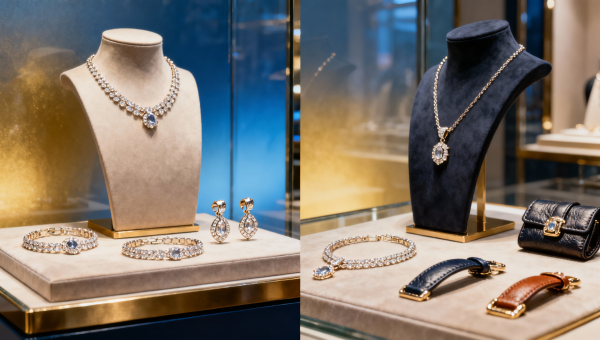
This is especially relevant in men’s luxury accessories, where demand is becoming more structured. Buyers are seeing growing interest in understated statement pieces, signet-inspired forms, cufflinks, premium chains, leather-metal hybrids, and branded gifting items. Suppliers with flexible development capability can help buyers capture this opportunity faster.
How sourcing standards are tightening in practice
When people discuss “higher standards,” they often speak in vague terms. In practice, the tightening of standards in luxury jewelry B2B affects everyday procurement workflows.
Buyers increasingly expect suppliers to demonstrate control in areas such as:
- Metal composition accuracy and plating consistency
- Stone grading alignment and setting reliability
- Batch traceability and production record management
- Restricted substance awareness for destination markets
- Packaging suitability for premium retail and gifting environments
- Inspection procedures before shipment
- Claim accuracy in marketing and wholesale documentation
For procurement teams, this means supplier evaluation should go beyond visual samples. It should include document readiness, production process clarity, quality assurance logic, and responsiveness under revision pressure.
In 2026, buyers are more likely to ask practical questions such as:
- How are production tolerances managed across repeat orders?
- What happens if a sample approved visually performs poorly during wear testing?
- Can the supplier separate premium lines from entry premium lines without quality confusion?
- What evidence supports delivery reliability during peak season?
Suppliers that answer these questions clearly create immediate trust advantages.
What luxury jewelry wholesale buyers should evaluate beyond the catalog
For distributors, agents, and wholesale buyers, the catalog is only the starting point. The real decision is whether a supplier can support a profitable and stable wholesale relationship over time.
Key evaluation points include:
Commercial flexibility
Can the supplier handle different MOQ levels, mixed-material assortments, regional exclusivity discussions, and staged replenishment? Flexibility matters more than broad product volume alone.
Merchandising structure
Are collections built in a way that supports retail logic? Buyers should look for coherent assortment architecture: hero products, entry luxury options, gifting products, men’s and women’s balance, and seasonal refresh potential.
Packaging and presentation standards
Luxury products are sold through presentation as much as through form. Packaging should support the intended channel, whether it is boutique retail, hotel gift shops, department store corners, or private client programs.
Wholesale operational maturity
A good luxury jewelry wholesale partner should be able to provide SKU clarity, lead-time transparency, reorder handling, damage policy details, and support materials for channel partners.
Brand protection
If the relationship includes private label or exclusive development, buyers should review confidentiality discipline, market overlap policies, and design protection practices.
These factors often have more business impact than a modest unit price difference.
Which product directions are likely to matter most in 2026?
While trend cycles remain relevant, B2B buyers should focus on commercially resilient product directions rather than short-lived visual hype. In 2026, several categories are positioned for stronger B2B performance.
Refined statement pieces
Buyers continue to favor products that feel distinctive without becoming difficult to wear. Pieces with architectural lines, sculptural forms, and premium finishing can appeal across retail and branded partnership environments.
Luxury accessories for men
This segment is becoming more important in gifting, hospitality retail, concept stores, and premium department channels. Buyers should not treat men’s jewelry as an add-on category. It increasingly deserves its own sourcing strategy, pricing logic, and display planning.
Custom collaborative capsules
Short-run exclusive collections tied to brands, venues, destinations, or events are creating new B2B opportunities. Suppliers that support agile capsule development are well placed.
Elevated gifting jewelry
Corporate gifting, VIP guest programs, and branded presentation sets are expanding the use case for luxury-adjacent jewelry in B2B channels beyond traditional fashion retail.
Cross-category luxury accessories
Buyers are also looking at the relationship between jewelry and adjacent luxury accessories, especially when building coordinated commercial assortments. This creates opportunities for suppliers that understand collection cohesion and packaging integration.
How buyers can reduce risk when selecting a supplier
The most effective sourcing decisions in 2026 will come from structured evaluation, not instinct alone. Buyers should use a practical framework that combines product, operational, and commercial criteria.
A useful supplier assessment checklist includes:
- Sample quality review: Check finish, weight balance, setting security, closure reliability, packaging, and visual consistency.
- Customization workflow review: Ask how concepts move from brief to sample to production.
- Documentation check: Confirm what material, compliance, and production information can be provided.
- Lead-time realism: Test whether timelines include revision stages and peak-season pressure.
- MOQ and scaling logic: Evaluate whether the supplier can support pilot orders, rollout orders, and replenishment.
- Quality control process: Understand inspection points and corrective action procedures.
- Communication discipline: Assess speed, clarity, and technical understanding during pre-order discussion.
- Commercial fit: Review margin potential, market positioning, and channel compatibility.
This kind of structured review is especially useful for distributors and agents who need to compare multiple vendors quickly while protecting downstream client relationships.
What this means for distributors, agents, and commercial buyers
For channel intermediaries, the 2026 market creates both pressure and opportunity. The pressure comes from more demanding clients, faster refresh expectations, and rising standards for product credibility. The opportunity comes from being able to differentiate through better sourcing intelligence.
Distributors and agents who understand the new luxury jewelry B2B environment can create value in several ways:
- Curating suppliers with proven customization capability
- Reducing procurement risk for retail and hospitality clients
- Building region-specific assortments with stronger commercial fit
- Supporting private label and capsule development projects
- Identifying growth in luxury accessories for men and premium gifting
In other words, market knowledge is becoming a stronger competitive asset. The intermediary that can evaluate sourcing quality, not just collect quotations, is in a much better position to win long-term business.
Conclusion: 2026 is a year of smarter luxury jewelry sourcing
Luxury jewelry B2B in 2026 is changing in ways that matter directly to procurement and commercial strategy. Buyers are placing greater weight on traceability, customization speed, quality consistency, and supply reliability. At the same time, growth opportunities are expanding across custom luxury jewelry, luxury jewelry wholesale, men’s accessories, branded capsules, and premium gifting programs.
The central takeaway is simple: strong suppliers are no longer judged only by design appeal. They are judged by whether they can help commercial buyers launch premium products with confidence, protect brand value, and scale without operational surprises.
For researchers, purchasers, evaluators, and distributors, the best path forward is to prioritize partners that combine aesthetic strength with manufacturing discipline, documentation readiness, and flexible development support. In 2026, that combination is what turns luxury jewelry sourcing from a product decision into a strategic advantage.
Search News
Hot Articles
- Pro Stage AudioFIFA Adopts Chinese Mini-LED Displays for 2026 World Cup VAR SystemApr 24, 2026
- Outdoor RidesChina FA Warns Nanjing City Over Fan Conduct; ISO 20785 Compliance AcceleratesApr 24, 2026
- Pro Stage AudioFan Zhendong Visits Silicon Valley as MLTT Investor, AI Ping-Pong Tech Draws US InterestApr 24, 2026
Popular Tags
Need ExpertConsultation?
Connect with our specialized leisureengineering team for procurementstrategies.
Recommended News
 Apr 23, 2026Texas Launches PFAS Probe Against Lululemon, Export Compliance Risks RisePFAS probe against Lululemon in Texas escalates export compliance risks for sportswear ODMs, testing labs & chemical suppliers — act now.● Luxury Retail Analyst
 Apr 21, 2026FDA Proposes Chinese Label Translation Requirement for Sports SupplementsFDA proposes Chinese label translation requirements for sports supplements—learn how protein powders, BCAAs & creatine brands can prepare for Q3 2026 compliance.● Luxury Retail Analyst
 Apr 21, 2026CPSC Urgent Alert: PFAS in Fitness Apparel Risks US Import DelaysPFAS in fitness apparel triggers CPSC alerts—avoid US import delays! Get CPSC-recognized PFAS testing, compliance tips & port detention prevention now.● Luxury Retail Analyst
 Apr 20, 2026US CPSC Alert: PFAS in Fitness Apparel May Delay US Import ClearancePFAS in fitness apparel may delay US import clearance—learn how the Texas AG probe & CPSC alert impact compliance, testing, and supply chains now.● Luxury Retail Analyst
 Apr 15, 2026FDA Updates Guidelines for Sports Nutrition Supplement Labels: Chinese Translations Must Be FDA-CertifiedFDA now requires Chinese translations on sports nutrition supplement labels to be FDA-certified. Learn how this impacts manufacturers, importers, and compliance timelines for US market access.● Luxury Retail Analyst
 Apr 14, 2026Japan Updates Jewelry Labeling Rules: Mandatory China Factory Codes from April 2026Japan's new jewelry labeling rules mandate 'Country of Origin + China Factory Code' (CN-FAC-XXXXX) from April 2026. Learn how this impacts Chinese exporters and Japanese importers in the $2.1B precious metals market.● Luxury Retail Analyst
 Apr 14, 2026RCEP Tariff Cuts Boost China's Optical Lens Exports to ASEANRCEP tariff cuts boost China's optical lens exports to ASEAN with 0% duties on CR-39 & polycarbonate lenses. Learn how this + faster logistics create new trade opportunities.● Luxury Retail Analyst
 Apr 14, 2026US CPSC Proposes Stricter Lead Limits in Children's Jewelry, Impacting Chinese ExportersUS CPSC proposes stricter lead limits (40ppm) in children's jewelry, impacting Chinese exporters with new compliance challenges. Learn how this 2026 regulation affects manufacturers & supply chains.● Luxury Retail Analyst
 Apr 14, 2026EU's Revised EN 14138:2026 Eyewear Nickel Standard Takes Effect, Impacting Chinese ExportersEU's EN 14138:2026 eyewear standard tightens nickel limits to 0.2μg/cm²/week, impacting Chinese exporters. Learn compliance strategies for EU market access.● Luxury Retail Analyst
 Apr 25, 2026Luxury Jewelry B2B in 2026: What Changes?Luxury jewelry B2B in 2026: explore custom jewelry design, custom jewelry manufacturer trends, luxury jewelry wholesale shifts, and how custom luxury jewelry drives faster, safer growth.● Luxury Retail Analyst
 Apr 25, 2026How to Grow a Luxury Accessories Online StoreLearn how to grow a luxury accessories online store with custom jewelry design, a trusted custom jewelry manufacturer, luxury accessories wholesale strategy, and high-end luxury jewelry that converts.● Luxury Retail Analyst
 Apr 25, 2026Custom Jewelry for Corporate Gifts That LastCustom jewelry for corporate gifts from a trusted custom jewelry manufacturer—discover custom jewelry design, high-end luxury jewelry, and scalable luxury jewelry B2B solutions.● Luxury Retail Analyst
 Apr 25, 2026What a Good Luxury Accessories Catalog IncludesLuxury accessories catalog guide covering custom jewelry design, high-end luxury jewelry, luxury accessories for men and women, and trusted luxury jewelry B2B sourcing insights.● Luxury Retail Analyst
 Apr 22, 2026Why Some Luxury Jewelry Collections Lose Value in DisplayLuxury jewelry in a trampoline park, indoor playground, arcade games or musical instruments venue can lose value fast. Discover smarter display strategies that protect premium appeal and buyer confidence.● Luxury Retail Analyst
 Apr 22, 2026Luxury Jewelry Trends in 2026 That Are Shaping Retail DemandLuxury jewelry trends in 2026 reveal how luxury jewelry, trampoline park, indoor playground, arcade games, office supplies, and musical instruments shape premium retail demand.● Luxury Retail Analyst
 Apr 25, 2026Luxury Accessories for Women That Hold Value Beyond TrendsLuxury accessories for women that hold value beyond trends—compare high-end luxury jewelry, custom luxury jewelry, and smart B2B sourcing insights for premium sport and entertainment retail.● Luxury Retail Analyst
 Apr 25, 2026Why Some Luxury Accessories for Women Feel Premium and Others Do NotLuxury accessories for women that feel truly premium rely on craftsmanship, materials, and supplier credibility. Explore custom luxury jewelry and high-end luxury jewelry sourcing insights for smarter B2B buying.● Luxury Retail Analyst
 Apr 25, 2026High-End Luxury Jewelry: What Actually Sets It Apart?High-end luxury jewelry buying guide: compare custom luxury jewelry, craftsmanship, compliance, and supplier reliability for premium retail and luxury accessories for women.● Luxury Retail Analyst
 Apr 25, 2026When High-End Luxury Jewelry Pricing Stops Making SenseHigh-end luxury jewelry pricing explained: learn when custom luxury jewelry delivers real value, how luxury accessories for women compare, and what buyers should ask before paying a premium.● Luxury Retail Analyst
 Apr 25, 2026Custom Luxury Jewelry: How Long Does True Customization Take?Custom luxury jewelry lead times explained: compare true customization, high-end luxury jewelry value, and luxury accessories for women to plan sourcing with confidence.● Luxury Retail Analyst
 Apr 25, 2026What Gets Lost When Custom Luxury Jewelry Is RushedCustom luxury jewelry rushed too fast can undermine craftsmanship, material trust, and brand value. Learn how high-end luxury jewelry buyers protect quality, margin, and sourcing success.● Luxury Retail Analyst
 Apr 25, 2026Why some luxury accessories for men lose value fastLuxury accessories for men lose value fast when hype, weak craftsmanship, and poor sourcing collide. Explore custom jewelry design insights and how a custom jewelry manufacturer can help buyers protect margins.● Luxury Retail Analyst
 Apr 25, 2026What a reliable custom jewelry manufacturer should confirm firstCustom jewelry manufacturer guide: learn what to confirm first in custom jewelry design, from materials and compliance to timelines, to source smarter and reduce risk.● Luxury Retail Analyst
 Apr 21, 2026Custom jewelry design mistakes that delay samplingCustom jewelry design mistakes that delay sampling: learn how to brief a custom jewelry manufacturer, avoid costly revisions, and keep sports & entertainment launches on schedule.● Luxury Retail Analyst