Texas Launches PFAS Probe Against Lululemon, Export Compliance Risks Rise
On April 13, 2026, the Texas Attorney General announced a civil investigation into Lululemon concerning potential non-compliance with PFAS (per- and polyfluoroalkyl substances) regulations in its apparel products. This development signals heightened regulatory scrutiny for U.S.-bound sportswear exports — particularly for Chinese ODM/OEM manufacturers, testing service providers, and trade intermediaries engaged in North American and transatlantic supply chains.
Event Overview
On April 13, 2026, the Office of the Texas Attorney General initiated a civil investigation targeting Lululemon’s use of PFAS in its athletic apparel. The probe focuses on whether the company’s products exceed permissible PFAS levels under applicable state or federal frameworks. PFAS are classified as substances of very high concern under the EU REACH Regulation, subject to enforcement actions by the U.S. Consumer Product Safety Commission (CPSC), and listed as priority chemicals by Health Canada. While the investigation is directed at the brand, it triggers immediate compliance expectations across upstream suppliers.
Industries Affected
Direct Exporters & Trading Companies
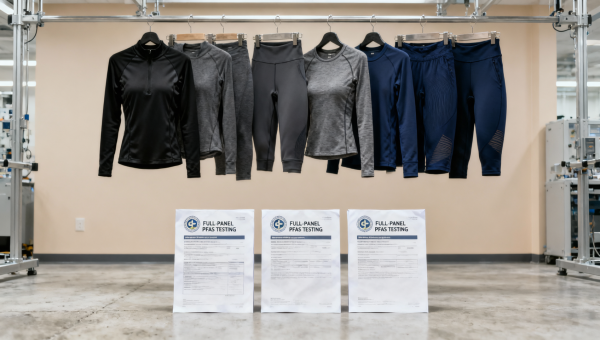
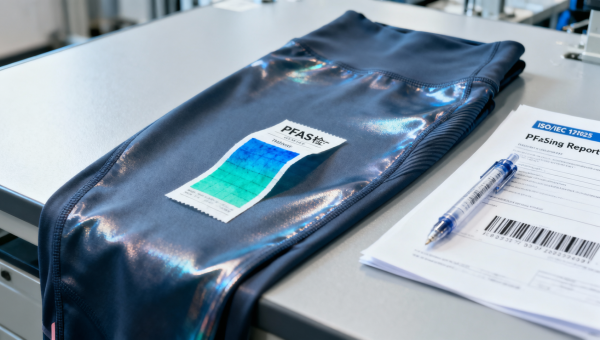
These firms face direct contractual and customs consequences: overseas buyers are now requiring third-party PFAS test reports (per ISO 16000-25 or EPA Method 1633) prior to shipment. Non-submission or failure to meet threshold limits may result in port rejection, cargo hold, or breach-of-contract claims — especially for shipments destined for Texas, California, or EU markets where PFAS restrictions are advancing rapidly.
Apparel Manufacturing (ODM/OEM) Facilities
Chinese contract manufacturers supplying sportswear to global brands are experiencing urgent downstream pressure. Since PFAS may originate from water-repellent finishes, durable press treatments, or stain-resistant coatings applied during finishing, facilities must verify chemical inputs and process controls. Absence of documented PFAS screening at the fabric or trim level increases liability exposure — even if the brand places the order.
Textile Chemical Suppliers & Finishers
Suppliers of functional finishes, waterproofing agents, and antimicrobial treatments are now under heightened due diligence. Buyers increasingly demand full ingredient disclosure and certified PFAS-free statements. Any formulation containing fluorinated surfactants or polymer emulsions falls within scope — and legacy formulations previously deemed compliant may no longer meet evolving buyer expectations.
Testing & Compliance Service Providers
Laboratories accredited for ISO 16000-25 or EPA 1633 are seeing surging demand for textile-specific PFAS analysis. However, method availability remains uneven: not all labs offer validated detection down to sub-parts-per-trillion levels required by emerging state laws. Service providers must clarify reporting scope (e.g., total organic fluorine vs. targeted PFAS compounds) and ensure chain-of-custody documentation meets importer requirements.
What Enterprises Should Monitor and Do Now
Track official updates from Texas AG and parallel legislative efforts
The Texas investigation is civil in nature and does not yet reflect an enforceable standard. However, it aligns with broader momentum: California’s AB 1817 (effective 2025) bans PFAS in apparel, and Maine’s LD 1503 mandates disclosure and phaseout. Companies should monitor enforcement patterns — not just statutory text — to anticipate operational impact.
Prioritize high-risk product categories and finishing steps
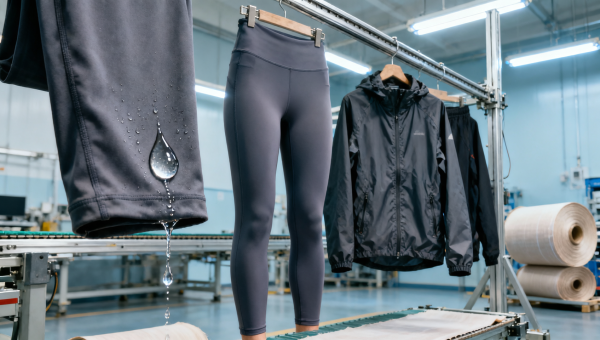
PFAS presence is most likely in performance-oriented items: running tights, rain jackets, yoga pants with moisture-wicking finishes, and outerwear with DWR (durable water repellent) treatment. Focus internal audits on finishing houses, coating vendors, and trim suppliers — not only final assembly plants.
Distinguish between policy signals and binding obligations
While buyer-mandated testing is accelerating, no U.S. federal textile PFAS limit currently exists. Texas’s action is investigative, not adjudicative. Companies should treat current requests as commercial risk mitigation — not legal compliance — unless tied to a specific jurisdictional requirement (e.g., EU REACH Annex XVII or California Prop 65 warnings).
Prepare documentation and supplier engagement protocols
Begin compiling existing chemical data sheets, finish application records, and prior test reports. Initiate conversations with Tier-2 chemical suppliers to confirm fluorine-free status — and request written declarations where possible. Internal cross-functional alignment (QC, procurement, logistics) is essential before next production cycle.
Editorial Observation / Industry Perspective
From an industry perspective, this investigation is best understood as a regulatory signal — not yet an enforcement outcome. It reflects growing convergence among U.S. states, the EU, and Canada on treating PFAS in textiles as a material compliance priority. Analysis来看, the timing suggests increasing coordination between state attorneys general and federal agencies on chemical transparency; observation来看, brand-led supply chain demands are outpacing formal rulemaking — making commercial due diligence functionally equivalent to regulatory readiness. Current more appropriate interpretation is that PFAS is transitioning from a ‘voluntary sustainability topic’ to a ‘contractual prerequisite’ in sportswear export workflows.
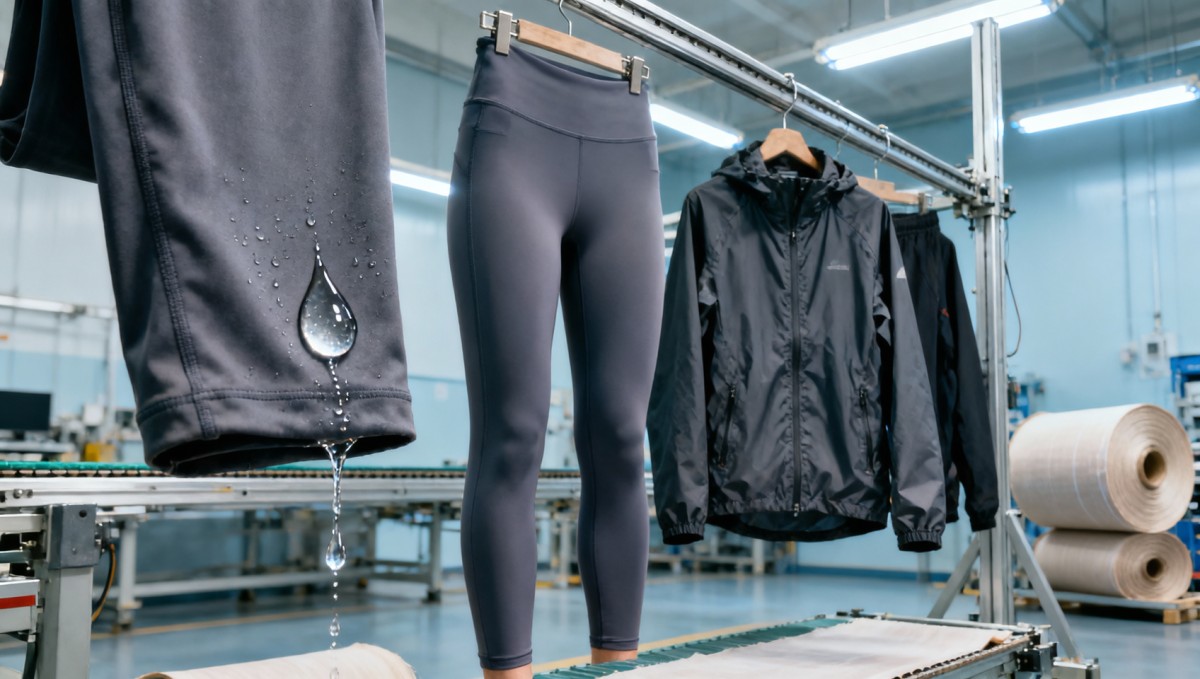
This incident underscores how civil investigations — even without immediate penalties — can reshape sourcing standards overnight. For exporters and manufacturers, the shift is less about new law and more about new expectation: PFAS verification is no longer optional for market access to key Western economies.
Source: Office of the Texas Attorney General (press release, April 13, 2026); EU REACH Annex XIV/XVII; U.S. CPSC guidance documents; Health Canada PFAS Priority Substances List. Note: Enforcement scope, thresholds, and timelines remain subject to ongoing review and are not yet codified in U.S. federal textile regulations.
Search News
Hot Articles
- Indoor PlaygroundFan Zhendong Visits Silicon Valley as MLTT Investor, AI Ping-Pong Tech Draws AttentionApr 23, 2026
- Stage Lighting & Truss2026 FIBA Women's World Cup Draw Opens Export Window for Arena Lighting & Timing SystemsApr 23, 2026
- Pro Stage AudioChina Upgrades Security Compliance for International Sports EventsApr 23, 2026
Popular Tags
Need ExpertConsultation?
Connect with our specialized leisureengineering team for procurementstrategies.
Recommended News
 Apr 23, 2026Texas Launches PFAS Probe Against Lululemon, Export Compliance Risks RisePFAS probe against Lululemon in Texas escalates export compliance risks for sportswear ODMs, testing labs & chemical suppliers — act now.● Luxury Retail Analyst
 Apr 21, 2026FDA Proposes Chinese Label Translation Requirement for Sports SupplementsFDA proposes Chinese label translation requirements for sports supplements—learn how protein powders, BCAAs & creatine brands can prepare for Q3 2026 compliance.● Luxury Retail Analyst
 Apr 21, 2026CPSC Urgent Alert: PFAS in Fitness Apparel Risks US Import DelaysPFAS in fitness apparel triggers CPSC alerts—avoid US import delays! Get CPSC-recognized PFAS testing, compliance tips & port detention prevention now.● Luxury Retail Analyst
 Apr 20, 2026US CPSC Alert: PFAS in Fitness Apparel May Delay US Import ClearancePFAS in fitness apparel may delay US import clearance—learn how the Texas AG probe & CPSC alert impact compliance, testing, and supply chains now.● Luxury Retail Analyst
 Apr 15, 2026FDA Updates Guidelines for Sports Nutrition Supplement Labels: Chinese Translations Must Be FDA-CertifiedFDA now requires Chinese translations on sports nutrition supplement labels to be FDA-certified. Learn how this impacts manufacturers, importers, and compliance timelines for US market access.● Luxury Retail Analyst
 Apr 14, 2026Japan Updates Jewelry Labeling Rules: Mandatory China Factory Codes from April 2026Japan's new jewelry labeling rules mandate 'Country of Origin + China Factory Code' (CN-FAC-XXXXX) from April 2026. Learn how this impacts Chinese exporters and Japanese importers in the $2.1B precious metals market.● Luxury Retail Analyst
 Apr 14, 2026RCEP Tariff Cuts Boost China's Optical Lens Exports to ASEANRCEP tariff cuts boost China's optical lens exports to ASEAN with 0% duties on CR-39 & polycarbonate lenses. Learn how this + faster logistics create new trade opportunities.● Luxury Retail Analyst
 Apr 14, 2026US CPSC Proposes Stricter Lead Limits in Children's Jewelry, Impacting Chinese ExportersUS CPSC proposes stricter lead limits (40ppm) in children's jewelry, impacting Chinese exporters with new compliance challenges. Learn how this 2026 regulation affects manufacturers & supply chains.● Luxury Retail Analyst
 Apr 14, 2026EU's Revised EN 14138:2026 Eyewear Nickel Standard Takes Effect, Impacting Chinese ExportersEU's EN 14138:2026 eyewear standard tightens nickel limits to 0.2μg/cm²/week, impacting Chinese exporters. Learn compliance strategies for EU market access.● Luxury Retail Analyst
 Apr 22, 2026Why Some Luxury Jewelry Collections Lose Value in DisplayLuxury jewelry in a trampoline park, indoor playground, arcade games or musical instruments venue can lose value fast. Discover smarter display strategies that protect premium appeal and buyer confidence.● Luxury Retail Analyst
 Apr 22, 2026Luxury Jewelry Trends in 2026 That Are Shaping Retail DemandLuxury jewelry trends in 2026 reveal how luxury jewelry, trampoline park, indoor playground, arcade games, office supplies, and musical instruments shape premium retail demand.● Luxury Retail Analyst
 Apr 21, 2026Custom jewelry design mistakes that delay samplingCustom jewelry design mistakes that delay sampling: learn how to brief a custom jewelry manufacturer, avoid costly revisions, and keep sports & entertainment launches on schedule.● Luxury Retail Analyst
 Apr 22, 2026Luxury accessories for men that still feel relevant in 2026Luxury accessories for men in 2026: discover how custom jewelry design and the right custom jewelry manufacturer help sports and entertainment buyers boost premium retail, gifting, and venue profits.● Luxury Retail Analyst
 Apr 22, 2026Custom jewelry manufacturer red flags before mass productionCustom jewelry manufacturer red flags before mass production: learn how to assess custom jewelry design quality, protect luxury accessories for men, and avoid costly sourcing mistakes.● Luxury Retail Analyst
 Apr 18, 2026Luxury jewelry authenticity verification: Can UV light spot fake gemstones?Trampoline park, luxury jewelry & adventure playground buyers: Discover how UV light detects fake gemstones—fast, non-destructive, field-proven verification for experiential retail and entertainment environments.● Luxury Retail Analyst
 Apr 16, 2026Designer eyewear MOQs that quietly exclude small-batch collectionsDesigner eyewear MOQs stifle creativity—discover agile OEM manufacturing, supply chain solutions & custom fabrication for small-batch luxury collections.● Luxury Retail Analyst
 Apr 16, 2026Designer eyewear supply chain risks no one talks about—beyond MOQ and color matchingDiscover hidden designer eyewear supply chain risks—from lens certification delays to acetate traceability gaps—and get actionable OEM manufacturing & supply chain solutions.● Luxury Retail Analyst
 Apr 16, 2026Luxury accessories with traceable material sourcingLuxury accessories, custom jewelry & luxury timepieces with fully traceable material sourcing—verified for park benches, music stands, orchestral instruments, DJ equipment and more.● Luxury Retail Analyst
 Apr 15, 2026Luxury accessories that actually hold value over timeDiscover luxury accessories that hold value—custom jewelry, orchestral instruments, keyboard instruments, luxury timepieces, park benches & more. Built to last, appreciate, and elevate your procurement strategy.● Luxury Retail Analyst
 Apr 15, 2026Why custom jewelry orders take longer than expected in 2026Discover why custom jewelry, luxury accessories & timepieces face delays in 2026—linked to park benches, music stands, DJ equipment & office supply bottlenecks. Optimize timelines now.● Luxury Retail Analyst
 Apr 13, 2026Designer eyewear materials that age gracefully—or fail silentlyDesigner eyewear materials impact hotel furniture, indoor playground equipment & pro audio gear longevity. Discover which age gracefully—or fail silently.● Luxury Retail Analyst
 Apr 13, 2026OEM manufacturing for eyewear: How small-batch runs affect hinge consistencyOEM manufacturing for eyewear demands precision hinge consistency—especially for designer eyewear, indoor playground equipment & pro audio equipment. Discover how small-batch runs impact durability, brand trust & supply chain solutions.● Luxury Retail Analyst
 Apr 14, 2026Designer eyewear OEM: How lens compatibility affects frame durability over timeDesigner eyewear OEM durability hinges on precise lens compatibility—critical for hotel furniture, indoor playground equipment & pro audio gear. Discover how smart supply chain solutions prevent frame failure.● Luxury Retail Analyst
 Apr 10, 2026OEM jewelry casting defects appear identical across factories — until you check mold maintenance logsUnlock supply chain solutions with OEM manufacturing transparency—spot hidden jewelry, watch & eyewear defects through mold maintenance logs.● Luxury Retail Analyst