SASO Updates EMC Standard for VR Motion Devices to Class B
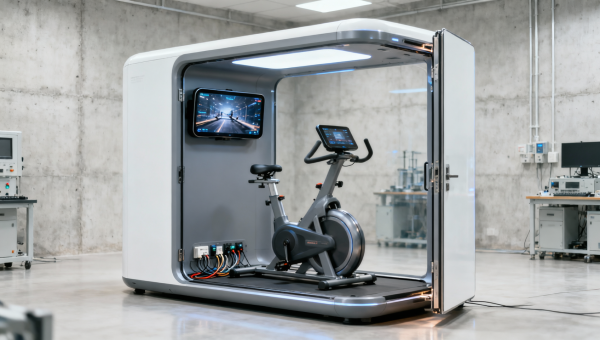
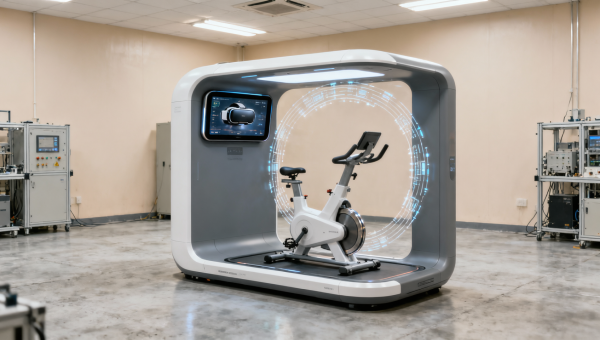
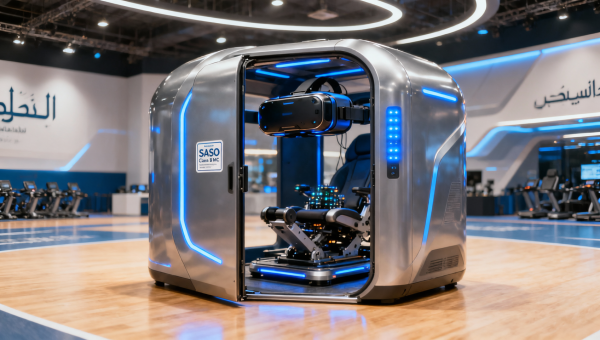
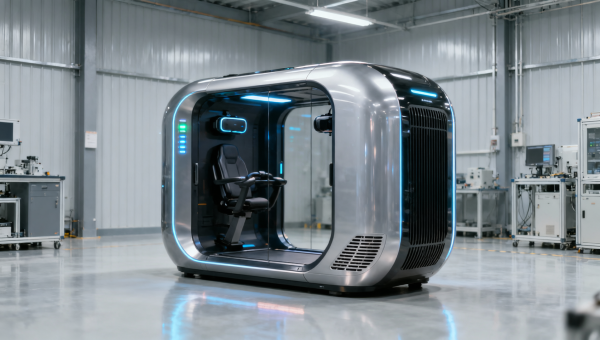
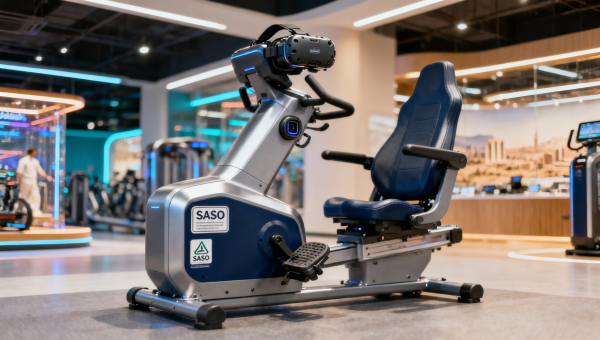
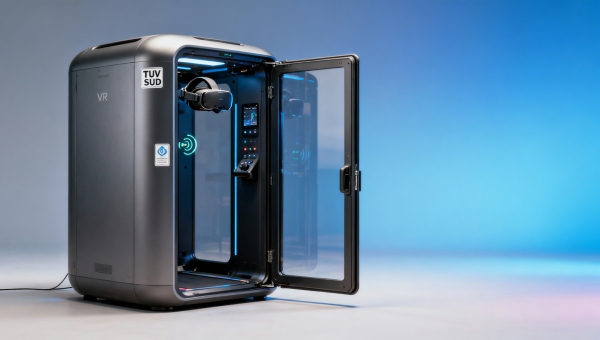
Saudi Arabia’s Standards, Metrology and Quality Organization (SASO) implemented a revised electromagnetic compatibility (EMC) technical regulation for VR motion devices on April 20, 2026. The update mandates Class B (residential environment) EMC compliance for all imported VR fitness pods, interactive motion-sensing systems, and commercial AR/VR amusement equipment — replacing the previous, less stringent Class A (industrial environment) requirement. This change directly affects VR hardware exporters, EMC testing service providers, and supply chain stakeholders operating in or serving the Saudi market.
Event Overview
On April 20, 2026, SASO officially enforced its updated EMC technical specification for VR motion devices. The regulation requires all applicable imported products — including VR fitness cabins, interactive body-tracking machines, and commercial AR/VR entertainment systems — to meet Class B emission and immunity limits, as defined in IEC/CISPR standards. Previously, Class A limits applied. According to publicly available information, this shift has already led to a 210% week-on-week increase in inquiry volume at SASO-authorized local laboratories in China, such as SGS Shenzhen and Bureau Veritas Guangzhou.
Industries Affected by Segment
Direct Exporters (VR Hardware Manufacturers)
Exporters of VR motion devices from China — particularly those without prior Class B EMC pre-certification — face immediate market access barriers. Approximately 30% of such manufacturers are reported to lack compliant test reports, resulting in shipment delays averaging 6–8 weeks per batch.
EMC Testing & Certification Service Providers
Laboratories authorized by SASO to issue EMC reports — especially those with physical presence in China — are experiencing sharp demand surges. The 210% weekly rise in inquiries reflects intensified pressure on capacity, scheduling, and turnaround time for Class B validation.
Supply Chain & Logistics Operators
Freight forwarders and customs brokers handling VR device consignments to Saudi Arabia must now verify Class B test reports prior to clearance. Absence of valid documentation triggers hold-ups at Jeddah or Dammam ports, increasing demurrage exposure and requiring updated compliance checklists.
OEM/ODM Contract Manufacturers
Firms producing VR motion hardware under white-label or private-label arrangements are affected indirectly: clients now require embedded Class B design validation (e.g., shielding, filtering, PCB layout) earlier in development cycles — shifting responsibility upstream from final product testing to component-level design assurance.
Key Points for Enterprises and Practitioners to Monitor and Act On
Track official SASO implementation guidance and transitional provisions
Although the regulation took effect on April 20, 2026, SASO may issue clarifications on grandfathering, grace periods, or acceptable test report formats. Enterprises should monitor SASO’s official portal and registered notifications for updates — particularly regarding whether existing Class A certifications retain any validity for pending shipments.
Prioritize Class B validation for high-volume or high-value SKUs destined for Saudi Arabia
Given constrained lab capacity and extended lead times, companies should triage product lines: focus first on models with confirmed Saudi orders or distributor commitments. Avoid blanket retesting; instead, identify shared platform architectures where one validated subassembly can support multiple SKUs.
Distinguish between regulatory signal and operational readiness
The surge in lab inquiries signals market awareness, but does not yet confirm widespread enforcement action at border points. Companies should treat the current phase as a preparedness window — not assume all shipments are immediately blocked, but also not delay documentation alignment until non-compliant cargo is detained.
Align internal procurement and engineering timelines with EMC test lead times
With average delays of 6–8 weeks reported for new submissions, procurement teams must adjust material ordering schedules, and R&D teams must integrate Class B pre-scan and debugging into early-stage prototyping — rather than treating EMC as a final compliance checkpoint.
Editorial Perspective / Industry Observation
From an industry perspective, this update is best understood as a tightening of market access discipline — not a sudden policy shock. SASO’s move aligns with broader Gulf Cooperation Council (GCC) harmonization efforts toward consumer-grade EMC rigor, especially for devices marketed for public or home use. Analysis来看, the 30% impact estimate on unprepared Chinese manufacturers suggests significant gaps in pre-market regulatory anticipation, particularly for immersive tech categories where EMC has historically been secondary to display or motion tracking performance. Observation来看, the rapid lab inquiry spike indicates reactive — not proactive — compliance behavior across much of the export base. Current more appropriate interpretation is that this is both a compliance milestone and an early signal of escalating technical barrier sophistication in GCC digital infrastructure markets.
This regulation marks a structural shift in how VR motion hardware is evaluated for Middle Eastern markets: EMC is no longer a ‘check-the-box’ item but a foundational design criterion. Its significance lies less in novelty and more in enforceability — confirming that technical conformity, not just safety or labeling, now anchors market entry. For stakeholders, it is more accurate to view this not as an isolated update, but as a precedent likely to inform similar revisions in UAE ESMA or Qatar GSO frameworks in the near term.
Information Source: Official SASO announcement effective April 20, 2026; publicly reported laboratory inquiry data from SGS Shenzhen and Bureau Veritas Guangzhou; industry impact estimates cited in official communications. Ongoing verification of enforcement patterns at Saudi ports remains pending.
Search News
Hot Articles
- Indoor PlaygroundFan Zhendong Visits Silicon Valley as MLTT Investor, AI Ping-Pong Tech Draws AttentionApr 23, 2026
- Stage Lighting & Truss2026 FIBA Women's World Cup Draw Opens Export Window for Arena Lighting & Timing SystemsApr 23, 2026
- Pro Stage AudioChina Upgrades Security Compliance for International Sports EventsApr 23, 2026
Popular Tags
Need ExpertConsultation?
Connect with our specialized leisureengineering team for procurementstrategies.
Recommended News
 Apr 23, 2026Global VR Fitness Device Export Prices Rise 12% QoQVR fitness device export prices surge 12% QoQ to $3,820 — discover why IP65, AI calibration & 98.7% on-time delivery now define premium global supply.● Theme Park Strategist
 Apr 23, 2026Vietnam TUV SUD Enforces Local Type Testing for VR Fitness CabinsVR fitness cabins entering Vietnam must now undergo local TUV SUD type testing—mandatory from Apr 22, 2026. Learn costs, timelines & compliance steps.● Theme Park Strategist
 Apr 23, 2026SASO Updates EMC Standard for VR Motion Devices to Class BSASO Updates EMC Standard for VR Motion Devices to Class B: Critical compliance shift for VR fitness pods, AR/VR amusement systems & exporters targeting Saudi Arabia.● Theme Park Strategist
 Apr 22, 2026SASO Updates EMC Standard for VR Haptic Devices in Saudi ArabiaSASO EMC standard update for VR haptic devices in Saudi Arabia: Class B compliance required by July 1, 2026 — critical for VR treadmills, AR walls & training pods.● Theme Park Strategist
 Apr 22, 2026Global VR Fitness Device Export Price Up 12% in Q1 2026VR fitness device export prices surge 12% to $1,842/unit in Q1 2026 — discover why China’s 38-day lead times are reshaping global procurement strategies.● Theme Park Strategist
 Apr 22, 2026Vietnam TUV SUD New Rule: VR Fitness Pods Require Local Type TestVR fitness pods now require local type testing in Vietnam per TUV SUD’s new rule—impacting exporters, costs & lead times. Act now!● Theme Park Strategist
 Apr 21, 2026Global VR Fitness Equipment Export Prices Rise 12% in Q1 2026VR fitness equipment export prices surge 12% in Q1 2026—driven by EU safety mandates. Discover cost impacts, compliance risks & supply chain insights.● Theme Park Strategist
 Apr 21, 2026Vietnam TUV SUD Enforces Local Type Testing for VR Fitness CabinsVR fitness cabins entering Vietnam must now undergo local TUV SUD type testing—EMC & safety checks in Hanoi or Ho Chi Minh City starting April 2026. Key for exporters, certifiers & distributors.● Theme Park Strategist
 Apr 21, 2026SASO Updates EMC Standard for VR Motion Devices in Saudi ArabiaSASO EMC update for VR motion devices in Saudi Arabia: Class B compliance now mandatory for fitness pods, edutainment cabins & arcade systems—act now to avoid shipment delays.● Theme Park Strategist
 Apr 20, 2026Global VR Fitness Device Export Price Up 12% in Q1 2026VR fitness device export prices surged 12% in Q1 2026—discover key drivers, regional impacts, and strategic actions for exporters, suppliers & logistics partners.● Theme Park Strategist
 Apr 20, 2026SASO Updates VR Haptic Device EMC Standard to Class B in Saudi ArabiaSASO VR haptic device EMC update: Class B standard now mandatory in Saudi Arabia from July 1, 2026. Ensure compliance for VR/AR hardware, imports & venues.● Theme Park Strategist
 Apr 20, 2026Vietnam TUV SUD Enforces Local Type Test for Commercial VR Fitness CabinsVietnam TUV SUD now mandates local type testing for commercial VR fitness cabins — including latency, EMC & safety checks. Act now to secure QCVN compliance and market access.● Theme Park Strategist
 Apr 17, 2026Global VR Fitness Equipment Export Prices Rise 12% in Q1 2026VR fitness equipment export prices surge 12.3% in Q1 2026—key insights for exporters, manufacturers & supply chain partners on compliance, pricing, and delivery trends.● Theme Park Strategist
 Apr 17, 2026SASO 2891:2026 Updated: VR Haptic Devices Now Require EMC Class B in Saudi ArabiaSASO 2891:2026 update mandates EMC Class B for VR haptic devices in Saudi Arabia — critical for OEMs, exporters & EdTech suppliers. Act now to avoid delays!● Theme Park Strategist
 Apr 17, 2026Vietnam TUV SUD Mandates Local Type Testing for VR Fitness CabinsVR fitness cabins for gyms & hotels in Vietnam now require local type testing—EMC, thermal, and AI fall detection—to obtain VIEC certification. Act now to avoid delays!● Theme Park Strategist
 Apr 16, 2026VR Fitness Device Export Prices Up 12% — China Supply Stability LeadsVR fitness device export prices up 12%—China’s supply stability and modular hardware-software delivery redefine global competitiveness. Act now.● Theme Park Strategist
 Apr 16, 2026Vietnam Mandates Local TUV SUD Type Testing for VR Fitness CabinsVR fitness cabins entering Vietnam must now pass local TÜV SÜD type testing in Hanoi—key for compliance, customs clearance & market access by July 1, 2026.● Theme Park Strategist
 Apr 16, 2026SASO Updates Playground Standards: VR Devices Now Require EMC TestingSASO now mandates EMC testing for VR playground devices in Saudi Arabia—key update for VR cycling, climbing & motion cabins exporters.● Theme Park Strategist
 Apr 15, 2026Vietnam's New Regulation: Commercial VR Fitness Pods Require Local TUV SUD TestingVietnam's new regulation mandates TUV SUD testing for commercial VR fitness pods. Learn how this impacts exporters, compliance timelines, and market entry strategies for Chinese manufacturers.● Theme Park Strategist
 Apr 15, 2026Global VR Fitness Equipment Export Prices Rise 12% YoY, China Maintains Supply Chain StabilityGlobal VR fitness equipment export prices surge 12% YoY in 2026 Q1, with China maintaining 96.3% delivery reliability. Key insights for VR hardware manufacturers & fitness distributors facing cost pressures.● Theme Park Strategist
 Apr 14, 2026US CPSC Seeks Comments on New Fitness Tracker Rules, Chinese Exporters Need UL/ETL ComplianceUS CPSC proposes new UL/ETL compliance rules for fitness trackers, impacting Chinese exporters. Learn key action points and industry impacts to stay ahead of regulatory changes affecting wearable tech exports to America.● Theme Park Strategist
 Apr 13, 20262026 Chinese Youth League Upgrades Format with VR Training PodsDiscover how China's 2026 Youth League VR training pods revolutionize football development, boosting exports by 210%. Learn about FIFA-certified tech transforming player training.● Theme Park Strategist
 Apr 09, 2026US CPSC Proposes New VR Safety Standards for Children's Indoor Play EquipmentUS CPSC proposes new VR safety standards for children's indoor play equipment, including dizziness testing and age grading. Learn how these regulations impact VR manufacturers and get compliance strategies.● Theme Park Strategist
 Apr 22, 2026Why Some Arcade Games Perform Well at First Then Fade FastArcade games can shine early then fade fast. Learn how trampoline park, indoor playground, and adventure playground buyers can spot ROI risks and choose longer-lasting winners.● Theme Park Strategist