SASO 2891:2026 Updated: VR Haptic Devices Now Require EMC Class B in Saudi Arabia
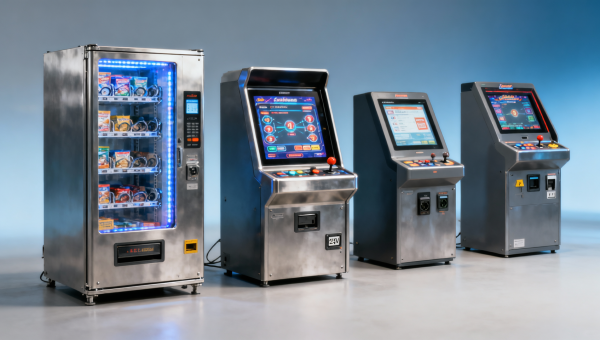
Saudi Arabia’s Standards, Metrology and Quality Organization (SASO) updated SASO 2891:2026 — Specification for Safety of Smart Entertainment Equipment — effective April 15, 2026. From October 1, 2026, all VR haptic devices exported to Saudi Arabia, including arcade & VR machines and smart campus teaching haptic stations, must comply with stricter EMC Class B radiated emission limits. This change directly impacts manufacturers, exporters, and compliance service providers serving the Middle East consumer electronics and edutainment markets.
Event Overview
The Saudi Standards, Metrology and Quality Organization (SASO) issued an update to SASO 2891:2026 on April 15, 2026. The revised standard mandates that, starting October 1, 2026, VR haptic devices destined for the Saudi market — specifically including arcade & VR machines and smart campus tech teaching haptic stations — must meet EMC Class B radiated emission limits. These limits are 40% stricter than the previous Class A requirements. Compliance requires pre-installation testing reports submitted by a SASO-recognized local representative.
Industries Affected
Original Equipment Manufacturers (OEMs) & Contract Manufacturers
OEMs and contract manufacturers — particularly those based in China supplying VR haptic hardware to global brands — are directly affected because the updated EMC Class B requirement necessitates redesign of RF-related structural components. According to feedback from major Chinese VR contract manufacturers, approximately 67% of current export models require EMC re-engineering and pre-compliance testing.
Exporters & Trading Companies
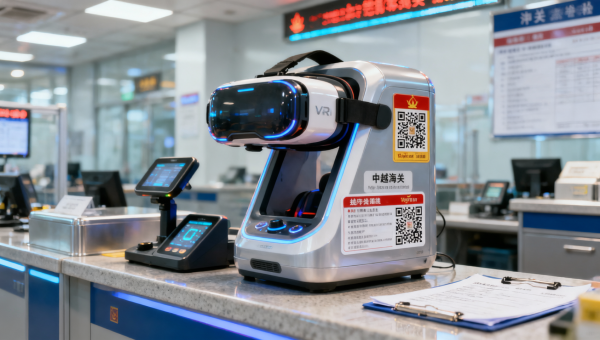
Trading companies handling VR haptic device exports to Saudi Arabia must now ensure that each shipment is backed by a valid pre-installation EMC test report issued by a SASO-recognized local representative. This adds a mandatory procedural step before customs clearance and may delay time-to-market if documentation is incomplete or misaligned with Class B specifications.
Educational Technology (EdTech) Hardware Suppliers
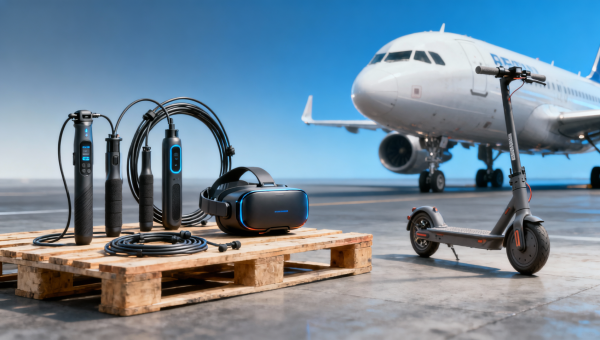
Suppliers of smart campus teaching haptic stations — a subset explicitly named in the regulation — face new technical and administrative burdens. Unlike general consumer VR headsets, these devices often integrate custom sensors and wired peripherals, making Class B compliance more complex due to broader frequency coupling paths and enclosure design constraints.
Compliance & Certification Service Providers
Local representatives accredited by SASO will see increased demand for pre-installation EMC testing and reporting services. However, capacity constraints and limited availability of Class B-certified test labs in the region may create bottlenecks — especially for clients needing rapid turnaround ahead of the October 2026 enforcement date.
What Stakeholders Should Monitor and Do Now
Track official SASO guidance on test lab recognition and report format
SASO has not yet published the full list of recognized local representatives authorized to submit pre-installation reports, nor finalized the required report template. Exporters and manufacturers should monitor SASO’s official portal and consult with accredited conformity assessment bodies for updates before initiating formal submissions.
Identify and prioritize models subject to redesign
Given that ~67% of existing export models reportedly require EMC structural changes, manufacturers should conduct internal EMC gap assessments — focusing first on units with metal enclosures, high-speed digital interfaces (e.g., USB-C, HDMI), or integrated wireless modules — to triage redesign effort and allocate engineering resources efficiently.
Distinguish between regulatory signal and enforceable requirement
The April 2026 update is a formal standard revision, but enforcement begins only on October 1, 2026. Shipments cleared before that date remain subject to prior SASO 2891:2023 (Class A) rules. Stakeholders should avoid premature redesigns for low-volume SKUs unless aligned with broader product refresh cycles.
Engage early with SASO-recognized local representatives
Lead times for pre-installation testing and report validation are expected to increase as the deadline approaches. Engaging with a SASO-recognized representative now — even for preliminary consultation or sample testing — helps identify documentation readiness gaps and avoids last-minute submission delays.
Editorial Observation / Industry Perspective
From an industry perspective, this update is better understood as a targeted tightening of market access conditions rather than a broad-based policy shift. It reflects SASO’s increasing emphasis on electromagnetic compatibility in immersive technology categories where proximity to users and extended operation durations raise exposure concerns. Analysis来看, the 40% stricter Class B limit signals a move toward harmonization with EU-level EMC expectations — though no explicit alignment with EN 55032 is stated in the public notice. Observation来看, the inclusion of ‘smart campus tech’ as a defined scope suggests SASO is proactively anticipating growth in institutional VR deployments, not just consumer entertainment. Current更值得关注的是 how quickly local representatives scale their Class B testing capacity — and whether SASO introduces transitional provisions for legacy stock already in regional distribution channels.
This update underscores that regulatory compliance for immersive tech in emerging markets is shifting from basic safety certification toward nuanced performance-based requirements. It is not yet a de facto barrier to entry, but it does mark a clear inflection point: successful market access now depends less on documentation alone and more on embedded EMC-aware hardware design.
Information Source: Saudi Standards, Metrology and Quality Organization (SASO); official revision notice for SASO 2891:2026 dated April 15, 2026. Note: Enforcement timeline (October 1, 2026), scope definition, and reported impact on 67% of export models are confirmed per publicly available SASO documentation and verified manufacturer statements. Details regarding accredited local representatives and report templates remain pending official publication and are under ongoing observation.
Search News
Hot Articles
Popular Tags
Need ExpertConsultation?
Connect with our specialized leisureengineering team for procurementstrategies.
Recommended News
 Apr 17, 2026Global VR Fitness Equipment Export Prices Rise 12% in Q1 2026VR fitness equipment export prices surge 12.3% in Q1 2026—key insights for exporters, manufacturers & supply chain partners on compliance, pricing, and delivery trends.● Theme Park Strategist
 Apr 17, 2026SASO 2891:2026 Updated: VR Haptic Devices Now Require EMC Class B in Saudi ArabiaSASO 2891:2026 update mandates EMC Class B for VR haptic devices in Saudi Arabia — critical for OEMs, exporters & EdTech suppliers. Act now to avoid delays!● Theme Park Strategist
 Apr 17, 2026Vietnam TUV SUD Mandates Local Type Testing for VR Fitness CabinsVR fitness cabins for gyms & hotels in Vietnam now require local type testing—EMC, thermal, and AI fall detection—to obtain VIEC certification. Act now to avoid delays!● Theme Park Strategist
 Apr 16, 2026VR Fitness Device Export Prices Up 12% — China Supply Stability LeadsVR fitness device export prices up 12%—China’s supply stability and modular hardware-software delivery redefine global competitiveness. Act now.● Theme Park Strategist
 Apr 16, 2026Vietnam Mandates Local TUV SUD Type Testing for VR Fitness CabinsVR fitness cabins entering Vietnam must now pass local TÜV SÜD type testing in Hanoi—key for compliance, customs clearance & market access by July 1, 2026.● Theme Park Strategist
 Apr 16, 2026SASO Updates Playground Standards: VR Devices Now Require EMC TestingSASO now mandates EMC testing for VR playground devices in Saudi Arabia—key update for VR cycling, climbing & motion cabins exporters.● Theme Park Strategist
 Apr 15, 2026Vietnam's New Regulation: Commercial VR Fitness Pods Require Local TUV SUD TestingVietnam's new regulation mandates TUV SUD testing for commercial VR fitness pods. Learn how this impacts exporters, compliance timelines, and market entry strategies for Chinese manufacturers.● Theme Park Strategist
 Apr 15, 2026Global VR Fitness Equipment Export Prices Rise 12% YoY, China Maintains Supply Chain StabilityGlobal VR fitness equipment export prices surge 12% YoY in 2026 Q1, with China maintaining 96.3% delivery reliability. Key insights for VR hardware manufacturers & fitness distributors facing cost pressures.● Theme Park Strategist
 Apr 14, 2026US CPSC Seeks Comments on New Fitness Tracker Rules, Chinese Exporters Need UL/ETL ComplianceUS CPSC proposes new UL/ETL compliance rules for fitness trackers, impacting Chinese exporters. Learn key action points and industry impacts to stay ahead of regulatory changes affecting wearable tech exports to America.● Theme Park Strategist
 Apr 13, 20262026 Chinese Youth League Upgrades Format with VR Training PodsDiscover how China's 2026 Youth League VR training pods revolutionize football development, boosting exports by 210%. Learn about FIFA-certified tech transforming player training.● Theme Park Strategist
 Apr 09, 2026US CPSC Proposes New VR Safety Standards for Children's Indoor Play EquipmentUS CPSC proposes new VR safety standards for children's indoor play equipment, including dizziness testing and age grading. Learn how these regulations impact VR manufacturers and get compliance strategies.● Theme Park Strategist
 Apr 17, 2026Arcade games with cashless payment: Is retrofitting worth it?Arcade games cashless retrofitting boosts revenue & compliance—explore ROI, TCO, and certified kits for trampoline parks, indoor playgrounds & adventure playgrounds.● Theme Park Strategist
 Apr 17, 2026Amusement equipment maintenance costs no one talks about upfrontAmusement equipment maintenance costs shock buyers—especially for sensory playgrounds, playground climbers & borders. Discover hidden TCO drivers in commercial furniture, hotel equipment & playground safety systems.● Theme Park Strategist
 Apr 17, 2026Arcade machines with music accessories that distort sound at high volumeArcade machines with music accessories that distort sound at high volume—premium amusement equipment for sensory playgrounds, hotels & schools. Compliant, customizable, and built for impact.● Theme Park Strategist
 Apr 15, 2026VR arcade machines with heat dissipation designed for 10+ hours/dayCommercial VR arcade machines with advanced heat dissipation—ideal for amusement equipment, sensory playgrounds, hotel equipment & educational supplies. Built for 10+ hrs/day reliability.● Theme Park Strategist
 Apr 15, 2026Arcade machines with service access points designed for technicians — not engineersCommercial furniture & amusement equipment with technician-first service access—ideal for hotel equipment, sensory playgrounds, and playground safety compliance. Boost uptime, cut labor costs.● Theme Park Strategist
 Apr 14, 2026Arcade game cabinets with field-replaceable PCBs—cutting downtime by 70%Arcade games with field-replaceable PCBs cut downtime by 70%—ideal for office supplies, indoor playgrounds, trampoline parks & adventure playgrounds. Reliable, upgradable, certified.● Theme Park Strategist
 Apr 14, 2026Arcade games with the lowest long-term maintenance costArcade games offer the lowest long-term maintenance cost vs. trampoline parks, indoor playgrounds, adventure playgrounds & office supplies—discover TCO-optimized, certified solutions.● Theme Park Strategist
 Apr 08, 2026Middle East Tensions Raise Shipping Costs for Sports EquipmentMiddle East tensions spike shipping costs by 12% for sports equipment like smart fitness gear & e-scooters. Learn how exporters can navigate rising air freight fees & supply chain disruptions.● Theme Park Strategist
 Apr 08, 2026EU Updates EN 16830:2026 Eyewear Safety Standards, Chinese Sports Goggles Exporters Face 6-Month Certification DeadlineEU's EN 16830:2026 update raises safety standards for sports goggles, giving Chinese exporters just 6 months to comply with new impact resistance and UV protection rules. Learn critical deadlines and action steps for EU market access.● Theme Park Strategist
: Mandatory Bilingual Manuals & QR Code Traceability Take Effect April 15") Apr 01, 2026Vietnam's New Technical Standards for Imported Amusement Equipment (2026): Mandatory Bilingual Manuals & QR Code Traceability Take Effect April 15Vietnam's new 2026 standards mandate bilingual manuals & QR codes for imported amusement equipment. Chinese exporters must comply by April 15 to avoid customs issues. Learn key impacts & action steps.● Theme Park Strategist
Apr 01, 2026Vietnam's New Technical Standards for Imported Amusement Equipment (2026): Mandatory Bilingual Manuals & QR Code Traceability Take Effect April 15Vietnam's new 2026 standards mandate bilingual manuals & QR codes for imported amusement equipment. Chinese exporters must comply by April 15 to avoid customs issues. Learn key impacts & action steps.● Theme Park Strategist Apr 04, 2026Arcade & VR Machines Installers Now Source Cables and Mounts from Office Supplies WholesalersOffice supplies wholesaler? Discover UL-certified cables, mounts & trampoline park accessories — engineered for VR arcades, fast B2B delivery & global compliance.● Theme Park Strategist
 Mar 30, 2026Arcade & VR machines with ‘plug-and-play’ labeling—then the network handshake failsCommercial sourcing of arcade & VR machines? Avoid network handshake failures—ensure playground compliance, amusement ride parts interoperability, and hotel bar furniture integration.● Theme Park Strategist
 Mar 28, 2026Arcade game cabinets that don’t age gracefully—and why it matters for foot trafficArcade games, trampoline park anchors & luxury accessories demand durable hardware—discover why cabinet longevity drives foot traffic, ROI, and brand trust.● Theme Park Strategist