Global VR Fitness Equipment Export Prices Rise 12% in Q1 2026
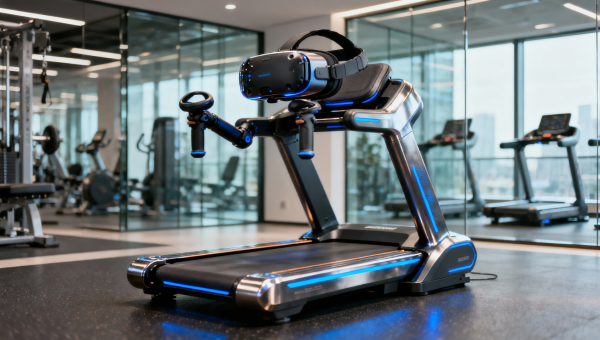
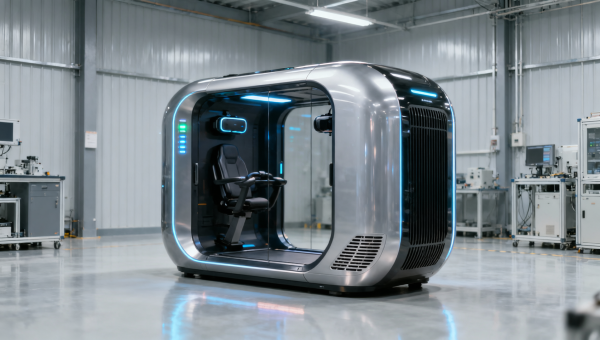
Global export prices for VR fitness equipment rose 12.3% quarter-on-quarter to $2,840 per unit in Q1 2026, according to data released on April 16, 2026 by the China Chamber of Commerce for Import and Export of Machinery and Electronic Products. This shift reflects evolving demand patterns in high-end commercial markets — particularly in North America and Europe — and increased compliance costs tied to new safety certifications. Direct trade enterprises, contract manufacturers, and supply chain service providers active in smart fitness hardware exports should monitor pricing dynamics, delivery reliability benchmarks, and regional certification requirements closely.
Event Overview
On April 16, 2026, the China Chamber of Commerce for Import and Export of Machinery and Electronic Products published its Quarterly Report on Global Smart Fitness Equipment Exports. The report states that China’s average export price for VR fitness devices (classified as Arcade & VR Machines) reached $2,840 per unit in Q1 2026 — a 12.3% year-on-year increase. This rise is attributed to higher shares of premium commercial deployments in Europe and North America, as well as cost pass-through from new regulatory requirements including EMC and laser safety certifications. Concurrently, the top five Chinese manufacturers achieved an average on-time delivery rate of 98.7%, outperforming comparable production bases in Vietnam (92.1%) and Mexico (89.4%).
Impact on Specific Industry Segments
Direct Trade Enterprises
These firms face tighter margin pressure due to rising unit costs and stricter certification timelines. The price increase signals stronger willingness to pay in high-end commercial channels — but also raises the bar for quoting accuracy and lead-time commitments, especially when competing against non-Chinese OEMs with lower compliance overhead.
Contract Manufacturing & Assembly Firms
Manufacturers supplying VR fitness hardware must now absorb or allocate additional costs related to updated EMC and laser safety testing. Delays in certification approvals could directly impact shipment schedules — making coordination with third-party labs and notified bodies more operationally critical than before.
Supply Chain Service Providers
Logistics, customs brokerage, and compliance support providers are seeing increased demand for documentation verification and pre-shipment conformity checks. The 98.7% on-time delivery rate among top Chinese vendors highlights growing client expectations for end-to-end visibility and schedule resilience — particularly for time-sensitive commercial installations.
Component Sourcing & Raw Material Suppliers
Suppliers of optical modules, motion sensors, and certified power systems may experience selective demand shifts. As OEMs prioritize reliability over cost in high-margin segments, long-term supplier relationships with traceable quality records gain relative advantage — though volume growth remains tied to downstream order stability.
What Relevant Companies or Practitioners Should Focus On
Monitor upcoming updates to EU and US safety standards
EMC and laser safety requirements referenced in the report are subject to periodic revision. Companies exporting to these regions should track official notifications from bodies such as the FCC, CE Notified Bodies, and Health Canada — not just final certification outcomes, but proposed amendments under consultation.
Track shifts in regional order composition — not just volume
The reported price uplift stems primarily from higher-value commercial orders, not broad-based market inflation. Exporters should analyze their own shipment data by destination, end-user type (e.g., gym operator vs. entertainment venue), and configuration tier — to assess whether their portfolio aligns with the trend toward premiumization.
Distinguish between delivery performance metrics and capacity constraints
The 98.7% on-time delivery rate reflects operational discipline — not unlimited scalability. Firms considering scaling production or shifting sourcing should verify whether top performers maintain this rate across product variants and order sizes, rather than assuming it applies uniformly.
Prepare for extended lead times on certified subassemblies
New safety certifications often require full-system revalidation when components change. Procurement teams should confirm lead times for pre-certified modules (e.g., Class 1 laser engines or shielded power supplies) and build buffer allowances into BOM planning — especially for products targeting Q3–Q4 2026 deliveries.
Editorial Perspective / Industry Observation
From an industry perspective, this data point is best understood as a signal — not yet a structural inflection. The price increase reflects near-term market segmentation and compliance cost absorption, rather than a broad-based inflationary trend across all VR fitness device categories. The sustained delivery advantage held by leading Chinese manufacturers suggests continued trust in their ability to manage complexity — but this advantage hinges on consistent execution, not inherent cost leadership. Observers should treat the current gap versus Vietnam and Mexico as a benchmark of operational maturity, not a permanent geographic cost differential. Ongoing attention is warranted because certification pathways and regional enforcement rigor remain fluid — and small changes in test protocols can ripple through procurement, assembly, and shipping cycles.
Conclusion
The Q1 2026 export pricing and delivery data reflect a maturing global VR fitness hardware market — one where differentiation is increasingly tied to regulatory readiness and fulfillment reliability, not just hardware capability. For stakeholders, this is less about reacting to a single price shift and more about calibrating longer-term strategies around compliance agility, customer-tier alignment, and supply chain transparency. It is currently more appropriate to interpret this development as evidence of selective premiumization — not systemic cost escalation.
Information Source
Main source: China Chamber of Commerce for Import and Export of Machinery and Electronic Products, Quarterly Report on Global Smart Fitness Equipment Exports, issued April 16, 2026.
Note: Certification timelines, regional enforcement practices, and comparative delivery rates beyond Q1 2026 remain subject to ongoing observation.
Search News
Hot Articles
Popular Tags
Need ExpertConsultation?
Connect with our specialized leisureengineering team for procurementstrategies.
Recommended News
 Apr 17, 2026Global VR Fitness Equipment Export Prices Rise 12% in Q1 2026VR fitness equipment export prices surge 12.3% in Q1 2026—key insights for exporters, manufacturers & supply chain partners on compliance, pricing, and delivery trends.● Theme Park Strategist
 Apr 17, 2026SASO 2891:2026 Updated: VR Haptic Devices Now Require EMC Class B in Saudi ArabiaSASO 2891:2026 update mandates EMC Class B for VR haptic devices in Saudi Arabia — critical for OEMs, exporters & EdTech suppliers. Act now to avoid delays!● Theme Park Strategist
 Apr 17, 2026Vietnam TUV SUD Mandates Local Type Testing for VR Fitness CabinsVR fitness cabins for gyms & hotels in Vietnam now require local type testing—EMC, thermal, and AI fall detection—to obtain VIEC certification. Act now to avoid delays!● Theme Park Strategist
 Apr 16, 2026VR Fitness Device Export Prices Up 12% — China Supply Stability LeadsVR fitness device export prices up 12%—China’s supply stability and modular hardware-software delivery redefine global competitiveness. Act now.● Theme Park Strategist
 Apr 16, 2026Vietnam Mandates Local TUV SUD Type Testing for VR Fitness CabinsVR fitness cabins entering Vietnam must now pass local TÜV SÜD type testing in Hanoi—key for compliance, customs clearance & market access by July 1, 2026.● Theme Park Strategist
 Apr 16, 2026SASO Updates Playground Standards: VR Devices Now Require EMC TestingSASO now mandates EMC testing for VR playground devices in Saudi Arabia—key update for VR cycling, climbing & motion cabins exporters.● Theme Park Strategist
 Apr 15, 2026Vietnam's New Regulation: Commercial VR Fitness Pods Require Local TUV SUD TestingVietnam's new regulation mandates TUV SUD testing for commercial VR fitness pods. Learn how this impacts exporters, compliance timelines, and market entry strategies for Chinese manufacturers.● Theme Park Strategist
 Apr 15, 2026Global VR Fitness Equipment Export Prices Rise 12% YoY, China Maintains Supply Chain StabilityGlobal VR fitness equipment export prices surge 12% YoY in 2026 Q1, with China maintaining 96.3% delivery reliability. Key insights for VR hardware manufacturers & fitness distributors facing cost pressures.● Theme Park Strategist
 Apr 14, 2026US CPSC Seeks Comments on New Fitness Tracker Rules, Chinese Exporters Need UL/ETL ComplianceUS CPSC proposes new UL/ETL compliance rules for fitness trackers, impacting Chinese exporters. Learn key action points and industry impacts to stay ahead of regulatory changes affecting wearable tech exports to America.● Theme Park Strategist
 Apr 13, 20262026 Chinese Youth League Upgrades Format with VR Training PodsDiscover how China's 2026 Youth League VR training pods revolutionize football development, boosting exports by 210%. Learn about FIFA-certified tech transforming player training.● Theme Park Strategist
 Apr 09, 2026US CPSC Proposes New VR Safety Standards for Children's Indoor Play EquipmentUS CPSC proposes new VR safety standards for children's indoor play equipment, including dizziness testing and age grading. Learn how these regulations impact VR manufacturers and get compliance strategies.● Theme Park Strategist
 Apr 17, 2026Arcade games with cashless payment: Is retrofitting worth it?Arcade games cashless retrofitting boosts revenue & compliance—explore ROI, TCO, and certified kits for trampoline parks, indoor playgrounds & adventure playgrounds.● Theme Park Strategist
 Apr 17, 2026Amusement equipment maintenance costs no one talks about upfrontAmusement equipment maintenance costs shock buyers—especially for sensory playgrounds, playground climbers & borders. Discover hidden TCO drivers in commercial furniture, hotel equipment & playground safety systems.● Theme Park Strategist
 Apr 17, 2026Arcade machines with music accessories that distort sound at high volumeArcade machines with music accessories that distort sound at high volume—premium amusement equipment for sensory playgrounds, hotels & schools. Compliant, customizable, and built for impact.● Theme Park Strategist
 Apr 15, 2026VR arcade machines with heat dissipation designed for 10+ hours/dayCommercial VR arcade machines with advanced heat dissipation—ideal for amusement equipment, sensory playgrounds, hotel equipment & educational supplies. Built for 10+ hrs/day reliability.● Theme Park Strategist
 Apr 15, 2026Arcade machines with service access points designed for technicians — not engineersCommercial furniture & amusement equipment with technician-first service access—ideal for hotel equipment, sensory playgrounds, and playground safety compliance. Boost uptime, cut labor costs.● Theme Park Strategist
 Apr 14, 2026Arcade game cabinets with field-replaceable PCBs—cutting downtime by 70%Arcade games with field-replaceable PCBs cut downtime by 70%—ideal for office supplies, indoor playgrounds, trampoline parks & adventure playgrounds. Reliable, upgradable, certified.● Theme Park Strategist
 Apr 14, 2026Arcade games with the lowest long-term maintenance costArcade games offer the lowest long-term maintenance cost vs. trampoline parks, indoor playgrounds, adventure playgrounds & office supplies—discover TCO-optimized, certified solutions.● Theme Park Strategist
 Apr 08, 2026Middle East Tensions Raise Shipping Costs for Sports EquipmentMiddle East tensions spike shipping costs by 12% for sports equipment like smart fitness gear & e-scooters. Learn how exporters can navigate rising air freight fees & supply chain disruptions.● Theme Park Strategist
 Apr 08, 2026EU Updates EN 16830:2026 Eyewear Safety Standards, Chinese Sports Goggles Exporters Face 6-Month Certification DeadlineEU's EN 16830:2026 update raises safety standards for sports goggles, giving Chinese exporters just 6 months to comply with new impact resistance and UV protection rules. Learn critical deadlines and action steps for EU market access.● Theme Park Strategist
: Mandatory Bilingual Manuals & QR Code Traceability Take Effect April 15") Apr 01, 2026Vietnam's New Technical Standards for Imported Amusement Equipment (2026): Mandatory Bilingual Manuals & QR Code Traceability Take Effect April 15Vietnam's new 2026 standards mandate bilingual manuals & QR codes for imported amusement equipment. Chinese exporters must comply by April 15 to avoid customs issues. Learn key impacts & action steps.● Theme Park Strategist
Apr 01, 2026Vietnam's New Technical Standards for Imported Amusement Equipment (2026): Mandatory Bilingual Manuals & QR Code Traceability Take Effect April 15Vietnam's new 2026 standards mandate bilingual manuals & QR codes for imported amusement equipment. Chinese exporters must comply by April 15 to avoid customs issues. Learn key impacts & action steps.● Theme Park Strategist Apr 04, 2026Arcade & VR Machines Installers Now Source Cables and Mounts from Office Supplies WholesalersOffice supplies wholesaler? Discover UL-certified cables, mounts & trampoline park accessories — engineered for VR arcades, fast B2B delivery & global compliance.● Theme Park Strategist
 Mar 30, 2026Arcade & VR machines with ‘plug-and-play’ labeling—then the network handshake failsCommercial sourcing of arcade & VR machines? Avoid network handshake failures—ensure playground compliance, amusement ride parts interoperability, and hotel bar furniture integration.● Theme Park Strategist
 Mar 28, 2026Arcade game cabinets that don’t age gracefully—and why it matters for foot trafficArcade games, trampoline park anchors & luxury accessories demand durable hardware—discover why cabinet longevity drives foot traffic, ROI, and brand trust.● Theme Park Strategist