Popular Badminton AI Protocol Launched in Chengdu
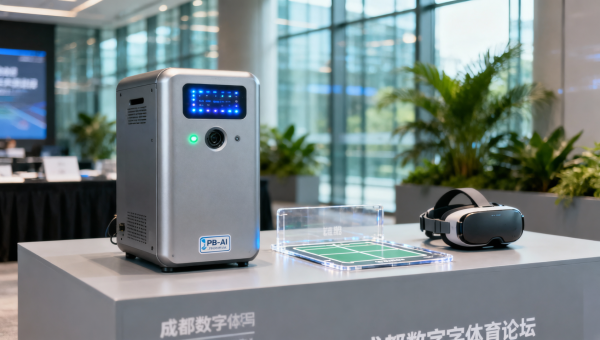
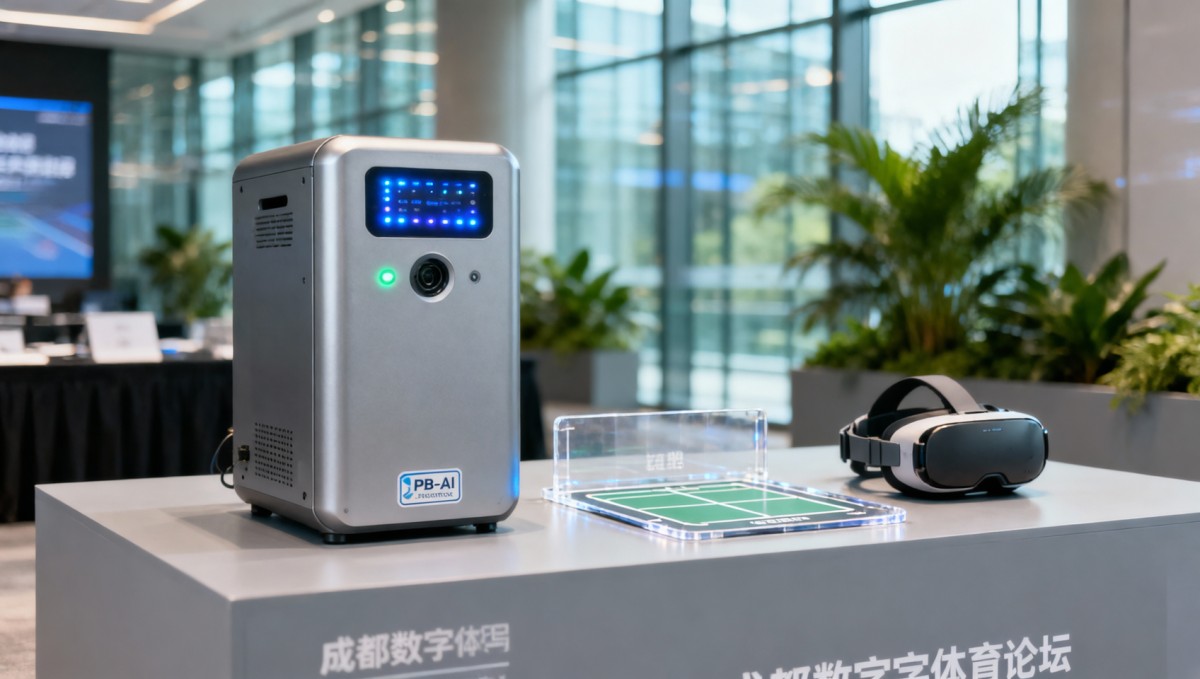
On April 15, 2026, the SMT Digital Sports New Ecosystem Forum held in Chengdu unveiled the ‘Popular Badminton AI’ (PB-AI) standard interface protocol — a technical specification for data format, communication protocols, and AI model invocation across badminton training equipment. This development signals implications for outdoor ride manufacturers, arcade & VR machine exporters, and smart sports hardware supply chains.
Event Overview
On April 15, 2026, the SMT Digital Sports New Ecosystem Forum in Chengdu released the ‘Popular Badminton AI’ (PB-AI) standard interface protocol. The protocol defines standardized data formats, communication protocols, and AI training model calling specifications for badminton training devices — including smart ball launchers, motion-capture mats, and VR multi-ball simulators. The Asian Badminton Confederation (ABF) has adopted PB-AI as the recommended standard for equipment procurement at its 2027 Asian Youth Training Centers. Eleven major Chinese equipment manufacturers have announced compatibility. The initiative is expected to drive standardized export upgrades for Outdoor Rides and Arcade & VR Machines.
Industries Affected
Outdoor Ride Manufacturers
Outdoor ride manufacturers producing hybrid fitness-sports equipment (e.g., interactive court-side training modules or AI-integrated shuttlecock return systems) may face new interoperability requirements. Impact arises from potential integration mandates with PB-AI–compliant sensors or edge-AI modules — particularly where products are marketed for youth sports academies or ABF-affiliated facilities.
Arcade & VR Machine Exporters
Exporters of VR-based badminton simulators or arcade-style skill trainers must now assess compatibility with PB-AI’s data schema and API structure. Since the protocol is tied to ABF’s 2027 procurement recommendations, non-compliant units risk reduced eligibility in key Asian institutional tenders — especially in markets prioritizing standardized digital sports infrastructure.
Smart Sports Hardware OEMs / ODMs
OEMs and ODMs supplying core components (e.g., motion-tracking SoCs, low-latency wireless transceivers, or embedded AI inference engines) to badminton device makers may see revised component-level spec requests. Compatibility with PB-AI’s defined latency thresholds, data packet structures, and model versioning conventions could become a de facto requirement for Tier-1 integrators.
Distribution & Channel Partners Serving Asian Youth Academies
Regional distributors and system integrators targeting ABF-aligned youth training centers may encounter updated technical prequalification checklists. Equipment listed for tender submission may soon require PB-AI conformance documentation — affecting quoting, lead time planning, and after-sales support workflows.
What Enterprises and Practitioners Should Monitor and Do Now
Track official ABF implementation timelines and compliance verification procedures
While PB-AI has been adopted as a ‘recommended standard’, the ABF has not yet published formal conformance testing criteria or certification pathways. Enterprises should monitor ABF technical bulletins and procurement notices for updates on mandatory application scope and validation mechanisms.
Review product roadmaps for PB-AI–aligned data interfaces and firmware architecture
Manufacturers exporting to Asia — especially those with VR, motion-capture, or automated feeding subsystems — should audit current API designs against PB-AI’s published interface definitions (where publicly available). Early alignment reduces retrofitting costs ahead of 2027 procurement cycles.
Distinguish between policy signal and commercial enforcement
Analysis来看, PB-AI’s adoption reflects a coordination effort among Chinese hardware vendors and regional sports governance bodies — not an immediate regulatory mandate. Its near-term impact remains strongest in public-sector tenders and institutional procurement, rather than open retail markets.
Prepare technical documentation and cross-vendor interoperability test plans
Companies intending to claim PB-AI compatibility should begin compiling interface documentation, data schema mappings, and minimal viable integration logs. Collaborative testing with other announced compatible vendors — especially on edge-AI model handoff and real-time sync — may help surface interoperability gaps before formal ABF evaluation begins.
Editorial Perspective / Industry Observation
From industry angle, PB-AI functions less as a finished technical standard and more as a coordination anchor: it aligns domestic hardware capabilities with emerging regional sports digitization priorities. Observation来看, its value lies not in technical novelty — many elements echo existing IoT and edge-AI patterns — but in signaling a shift toward interoperability-as-a-procurement-condition in Asian youth sports infrastructure. Current more suitable interpretation is that PB-AI represents a preparatory framework, not yet an enforced compliance barrier; however, its linkage to ABF’s 2027 rollout timeline means delays in technical readiness could constrain market access windows.
Concluding, PB-AI does not redefine core technologies, but restructures market access conditions for specific segments of the digital sports hardware value chain. Its significance lies in standardizing expectations — not just for what devices do, but how they communicate and integrate within federated training ecosystems. At present, it is best understood as an early-stage institutional alignment mechanism, whose operational weight will grow incrementally through procurement execution — not through regulation.
Information Source: Official announcement from SMT Digital Sports New Ecosystem Forum (Chengdu, April 15, 2026); public statements by ABF and 11 Chinese equipment manufacturers. Note: ABF’s formal compliance verification process, technical annexes, and enforcement scope remain pending publication and are subject to ongoing observation.
Search News
Hot Articles
Popular Tags
Need ExpertConsultation?
Connect with our specialized leisureengineering team for procurementstrategies.
Recommended News
 Apr 17, 2026Popular Badminton AI Protocol Launched in ChengduPopular Badminton AI protocol launched in Chengdu — a game-changer for smart sports hardware, VR simulators & outdoor ride manufacturers targeting Asian youth academies.● Theme Park Strategist
 Apr 17, 2026EN 1176-7:2026 Enforced: AI Behavior Recognition Required for EU Outdoor Interactive Play EquipmentEN 1176-7:2026 is now enforced — AI behavior recognition is mandatory for EU outdoor interactive play equipment. Ensure CE compliance now.● Theme Park Strategist
 Apr 16, 2026EN 1176-7:2026 Enforces AI Safety Rules for EU Outdoor Interactive Play EquipmentEN 1176-7:2026 enforces AI safety rules for EU outdoor interactive play equipment — mandatory false-trigger ≤0.3% & local-only data processing. Act now to comply.● Theme Park Strategist
 Apr 13, 20262026 CKC China Karting Championship in Macau Sparks Export Interest for Domestic Racing GearThe 2026 CKC China Karting Championship in Macau showcased FIA-compliant racing gear, sparking export interest for domestic timing systems, carbon fiber kits & sustainable tires. Discover how this event opens global opportunities.● Theme Park Strategist
 Apr 13, 2026Japan Revises Sports Equipment Safety Standards: Mandatory Multilingual E-Manuals for Imported Fitness Gear from April 2026Japan's new Sports Equipment Safety Standards mandate multilingual e-manuals for imported fitness gear from 2026. Learn how this impacts global exporters and key compliance strategies for smooth market entry.● Theme Park Strategist
 Apr 10, 2026Middle East Tensions Raise Shipping Risks in Hormuz Strait, Air Freight Costs for Sports Equipment Surge 12%Middle East tensions escalate shipping risks in Hormuz Strait, causing a 12% surge in air freight costs for sports equipment. Learn how this impacts supply chains and strategies to mitigate delays.● Theme Park Strategist
 Apr 17, 2026Adventure playground design trends: Why natural materials are gaining tractionAdventure playground design is shifting to natural materials for safety, sustainability & sensory impact—key for trampoline parks and indoor playgrounds. Discover why.● Theme Park Strategist
 Apr 17, 2026Playground borders that actually stop erosion — not just look goodCommercial furniture & playground borders that stop erosion—engineered for sensory playgrounds, hotel tables, educational supplies & amusement equipment safety.● Theme Park Strategist
 Apr 17, 2026Playground climbers made for real-world use — not just certification testsCommercial playground climbers engineered for real-world durability, safety & seamless integration—beyond certification. Ideal for sensory playgrounds, hotels, schools & amusement equipment.● Theme Park Strategist
 Apr 17, 2026Playground safety isn’t just about padding — what the surface layer hidesPlayground safety, commercial furniture & sensory playground surfaces—discover ASTM-compliant solutions for hotels, schools & resorts. Boost safety, cut liability, and elevate play experiences.● Theme Park Strategist
 Apr 17, 2026Outdoor rides with playground borders designed for freeze-thaw climatesCommercial furniture & playground borders engineered for freeze-thaw climates—sensory playgrounds, climbers, safety-certified amusement equipment & hotel tables.● Theme Park Strategist
 Apr 16, 2026Outdoor playground equipment with minimal seasonal maintenanceOutdoor playground equipment with minimal seasonal maintenance — durable, low-TCO, and design-integrated. Ideal for campuses, resorts & smart offices. Explore luxury furniture, park benches & more.● Theme Park Strategist
 Apr 16, 2026Park benches with integrated accessibility featuresPark benches with integrated accessibility features — premium outdoor furniture for inclusive, luxury-ready spaces. Built for durability, compliance & design excellence.● Theme Park Strategist
 Apr 15, 2026Outdoor playground surfacing that meets updated ASTM standardsOutdoor playground surfacing meeting ASTM F1292 & F2075 standards — ideal for park benches, luxury furniture, and institutional campuses. Safe, compliant, smart.● Theme Park Strategist
 Apr 15, 2026Park benches designed for high-traffic public spacesPremium park benches for high-traffic public spaces—durable, compliant & design-forward. Also explore luxury furniture, orchestral instruments, custom jewelry & more.● Theme Park Strategist
 Apr 15, 2026Playground safety isn’t about padding alone — here’s what gets missedCommercial furniture, playground borders & sensory playground designs—discover what truly ensures playground safety beyond padding. Expert insights + compliance-ready solutions.● Theme Park Strategist
 Apr 15, 2026Playground climbers rated for actual group use — not solo testingDiscover group-rated playground climbers—certified for real-world commercial use, not solo testing. Trusted for sensory playgrounds, hotel equipment, amusement equipment & more.● Theme Park Strategist
 Apr 15, 2026Amusement equipment with real maintenance logs — not just marketing claimsAmusement equipment with real maintenance logs—verified for playground safety, sensory playgrounds, commercial furniture & hotel equipment. No claims, just auditable proof.● Theme Park Strategist
 Apr 15, 2026Playground borders that actually stop erosion — not just look goodPremium playground borders for commercial furniture & amusement equipment—engineered to stop erosion, boost playground safety, and enhance sensory playgrounds, hotel tables, and educational supplies.● Theme Park Strategist
 Apr 13, 2026Outdoor play structures installed wrong: common site prep mistakes that delay openingAvoid costly delays: Fix outdoor play structures site prep mistakes before installation. Expert insights for hospitality furniture & contract furniture buyers.● Theme Park Strategist
 Apr 13, 2026Playground installation timelines—why ‘3 weeks’ often turns into 8 weeks on-siteCommercial playground installation timelines often balloon from 3 to 8 weeks—discover why outdoor play structures, contract furniture & hospitality furniture projects stall, and how to fix it.● Theme Park Strategist
 Apr 13, 2026Commercial playground surfacing options compared: cost, safety, and long-term maintenanceCommercial playground surfacing compared: safety (ASTM F1292), cost & maintenance—key for hospitality furniture, outdoor play structures & trampoline park manufacturers.● Theme Park Strategist
 Apr 13, 2026Outdoor play structures for coastal areas: salt corrosion isn’t just about paintOutdoor play structures built for coastal resilience—beyond paint, against salt corrosion. Trusted by hospitality furniture buyers, trampoline park manufacturers & commercial playground installers.● Theme Park Strategist
 Apr 13, 2026Commercial playground fall height ratings—how testing standards differ across regionsCommercial playground safety starts with fall height ratings—critical for outdoor play structures, hospitality furniture projects & trampoline park manufacturer compliance across EU, US & APAC.● Theme Park Strategist