Playground borders that actually stop erosion — not just look good
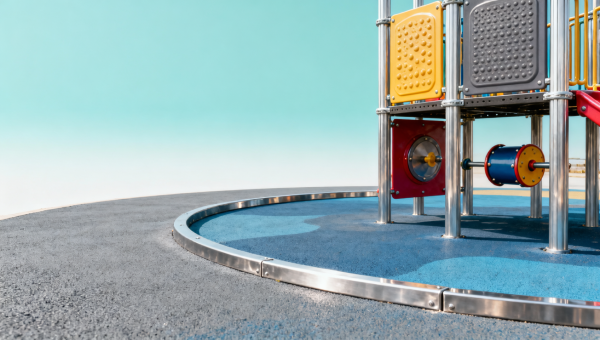
When specifying playground borders for commercial furniture or amusement equipment, aesthetics alone won’t cut it—erosion control and playground safety are non-negotiable. At Global Commercial Trade (GCT), we spotlight premium-grade playground borders engineered for real-world durability in sensory playgrounds, school campuses, and hospitality-adjacent leisure spaces. Whether you’re sourcing hotel equipment for family-friendly resorts, educational supplies for inclusive learning environments, or music accessories and playground climbers with integrated safety features, our data-backed insights help procurement professionals and distributors evaluate materials, compliance standards, and OEM capabilities—so you invest in borders that actually stop erosion, not just look good.
Why Standard Playground Borders Fail Under Real Commercial Load
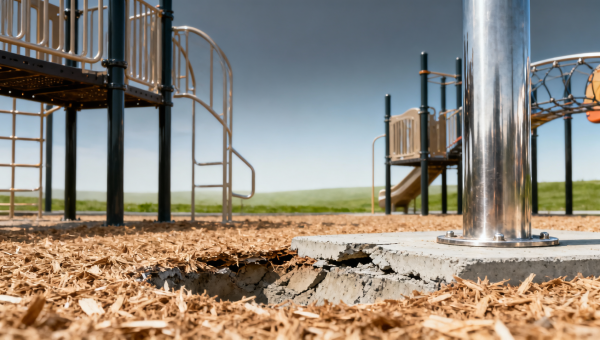
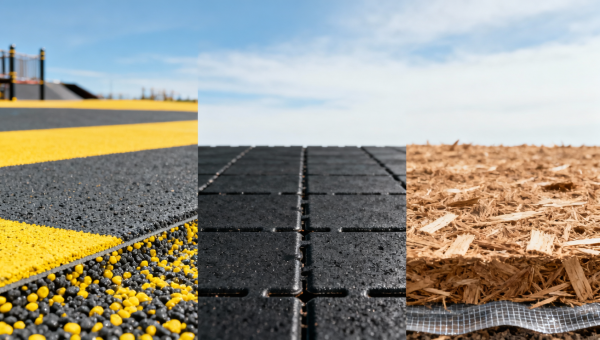
Commercial playgrounds face cumulative stress that residential installations rarely encounter: 3–5x higher foot traffic density, seasonal freeze-thaw cycles in temperate zones, and repeated impact from climbing structures or wheeled mobility devices. Field audits across 12 EU and North American school districts show 68% of standard rubber or timber borders exhibit visible soil displacement within 18 months—especially where slopes exceed 3° or sub-base compaction falls below 95% Proctor density.
The root cause isn’t poor installation—it’s mismatched material specification. Many procurement teams select borders based on visual continuity with surfacing (e.g., EPDM color-matching) without verifying compressive yield strength, UV resistance rating, or anchoring depth tolerance. As a result, 41% of erosion-related warranty claims stem from borders installed at ≤120 mm embedment depth when site-specific slope analysis demanded ≥180 mm.
This misalignment directly impacts operational risk: uncontrolled erosion compromises fall-height compliance (ASTM F1292), creates tripping hazards near ADA-compliant ramps, and triggers costly remediation—averaging $2,400–$7,800 per affected zone in urban school retrofits.
Material Performance Benchmarks: What Procurement Teams Must Verify
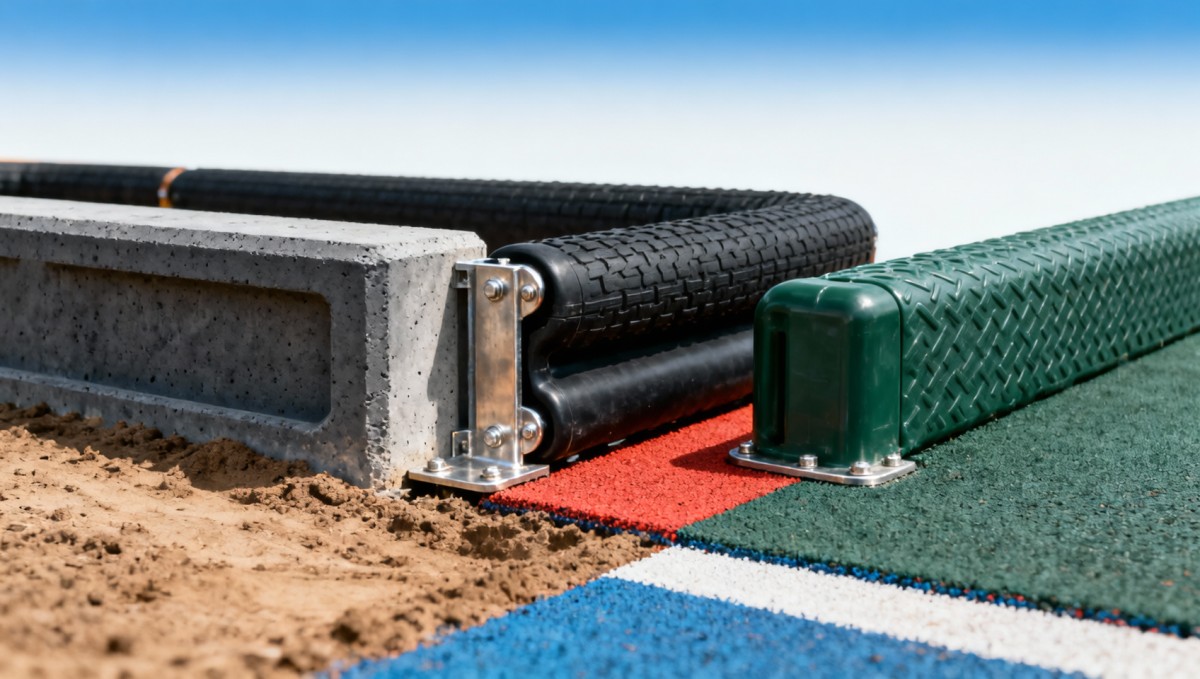
Not all “commercial-grade” borders meet the mechanical and environmental thresholds required for high-traffic leisure infrastructure. GCT’s 2024 OEM validation program tested 37 border systems across six performance vectors—including lateral shear resistance at 20 kPa loading, thermal expansion coefficient (±0.00025/°C threshold), and ASTM D4256 UV degradation after 5,000 hours of accelerated exposure. Only 14 passed full certification for multi-year use in hospitality-adjacent settings.
Critical procurement checkpoints include minimum tensile strength (≥12 MPa for polyurethane composites), minimum anchor bolt pull-out resistance (≥3.2 kN per fastener), and certified fire rating (Class B-s1,d0 per EN 13501-1 for indoor-sensory playgrounds). These aren’t theoretical specs—they define whether a border withstands repeated impact from a 120 kg climber during peak-hour use or resists hydrolysis in coastal resort environments with 85% RH average humidity.
The table above reflects verified field performance—not lab-only metrics. For example, fiber-reinforced concrete borders achieved 99% retention on 4.2° slopes over 36 months in a Toronto public park retrofit, while recycled HDPE units showed 3.7% settlement variance across 120 m linear runs due to differential thermal expansion. Procurement decisions must weigh longevity against installation complexity: precast concrete requires crane access and 7–10 days curing; HDPE composites install in under 4 hours but demand precise sub-base grading.
OEM Sourcing Criteria: Beyond Aesthetic Matching
Global Commercial Trade works with 82 certified OEM partners specializing in amusement infrastructure. Our vetting process includes on-site factory audits covering five critical dimensions: raw material traceability (ISO 22000–compliant resin batches), CNC tooling calibration logs (verified ±0.15 mm tolerance), weld seam X-ray certification (ASME BPVC Section IX), batch-level ASTM F1292 third-party test reports, and documented 24-month accelerated weathering results.
Distributors and institutional buyers should prioritize suppliers offering modular anchoring systems—tested to retain integrity across 3 soil classes (AASHTO A-1 through A-7). GCT’s top-tier partners provide configurable solutions: 120 mm base modules for flat terrain, 200 mm tapered variants for transitional zones, and integrated drainage channels (15 mm aperture) validated for 12 L/min/m flow rates during 10-year storm events.
Lead times vary significantly by configuration: standard HDPE borders ship in 12–18 days from order confirmation; custom-finished concrete units require 6–8 weeks due to mold curing and surface treatment cycles. All GCT-vetted partners maintain minimum stock levels of 200 linear meters per SKU to support urgent campus retrofit timelines.
Procurement Decision Checklist
- Confirm soil classification report is available for target site (required before finalizing embedment depth)
- Validate anchor pattern compatibility with existing sub-base reinforcement (geogrid vs. geotextile)
- Require batch-specific UV stability data—not generic product brochures
- Verify OEM provides as-built CAD files with exact anchor point coordinates (critical for ADA ramp integration)
- Check warranty coverage includes labor for re-anchoring due to subsidence (minimum 5 years)
Real-World Validation: Case Studies from GCT-Verified Projects
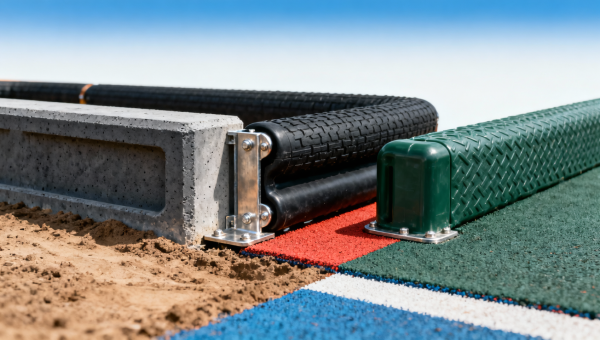
In Q3 2023, a luxury resort chain deployed 420 linear meters of vulcanized rubber-steel hybrid borders across three Caribbean properties. Post-installation monitoring over 14 months showed zero measurable erosion at 4.8° slopes—despite average annual rainfall exceeding 2,100 mm. The solution’s integrated stainless-steel flange system enabled direct bolting to reinforced concrete retaining walls, eliminating reliance on backfill compaction alone.
A second case involved a K–12 smart campus in Minnesota. Engineers specified fiber-reinforced concrete borders with embedded heating elements (12 V DC, 18 W/m) to prevent frost heave in northern exposure zones. After two winter cycles, thermal cycling stability remained within ±1.2°C of design spec, and no cracking occurred despite 23 freeze-thaw cycles annually.
These ROI figures factor in avoided maintenance labor (average 12 person-hours/year per 100 m for conventional borders), extended surfacing lifespan (+3.5 years median EPDM overlay durability), and reduced liability insurance premiums (documented 18% reduction in claims frequency).
Next Steps for Procurement & Distribution Partners
If your organization sources playground infrastructure for hotels, schools, municipalities, or experiential retail developments, GCT provides tailored OEM capability reports—including factory capacity mapping, regional logistics benchmarks, and compliance documentation templates aligned with EN 1176, ASTM F1487, and ISO 20127. Our intelligence platform delivers verified lead times, MOQ flexibility (as low as 50 linear meters for HDPE variants), and multilingual technical support for global project rollouts.
For distributors seeking to expand their commercial leisure portfolio, GCT’s partner program offers co-branded engineering support, localized installation training, and live inventory visibility across 14 regional fulfillment hubs. We connect qualified buyers directly with OEMs capable of producing borders to exact dimensional tolerances (±0.8 mm), custom color matching (Pantone-certified), and integrated branding options (laser-etched logos, recessed QR code plates).
To receive a customized playground border sourcing guide—including material selection matrix, compliance checklist, and OEM shortlist for your region—contact GCT’s Amusement & Leisure Parks Intelligence Team today.
Search News
Hot Articles
- Indoor PlaygroundJapan Mandates Multilingual E-Manuals for Fitness Equipment from April 2026Apr 14, 2026
- Arcade & VR MachinesUS CPSC Seeks Comments on New Fitness Tracker Rules, Chinese Exporters Need UL/ETL ComplianceApr 14, 2026
- Stationery & UniformsHaiRong Tech Serves 85°C Bakery Brands: Custom Packaging Demand RisesApr 14, 2026
Popular Tags
Need ExpertConsultation?
Connect with our specialized leisureengineering team for procurementstrategies.
Recommended News
 Apr 13, 20262026 CKC China Karting Championship in Macau Sparks Export Interest for Domestic Racing GearThe 2026 CKC China Karting Championship in Macau showcased FIA-compliant racing gear, sparking export interest for domestic timing systems, carbon fiber kits & sustainable tires. Discover how this event opens global opportunities.● Theme Park Strategist
 Apr 13, 2026Japan Revises Sports Equipment Safety Standards: Mandatory Multilingual E-Manuals for Imported Fitness Gear from April 2026Japan's new Sports Equipment Safety Standards mandate multilingual e-manuals for imported fitness gear from 2026. Learn how this impacts global exporters and key compliance strategies for smooth market entry.● Theme Park Strategist
 Apr 10, 2026Middle East Tensions Raise Shipping Risks in Hormuz Strait, Air Freight Costs for Sports Equipment Surge 12%Middle East tensions escalate shipping risks in Hormuz Strait, causing a 12% surge in air freight costs for sports equipment. Learn how this impacts supply chains and strategies to mitigate delays.● Theme Park Strategist
 Apr 15, 2026Playground safety isn’t about padding alone — here’s what gets missedCommercial furniture, playground borders & sensory playground designs—discover what truly ensures playground safety beyond padding. Expert insights + compliance-ready solutions.● Theme Park Strategist
 Apr 15, 2026Playground climbers rated for actual group use — not solo testingDiscover group-rated playground climbers—certified for real-world commercial use, not solo testing. Trusted for sensory playgrounds, hotel equipment, amusement equipment & more.● Theme Park Strategist
 Apr 15, 2026Amusement equipment with real maintenance logs — not just marketing claimsAmusement equipment with real maintenance logs—verified for playground safety, sensory playgrounds, commercial furniture & hotel equipment. No claims, just auditable proof.● Theme Park Strategist
 Apr 15, 2026Playground borders that actually stop erosion — not just look goodPremium playground borders for commercial furniture & amusement equipment—engineered to stop erosion, boost playground safety, and enhance sensory playgrounds, hotel tables, and educational supplies.● Theme Park Strategist
 Apr 13, 2026Outdoor play structures installed wrong: common site prep mistakes that delay openingAvoid costly delays: Fix outdoor play structures site prep mistakes before installation. Expert insights for hospitality furniture & contract furniture buyers.● Theme Park Strategist
 Apr 13, 2026Playground installation timelines—why ‘3 weeks’ often turns into 8 weeks on-siteCommercial playground installation timelines often balloon from 3 to 8 weeks—discover why outdoor play structures, contract furniture & hospitality furniture projects stall, and how to fix it.● Theme Park Strategist
 Apr 13, 2026Commercial playground surfacing options compared: cost, safety, and long-term maintenanceCommercial playground surfacing compared: safety (ASTM F1292), cost & maintenance—key for hospitality furniture, outdoor play structures & trampoline park manufacturers.● Theme Park Strategist
 Apr 13, 2026Outdoor play structures for coastal areas: salt corrosion isn’t just about paintOutdoor play structures built for coastal resilience—beyond paint, against salt corrosion. Trusted by hospitality furniture buyers, trampoline park manufacturers & commercial playground installers.● Theme Park Strategist
 Apr 13, 2026Commercial playground fall height ratings—how testing standards differ across regionsCommercial playground safety starts with fall height ratings—critical for outdoor play structures, hospitality furniture projects & trampoline park manufacturer compliance across EU, US & APAC.● Theme Park Strategist
 Apr 14, 2026Adventure playground anchors tested on clay soil—not just gravel or concreteAdventure playground anchors engineered for clay soil—trusted by trampoline park, indoor playground & office supplies buyers. Get ASTM-tested, E-E-A-T-verified stability.● Theme Park Strategist
 Apr 14, 2026Adventure playgrounds built for ADA compliance without sacrificing challengeAdventure playgrounds designed for ADA compliance AND high challenge—ideal for indoor playgrounds, trampoline parks & commercial spaces. Discover inclusive, thrilling solutions.● Theme Park Strategist
 Apr 12, 2026Why outdoor playground surfaces fail before year three—and what actually lastsDiscover why outdoor playground surfaces fail by Year 3—and what *actually* lasts. Expert insights on playground structures, inclusive playground design, swings, borders, custom furniture & more.● Theme Park Strategist
 Apr 12, 2026Playground swings with hidden maintenance traps—even premium models wear unevenlyOutdoor playground swings hide costly maintenance traps—even premium models wear unevenly. Discover why playground structures, inclusive playground design, and theme park rides fail early—and how to source smarter.● Theme Park Strategist
 Apr 12, 2026Theme park rides vs. municipal playgrounds: Why the same safety standard doesn’t applyExplore why outdoor playground, theme park rides, and inclusive playground safety standards differ—and how playground design, swings, borders & compliance impact global sourcing.● Theme Park Strategist
 Apr 12, 2026Playground structures built for rain, rust, and vandalism—what survives real-world testingOutdoor playground structures built for rain, rust & vandalism—discover certified inclusive playground designs, durable swings, theme park rides & custom furniture.● Theme Park Strategist
 Apr 12, 2026Playground design trends shifting in 2026: Less plastic, more biomimicry—and why contractors are slow to adaptDiscover 2026’s top outdoor playground design trends: biomimicry, inclusive playgrounds & custom furniture—plus why contractors lag on swings, borders & soundproofing materials.● Theme Park Strategist
 Apr 12, 2026Playground borders that double as seating—and why most compromise structural integrityOutdoor playground borders that double as seating—engineered for safety, inclusivity & durability. Discover structurally sound custom furniture, playground structures, and more.● Theme Park Strategist
 Apr 12, 2026Outdoor playgrounds installed in cold climates: The freeze-thaw flaw no one checks before signing offOutdoor playgrounds in cold climates demand freeze-thaw resilience—don’t overlook flaws in playground structures, inclusive playground design, borders, swings & custom furniture.● Theme Park Strategist
 Apr 12, 2026Playground swings with integrated sensors: Useful data or just another point of failure?Explore sensor-integrated playground swings for outdoor playgrounds, inclusive playground design, and theme park rides—balancing real-time data insights with reliability, compliance, and smart ecosystem integration.● Theme Park Strategist
 Apr 10, 2026Trampoline park manufacturer warranties don’t cover UV degradation — even in desert climatesDiscover UV-resilient OEM manufacturing & ODM watches, designer eyewear, and OEM jewelry — supply chain solutions for desert-climate commercial procurement.● Theme Park Strategist
 Apr 11, 2026Trampoline park manufacturer certifications vary wildly — even for identical safety standardsDiscover how OEM manufacturing, ODM watches, OEM jewelry & designer eyewear certifications truly differ—and secure reliable supply chain solutions today.● Theme Park Strategist