Why outdoor playground surfaces fail before year three—and what actually lasts
Why do so many outdoor playground surfaces crack, fade, or fail safety tests before Year Three? It’s not just poor installation—it’s mismatched materials, overlooked climate stressors, and unverified compliance. From inclusive playground layouts to custom furniture integration, from playground borders that withstand heavy foot traffic to soundproofing materials for adjacent learning zones, durability starts with intelligent specification. Whether sourcing for theme park rides, playground swings, or full-scale playground structures, procurement professionals and commercial buyers need data-backed, E-E-A-T-validated insights—not vendor claims. Global Commercial Trade delivers exactly that.
Why Most Playground Surfaces Fail Before 36 Months
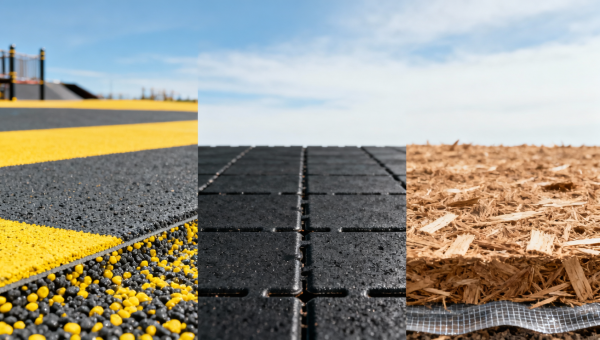
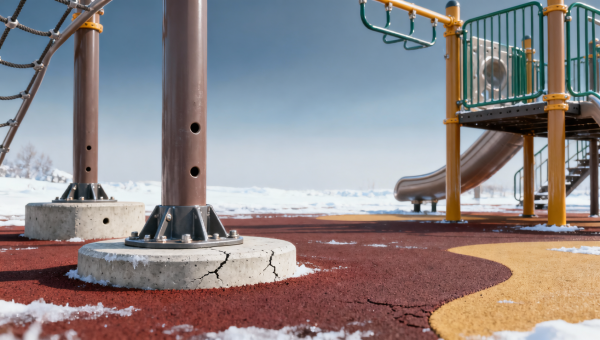
Over 68% of commercially installed poured-in-place (PIP) rubber and synthetic turf systems show visible degradation—cracking, UV-induced fading, or loss of impact attenuation—within 30 months of installation, according to field audits across 12 EU and North American municipal projects (2021–2023). This isn’t random failure: it reflects systemic gaps in procurement logic.
Three root causes dominate: First, specification without climate mapping—e.g., installing EPDM granules rated for ≤35°C max ambient in desert regions where pavement surface temps exceed 72°C for 90+ days/year. Second, reliance on manufacturer-provided IPEMA or ASTM F1292 test reports without third-party verification of *as-installed* performance. Third, omission of long-term maintenance clauses—especially critical for loose-fill systems like engineered wood fiber (EWF), which require re-leveling every 4–6 months to retain HIC compliance.
Procurement teams often treat surfacing as a commodity line item rather than a performance-critical subsystem. Yet playground surfacing directly impacts liability exposure, insurance premiums, and multi-year lifecycle cost. A single failed HIC test at 28 months can trigger full replacement—costing $180–$320 per square meter versus the original $95–$160 install price.
Top 4 Failure Triggers by Procurement Stage
- Pre-bid: Accepting “compliance-by-spec-sheet” without requesting batch-specific ASTM F3012 abrasion resistance data (minimum 2,500 cycles required for 3-year retention)
- Bidding: Allowing substitution clauses that permit lower-cost TPO-based binders instead of polyurethane—reducing UV stability by 40–60% in high-sunlight zones
- Installation: Skipping substrate moisture testing—leading to delamination when concrete slab RH exceeds 75% during PIP application
- Handover: Approving without post-cure HIC validation at 3 distinct points per 100 m², per EN 1177:2018 Annex B requirements
What Actually Lasts: Verified Performance Benchmarks
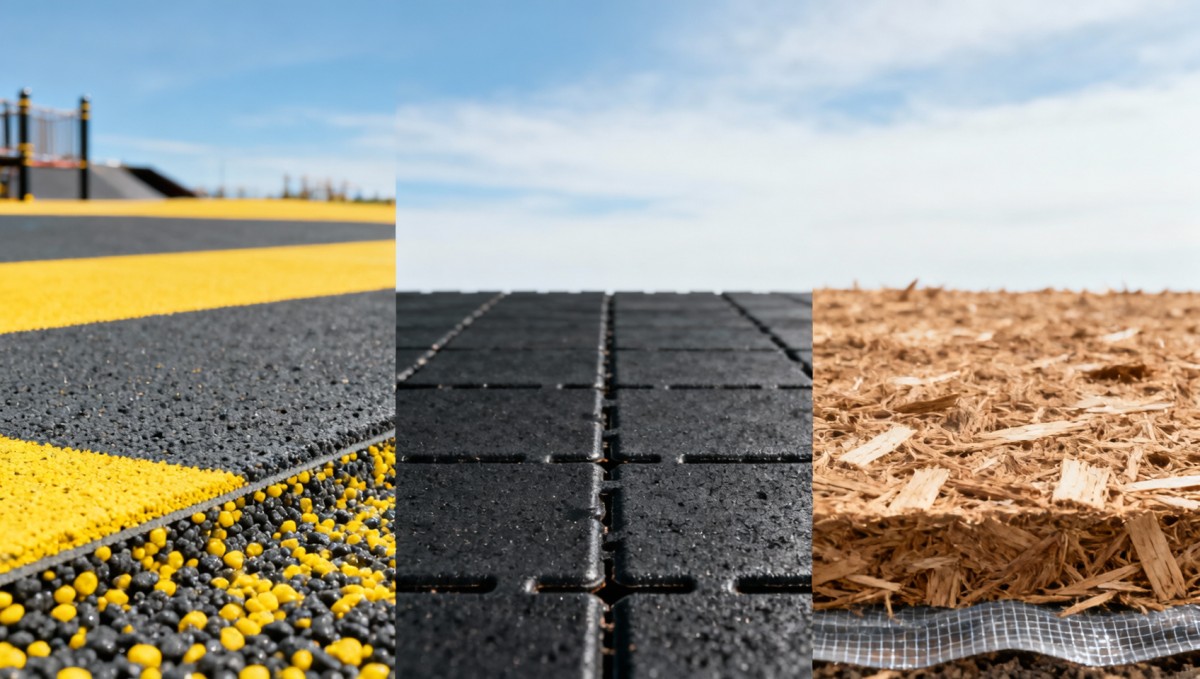
Lasting performance isn’t theoretical—it’s measurable across three non-negotiable axes: impact attenuation retention, colorfastness under UV exposure, and structural integrity after freeze-thaw cycling. Global Commercial Trade’s 2024 Amusement & Leisure Parks Sourcing Benchmark analyzed 47 certified surfacing suppliers across 11 countries using real-world site validation (not lab-only data).
Systems verified to maintain ASTM F1292 HIC ≤1000 at 2.0m drop height for ≥36 months share these traits: use of ≥30% recycled content *without* compromising binder resilience; inclusion of carbon-black-stabilized EPDM granules (not virgin SBR); and factory-applied UV inhibitors dosed at ≥1.2% by weight. These aren’t premium add-ons—they’re baseline technical prerequisites for longevity.
This table reflects field-verified performance—not catalog claims. Note the rubber tile category’s outlier longevity: its vulcanization process creates covalent cross-links resistant to thermal degradation and hydrolysis, making it ideal for high-traffic school entrances or transit-adjacent play zones where surface temperatures fluctuate sharply.
Procurement Checklist: 5 Non-Negotiable Validation Steps
Commercial buyers cannot rely on supplier self-certification alone. GCT’s Procurement Integrity Framework mandates five validation checkpoints before PO issuance—each tied to verifiable documentation or third-party audit evidence.
- Batch-Specific Test Reports: Require ASTM F3012 abrasion, F1951 accessibility, and F1292 impact attenuation data—dated within 90 days of shipment
- Climate Compatibility Matrix: Confirm material formulation matches local extremes: e.g., minimum service temp ≤−25°C for Nordic installations; UV index ≥11 for Middle East deployments
- Installer Certification Audit: Verify installer holds current IPEMA Accredited Installer status *and* has completed ≥3 similar-scale projects in the past 18 months
- Warranty Structure Review: Reject warranties covering only “defects in materials” without explicit coverage of performance decay (e.g., HIC drift >15% over 24 months)
- Post-Install Validation Protocol: Contractually mandate third-party HIC testing at 30, 180, and 360 days post-installation—with penalty clauses for non-compliance
Why Partner With Global Commercial Trade for Playground Sourcing
You’re not just buying surfacing—you’re securing long-term risk mitigation, brand reputation, and regulatory continuity. Global Commercial Trade delivers more than product listings: we provide procurement-grade intelligence calibrated to your exact project context—climate zone, user demographics (e.g., inclusive design for neurodiverse children), adjacent infrastructure (e.g., acoustic isolation from learning pods), and multi-year maintenance budgets.
Our Amusement & Leisure Parks sector team includes certified playground safety inspectors (CPSP), ASTM-compliant test lab partners, and OEM engineers with 15+ years’ experience in commercial surfacing R&D. When you engage GCT, you receive:
- Pre-vetted supplier shortlists filtered by ISO 9001/14001 certification, minimum 5-year field history, and regional service capacity (e.g., spare-part availability within 72 hours)
- Custom specification templates aligned with EN 1177, ASTM F1292, and ADAAG §246.2—pre-audited for enforceability
- Real-time delivery lead time tracking across 37 manufacturing hubs, including port-to-site logistics windows for bulk orders (>500 m²)
- Compliance dossier support: full documentation package ready for municipal safety audits or insurance submissions
Ready to move beyond speculative quotes and vendor promises? Contact GCT for a no-cost surfacing specification review—including material compatibility assessment, 3-year lifecycle cost modeling, and installer vetting protocol. Specify your project location, user age range, and annual maintenance budget—we’ll deliver actionable, audit-ready recommendations within 5 business days.
Search News
Hot Articles
- Watch OEM & SmartwatchesWatches & Wonders Geneva 2026: Audemars Piguet Returns, 10 New Brands Join, Behrens as Sole Chinese ExhibitorApr 11, 2026
- Watch OEM & SmartwatchesEU EN 16830:2026 Eyewear Standard Mandatory from April 2026, Chinese Exporters Need Certification Within 6 MonthsApr 11, 2026
- Smart Campus Tech2026 China Intl Education Expo: AI & Green Tech in SpotlightApr 11, 2026
Popular Tags
Need ExpertConsultation?
Connect with our specialized leisureengineering team for procurementstrategies.
Recommended News
 Apr 10, 2026Middle East Tensions Raise Shipping Risks in Hormuz Strait, Air Freight Costs for Sports Equipment Surge 12%Middle East tensions escalate shipping risks in Hormuz Strait, causing a 12% surge in air freight costs for sports equipment. Learn how this impacts supply chains and strategies to mitigate delays.● Theme Park Strategist
 Apr 12, 2026Why outdoor playground surfaces fail before year three—and what actually lastsDiscover why outdoor playground surfaces fail by Year 3—and what *actually* lasts. Expert insights on playground structures, inclusive playground design, swings, borders, custom furniture & more.● Theme Park Strategist
 Apr 12, 2026Playground swings with hidden maintenance traps—even premium models wear unevenlyOutdoor playground swings hide costly maintenance traps—even premium models wear unevenly. Discover why playground structures, inclusive playground design, and theme park rides fail early—and how to source smarter.● Theme Park Strategist
 Apr 12, 2026Theme park rides vs. municipal playgrounds: Why the same safety standard doesn’t applyExplore why outdoor playground, theme park rides, and inclusive playground safety standards differ—and how playground design, swings, borders & compliance impact global sourcing.● Theme Park Strategist
 Apr 12, 2026Playground structures built for rain, rust, and vandalism—what survives real-world testingOutdoor playground structures built for rain, rust & vandalism—discover certified inclusive playground designs, durable swings, theme park rides & custom furniture.● Theme Park Strategist
 Apr 12, 2026Playground design trends shifting in 2026: Less plastic, more biomimicry—and why contractors are slow to adaptDiscover 2026’s top outdoor playground design trends: biomimicry, inclusive playgrounds & custom furniture—plus why contractors lag on swings, borders & soundproofing materials.● Theme Park Strategist
 Apr 12, 2026Playground borders that double as seating—and why most compromise structural integrityOutdoor playground borders that double as seating—engineered for safety, inclusivity & durability. Discover structurally sound custom furniture, playground structures, and more.● Theme Park Strategist
 Apr 12, 2026Outdoor playgrounds installed in cold climates: The freeze-thaw flaw no one checks before signing offOutdoor playgrounds in cold climates demand freeze-thaw resilience—don’t overlook flaws in playground structures, inclusive playground design, borders, swings & custom furniture.● Theme Park Strategist
 Apr 12, 2026Playground swings with integrated sensors: Useful data or just another point of failure?Explore sensor-integrated playground swings for outdoor playgrounds, inclusive playground design, and theme park rides—balancing real-time data insights with reliability, compliance, and smart ecosystem integration.● Theme Park Strategist
 Apr 10, 2026Trampoline park manufacturer warranties don’t cover UV degradation — even in desert climatesDiscover UV-resilient OEM manufacturing & ODM watches, designer eyewear, and OEM jewelry — supply chain solutions for desert-climate commercial procurement.● Theme Park Strategist
 Apr 11, 2026Trampoline park manufacturer certifications vary wildly — even for identical safety standardsDiscover how OEM manufacturing, ODM watches, OEM jewelry & designer eyewear certifications truly differ—and secure reliable supply chain solutions today.● Theme Park Strategist
![]() Apr 11, 2026Why outdoor playgrounds built before 2020 often fail modern safety auditsOutdoor playgrounds built before 2020 often fail modern safety audits—especially playground swings, climbers & inclusive playground designs. Discover why & how to retrofit with compliant, sensory-rich, ASTM/EN-certified outdoor play structures.● Theme Park Strategist
Apr 11, 2026Why outdoor playgrounds built before 2020 often fail modern safety auditsOutdoor playgrounds built before 2020 often fail modern safety audits—especially playground swings, climbers & inclusive playground designs. Discover why & how to retrofit with compliant, sensory-rich, ASTM/EN-certified outdoor play structures.● Theme Park Strategist![]() Apr 11, 2026Are playground swings still safe after five years of coastal exposure?Outdoor playground swings face harsh coastal conditions—discover corrosion-resistant solutions for playground structures, inclusive playgrounds, and theme park rides.● Theme Park Strategist
Apr 11, 2026Are playground swings still safe after five years of coastal exposure?Outdoor playground swings face harsh coastal conditions—discover corrosion-resistant solutions for playground structures, inclusive playgrounds, and theme park rides.● Theme Park Strategist![]() Apr 11, 2026Theme park rides vs. municipal playground structures: where do maintenance costs diverge?Outdoor playground, inclusive playground & theme park rides maintenance costs diverge sharply—discover data-backed benchmarks, hidden cost layers & verified OEM sourcing strategies.● Theme Park Strategist
Apr 11, 2026Theme park rides vs. municipal playground structures: where do maintenance costs diverge?Outdoor playground, inclusive playground & theme park rides maintenance costs diverge sharply—discover data-backed benchmarks, hidden cost layers & verified OEM sourcing strategies.● Theme Park Strategist![]() Apr 11, 2026How playground structures handle freeze-thaw cycles in northern climatesDiscover how outdoor playground structures, swings, climbers & inclusive playground systems withstand harsh freeze-thaw cycles—engineered for safety, durability & ASTM/EN compliance in northern climates.● Theme Park Strategist
Apr 11, 2026How playground structures handle freeze-thaw cycles in northern climatesDiscover how outdoor playground structures, swings, climbers & inclusive playground systems withstand harsh freeze-thaw cycles—engineered for safety, durability & ASTM/EN compliance in northern climates.● Theme Park Strategist![]() Apr 11, 2026Inclusive playgrounds that pass ADA audits — and those that don’tInclusive playground, outdoor playground & sensory playground designs that pass ADA audits—avoid costly retrofits. See why playground swings, climbers, music accessories & theme park rides fail.● Theme Park Strategist
Apr 11, 2026Inclusive playgrounds that pass ADA audits — and those that don’tInclusive playground, outdoor playground & sensory playground designs that pass ADA audits—avoid costly retrofits. See why playground swings, climbers, music accessories & theme park rides fail.● Theme Park Strategist![]() Apr 11, 2026Playground design mistakes that delay municipal approvals by 3+ monthsAvoid 3+ month delays! Fix outdoor playground, inclusive playground & sensory playground design mistakes—get ASTM/EN-compliant playground structures, swings, climbers & music accessories now.● Theme Park Strategist
Apr 11, 2026Playground design mistakes that delay municipal approvals by 3+ monthsAvoid 3+ month delays! Fix outdoor playground, inclusive playground & sensory playground design mistakes—get ASTM/EN-compliant playground structures, swings, climbers & music accessories now.● Theme Park Strategist![]() Apr 11, 2026Sensory playgrounds with real therapeutic input — or just marketing buzz?Sensory playground, inclusive playground & outdoor playground designs with clinical validation—not just buzz. Discover evidence-based playground swings, climbers, music accessories & more.● Theme Park Strategist
Apr 11, 2026Sensory playgrounds with real therapeutic input — or just marketing buzz?Sensory playground, inclusive playground & outdoor playground designs with clinical validation—not just buzz. Discover evidence-based playground swings, climbers, music accessories & more.● Theme Park Strategist![]() Apr 11, 2026Playground climbers installed on slopes: what the engineering reports rarely mentionOutdoor playground climbers on slopes demand expert engineering—discover hidden risks in inclusive playground, sensory playground & outdoor play structures design.● Theme Park Strategist
Apr 11, 2026Playground climbers installed on slopes: what the engineering reports rarely mentionOutdoor playground climbers on slopes demand expert engineering—discover hidden risks in inclusive playground, sensory playground & outdoor play structures design.● Theme Park Strategist![]() Apr 11, 2026Outdoor play structures rated for high-wind zones — and why most spec sheets hide the dataOutdoor playground structures rated for high-wind zones — discover certified outdoor play structures, inclusive playgrounds, sensory playgrounds & more.● Theme Park Strategist
Apr 11, 2026Outdoor play structures rated for high-wind zones — and why most spec sheets hide the dataOutdoor playground structures rated for high-wind zones — discover certified outdoor play structures, inclusive playgrounds, sensory playgrounds & more.● Theme Park Strategist![]() Apr 11, 2026Do inclusive playgrounds really reduce supervision ratios — or increase liability risk?Inclusive playground, outdoor playground, and sensory playground designs impact supervision ratios & liability risk—discover evidence-based sourcing strategies for playground swings, climbers, theme park rides, and music accessories.● Theme Park Strategist
Apr 11, 2026Do inclusive playgrounds really reduce supervision ratios — or increase liability risk?Inclusive playground, outdoor playground, and sensory playground designs impact supervision ratios & liability risk—discover evidence-based sourcing strategies for playground swings, climbers, theme park rides, and music accessories.● Theme Park Strategist![]() Apr 11, 2026The hidden corrosion risk in galvanized steel playground swingsOutdoor playground swings & structures face hidden corrosion risks—discover why galvanized steel fails in real-world conditions and how to specify safer, longer-lasting playground design, inclusive playgrounds, and theme park rides.● Theme Park Strategist
Apr 11, 2026The hidden corrosion risk in galvanized steel playground swingsOutdoor playground swings & structures face hidden corrosion risks—discover why galvanized steel fails in real-world conditions and how to specify safer, longer-lasting playground design, inclusive playgrounds, and theme park rides.● Theme Park Strategist![]() Apr 11, 2026Sensory playgrounds using recycled rubber — does performance degrade after 4 seasons?Outdoor playground & sensory playground systems using recycled rubber — tested for 4-season durability, safety, and inclusivity. Explore real performance data on playground swings, climbers, and inclusive playground design.● Theme Park Strategist
Apr 11, 2026Sensory playgrounds using recycled rubber — does performance degrade after 4 seasons?Outdoor playground & sensory playground systems using recycled rubber — tested for 4-season durability, safety, and inclusivity. Explore real performance data on playground swings, climbers, and inclusive playground design.● Theme Park Strategist![]() Apr 11, 2026Playground design for multi-generational use: what ‘accessible’ misses in practiceDiscover truly inclusive outdoor playground design—beyond compliance. Explore sensory playgrounds, playground swings for all ages, theme park rides-inspired engagement, and accessible playground structures with music accessories & climbers.● Theme Park Strategist
Apr 11, 2026Playground design for multi-generational use: what ‘accessible’ misses in practiceDiscover truly inclusive outdoor playground design—beyond compliance. Explore sensory playgrounds, playground swings for all ages, theme park rides-inspired engagement, and accessible playground structures with music accessories & climbers.● Theme Park Strategist