2026 China Intl Education Expo: AI & Green Tech in Spotlight
The 2026 China International Education Exhibition, launched on April 10 across five cities including Beijing and Chengdu, has drawn 242 universities and institutions from 26 countries. Notably, the event highlights growing global demand for China's AI-powered education solutions and sustainable training equipment, with first-time participants like the UK, Kazakhstan, and Georgia showcasing procurement needs for smart classrooms and low-carbon workshops. The concurrent release of 'Study Abroad Digital Platform 2.0' and spring recruitment for returnees further underscores the exhibition's industry significance.
Event Overview
Running from April 10, 2026, the exhibition features 242 educational institutions from 26 countries, including debut national pavilions from the UK, Kazakhstan, and Georgia. Key highlights include live demonstrations of AI-powered smart classrooms and eco-friendly training workshops. The organizer simultaneously upgraded the digital service platform for overseas students and launched a dedicated recruitment channel for returnees.
Impact on Key Industries
EdTech Solution Providers
The exhibition reveals substantial international demand for Chinese-developed AI education tools, particularly smart classroom systems. Participating institutions from Europe and Central Asia have expressed batch procurement intentions, signaling export opportunities for interactive whiteboards, adaptive learning platforms, and classroom management software.
Green Training Equipment Manufacturers
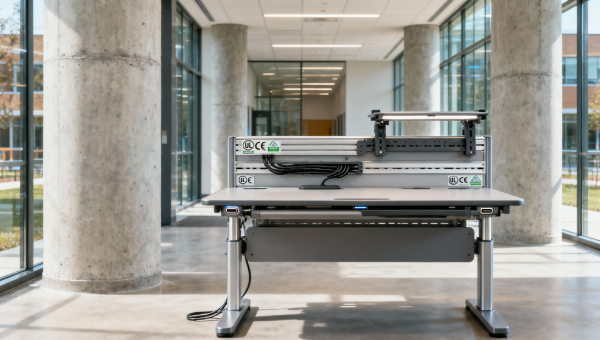
Multiple exhibitors showcased specifications for sustainable vocational training facilities, including energy-efficient welding simulators and solar-powered maintenance workstations. This aligns with global education sector's decarbonization trends, creating potential for Chinese manufacturers specializing in renewable energy-powered training devices.
Education Service Agencies
The upgraded digital platform and recruitment events indicate structural changes in study abroad services. Agencies may need to shift from traditional consultancy to integrated services covering pre-departure digital orientation, overseas academic support, and post-return career bridging.
Strategic Considerations
Track Emerging Procurement Patterns
Exhibitors from Belt and Road countries showed particular interest in vocational education solutions combining AI and sustainability. Suppliers should analyze technical specifications from Kazakhstan and Georgia's booths for market adaptation insights.
Evaluate Partnership Models
Several European universities proposed joint laboratory setups rather than outright purchases. Equipment manufacturers might consider flexible financing or lease-to-own arrangements to address budget constraints.
Leverage Digital Integration
The new platform's API documentation suggests upcoming third-party service integration. EdTech firms should prepare standardized data interfaces to capitalize on potential ecosystem partnerships.
Industry Perspective
Analysis suggests this event marks a strategic pivot in global education procurement - from standalone hardware to integrated smart solutions with sustainability credentials. While current orders remain modest, the exhibition's format (combining trade fair, policy announcement, and recruitment) indicates China's ambition to position its education exports as comprehensive service packages rather than commodity products.
Conclusion
The exhibition serves as both a demand indicator and capability showcase for China's education technology sector. More than a trade event, it reflects structural shifts in global education procurement priorities toward digitalization and environmental responsibility. Industry players should monitor follow-up MOUs and actual procurement volumes to distinguish market signals from ceremonial agreements.
Sources
1. Official press release from China Education Association for International Exchange (April 10, 2026)
2. Exhibition floor plan and participant list (verified April 11, 2026)
3. Pending verification: Reported procurement intentions from Central Asian delegations (to be confirmed through post-event trade data)
Search News
Hot Articles
- Watch OEM & SmartwatchesWatches & Wonders Geneva 2026: Audemars Piguet Returns, 10 New Brands Join, Behrens as Sole Chinese ExhibitorApr 11, 2026
- Watch OEM & SmartwatchesEU EN 16830:2026 Eyewear Standard Mandatory from April 2026, Chinese Exporters Need Certification Within 6 MonthsApr 11, 2026
- Smart Campus Tech2026 China Intl Education Expo: AI & Green Tech in SpotlightApr 11, 2026
Popular Tags
Need ExpertConsultation?
Connect with our specialized leisureengineering team for procurementstrategies.
Recommended News
 Apr 11, 20262026 China Intl Education Expo: AI & Green Tech in SpotlightExplore AI & green tech trends at 2026 China Intl Education Expo: 242 global institutions showcase smart classrooms & sustainable training solutions. Discover export opportunities for EdTech and eco-friendly equipment.● Institutional Buyer
 Apr 11, 2026China-Russia Vocational Education Week Launches with Bilingual Textbook ReleaseThe China-Russia Vocational Education Week 2026 launched with bilingual textbook releases, boosting cross-border collaboration in electromechanics, healthcare & digital commerce. Explore new SCO education standards & partnership opportunities.● Institutional Buyer
 Apr 11, 2026China's Smart Education Platform Upgrade Spurs Global AI Teaching Tool DemandChina's AI-powered education platform upgrade boosts global demand for smart teaching tools, featuring multilingual assistants and API integration. Discover how this impacts EdTech exporters and vocational training providers.● Institutional Buyer
 Apr 09, 2026Chengdu Implements Spring Break for Schools, Boosting Study Tour and Camp Equipment ExportsChengdu's new spring break policy boosts study tour & camp equipment exports, creating a $200M opportunity for manufacturers. Learn how to capitalize on this demand surge now.● Institutional Buyer
 Apr 09, 2026China-Russia Vocational Education Week Launches with Bilingual Textbook ReleaseChina-Russia Vocational Education Week launches bilingual textbooks for智能制造 and新能源汽车 sectors, creating export opportunities for vocational training providers. Discover how this impacts edtech and curriculum localization markets.● Institutional Buyer
 Apr 09, 2026Vocational Health Education Collaboration Expands Global Reach with New StandardsVocational health education reaches new global standards with China's 2026 initiative, featuring Luban Workshop standards and cross-border cloud platforms. Explore opportunities for healthcare training, edtech, and equipment exports in emerging markets.● Institutional Buyer
 Apr 09, 2026China's Education Ministry Launches Sunshine Enrollment Campaign, Impacting International School ProgramsChina's Sunshine Enrollment Campaign tightens regulations on international school programs, impacting A-Level/IB/AP providers with new localization requirements. Learn how this affects curriculum partnerships and compliance strategies.● Institutional Buyer
 Apr 09, 2026China's Smart Education Platform Upgrade Sparks Global Demand for AI ToolsChina's AI education platform upgrade drives global demand for smart teaching tools, creating export opportunities in Southeast Asia and beyond. Discover how edtech exporters can capitalize on this trend.● Institutional Buyer
 Apr 07, 2026China's National Smart Education Platform Upgraded, Boosting AI EdTech ExportsChina's upgraded National Smart Education Platform boosts AI EdTech exports with new AI-driven features and international accessibility, creating opportunities for EdTech providers and localization services worldwide.● Institutional Buyer
 Apr 07, 2026China's 2026 School Admissions Policy Impacts International Education ProvidersChina's 2026 school admissions policy reshapes international education landscape, impacting IB, AP & A-Level providers with new compliance requirements. Learn how global education stakeholders can adapt.● Institutional Buyer
 Apr 04, 2026Smart Campus Tech Procurement Is Pulling From Office Supplies Manufacturers — Here’s WhyOffice supplies manufacturer? Smart campuses now choose trusted office supplies suppliers, OEM manufacturers & B2B exporters for integrated infrastructure—discover why.● Institutional Buyer
 Mar 31, 2026Nature Spotlights Tianli Education's AGI Path: AI+Education Export Model Gains Global Academic RecognitionNature highlights Tianli Education's AI+Education model, recognized globally for transforming teaching with AGI. Discover how this scalable, data-driven approach is reshaping EdTech and smart campuses worldwide.● Institutional Buyer
 Mar 31, 2026Shenzhen Institute of Technology and Chongqing No.1 High School Co-build 'One Student One Chip' Lab: University Research Resources Extended to Secondary Schools, Providing Real Teaching Validation Scenarios for China's STEM Educational Equipment ExportsShenzhen Institute of Technology & Chongqing No.1 High School launch 'One Student One Chip' lab, bringing AI & chip design to secondary schools. This university-school-industry model sets new STEM education standards for global exports.● Institutional Buyer
 Mar 31, 2026Haidian District's Moral Education Work Conference Focuses on 'Collaborative Governance': Upgraded Home-School-Community Linkage Mechanism Boosts Export Potential of China's Campus Psychological Assessment Systems, Digital Moral Education Platforms, and AI Teacher Development AssistantsHaidian District's moral education conference highlights China's export potential in campus psychological assessment systems, digital moral education platforms, and AI teacher development tools. Learn how collaborative governance boosts global edtech opportunities.● Institutional Buyer
 Mar 31, 2026Jilin Province Launches Crackdown on Education Over-Competition: Shifting Focus from Scores to Holistic DevelopmentJilin Province cracks down on education over-competition, shifting from scores to holistic development. Impacts training providers, edtech firms & global manufacturers. Explore policy changes & market opportunities now.● Institutional Buyer
 Mar 31, 2026China's Spring and Autumn Holiday Policy Boosts Demand for Non-Academic Educational Tools and STEAM KitsChina's new spring/autumn holiday policy boosts demand for STEAM kits & non-academic educational tools. Learn how manufacturers can capitalize on this shift with certified learning materials.● Institutional Buyer
 Mar 31, 2026World Champion Xie Jun Visits Chongqing No.1 High School: Chess Classroom and 'One Student, One Chip' Lab Inaugurated, China's Integrated Intellectual Education Solution Gains International AttentionWorld Chess Champion Xie Jun launches 'Smart Chess Education' at Chongqing No.1 High School, featuring AI chess terminals and FPGA chip labs. China's integrated intellectual education solution attracts global interest from UAE, Thailand & Poland.● Institutional Buyer
 Mar 31, 2026Zhongshan's 2026 Off-Campus Training Regulatory Conference: Stricter Controls on Subject-Based Training and Nationwide Promotion of 'Pay-After-Learning' Model Impacting China's EdTech SaaS and Smart Teaching Tools Export ComplianceZhongshan's 2026 Off-Campus Training Conference introduces stricter controls on subject-based training and nationwide 'Pay-After-Learning' model, impacting EdTech SaaS and smart teaching tools export compliance. Learn how this affects your business strategy.● Institutional Buyer
 Mar 30, 2026World Champion Xie Jun Visits Chongqing No.1 High School: Chess Classroom and 'One Student One Chip' Lab Inaugurated, China's Integrated Cognitive Education Model Gains Global AttentionWorld Champion Xie Jun launches chess classroom & 'One Student One Chip' lab at Chongqing No.1 High School, showcasing China's innovative cognitive education model attracting global interest from UAE, Chile & edtech investors.● Institutional Buyer
 Mar 30, 2026Zhongshan City’s 2026 Off-Campus Training Regulations: Stricter Oversight on Academic Tutoring and ‘Pay-After-Learning’ Model to Shape EdTech SaaS Compliance for Global MarketsZhongshan City’s 2026 regulations enforce stricter oversight on academic tutoring and mandate 'Pay-After-Learning' models, reshaping EdTech SaaS compliance for global markets. Learn how this impacts tutoring platforms and cross-border education technology trade.● Institutional Buyer
 Mar 30, 2026Fiber Optic Cable Bidding Prices Soar 178%: Heilongjiang Telecom's G.652.D Cable Transaction Price Hits 155.7 Yuan/Core-Kilometer, Pressuring China's Communication Equipment Export CostsFiber optic cable prices surge 178% as Heilongjiang Telecom's G.652.D deal hits 155.7 yuan/core-km, pressuring global telecom costs. Learn how this impacts 5G projects and OEM strategies.● Institutional Buyer
 Mar 27, 2026Nanjing Audit University's Educational Ecosystem Practice Promoted at the 3rd National Social Psychological Service Conference, Providing a 'Localized Mental Health Service' Chinese Solution for Overseas InstitutionsNanjing Audit University's mental health education model, featuring 'Localized Mental Health Service,' was showcased at the 3rd National Social Psychological Service Conference and adopted by Malaysia's Ministry of Education. Discover how this Chinese solution is transforming global mental health services in education.● Institutional Buyer
 Mar 27, 2026Huairou Science City Opens 17 Major Scientific Facilities Globally, Offering STEM Education Institutions Access to Cutting-Edge Research InfrastructureHuairou Science City opens 17 cutting-edge scientific facilities globally, offering STEM education institutions access to advanced research infrastructure like the Space Environment Monitoring Network. A game-changer for international STEM collaboration and curriculum development.● Institutional Buyer
 Mar 27, 2026Global STEM Education Paradigm Shift: High-Level Thinking Becomes Key Metric for Chinese EdTech SolutionsDiscover how global STEM education shifts prioritize high-level thinking skills for Chinese EdTech solutions. Learn critical impacts on curriculum, hardware, and teacher training in this paradigm change.● Institutional Buyer