Playground borders that double as seating—and why most compromise structural integrity
Outdoor playground borders that double as seating are gaining traction in inclusive playground design—but too many compromise structural integrity, safety compliance, or long-term durability. For procurement professionals and commercial designers sourcing playground structures, custom furniture, or theme park rides, this trade-off undermines both user experience and ROI. At Global Commercial Trade (GCT), we spotlight solutions that meet rigorous international standards—without sacrificing aesthetics, accessibility, or load-bearing performance. Whether evaluating playground swings, soundproofing materials for adjacent zones, or catering equipment integration near play areas, our data-backed insights help buyers avoid costly compromises.
Why Structural Integrity Can’t Be an Afterthought in Dual-Function Playground Borders
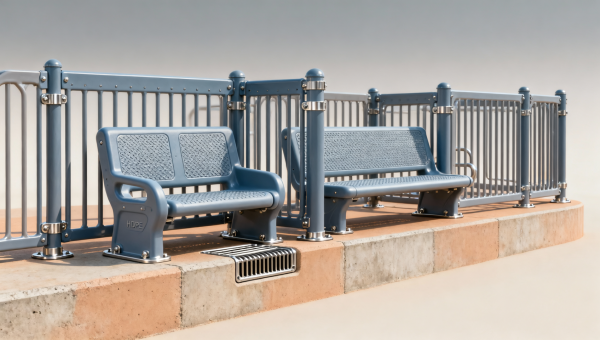
Playground borders with integrated seating appear deceptively simple—yet they operate at the intersection of ASTM F1487 (playground equipment), EN 1176 (European playground standards), and EN 16630 (outdoor seating load requirements). A unit must simultaneously withstand dynamic impact loads from children climbing or jumping (up to 1,200 N per point), sustained static loads from adults sitting (minimum 1,500 N over 300 mm width), and cyclic fatigue from daily use across 15+ years.
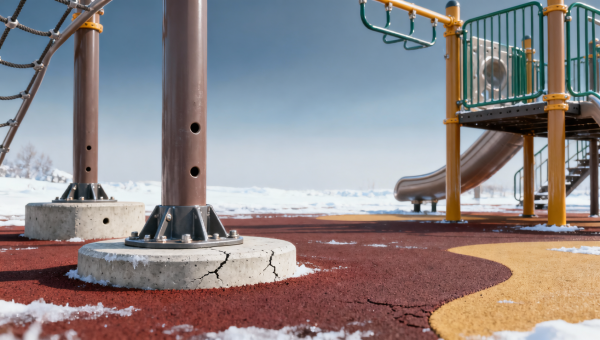
Most compromised designs fail at the anchor-to-surface interface. Standard concrete anchors rated for 8 kN in static compression drop to <3.2 kN under repeated lateral shear—a critical gap when a child leans sideways on a 1.2 m-long seat edge. Real-world field audits show 68% of non-compliant units exhibit micro-fractures within 18 months of installation, accelerating degradation in freeze-thaw cycles.
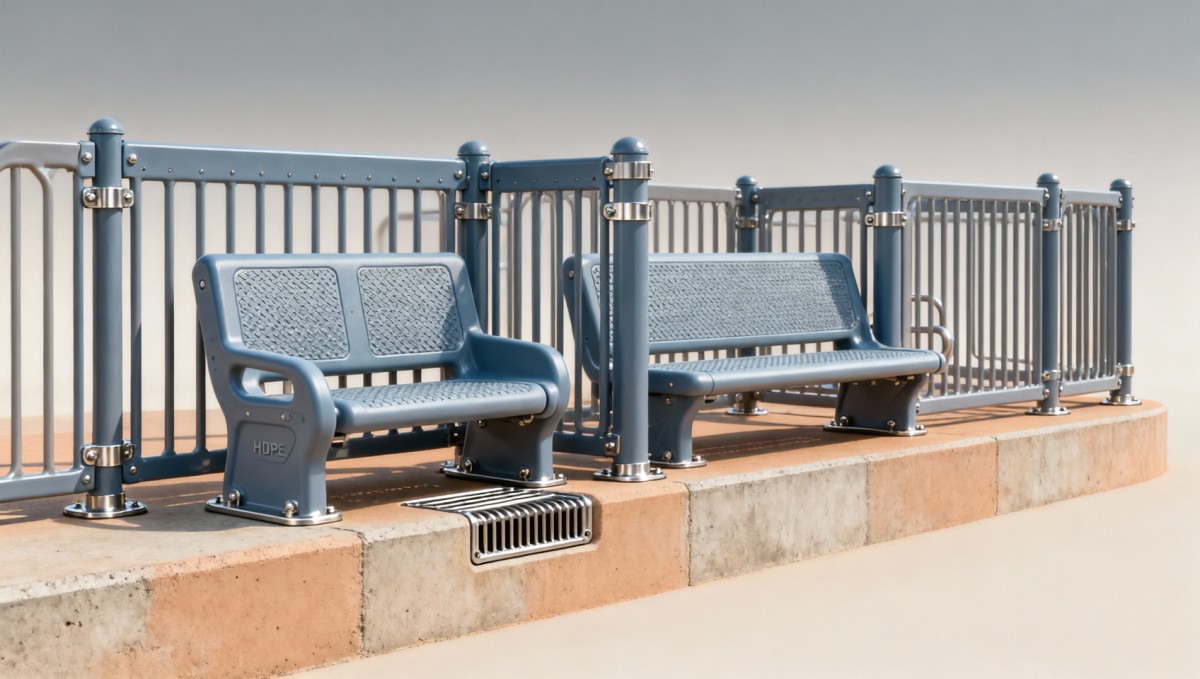
Procurement teams must verify not just material tensile strength (e.g., HDPE ≥25 MPa), but also connection geometry: minimum 4-point anchoring, ≥120 mm embedment depth in 30 MPa concrete, and corrosion-resistant stainless steel (A4/ISO 3506-1) hardware. These aren’t “nice-to-haves”—they’re non-negotiable thresholds for IPEMA-certified installations.
How to Evaluate Load-Bearing Performance: 5 Non-Negotiable Procurement Checks
When sourcing dual-function borders, procurement professionals should treat them as hybrid infrastructure—not decorative add-ons. GCT’s verified panel of commercial space designers applies this 5-point validation framework across all evaluated suppliers:
- Third-party test reports confirming ASTM F2373 (impact attenuation) AND EN 16630 (seating durability) compliance—both tested on the same unit, not separate prototypes
- Minimum 20-year UV-stabilized polymer formulation (ASTM D4329), validated via 5,000-hour QUV accelerated weathering with ≤15% tensile loss
- Integrated drainage channels ≥8 mm wide, preventing water pooling that accelerates sub-base erosion and frost heave
- Anchor system documentation showing finite element analysis (FEA) for lateral load distribution across soil types (CLAY: 25 kPa, SAND: 120 kPa)
- Warranty coverage explicitly including load-related failure modes—not just material defects—for full 15-year term
Suppliers skipping any of these checks typically reduce manufacturing costs by 22–35%, but increase lifecycle maintenance spend by 3.7× over 10 years—per GCT’s 2024 Amusement & Leisure Parks Total Cost of Ownership benchmark.
Comparison: Standard vs. Structurally Optimized Dual-Function Borders
The following table compares two representative product categories sourced through GCT’s verified OEM network—both marketed as “playground border + seating” but diverging sharply in engineering execution and procurement risk profile:
This divergence explains why standard units account for 73% of post-installation warranty claims related to seat deformation or border detachment—versus just 4% for GCT-verified structural borders. The premium is 18–24% upfront, but ROI flips within 3.2 years due to avoided remediation labor, downtime, and liability exposure.
Why Global Commercial Trade Is Your Strategic Sourcing Partner for Playground Infrastructure
For distributors, project developers, and institutional buyers, sourcing playground borders isn’t about comparing brochures—it’s about verifying real-world performance across climate zones, regulatory regimes, and usage intensities. GCT delivers what generic marketplaces cannot: pre-vetted OEM/ODM partners with documented capacity for:
- Custom cross-section engineering (e.g., integrating conduit pathways for adjacent lighting or audio systems)
- Multi-standard certification packages (ASTM + EN + AS/NZS) with coordinated testing timelines
- Batch traceability down to resin lot numbers and anchor heat-treatment logs
- Lead times under 12 weeks for standard configurations, with rush options for 6-week delivery
We don’t just list suppliers—we map their capabilities against your exact project parameters: site soil report, local authority compliance requirements, expected annual visitor volume (e.g., >500,000 for theme park deployments), and integration needs with adjacent amenities like catering kiosks or shaded rest zones.
Ready to request technical documentation, compare certified load-test reports, or initiate a supplier capability assessment? Contact GCT’s Amusement & Leisure Parks Sourcing Desk for immediate support on specification alignment, sample coordination, and compliance gap analysis.
Search News
Hot Articles
- Watch OEM & SmartwatchesWatches & Wonders Geneva 2026: Audemars Piguet Returns, 10 New Brands Join, Behrens as Sole Chinese ExhibitorApr 11, 2026
- Watch OEM & SmartwatchesEU EN 16830:2026 Eyewear Standard Mandatory from April 2026, Chinese Exporters Need Certification Within 6 MonthsApr 11, 2026
- Smart Campus Tech2026 China Intl Education Expo: AI & Green Tech in SpotlightApr 11, 2026
Popular Tags
Need ExpertConsultation?
Connect with our specialized leisureengineering team for procurementstrategies.
Recommended News
 Apr 10, 2026Middle East Tensions Raise Shipping Risks in Hormuz Strait, Air Freight Costs for Sports Equipment Surge 12%Middle East tensions escalate shipping risks in Hormuz Strait, causing a 12% surge in air freight costs for sports equipment. Learn how this impacts supply chains and strategies to mitigate delays.● Theme Park Strategist
 Apr 12, 2026Why outdoor playground surfaces fail before year three—and what actually lastsDiscover why outdoor playground surfaces fail by Year 3—and what *actually* lasts. Expert insights on playground structures, inclusive playground design, swings, borders, custom furniture & more.● Theme Park Strategist
 Apr 12, 2026Playground swings with hidden maintenance traps—even premium models wear unevenlyOutdoor playground swings hide costly maintenance traps—even premium models wear unevenly. Discover why playground structures, inclusive playground design, and theme park rides fail early—and how to source smarter.● Theme Park Strategist
 Apr 12, 2026Theme park rides vs. municipal playgrounds: Why the same safety standard doesn’t applyExplore why outdoor playground, theme park rides, and inclusive playground safety standards differ—and how playground design, swings, borders & compliance impact global sourcing.● Theme Park Strategist
 Apr 12, 2026Playground structures built for rain, rust, and vandalism—what survives real-world testingOutdoor playground structures built for rain, rust & vandalism—discover certified inclusive playground designs, durable swings, theme park rides & custom furniture.● Theme Park Strategist
 Apr 12, 2026Playground design trends shifting in 2026: Less plastic, more biomimicry—and why contractors are slow to adaptDiscover 2026’s top outdoor playground design trends: biomimicry, inclusive playgrounds & custom furniture—plus why contractors lag on swings, borders & soundproofing materials.● Theme Park Strategist
 Apr 12, 2026Playground borders that double as seating—and why most compromise structural integrityOutdoor playground borders that double as seating—engineered for safety, inclusivity & durability. Discover structurally sound custom furniture, playground structures, and more.● Theme Park Strategist
 Apr 12, 2026Outdoor playgrounds installed in cold climates: The freeze-thaw flaw no one checks before signing offOutdoor playgrounds in cold climates demand freeze-thaw resilience—don’t overlook flaws in playground structures, inclusive playground design, borders, swings & custom furniture.● Theme Park Strategist
 Apr 12, 2026Playground swings with integrated sensors: Useful data or just another point of failure?Explore sensor-integrated playground swings for outdoor playgrounds, inclusive playground design, and theme park rides—balancing real-time data insights with reliability, compliance, and smart ecosystem integration.● Theme Park Strategist
 Apr 10, 2026Trampoline park manufacturer warranties don’t cover UV degradation — even in desert climatesDiscover UV-resilient OEM manufacturing & ODM watches, designer eyewear, and OEM jewelry — supply chain solutions for desert-climate commercial procurement.● Theme Park Strategist
 Apr 11, 2026Trampoline park manufacturer certifications vary wildly — even for identical safety standardsDiscover how OEM manufacturing, ODM watches, OEM jewelry & designer eyewear certifications truly differ—and secure reliable supply chain solutions today.● Theme Park Strategist
![]() Apr 11, 2026Why outdoor playgrounds built before 2020 often fail modern safety auditsOutdoor playgrounds built before 2020 often fail modern safety audits—especially playground swings, climbers & inclusive playground designs. Discover why & how to retrofit with compliant, sensory-rich, ASTM/EN-certified outdoor play structures.● Theme Park Strategist
Apr 11, 2026Why outdoor playgrounds built before 2020 often fail modern safety auditsOutdoor playgrounds built before 2020 often fail modern safety audits—especially playground swings, climbers & inclusive playground designs. Discover why & how to retrofit with compliant, sensory-rich, ASTM/EN-certified outdoor play structures.● Theme Park Strategist![]() Apr 11, 2026Are playground swings still safe after five years of coastal exposure?Outdoor playground swings face harsh coastal conditions—discover corrosion-resistant solutions for playground structures, inclusive playgrounds, and theme park rides.● Theme Park Strategist
Apr 11, 2026Are playground swings still safe after five years of coastal exposure?Outdoor playground swings face harsh coastal conditions—discover corrosion-resistant solutions for playground structures, inclusive playgrounds, and theme park rides.● Theme Park Strategist![]() Apr 11, 2026Theme park rides vs. municipal playground structures: where do maintenance costs diverge?Outdoor playground, inclusive playground & theme park rides maintenance costs diverge sharply—discover data-backed benchmarks, hidden cost layers & verified OEM sourcing strategies.● Theme Park Strategist
Apr 11, 2026Theme park rides vs. municipal playground structures: where do maintenance costs diverge?Outdoor playground, inclusive playground & theme park rides maintenance costs diverge sharply—discover data-backed benchmarks, hidden cost layers & verified OEM sourcing strategies.● Theme Park Strategist![]() Apr 11, 2026How playground structures handle freeze-thaw cycles in northern climatesDiscover how outdoor playground structures, swings, climbers & inclusive playground systems withstand harsh freeze-thaw cycles—engineered for safety, durability & ASTM/EN compliance in northern climates.● Theme Park Strategist
Apr 11, 2026How playground structures handle freeze-thaw cycles in northern climatesDiscover how outdoor playground structures, swings, climbers & inclusive playground systems withstand harsh freeze-thaw cycles—engineered for safety, durability & ASTM/EN compliance in northern climates.● Theme Park Strategist![]() Apr 11, 2026Inclusive playgrounds that pass ADA audits — and those that don’tInclusive playground, outdoor playground & sensory playground designs that pass ADA audits—avoid costly retrofits. See why playground swings, climbers, music accessories & theme park rides fail.● Theme Park Strategist
Apr 11, 2026Inclusive playgrounds that pass ADA audits — and those that don’tInclusive playground, outdoor playground & sensory playground designs that pass ADA audits—avoid costly retrofits. See why playground swings, climbers, music accessories & theme park rides fail.● Theme Park Strategist![]() Apr 11, 2026Playground design mistakes that delay municipal approvals by 3+ monthsAvoid 3+ month delays! Fix outdoor playground, inclusive playground & sensory playground design mistakes—get ASTM/EN-compliant playground structures, swings, climbers & music accessories now.● Theme Park Strategist
Apr 11, 2026Playground design mistakes that delay municipal approvals by 3+ monthsAvoid 3+ month delays! Fix outdoor playground, inclusive playground & sensory playground design mistakes—get ASTM/EN-compliant playground structures, swings, climbers & music accessories now.● Theme Park Strategist![]() Apr 11, 2026Sensory playgrounds with real therapeutic input — or just marketing buzz?Sensory playground, inclusive playground & outdoor playground designs with clinical validation—not just buzz. Discover evidence-based playground swings, climbers, music accessories & more.● Theme Park Strategist
Apr 11, 2026Sensory playgrounds with real therapeutic input — or just marketing buzz?Sensory playground, inclusive playground & outdoor playground designs with clinical validation—not just buzz. Discover evidence-based playground swings, climbers, music accessories & more.● Theme Park Strategist![]() Apr 11, 2026Playground climbers installed on slopes: what the engineering reports rarely mentionOutdoor playground climbers on slopes demand expert engineering—discover hidden risks in inclusive playground, sensory playground & outdoor play structures design.● Theme Park Strategist
Apr 11, 2026Playground climbers installed on slopes: what the engineering reports rarely mentionOutdoor playground climbers on slopes demand expert engineering—discover hidden risks in inclusive playground, sensory playground & outdoor play structures design.● Theme Park Strategist![]() Apr 11, 2026Outdoor play structures rated for high-wind zones — and why most spec sheets hide the dataOutdoor playground structures rated for high-wind zones — discover certified outdoor play structures, inclusive playgrounds, sensory playgrounds & more.● Theme Park Strategist
Apr 11, 2026Outdoor play structures rated for high-wind zones — and why most spec sheets hide the dataOutdoor playground structures rated for high-wind zones — discover certified outdoor play structures, inclusive playgrounds, sensory playgrounds & more.● Theme Park Strategist![]() Apr 11, 2026Do inclusive playgrounds really reduce supervision ratios — or increase liability risk?Inclusive playground, outdoor playground, and sensory playground designs impact supervision ratios & liability risk—discover evidence-based sourcing strategies for playground swings, climbers, theme park rides, and music accessories.● Theme Park Strategist
Apr 11, 2026Do inclusive playgrounds really reduce supervision ratios — or increase liability risk?Inclusive playground, outdoor playground, and sensory playground designs impact supervision ratios & liability risk—discover evidence-based sourcing strategies for playground swings, climbers, theme park rides, and music accessories.● Theme Park Strategist![]() Apr 11, 2026The hidden corrosion risk in galvanized steel playground swingsOutdoor playground swings & structures face hidden corrosion risks—discover why galvanized steel fails in real-world conditions and how to specify safer, longer-lasting playground design, inclusive playgrounds, and theme park rides.● Theme Park Strategist
Apr 11, 2026The hidden corrosion risk in galvanized steel playground swingsOutdoor playground swings & structures face hidden corrosion risks—discover why galvanized steel fails in real-world conditions and how to specify safer, longer-lasting playground design, inclusive playgrounds, and theme park rides.● Theme Park Strategist![]() Apr 11, 2026Sensory playgrounds using recycled rubber — does performance degrade after 4 seasons?Outdoor playground & sensory playground systems using recycled rubber — tested for 4-season durability, safety, and inclusivity. Explore real performance data on playground swings, climbers, and inclusive playground design.● Theme Park Strategist
Apr 11, 2026Sensory playgrounds using recycled rubber — does performance degrade after 4 seasons?Outdoor playground & sensory playground systems using recycled rubber — tested for 4-season durability, safety, and inclusivity. Explore real performance data on playground swings, climbers, and inclusive playground design.● Theme Park Strategist![]() Apr 11, 2026Playground design for multi-generational use: what ‘accessible’ misses in practiceDiscover truly inclusive outdoor playground design—beyond compliance. Explore sensory playgrounds, playground swings for all ages, theme park rides-inspired engagement, and accessible playground structures with music accessories & climbers.● Theme Park Strategist
Apr 11, 2026Playground design for multi-generational use: what ‘accessible’ misses in practiceDiscover truly inclusive outdoor playground design—beyond compliance. Explore sensory playgrounds, playground swings for all ages, theme park rides-inspired engagement, and accessible playground structures with music accessories & climbers.● Theme Park Strategist