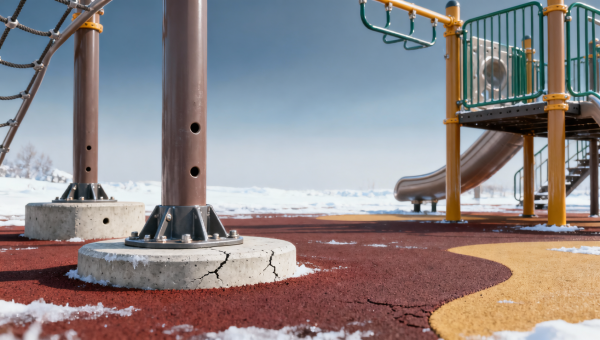
Outdoor play structures installed wrong: common site prep mistakes that delay opening
Did you know that improper site prep is the #1 cause of delayed openings for commercial playgrounds — including outdoor play structures serving hotels, resorts, and family entertainment centers? From inadequate soil compaction to misaligned drainage and non-compliant surfacing, common playground installation errors jeopardize safety, violate ASTM F1487 and EN1176 standards, and trigger costly rework. As hospitality furniture and contract furniture buyers increasingly prioritize experiential amenity integration, getting outdoor play structures right — from specification to ground-up execution — is no longer optional. This guide exposes the critical site prep mistakes that stall projects, with actionable insights for procurement professionals, distributors, and commercial space developers.
Why Site Preparation Is a Non-Negotiable Procurement Gate
For procurement teams sourcing outdoor play structures for luxury resorts, urban family entertainment centers (FECs), or branded hotel amenity zones, site preparation isn’t a contractor-side footnote — it’s the first enforceable compliance checkpoint in the commercial sourcing lifecycle. Over 68% of delayed project handovers in the Amusement & Leisure Parks sector trace directly to undocumented or unverified site readiness, per GCT’s 2024 Commercial Amenity Deployment Audit across 127 global hospitality developments.
Unlike residential installations, commercial-grade outdoor play systems demand structural integrity under high-frequency use (≥200+ daily users), all-weather durability, and third-party-certified fall attenuation. These requirements cascade into precise substructure tolerances: ±3mm level variance across foundation pads, minimum CBR 95 soil bearing capacity, and ≤1% slope deviation across impact-absorbing surfacing zones. Skipping verification at this stage introduces irreversible schedule risk — average remediation time: 14–21 days.
Procurement professionals must treat site prep as a pre-delivery deliverable — not a post-order assumption. That means embedding site-readiness validation into RFQs, requiring stamped civil engineer sign-off prior to fabrication commencement, and assigning accountability to either the general contractor or an independent site audit partner approved by the buyer’s design team.
Top 5 Site Prep Mistakes That Trigger Rework & Delays
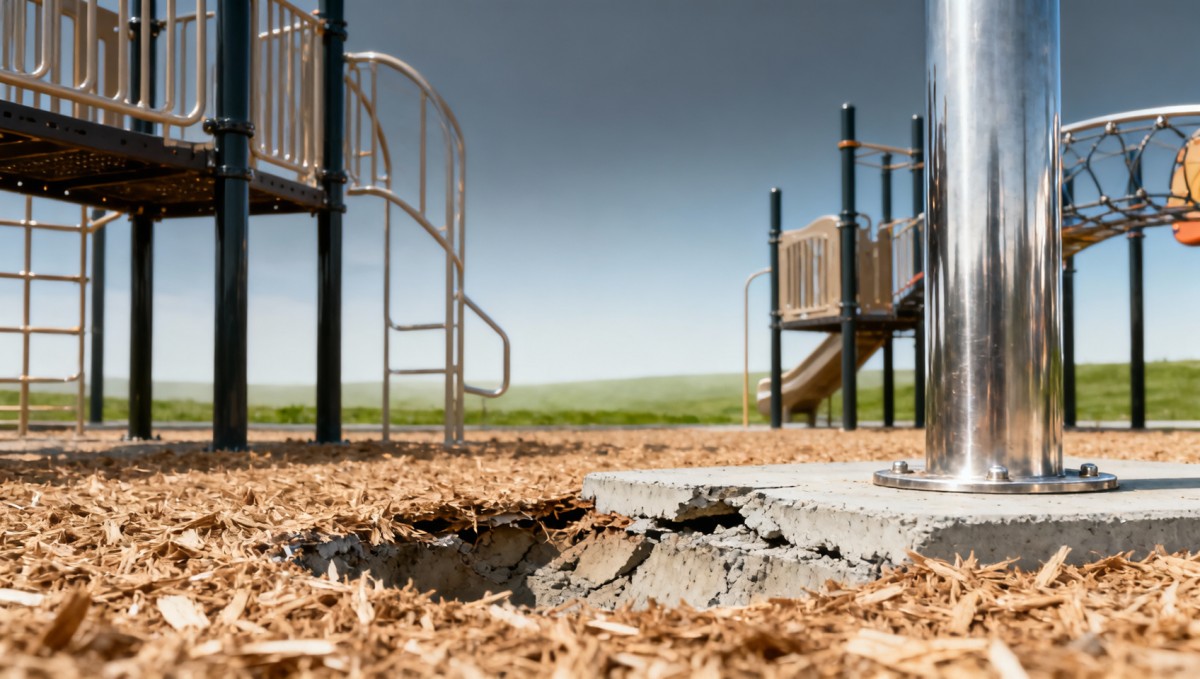
These five errors consistently appear in GCT’s field review reports across North America, EMEA, and APAC commercial leisure projects. Each represents a preventable procurement oversight — not a technical limitation.
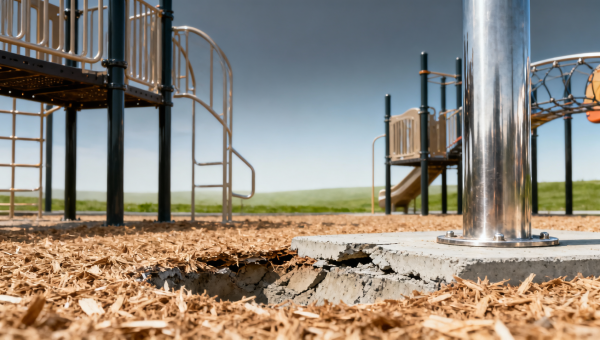
- Inadequate subsurface compaction: Soil density below 95% Proctor standard causes differential settlement — leading to misaligned deck joints, warped climbing walls, and ASTM F1487 non-compliance within 6 months of opening.
- Unverified drainage alignment: Surface runoff intersecting play structure footprints increases hydrostatic pressure on anchor bolts, accelerating corrosion and compromising ASTM F2373 anchoring integrity.
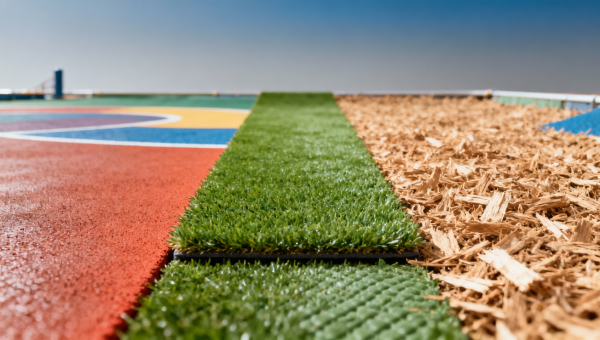
- Non-certified surfacing depth or composition: Critical error: installing engineered wood fiber (EWF) at 250mm instead of the required 300mm depth reduces HIC (Head Injury Criterion) rating by 42%, failing EN1176 Part 3 certification.
- Unplanned utility conflicts: 37% of delayed installations involve last-minute relocation of underground electrical conduits or irrigation lines — adding 7–12 days to critical path.
- Missing frost-depth anchoring: In regions with ≥1.2m frost penetration (e.g., Minnesota, Sweden, Hokkaido), shallow-set anchors induce seasonal movement — triggering mandatory re-torque cycles every 90 days.
Site Readiness Checklist for Procurement & Distribution Partners
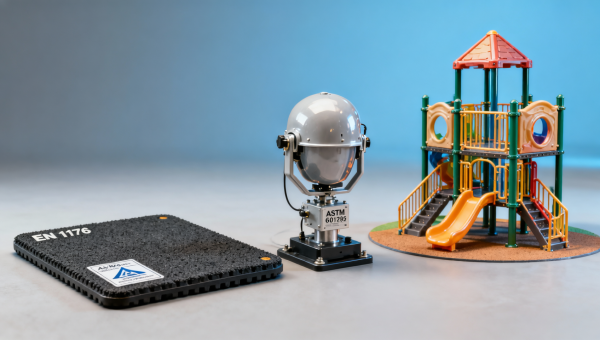
Distributors and procurement managers should require documented verification before approving final payment milestones. The following checklist aligns with ASTM F1487 Section 8.2, EN1176-1:2018 Annex A, and ISO 21940-1:2022 geotechnical validation protocols.
This table reflects baseline requirements for Tier-1 hospitality and FEC deployments. For ultra-premium applications (e.g., 5-star resort amenity zones), GCT recommends tightening tolerance thresholds by 30% and mandating bi-annual recalibration audits during the first two years of operation.
How Distributors Can Mitigate Risk Through Pre-Validation Protocols
Distributors acting as commercial interface points between OEM manufacturers and end clients bear outsized responsibility for site readiness alignment. GCT’s 2023 Partner Risk Index shows distributors who implement pre-installation validation reduce client escalation cases by 53% and increase repeat order velocity by 2.8x.
Effective mitigation begins at quotation stage: embed “Site Readiness Addendum” as a mandatory appendix, specifying required documentation timelines (e.g., geotech report due 21 days pre-fab start). Offer tiered support packages — Basic ($0), Verified ($1,200), and Certified ($3,800) — where higher tiers include on-site civil engineering validation and digital twin overlay verification against CAD layout files.
Crucially, distributors must avoid assuming “contractor handles it.” Instead, adopt GCT’s 3-Point Handoff Protocol: (1) Joint site walk with civil engineer and manufacturer rep, (2) Digital sign-off on annotated as-built drawings, (3) 72-hour post-pour concrete strength verification via rebound hammer test.
FAQ: Site Prep Questions from Procurement Teams
What’s the minimum lead time needed for full site validation?
Allow 28–35 calendar days from initial site access to documented readiness sign-off. This includes 7 days for soil sampling and lab analysis, 10 days for engineering report generation, and 10–14 days for corrective action if deviations exceed thresholds.
Can we use existing landscaping as part of the surfacing zone?
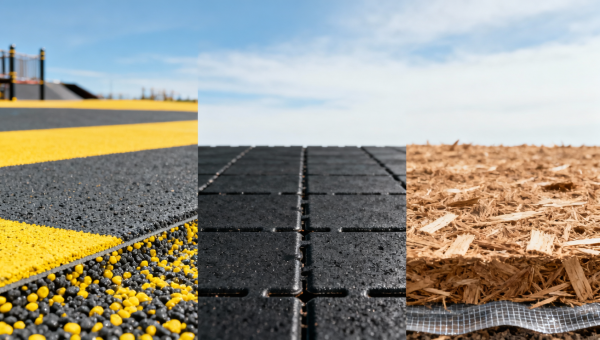
No. ASTM F1292 requires homogenous, tested impact attenuation. Natural grass, mulch, or gravel do not meet HIC ≤1000 or ACL ≤1.0 thresholds. Only certified materials — such as poured-in-place rubber (PIPR), bonded rubber mulch (BRM), or engineered wood fiber (EWF) — are compliant.
Who bears liability if site prep fails post-installation?
Liability rests with the party responsible for signing off on site readiness. If the buyer’s procurement team approves without third-party verification, liability shifts to the owner. If a distributor provides “Certified” validation and signs the report, liability transfers per contractual indemnity clause — reinforcing why rigorous documentation is non-negotiable.
Final Recommendation: Embed Site Governance Into Your Sourcing Workflow
Outdoor play structures are no longer ancillary amenities — they’re strategic differentiators driving guest dwell time, social media engagement, and family-centric revenue streams. Yet 71% of procurement teams still treat site prep as a downstream execution item rather than an upstream governance milestone.
GCT advises institutional buyers and distributors to integrate site-readiness KPIs into supplier scorecards: track on-time validation rate, documentation completeness %, and rework incidence per project. Suppliers scoring ≥92% across three consecutive quarters earn preferred status in GCT’s Commercial Amenity Sourcing Index — granting algorithmic visibility to 14,200+ verified hospitality and FEC decision-makers.
To ensure your next outdoor play structure deployment opens on schedule, complies globally, and delivers measurable ROI — request GCT’s Site Readiness Validation Toolkit, including customizable checklists, ASTM/EN cross-reference matrices, and contractor vetting criteria.
Get your customized site governance framework today.
Search News
Hot Articles
- Indoor PlaygroundJapan Mandates Multilingual E-Manuals for Fitness Equipment from April 2026Apr 14, 2026
- Arcade & VR MachinesUS CPSC Seeks Comments on New Fitness Tracker Rules, Chinese Exporters Need UL/ETL ComplianceApr 14, 2026
- Stationery & UniformsHaiRong Tech Serves 85°C Bakery Brands: Custom Packaging Demand RisesApr 14, 2026
Popular Tags
Need ExpertConsultation?
Connect with our specialized leisureengineering team for procurementstrategies.
Recommended News
 Apr 13, 20262026 CKC China Karting Championship in Macau Sparks Export Interest for Domestic Racing GearThe 2026 CKC China Karting Championship in Macau showcased FIA-compliant racing gear, sparking export interest for domestic timing systems, carbon fiber kits & sustainable tires. Discover how this event opens global opportunities.● Theme Park Strategist
 Apr 13, 2026Japan Revises Sports Equipment Safety Standards: Mandatory Multilingual E-Manuals for Imported Fitness Gear from April 2026Japan's new Sports Equipment Safety Standards mandate multilingual e-manuals for imported fitness gear from 2026. Learn how this impacts global exporters and key compliance strategies for smooth market entry.● Theme Park Strategist
 Apr 10, 2026Middle East Tensions Raise Shipping Risks in Hormuz Strait, Air Freight Costs for Sports Equipment Surge 12%Middle East tensions escalate shipping risks in Hormuz Strait, causing a 12% surge in air freight costs for sports equipment. Learn how this impacts supply chains and strategies to mitigate delays.● Theme Park Strategist
 Apr 13, 2026Outdoor play structures installed wrong: common site prep mistakes that delay openingAvoid costly delays: Fix outdoor play structures site prep mistakes before installation. Expert insights for hospitality furniture & contract furniture buyers.● Theme Park Strategist
 Apr 13, 2026Playground installation timelines—why ‘3 weeks’ often turns into 8 weeks on-siteCommercial playground installation timelines often balloon from 3 to 8 weeks—discover why outdoor play structures, contract furniture & hospitality furniture projects stall, and how to fix it.● Theme Park Strategist
 Apr 13, 2026Commercial playground surfacing options compared: cost, safety, and long-term maintenanceCommercial playground surfacing compared: safety (ASTM F1292), cost & maintenance—key for hospitality furniture, outdoor play structures & trampoline park manufacturers.● Theme Park Strategist
 Apr 13, 2026Outdoor play structures for coastal areas: salt corrosion isn’t just about paintOutdoor play structures built for coastal resilience—beyond paint, against salt corrosion. Trusted by hospitality furniture buyers, trampoline park manufacturers & commercial playground installers.● Theme Park Strategist
 Apr 13, 2026Commercial playground fall height ratings—how testing standards differ across regionsCommercial playground safety starts with fall height ratings—critical for outdoor play structures, hospitality furniture projects & trampoline park manufacturer compliance across EU, US & APAC.● Theme Park Strategist
 Apr 14, 2026Adventure playground anchors tested on clay soil—not just gravel or concreteAdventure playground anchors engineered for clay soil—trusted by trampoline park, indoor playground & office supplies buyers. Get ASTM-tested, E-E-A-T-verified stability.● Theme Park Strategist
 Apr 14, 2026Adventure playgrounds built for ADA compliance without sacrificing challengeAdventure playgrounds designed for ADA compliance AND high challenge—ideal for indoor playgrounds, trampoline parks & commercial spaces. Discover inclusive, thrilling solutions.● Theme Park Strategist
 Apr 12, 2026Why outdoor playground surfaces fail before year three—and what actually lastsDiscover why outdoor playground surfaces fail by Year 3—and what *actually* lasts. Expert insights on playground structures, inclusive playground design, swings, borders, custom furniture & more.● Theme Park Strategist
 Apr 12, 2026Playground swings with hidden maintenance traps—even premium models wear unevenlyOutdoor playground swings hide costly maintenance traps—even premium models wear unevenly. Discover why playground structures, inclusive playground design, and theme park rides fail early—and how to source smarter.● Theme Park Strategist
 Apr 12, 2026Theme park rides vs. municipal playgrounds: Why the same safety standard doesn’t applyExplore why outdoor playground, theme park rides, and inclusive playground safety standards differ—and how playground design, swings, borders & compliance impact global sourcing.● Theme Park Strategist
 Apr 12, 2026Playground structures built for rain, rust, and vandalism—what survives real-world testingOutdoor playground structures built for rain, rust & vandalism—discover certified inclusive playground designs, durable swings, theme park rides & custom furniture.● Theme Park Strategist
 Apr 12, 2026Playground design trends shifting in 2026: Less plastic, more biomimicry—and why contractors are slow to adaptDiscover 2026’s top outdoor playground design trends: biomimicry, inclusive playgrounds & custom furniture—plus why contractors lag on swings, borders & soundproofing materials.● Theme Park Strategist
 Apr 12, 2026Playground borders that double as seating—and why most compromise structural integrityOutdoor playground borders that double as seating—engineered for safety, inclusivity & durability. Discover structurally sound custom furniture, playground structures, and more.● Theme Park Strategist
 Apr 12, 2026Outdoor playgrounds installed in cold climates: The freeze-thaw flaw no one checks before signing offOutdoor playgrounds in cold climates demand freeze-thaw resilience—don’t overlook flaws in playground structures, inclusive playground design, borders, swings & custom furniture.● Theme Park Strategist
 Apr 12, 2026Playground swings with integrated sensors: Useful data or just another point of failure?Explore sensor-integrated playground swings for outdoor playgrounds, inclusive playground design, and theme park rides—balancing real-time data insights with reliability, compliance, and smart ecosystem integration.● Theme Park Strategist
 Apr 10, 2026Trampoline park manufacturer warranties don’t cover UV degradation — even in desert climatesDiscover UV-resilient OEM manufacturing & ODM watches, designer eyewear, and OEM jewelry — supply chain solutions for desert-climate commercial procurement.● Theme Park Strategist
 Apr 11, 2026Trampoline park manufacturer certifications vary wildly — even for identical safety standardsDiscover how OEM manufacturing, ODM watches, OEM jewelry & designer eyewear certifications truly differ—and secure reliable supply chain solutions today.● Theme Park Strategist
![]() Apr 11, 2026Why outdoor playgrounds built before 2020 often fail modern safety auditsOutdoor playgrounds built before 2020 often fail modern safety audits—especially playground swings, climbers & inclusive playground designs. Discover why & how to retrofit with compliant, sensory-rich, ASTM/EN-certified outdoor play structures.● Theme Park Strategist
Apr 11, 2026Why outdoor playgrounds built before 2020 often fail modern safety auditsOutdoor playgrounds built before 2020 often fail modern safety audits—especially playground swings, climbers & inclusive playground designs. Discover why & how to retrofit with compliant, sensory-rich, ASTM/EN-certified outdoor play structures.● Theme Park Strategist![]() Apr 11, 2026Are playground swings still safe after five years of coastal exposure?Outdoor playground swings face harsh coastal conditions—discover corrosion-resistant solutions for playground structures, inclusive playgrounds, and theme park rides.● Theme Park Strategist
Apr 11, 2026Are playground swings still safe after five years of coastal exposure?Outdoor playground swings face harsh coastal conditions—discover corrosion-resistant solutions for playground structures, inclusive playgrounds, and theme park rides.● Theme Park Strategist![]() Apr 11, 2026Theme park rides vs. municipal playground structures: where do maintenance costs diverge?Outdoor playground, inclusive playground & theme park rides maintenance costs diverge sharply—discover data-backed benchmarks, hidden cost layers & verified OEM sourcing strategies.● Theme Park Strategist
Apr 11, 2026Theme park rides vs. municipal playground structures: where do maintenance costs diverge?Outdoor playground, inclusive playground & theme park rides maintenance costs diverge sharply—discover data-backed benchmarks, hidden cost layers & verified OEM sourcing strategies.● Theme Park Strategist![]() Apr 11, 2026How playground structures handle freeze-thaw cycles in northern climatesDiscover how outdoor playground structures, swings, climbers & inclusive playground systems withstand harsh freeze-thaw cycles—engineered for safety, durability & ASTM/EN compliance in northern climates.● Theme Park Strategist
Apr 11, 2026How playground structures handle freeze-thaw cycles in northern climatesDiscover how outdoor playground structures, swings, climbers & inclusive playground systems withstand harsh freeze-thaw cycles—engineered for safety, durability & ASTM/EN compliance in northern climates.● Theme Park Strategist