Vietnam Mandates Local TUV SUD Type Testing for VR Fitness Cabins
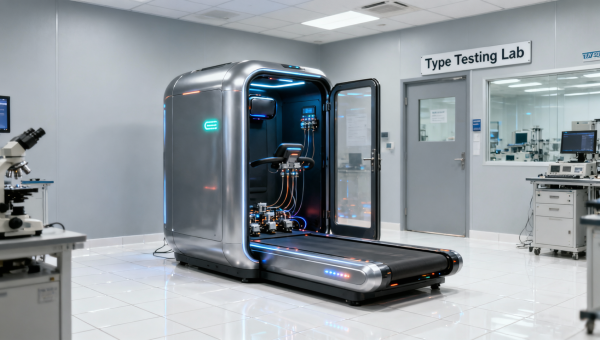
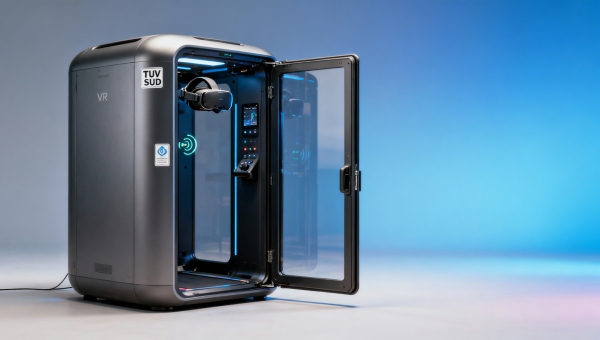
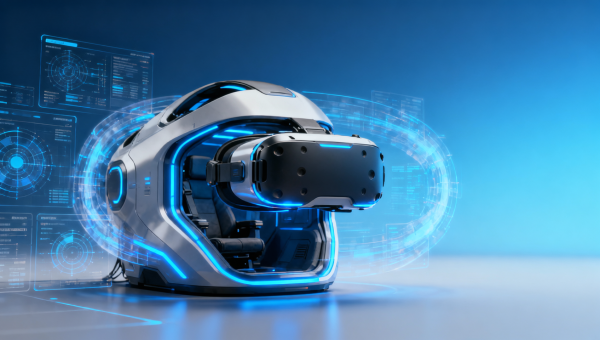
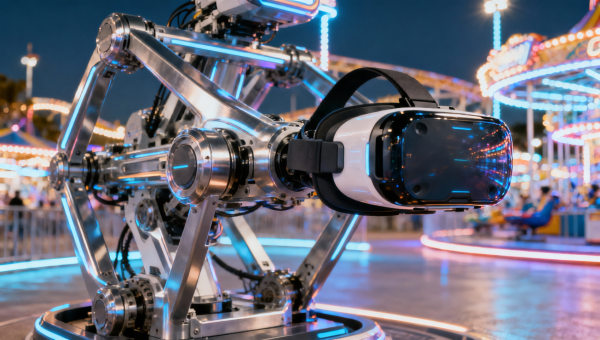
On April 14, 2026, Vietnam’s General Department of Standards, Metrology and Quality (STAMEQ) and TÜV SÜD Vietnam jointly issued the Guidance on Import Compliance for Commercial Smart Fitness Equipment, requiring all VR fitness cabins and immersive exercise cabins to undergo local type testing at TÜV SÜD’s Hanoi laboratory prior to customs clearance. This regulation takes effect on July 1, 2026, and directly impacts manufacturers, importers, and distributors of integrated electromechanical fitness equipment targeting the Vietnamese commercial market.
Event Overview
On April 14, 2026, STAMEQ and TÜV SÜD Vietnam released the Guidance on Import Compliance for Commercial Smart Fitness Equipment. The guidance stipulates that any electromechanical device marketed as a ‘VR fitness cabin’ or ‘immersive exercise cabin’ must complete local type testing at TÜV SÜD’s Hanoi laboratory before customs clearance. The test includes three newly mandated items: structural strength, emergency stop response time, and VR content health warning mechanisms. Enforcement begins on July 1, 2026.
Industries Affected by the Regulation
Direct Importers and Exporters of Fitness Equipment
These entities are directly responsible for regulatory compliance at the point of entry. Under the new rule, they must arrange and fund pre-clearance testing — adding lead time, cost, and documentation requirements not previously applicable to such devices in Vietnam.
Original Equipment Manufacturers (OEMs) and Contract Manufacturers
OEMs supplying VR fitness cabins to Vietnamese importers face upstream compliance pressure. Their product designs — especially mechanical structure, emergency stop integration, and software-triggered health warnings — must now meet locally verified criteria before shipment. Non-compliant units may be detained or rejected upon arrival.
Distributors and Channel Partners in Vietnam
Vietnamese distributors marketing VR fitness solutions must verify conformity documentation before accepting shipments. Inventory planning, sales cycles, and after-sales support timelines will need adjustment to accommodate the 4–6 week typical duration for TÜV SÜD Hanoi’s type testing process.
Logistics and Certification Support Providers
Third-party compliance consultants, customs brokers, and lab coordination services handling Vietnam-bound smart fitness equipment will see increased demand for localized testing facilitation — particularly for coordinating sample submission, test protocol alignment, and result certification issuance aligned with STAMEQ’s expectations.
What Relevant Enterprises Should Monitor and Do Now
Track official implementation details and test protocol updates
While the guidance is published, formal test standards (e.g., reference norms for structural strength or health warning display timing) have not yet been publicly released. Companies should monitor announcements from STAMEQ and TÜV SÜD Vietnam for finalized technical specifications and acceptable evidence formats.
Identify and prioritize affected product SKUs ahead of July 2026
Businesses should audit their Vietnam-bound product portfolio to identify all units marketed using terms such as ‘VR fitness cabin’ or ‘immersive exercise cabin’. Even if functionally similar to standard treadmills or cycle studios, branding triggers the requirement — making terminology review essential.
Distinguish between policy signal and operational readiness
The April 14, 2026 issuance is a formal regulatory signal, not yet an enforcement record. However, given the July 1, 2026 effective date and absence of transitional provisions, companies should treat this as a hard deadline — not a preliminary notice.
Initiate early engagement with TÜV SÜD Vietnam for sample submission and scheduling
TÜV SÜD Hanoi’s capacity for electromechanical fitness device testing is limited. Early coordination — including pre-submission technical consultations and slot booking — helps avoid delays in Q2 2026, when demand for testing is expected to rise.
Editorial Observation / Industry Perspective
From an industry perspective, this measure signals Vietnam’s shift toward aligning smart fitness equipment oversight with established safety frameworks for interactive electromechanical systems — rather than treating them as generic consumer electronics or conventional gym hardware. Analysis来看, it reflects growing regulatory attention to human factors in immersive environments, particularly where physical exertion intersects with real-time visual-auditory stimuli. Observation来看, STAMEQ’s collaboration with a recognized third-party lab suggests intent to build enforceable, repeatable verification — not just procedural formality. Current more appropriate interpretation is that this is both a compliance requirement and a forward-looking signal: future regulations may extend similar testing to other AI- or AR-enabled wellness devices entering Vietnam’s commercial space.
This development underscores that market access for next-generation fitness technology in Vietnam is no longer determined solely by performance or pricing — but increasingly by verifiable, locally attested safety and human-interface design. For stakeholders, the July 2026 deadline marks the start of a new baseline, not a one-off adjustment.
Information Source: Official joint guidance issued by Vietnam’s General Department of Standards, Metrology and Quality (STAMEQ) and TÜV SÜD Vietnam on April 14, 2026. No further technical annexes or test protocols have been published as of the guidance’s release date. Continued observation is recommended for updates on accepted standards, fee structures, and certification validity periods.
Search News
Hot Articles
- Jewelry Packaging & DisplayVietnam's New Regulation: Commercial VR Fitness Pods Must Undergo Local TUV SUD TestingApr 16, 2026
- Jewelry Packaging & DisplaySASO Updates Amusement Ride Standards: EMC Testing Now Mandatory for VR Fitness EquipmentApr 16, 2026
- Stage Lighting & TrussJIS T 0601-2-77:2026 Enforces New Audience Laser Limits in JapanApr 16, 2026
Popular Tags
Need ExpertConsultation?
Connect with our specialized leisureengineering team for procurementstrategies.
Recommended News
 Apr 16, 2026VR Fitness Device Export Prices Up 12% — China Supply Stability LeadsVR fitness device export prices up 12%—China’s supply stability and modular hardware-software delivery redefine global competitiveness. Act now.● Theme Park Strategist
 Apr 16, 2026Vietnam Mandates Local TUV SUD Type Testing for VR Fitness CabinsVR fitness cabins entering Vietnam must now pass local TÜV SÜD type testing in Hanoi—key for compliance, customs clearance & market access by July 1, 2026.● Theme Park Strategist
 Apr 16, 2026SASO Updates Playground Standards: VR Devices Now Require EMC TestingSASO now mandates EMC testing for VR playground devices in Saudi Arabia—key update for VR cycling, climbing & motion cabins exporters.● Theme Park Strategist
 Apr 15, 2026Vietnam's New Regulation: Commercial VR Fitness Pods Require Local TUV SUD TestingVietnam's new regulation mandates TUV SUD testing for commercial VR fitness pods. Learn how this impacts exporters, compliance timelines, and market entry strategies for Chinese manufacturers.● Theme Park Strategist
 Apr 15, 2026Global VR Fitness Equipment Export Prices Rise 12% YoY, China Maintains Supply Chain StabilityGlobal VR fitness equipment export prices surge 12% YoY in 2026 Q1, with China maintaining 96.3% delivery reliability. Key insights for VR hardware manufacturers & fitness distributors facing cost pressures.● Theme Park Strategist
 Apr 14, 2026US CPSC Seeks Comments on New Fitness Tracker Rules, Chinese Exporters Need UL/ETL ComplianceUS CPSC proposes new UL/ETL compliance rules for fitness trackers, impacting Chinese exporters. Learn key action points and industry impacts to stay ahead of regulatory changes affecting wearable tech exports to America.● Theme Park Strategist
 Apr 13, 20262026 Chinese Youth League Upgrades Format with VR Training PodsDiscover how China's 2026 Youth League VR training pods revolutionize football development, boosting exports by 210%. Learn about FIFA-certified tech transforming player training.● Theme Park Strategist
 Apr 09, 2026US CPSC Proposes New VR Safety Standards for Children's Indoor Play EquipmentUS CPSC proposes new VR safety standards for children's indoor play equipment, including dizziness testing and age grading. Learn how these regulations impact VR manufacturers and get compliance strategies.● Theme Park Strategist
 Apr 15, 2026VR arcade machines with heat dissipation designed for 10+ hours/dayCommercial VR arcade machines with advanced heat dissipation—ideal for amusement equipment, sensory playgrounds, hotel equipment & educational supplies. Built for 10+ hrs/day reliability.● Theme Park Strategist
 Apr 15, 2026Arcade machines with service access points designed for technicians — not engineersCommercial furniture & amusement equipment with technician-first service access—ideal for hotel equipment, sensory playgrounds, and playground safety compliance. Boost uptime, cut labor costs.● Theme Park Strategist
 Apr 14, 2026Arcade game cabinets with field-replaceable PCBs—cutting downtime by 70%Arcade games with field-replaceable PCBs cut downtime by 70%—ideal for office supplies, indoor playgrounds, trampoline parks & adventure playgrounds. Reliable, upgradable, certified.● Theme Park Strategist
 Apr 14, 2026Arcade games with the lowest long-term maintenance costArcade games offer the lowest long-term maintenance cost vs. trampoline parks, indoor playgrounds, adventure playgrounds & office supplies—discover TCO-optimized, certified solutions.● Theme Park Strategist
 Apr 08, 2026Middle East Tensions Raise Shipping Costs for Sports EquipmentMiddle East tensions spike shipping costs by 12% for sports equipment like smart fitness gear & e-scooters. Learn how exporters can navigate rising air freight fees & supply chain disruptions.● Theme Park Strategist
 Apr 08, 2026EU Updates EN 16830:2026 Eyewear Safety Standards, Chinese Sports Goggles Exporters Face 6-Month Certification DeadlineEU's EN 16830:2026 update raises safety standards for sports goggles, giving Chinese exporters just 6 months to comply with new impact resistance and UV protection rules. Learn critical deadlines and action steps for EU market access.● Theme Park Strategist
: Mandatory Bilingual Manuals & QR Code Traceability Take Effect April 15") Apr 01, 2026Vietnam's New Technical Standards for Imported Amusement Equipment (2026): Mandatory Bilingual Manuals & QR Code Traceability Take Effect April 15Vietnam's new 2026 standards mandate bilingual manuals & QR codes for imported amusement equipment. Chinese exporters must comply by April 15 to avoid customs issues. Learn key impacts & action steps.● Theme Park Strategist
Apr 01, 2026Vietnam's New Technical Standards for Imported Amusement Equipment (2026): Mandatory Bilingual Manuals & QR Code Traceability Take Effect April 15Vietnam's new 2026 standards mandate bilingual manuals & QR codes for imported amusement equipment. Chinese exporters must comply by April 15 to avoid customs issues. Learn key impacts & action steps.● Theme Park Strategist Apr 04, 2026Arcade & VR Machines Installers Now Source Cables and Mounts from Office Supplies WholesalersOffice supplies wholesaler? Discover UL-certified cables, mounts & trampoline park accessories — engineered for VR arcades, fast B2B delivery & global compliance.● Theme Park Strategist
 Mar 30, 2026Arcade & VR machines with ‘plug-and-play’ labeling—then the network handshake failsCommercial sourcing of arcade & VR machines? Avoid network handshake failures—ensure playground compliance, amusement ride parts interoperability, and hotel bar furniture integration.● Theme Park Strategist
 Mar 28, 2026Arcade game cabinets that don’t age gracefully—and why it matters for foot trafficArcade games, trampoline park anchors & luxury accessories demand durable hardware—discover why cabinet longevity drives foot traffic, ROI, and brand trust.● Theme Park Strategist
 Mar 28, 2026Arcade games with built-in loyalty systems: convenience or hidden maintenance drag?Arcade games with built-in loyalty systems: boost repeat visits in trampoline parks, luxury furniture venues & more—but weigh real maintenance costs first.● Theme Park Strategist
 Mar 28, 2026Golden Horse Amusement Equipment Sees Surge in Overseas VR Ride Orders: Industry ImplicationsGolden Horse Amusement Equipment reports 142% surge in overseas VR ride orders, transforming theme park markets in Southeast Asia and the Middle East with space-efficient, content-upgradable solutions.● Theme Park Strategist
 Mar 27, 2026Can supply chain solutions support just-in-time delivery for arcade & VR machine parts without increasing defect rates?Supply chain solutions for arcade & VR machines—backed by ODM services, OEM manufacturing, and commercial procurement expertise—enable true JIT delivery without raising defect rates.● Theme Park Strategist
 Mar 27, 2026What ODM services actually include when developing custom arcade & VR machines for global distributorsDiscover end-to-end ODM services for arcade & VR machines — supply chain solutions, commercial procurement, amusement park equipment, and more. Source with confidence.● Theme Park Strategist
 Mar 19, 2026Can Soundproofing Materials Be Integrated Into Existing Arcade & VR Machine Zones?Integrate soundproofing materials into arcade & VR zones for adventure playgrounds, trampoline parks, and theme park rides—boost playground safety, indoor/outdoor playground acoustics, and hospitality furniture compliance.● Theme Park Strategist
 Mar 19, 2026Arcade & VR Machines Procurement: Why Warranty Coverage Must Include On-Site Technician Response SLAsCommercial sourcing of arcade & VR machines demands on-site SLAs—like hotel equipment and premium accessories—ensuring uptime, ROI, and guest trust. Get expert warranty benchmarking now.● Theme Park Strategist