2026 Yangtze River Delta Triathlon Uses Certified Chinese Timing System
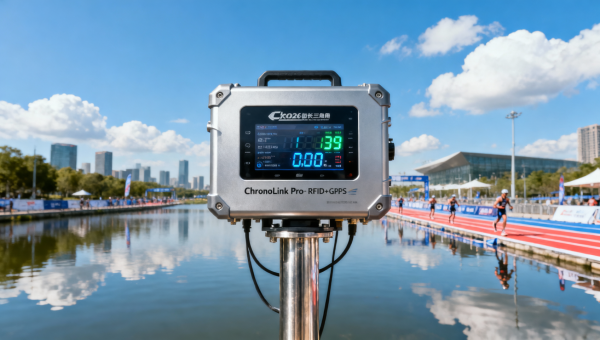
On April 15, 2026, the 2026 Yangtze River Delta International Triathlon (Qingpu, Shanghai) announced full deployment of the domestically developed ChronoLink Pro wireless RFID+GPS dual-mode timing system — the first Chinese timing solution to receive ITU 2026 official certification. This development signals implications for sports technology exporters, event operations providers, and integrated sports infrastructure suppliers.
Event Overview
The 2026 Yangtze River Delta International Triathlon — scheduled to start on April 18 in Qingpu District, Shanghai — will use the ChronoLink Pro timing system exclusively. The system has been certified by the International Triathlon Union (ITU) for 2026, making it the seventh Chinese timing solution authorized for ITU-sanctioned events globally. According to official announcements, it supports end-to-end timing, data platform integration, and multilingual live broadcast functionality — available as a turnkey procurement package for overseas race organizers.
Industries Affected
Sports Technology Exporters
This certification confirms that a Chinese-made timing system meets ITU’s technical and operational requirements for elite international multisport events. As such, exporters of timing hardware, firmware, and SaaS-based race management platforms may face increased demand from non-Chinese race organizers seeking pre-qualified, fully compliant solutions. Impact is most direct for vendors offering integrated timing + data + broadcast stacks — not standalone sensors or software modules.
International Event Operations Providers
Organizers of ITU-affiliated triathlons outside China now have access to a certified, off-the-shelf timing ecosystem sourced entirely from one Chinese supplier. This reduces vendor fragmentation and shortens procurement lead times for timing infrastructure. However, adoption requires validation of local regulatory compliance (e.g., RF spectrum licensing, data residency), which remains outside the scope of ITU certification.
Sports Data Platform Integrators
The ChronoLink Pro system includes a unified data middleware layer capable of feeding real-time results into third-party dashboards, broadcast graphics engines, and athlete performance analytics tools. Integrators working with race result APIs or live-data visualization services should assess compatibility with ChronoLink Pro’s documented output schema — especially if targeting markets where this system gains traction post-2026.
What Enterprises and Practitioners Should Monitor and Act On
Track official ITU communications beyond initial certification
ITU certification applies to the 2026 cycle only. Current more relevant than assuming long-term validity is monitoring whether ITU publishes updated technical annexes or field audit reports referencing ChronoLink Pro — these would indicate scalability and reliability under diverse race conditions.
Assess readiness for multilingual and multi-regulatory deployment
The system is promoted as supporting multilingual broadcast and overseas procurement. Firms evaluating it for export must verify whether language packs, GDPR-compliant data handling, and regional RF certifications (e.g., FCC, CE) are included in the base package — or require separate customization and testing.
Distinguish between certification and market adoption
ITU authorization enables eligibility but does not guarantee selection. Race organizers’ actual procurement decisions depend on pricing, service-level agreements (e.g., on-site technician coverage), and historical uptime performance — none of which are disclosed in the current announcement. Early adopters should prioritize case studies from pilot deployments, not just certification status.
Prepare for potential supply chain coordination shifts
If demand rises for turnkey timing packages, manufacturers may consolidate assembly, firmware loading, and calibration steps. Suppliers of RFID tags, GPS modules, or ruggedized enclosures should confirm whether ChronoLink Pro’s BOM uses standardized components — or proprietary variants requiring dedicated sourcing channels.
Editorial Perspective / Industry Observation
From an industry perspective, this milestone is best understood not as a sudden market shift, but as a signal of maturing capability in high-precision sports timing — a niche previously dominated by European and U.S.-based vendors. Analysis来看, the value lies less in displacing incumbents immediately, and more in expanding viable vendor options for mid-tier international races where budget and timeline constraints limit bidding pools. Observation来看, the inclusion of a unified data platform and multilingual broadcast layer suggests strategic alignment with broader trends in sports media monetization and fan engagement — not just timing accuracy. Current more relevant than treating this as a standalone product launch is recognizing it as an inflection point in how integrated sports tech stacks are evaluated and procured globally.
Conclusion
This announcement reflects incremental but meaningful progress in the global recognition of Chinese-developed sports timing infrastructure. It does not yet indicate broad market displacement, nor does it imply automatic adoption across ITU events. Rather, it marks the entry of a new certified option into a highly specialized, standards-driven procurement environment — one where credibility, interoperability, and support continuity matter as much as technical compliance. Current more suitable interpretation is: a validated capability now exists; its commercial impact depends on execution consistency and ecosystem responsiveness over the next 12–24 months.
Information Sources
Main source: Official announcement by the 2026 Yangtze River Delta International Triathlon Organizing Committee, issued April 15, 2026. ITU’s 2026 Equipment Certification List (publicly accessible as of April 2026). Note: Long-term adoption rates, regional certification status, and detailed technical specifications remain pending further disclosure and independent verification.
Search News
Hot Articles
- Jewelry Packaging & DisplayVietnam's New Regulation: Commercial VR Fitness Pods Must Undergo Local TUV SUD TestingApr 16, 2026
- Jewelry Packaging & DisplaySASO Updates Amusement Ride Standards: EMC Testing Now Mandatory for VR Fitness EquipmentApr 16, 2026
- Stage Lighting & TrussJIS T 0601-2-77:2026 Enforces New Audience Laser Limits in JapanApr 16, 2026
Popular Tags
Need ExpertConsultation?
Connect with our specialized leisureengineering team for procurementstrategies.
Recommended News
 Apr 16, 20262026 Yangtze River Delta Triathlon Uses Certified Chinese Timing System2026 Yangtze River Delta Triathlon uses certified Chinese timing system — ChronoLink Pro, ITU-approved RFID+GPS dual-mode solution for global race organizers.● Pro Audio Engineer
 Apr 13, 2026Asian University Basketball League Secures Funding, Launches Smart Venue ProgramThe Asian University Basketball League (AUBL) secures Series A funding and launches its Smart Venue Program, partnering with tech firms for sustainable sports infrastructure. A key opportunity for sports tech exporters with ISO 50001 certification.● Pro Audio Engineer
 Apr 16, 2026Pro stage audio gear warranties: What ‘lifetime’ really covers when used in hospitality venuesPro audio equipment & designer eyewear warranties decoded for hotels. See what ‘lifetime’ really covers—OEM manufacturing, custom fabrication, supply chain solutions & more.● Pro Audio Engineer
 Apr 16, 2026Recording studio gear sourcing: Why local compliance often overrides ‘best-in-class’ specsRecording studio gear sourcing for luxury spaces: compliance-first pro audio equipment, designer eyewear integration, and OEM manufacturing solutions—avoid costly delays.● Pro Audio Engineer
 Apr 16, 2026Pro audio equipment for boutique hotels: Why studio-grade gear doesn’t always translate to lobby soundPro audio equipment for boutique hotels must integrate with hotel furniture, designer eyewear & jewelry displays—discover why studio gear fails and how custom fabrication + supply chain solutions deliver sonic & material harmony.● Pro Audio Engineer
 Apr 16, 2026DJ equipment brands prioritizing repairability over replacementDJ equipment brands leading in repairability—trusted alongside luxury furniture, orchestral instruments, music stands & park benches for sustainable, high-ROI commercial procurement.● Pro Audio Engineer
 Apr 15, 2026DJ equipment setups that scale from club nights to festivalsDiscover scalable DJ equipment for clubs & festivals—engineered like luxury furniture, orchestral instruments & music stands. Premium, certified, ready to grow with your venue.● Pro Audio Engineer
 Apr 15, 2026Pro stage audio cabinets tested for 90dB+ continuous playback — not just peaksCommercial furniture & amusement equipment: Pro audio cabinets tested for 90dB+ continuous playback—ideal for sensory playgrounds, hotels, and educational supplies.● Pro Audio Engineer
 Apr 13, 2026Microphone systems for multi-room venues: why one-size-fits-all doesn’t workMicrophone systems for multi-room venues—optimized for hotel desks, commercial playgrounds, trampoline park manufacturer needs & hospitality furniture integration.● Pro Audio Engineer
 Apr 13, 2026Microphone systems for outdoor stages: wind noise reduction that actually worksMicrophone systems engineered for outdoor stages—wind noise reduction that works. Trusted by trampoline park manufacturers, commercial playground & hospitality venues.● Pro Audio Engineer
 Apr 13, 2026Recording studio gear service networks: Why local support beats global warranty claimsRecording studio gear, pro audio equipment & indoor playground equipment demand local service—not global warranties. Faster repairs, OEM manufacturing alignment, and supply chain solutions ensure zero downtime for hotels, studios & leisure venues.● Pro Audio Engineer
 Apr 13, 2026Custom fabrication for studio control rooms: When millwork delays derail your launchCustom fabrication for studio control rooms—critical for pro audio equipment, hotel furniture & indoor playground equipment. Discover supply chain solutions that prevent costly launch delays.● Pro Audio Engineer
 Apr 13, 2026Pro audio equipment for hybrid spaces: Why acoustic load matters more than wattagePro audio equipment for hybrid spaces: Discover why acoustic load—not wattage—ensures reliability in hotel furniture, indoor playground equipment & OEM manufacturing.● Pro Audio Engineer
 Apr 14, 2026Recording studio gear under $5,000: What you gain—and lose—in real-world trackingRecording studio gear under $5,000: balance pro audio equipment performance with real-world constraints—ideal for hotels, parks & experiential venues needing OEM manufacturing, supply chain solutions, and indoor playground equipment integration.● Pro Audio Engineer
 Apr 14, 2026Pro audio equipment for boutique studios: Why ‘studio-grade’ isn’t enough anymorePro audio equipment for boutique studios: Discover commercial-grade, OEM-manufactured pro audio equipment engineered for indoor playgrounds, hotel media lounges & immersive entertainment—beyond studio-grade.● Pro Audio Engineer
 Apr 12, 2026Soundproofing materials for playgrounds: The decibel drop that never shows up on spec sheetsDiscover high-performance soundproofing materials for outdoor playgrounds, inclusive playgrounds & theme park rides—engineered for real-world noise reduction, not just spec sheets.● Pro Audio Engineer
 Apr 12, 2026Soundproofing materials marketed for playgrounds—but tested only in studiosSoundproofing materials for outdoor playgrounds—tested in real conditions, not just studios. Trusted for inclusive playground, theme park rides & custom furniture.● Pro Audio Engineer
 Apr 10, 2026Soundproofing materials installed behind drywall—why STC ratings don’t reflect real-world bass leakageDiscover why STC ratings fail for bass leakage—critical for soundproofing materials, pro audio equipment & recording studio gear. Get real-world LF-TL insights now!● Pro Audio Engineer
 Apr 10, 2026Live sound equipment with onboard Wi-Fi—what encryption standards are actually enforced?Discover enforced encryption standards (WPA3, TLS 1.2+) for live sound equipment—plus pro audio equipment, microphone systems, instrument cables & more.● Pro Audio Engineer
 Apr 10, 2026Microphone systems using USB-C power delivery—can they run off a 10W portable charger?Explore USB-C microphone systems powered by 10W chargers—ideal for portable pro audio equipment, live sound equipment, and music production tools in mobile entertainment setups.● Pro Audio Engineer
 Apr 10, 2026Recording studio gear with ‘zero-latency monitoring’—tested latency vs. claimed specsDiscover real-world latency test results for recording studio gear, pro audio equipment & microphone systems—exposing gaps in claimed 'zero-latency monitoring' specs. Essential for soundproofing materials, instrument cables & commercial sound systems buyers.● Pro Audio Engineer
 Apr 10, 2026Pro audio equipment firmware updates in 2026: security patch or feature gate?Discover how 2026 pro audio equipment firmware updates impact security, compatibility & TCO—covering soundproofing materials, instrument cables, microphone systems, and more.● Pro Audio Engineer
 Apr 10, 2026Instrument cables with oxygen-free copper claims—does purity matter at 15ft lengths?instrument cables, pro audio equipment & recording studio gear—does oxygen-free copper matter at 15ft? Data-driven insights for live sound equipment & music production tools.● Pro Audio Engineer
 Apr 10, 2026Soundproofing materials sold as 'eco-friendly'—what percentage is actually recycled content?Soundproofing materials, instrument cables & pro audio equipment: How much is truly recycled? Get verified data on eco-friendly recording studio gear, microphone systems & commercial sound systems.● Pro Audio Engineer