2026 Shanghai Smart Campus Expo: VR Teaching Devices Gain ITU & ISO/IEC Dual Certification
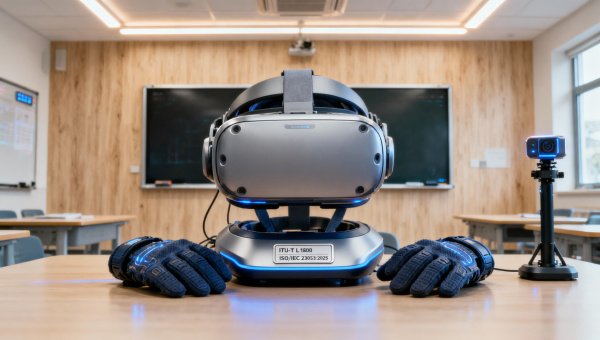
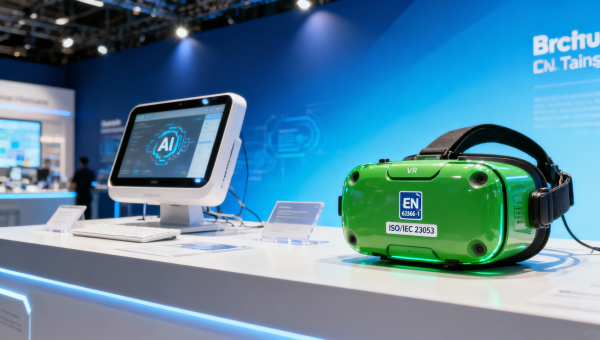
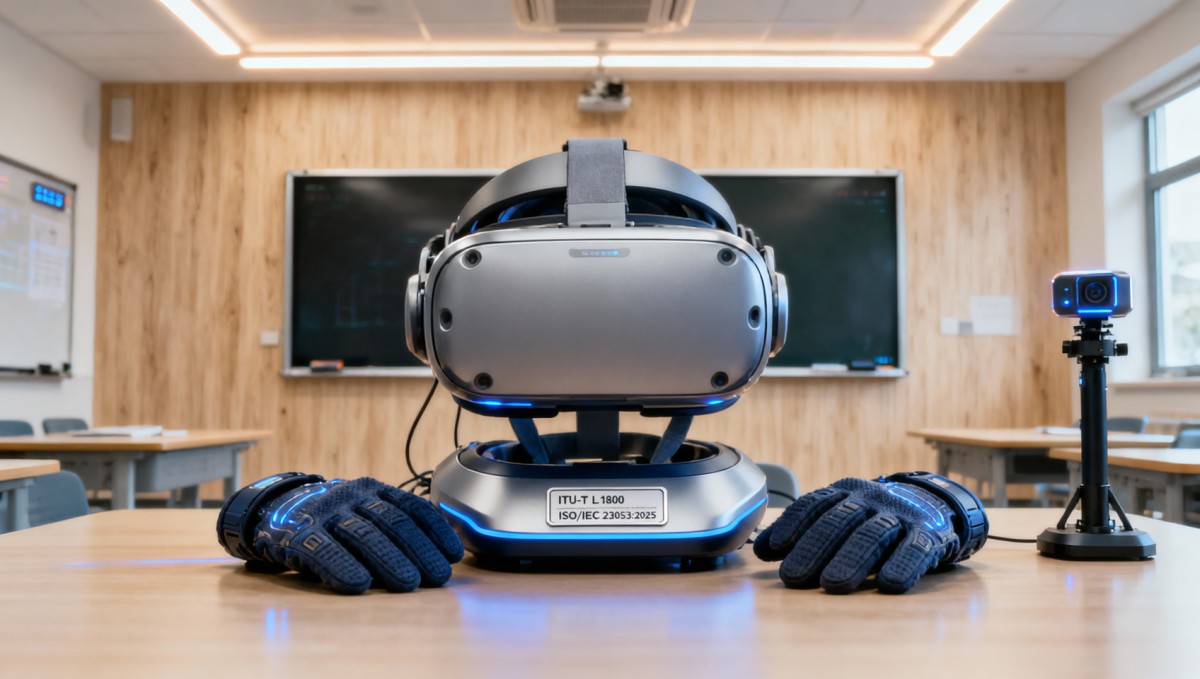
From April 14–16, 2026, the 2026 Shanghai International Smart Campus Exhibition concluded with a notable development: 12 Chinese manufacturers’ VR haptic teaching devices (classified under Smart Campus Tech) achieved dual international certification — ITU-T L.1800 (cybersecurity for educational equipment) and ISO/IEC 23053:2025 (interoperability for immersive learning systems). This milestone signals growing regulatory convergence in global edtech procurement — particularly for export-oriented education hardware suppliers, public-sector integrators, and standards-compliance service providers.
Event Overview
The 2026 Shanghai International Smart Campus Exhibition took place from April 14 to 16, 2026. During the event, 12 China-based vendors exhibited VR haptic teaching devices. All 12 units were confirmed to have passed both ITU-T L.1800 and ISO/IEC 23053:2025 certifications. Export意向 orders totaling over USD 120 million were reported, primarily from the Southeast Asian Public School Procurement Alliance and Middle Eastern smart education infrastructure projects. The dual certification is now cited as a mandatory requirement in several national and regional education equipment tenders.
Impact on Specific Industry Segments
Direct Export Trading Firms
These firms face immediate implications in tender eligibility. Since the certification is now a stated hard threshold in public-sector education procurements — especially in Southeast Asia and the Middle East — non-certified products may be excluded at bid submission stage. Impact manifests in bidding success rates, contract lead times, and pre-qualification documentation requirements.
Hardware Manufacturing & OEM Suppliers
Manufacturers supplying core components (e.g., motion sensors, low-latency display modules, or secure firmware stacks) for certified VR teaching devices may see revised specification demands. Buyers are increasingly requiring evidence of upstream compliance traceability — not just end-product certification — meaning component-level documentation and audit readiness become more critical.
Educational Technology Integrators & System Providers
Integrators deploying turnkey smart campus solutions must now verify interoperability claims against ISO/IEC 23053:2025’s defined interface protocols and data exchange formats. Failure to align with certified endpoints risks integration delays, retesting costs, or rejection during commissioning audits — especially in government-backed infrastructure projects.
Standards Advisory & Certification Support Services
Third-party testing labs, conformity assessment bodies, and technical consultants specializing in ITU or ISO/IEC edtech standards are likely to see increased demand for gap analysis, pre-assessment audits, and multi-jurisdictional certification coordination — particularly for vendors targeting multiple export markets with overlapping but non-identical compliance expectations.
What Relevant Enterprises or Practitioners Should Focus On Now
Monitor official tender documents for explicit referencing of ITU-T L.1800 and ISO/IEC 23053:2025
Several recent education infrastructure RFPs in ASEAN and GCC countries now list these two standards verbatim in eligibility clauses. Tracking actual tender language — rather than relying on general ‘compliance required’ statements — helps prioritize certification investments.
Assess current product portfolios against the scope of ISO/IEC 23053:2025
The standard covers system-level interoperability (e.g., session handover between VR platforms, metadata tagging for learning assets, authentication token exchange), not just device security. Companies should verify whether their architecture supports defined API behaviors and data models — not only whether their devices carry a certificate label.
Distinguish between certification as a signal versus operational adoption
While the Shanghai Expo highlighted adoption momentum, widespread enforcement varies by jurisdiction. For example, some Southeast Asian tenders reference the standards but accept transitional compliance pathways; others require full conformance before bid opening. Understanding this variance prevents premature or misaligned resource allocation.
Prepare documentation traceability for supply chain components
Buyers and certifiers are beginning to request supplier declarations and test reports for key subassemblies — especially those affecting cybersecurity (e.g., embedded OS updates, encryption modules) or interoperability (e.g., SDK versions, protocol stack implementations). Maintaining version-controlled technical dossiers is becoming operationally necessary.
Editorial Perspective / Industry Observation
From an industry perspective, this development is better understood as a formalization signal — not yet a fully matured market condition. The fact that all 12 exhibited devices met both standards suggests coordinated preparation among leading vendors, possibly supported by national standardization initiatives or industry consortium guidance. However, the certification remains technically demanding and resource-intensive; its current status reflects early-mover alignment rather than broad-based industry readiness. What makes it noteworthy is not just the technical achievement, but the speed with which dual certification has entered tender language — indicating accelerated institutional uptake in key growth markets. Continued observation is warranted on whether certification becomes harmonized across procurement agencies, or diverges into region-specific interpretations.
It is more accurate to view this as an emerging compliance benchmark gaining traction in public-sector education procurement — particularly where digital infrastructure funding is tied to interoperability and cybersecurity mandates. Its relevance extends beyond VR hardware to any immersive or connected classroom technology entering regulated tenders.
Conclusion
Overall, the dual certification outcome at the 2026 Shanghai Smart Campus Expo marks a step toward standardized technical governance in global smart education hardware markets. It does not signify universal compliance, nor does it replace local regulatory requirements. Rather, it highlights a tightening linkage between international standard adherence and market access — especially in publicly funded education infrastructure. For stakeholders, the current situation is best interpreted as a procedural inflection point: one where standards transition from voluntary benchmarks to enforceable procurement conditions in select high-potential regions.
Information Sources
Primary source: Official exhibition summary released by Shanghai Smart Campus Expo Organizing Committee, April 16, 2026.
Note: Ongoing monitoring is recommended for updates on national adoption timelines, interpretation guidelines issued by ITU or ISO/IEC JTC 1/SC 36, and tender language evolution in target export markets.
Search News
Hot Articles
Popular Tags
Need ExpertConsultation?
Connect with our specialized leisureengineering team for procurementstrategies.
Recommended News
 Apr 17, 20262026 Shanghai Smart Campus Expo: VR Teaching Devices Gain ITU & ISO/IEC Dual CertificationVR teaching devices with ITU & ISO/IEC dual certification headline the 2026 Shanghai Smart Campus Expo—unlock global edtech tenders now.● Institutional Buyer
 Apr 16, 20262026 Shanghai Smart Campus Expo Highlights VR EdTech ExportVR EdTech Export takes center stage at 2026 Shanghai Smart Campus Expo — discover VR learning rides, AR sand tables & global procurement opportunities.● Institutional Buyer
 Apr 13, 20262026 China International Education Tour: AI and Green Training Equipment in SpotlightExplore AI education platforms & green training equipment at 2026 China International Education Tour. 242 global exhibitors showcase ISO-certified VR tools & low-carbon solutions for international buyers.● Institutional Buyer
 Apr 11, 20262026 China Intl Education Expo: AI & Green Tech in SpotlightExplore AI & green tech trends at 2026 China Intl Education Expo: 242 global institutions showcase smart classrooms & sustainable training solutions. Discover export opportunities for EdTech and eco-friendly equipment.● Institutional Buyer
 Apr 11, 2026China-Russia Vocational Education Week Launches with Bilingual Textbook ReleaseThe China-Russia Vocational Education Week 2026 launched with bilingual textbook releases, boosting cross-border collaboration in electromechanics, healthcare & digital commerce. Explore new SCO education standards & partnership opportunities.● Institutional Buyer
 Apr 11, 2026China's Smart Education Platform Upgrade Spurs Global AI Teaching Tool DemandChina's AI-powered education platform upgrade boosts global demand for smart teaching tools, featuring multilingual assistants and API integration. Discover how this impacts EdTech exporters and vocational training providers.● Institutional Buyer
 Apr 09, 2026Chengdu Implements Spring Break for Schools, Boosting Study Tour and Camp Equipment ExportsChengdu's new spring break policy boosts study tour & camp equipment exports, creating a $200M opportunity for manufacturers. Learn how to capitalize on this demand surge now.● Institutional Buyer
 Apr 09, 2026China-Russia Vocational Education Week Launches with Bilingual Textbook ReleaseChina-Russia Vocational Education Week launches bilingual textbooks for智能制造 and新能源汽车 sectors, creating export opportunities for vocational training providers. Discover how this impacts edtech and curriculum localization markets.● Institutional Buyer
 Apr 09, 2026Vocational Health Education Collaboration Expands Global Reach with New StandardsVocational health education reaches new global standards with China's 2026 initiative, featuring Luban Workshop standards and cross-border cloud platforms. Explore opportunities for healthcare training, edtech, and equipment exports in emerging markets.● Institutional Buyer
 Apr 09, 2026China's Education Ministry Launches Sunshine Enrollment Campaign, Impacting International School ProgramsChina's Sunshine Enrollment Campaign tightens regulations on international school programs, impacting A-Level/IB/AP providers with new localization requirements. Learn how this affects curriculum partnerships and compliance strategies.● Institutional Buyer
 Apr 09, 2026China's Smart Education Platform Upgrade Sparks Global Demand for AI ToolsChina's AI education platform upgrade drives global demand for smart teaching tools, creating export opportunities in Southeast Asia and beyond. Discover how edtech exporters can capitalize on this trend.● Institutional Buyer
 Apr 17, 2026Smart campus tech integrations that break when you add new educational suppliesDiscover why commercial furniture, sensory playgrounds & educational supplies break smart campus tech—and how to ensure playground safety, interoperability & future-proof amusement equipment.● Institutional Buyer
 Apr 15, 2026Smart campus tech integrations that break when firmware updates dropDiscover firmware-resilient commercial furniture, sensory playgrounds, amusement equipment & hotel tables—engineered to stay safe, synced, and operational post-update.● Institutional Buyer
 Apr 15, 2026Educational supplies that teachers quietly replace after one semesterDiscover high-wear educational supplies, sensory playgrounds, playground climbers & commercial furniture—strategically replaced by teachers. Optimize procurement with GCT’s wear analytics and compliance insights.● Institutional Buyer
 Apr 12, 2026Educational supplies built for actual classroom chaos — not idealized lesson plansEducational supplies, office supplies & commercial furniture engineered for real classrooms—soundproofing materials, custom fabrication, luxury furniture & supply chain solutions.● Institutional Buyer
 Apr 07, 2026China's National Smart Education Platform Upgraded, Boosting AI EdTech ExportsChina's upgraded National Smart Education Platform boosts AI EdTech exports with new AI-driven features and international accessibility, creating opportunities for EdTech providers and localization services worldwide.● Institutional Buyer
 Apr 07, 2026China's 2026 School Admissions Policy Impacts International Education ProvidersChina's 2026 school admissions policy reshapes international education landscape, impacting IB, AP & A-Level providers with new compliance requirements. Learn how global education stakeholders can adapt.● Institutional Buyer
 Apr 04, 2026Smart Campus Tech Procurement Is Pulling From Office Supplies Manufacturers — Here’s WhyOffice supplies manufacturer? Smart campuses now choose trusted office supplies suppliers, OEM manufacturers & B2B exporters for integrated infrastructure—discover why.● Institutional Buyer
 Mar 31, 2026Nature Spotlights Tianli Education's AGI Path: AI+Education Export Model Gains Global Academic RecognitionNature highlights Tianli Education's AI+Education model, recognized globally for transforming teaching with AGI. Discover how this scalable, data-driven approach is reshaping EdTech and smart campuses worldwide.● Institutional Buyer
 Mar 31, 2026Shenzhen Institute of Technology and Chongqing No.1 High School Co-build 'One Student One Chip' Lab: University Research Resources Extended to Secondary Schools, Providing Real Teaching Validation Scenarios for China's STEM Educational Equipment ExportsShenzhen Institute of Technology & Chongqing No.1 High School launch 'One Student One Chip' lab, bringing AI & chip design to secondary schools. This university-school-industry model sets new STEM education standards for global exports.● Institutional Buyer
 Mar 31, 2026Haidian District's Moral Education Work Conference Focuses on 'Collaborative Governance': Upgraded Home-School-Community Linkage Mechanism Boosts Export Potential of China's Campus Psychological Assessment Systems, Digital Moral Education Platforms, and AI Teacher Development AssistantsHaidian District's moral education conference highlights China's export potential in campus psychological assessment systems, digital moral education platforms, and AI teacher development tools. Learn how collaborative governance boosts global edtech opportunities.● Institutional Buyer
 Mar 31, 2026Jilin Province Launches Crackdown on Education Over-Competition: Shifting Focus from Scores to Holistic DevelopmentJilin Province cracks down on education over-competition, shifting from scores to holistic development. Impacts training providers, edtech firms & global manufacturers. Explore policy changes & market opportunities now.● Institutional Buyer
 Mar 31, 2026China's Spring and Autumn Holiday Policy Boosts Demand for Non-Academic Educational Tools and STEAM KitsChina's new spring/autumn holiday policy boosts demand for STEAM kits & non-academic educational tools. Learn how manufacturers can capitalize on this shift with certified learning materials.● Institutional Buyer
 Mar 31, 2026World Champion Xie Jun Visits Chongqing No.1 High School: Chess Classroom and 'One Student, One Chip' Lab Inaugurated, China's Integrated Intellectual Education Solution Gains International AttentionWorld Chess Champion Xie Jun launches 'Smart Chess Education' at Chongqing No.1 High School, featuring AI chess terminals and FPGA chip labs. China's integrated intellectual education solution attracts global interest from UAE, Thailand & Poland.● Institutional Buyer