2026 Shanghai Smart Campus Expo Highlights VR EdTech Export
Smart Campus Tech Expo 2026 — scheduled for April 22–24 at Shanghai New International博览中心 — has confirmed a new dedicated zone, ‘VR Learning Rides & Immersive Playgrounds’, signaling growing international procurement interest in Chinese-made VR/AR educational hardware. This development is especially relevant for exporters, edtech manufacturers, K12 infrastructure suppliers, and cross-border education solution integrators.
Event Overview
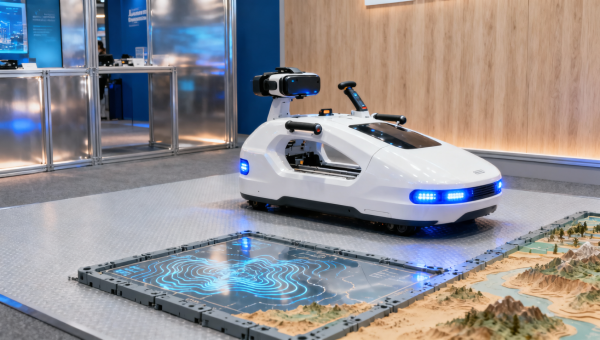
The Smart Campus Tech Expo 2026 will take place from April 22 to 24, 2026, at the Shanghai New International Expo Centre. Organizers have officially announced the addition of the ‘VR Learning Rides & Immersive Playgrounds’ thematic exhibition zone. Seventeen Chinese VR education equipment manufacturers are confirmed to exhibit, with product categories including VR physics lab track carts, AR geographic sand tables, and multisensory English learning pods. The UK Department for Education (DfE) and the UAE Ministry of Education (MOE) have jointly pre-registered a procurement delegation, explicitly indicating import intent for K12 smart campus equipment.
Industries Affected
Direct Exporters & Cross-Border Trade Firms
These firms face immediate relevance due to confirmed pre-registration by two national education procurement bodies. Impact centers on near-term export opportunity validation — not just market interest, but formal, institutional-level engagement signals. The presence of DfE and UAE MOE delegations suggests potential for tender-aligned product specifications and compliance pathways in upcoming tenders.
VR/AR Hardware Manufacturers (OEM/ODM)
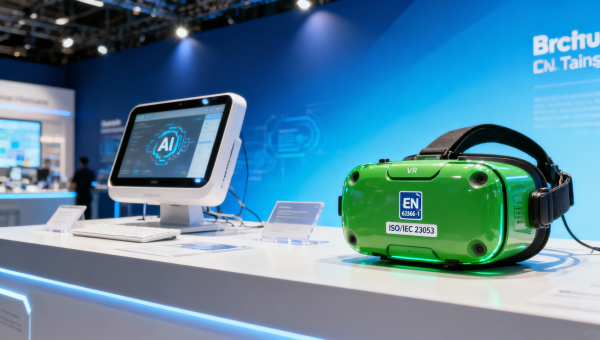
Manufacturers supplying physical devices — particularly those producing motion-integrated, multisensory, or curriculum-aligned hardware — may see rising demand for certification-ready variants (e.g., CE, UKCA, GCC conformity). The focus on ‘learning rides’ and ‘immersive playgrounds’ implies emphasis on safety standards, durability testing, and classroom integration documentation — beyond pure software functionality.
K12 EdTech Solution Integrators
Integrators delivering turnkey smart campus deployments may need to reassess hardware compatibility frameworks. The showcased products — such as AR sand tables and VR physics carts — require spatial calibration, networked device management, and teacher-facing operational interfaces. Their inclusion signals shifting client expectations toward experiential, hardware-enabled pedagogy modules — not just LMS or analytics layers.
Educational Infrastructure Suppliers
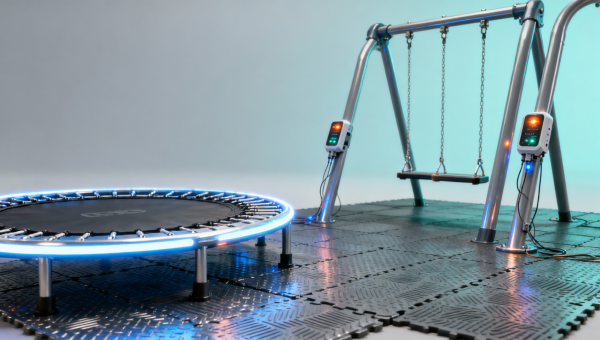
Suppliers of classroom furniture, power systems, network cabling, and safety enclosures may experience downstream demand shifts. VR learning rides and immersive playgrounds imply non-standard spatial layouts, higher power draw per station, and requirements for impact-absorbing flooring or modular partitions — all outside conventional classroom fit-out specs.
What Enterprises and Practitioners Should Monitor and Act On
Track official procurement timelines and technical specifications
While DfE and UAE MOE delegations have pre-registered, no formal tender announcements or RFPs have been issued. Companies should monitor both ministries’ official procurement portals over Q2–Q3 2025 for draft specifications — especially around interoperability (e.g., LTI 1.3 support), data privacy (UK GDPR / UAE PDPL alignment), and classroom deployment scalability.
Prioritize compliance readiness for priority markets
UKCA marking (for Great Britain) and GCC Conformity Assessment (for UAE) are distinct from CE. Firms with existing CE-certified VR hardware should audit whether mechanical safety, electromagnetic compatibility (EMC), and low-voltage directive (LVD) test reports meet updated UKCA/GCC requirements — particularly for motorized or motion-based devices like track carts.
Distinguish between procurement signal and commercial execution
The delegation pre-registration reflects institutional interest, not binding purchase commitments. From industry perspective, this is best understood as an early-stage validation of export viability — not evidence of imminent volume orders. Commercial follow-up will depend on demonstrable alignment with national curriculum frameworks (e.g., England’s National Curriculum science units, UAE’s Mawhiba STEM standards).
Prepare for pilot-phase logistics and localization support
If selected for pilot deployments, vendors may be required to provide on-site installation supervision, bilingual (English–Arabic or English–Chinese) operator training, and localized maintenance SLAs. Firms should assess current capacity for overseas technical support — including spare parts warehousing and certified field engineers — rather than assuming cloud-only servicing models suffice.
Editorial Observation / Industry Perspective
From industry perspective, this event update is best interpreted as a policy-adjacent demand signal — not yet a transactional inflection point. Its significance lies less in immediate sales volume and more in its confirmation that VR/AR hardware for experiential learning is entering formal government procurement consideration in key export markets. Analysis来看, it reflects a broader shift: national education authorities are beginning to treat immersive hardware not as novelty demos, but as infrastructural components requiring standardized evaluation, safety assurance, and curriculum integration. That transition — from pilot curiosity to procurement eligibility — is what makes this development structurally meaningful. However, actual contract awards remain subject to budget cycles, competitive bidding, and post-pilot efficacy reviews — all of which lie beyond the scope of the current announcement.
Conclusion
This announcement does not indicate a sudden opening of large-scale export channels, but rather marks a measurable step in the institutional recognition of Chinese VR/AR education hardware. It confirms that certain product categories — particularly those combining physical movement, multisensory feedback, and curriculum mapping — are now visible within formal education procurement pipelines. For stakeholders, the appropriate stance is measured attention: monitor specification developments closely, verify compliance readiness without overcommitting, and treat the event as a diagnostic checkpoint — not a launchpad.
Information Source
Main source: Official announcement from Smart Campus Tech Expo 2026 organizers (confirmed via press release dated March 2025). Note: UK DfE and UAE MOE delegation participation is confirmed as pre-registered; no tender documents or award details have been published. Ongoing observation is warranted for official procurement updates through mid-2025.
Search News
Hot Articles
- Jewelry Packaging & DisplayVietnam's New Regulation: Commercial VR Fitness Pods Must Undergo Local TUV SUD TestingApr 16, 2026
- Jewelry Packaging & DisplaySASO Updates Amusement Ride Standards: EMC Testing Now Mandatory for VR Fitness EquipmentApr 16, 2026
- Stage Lighting & TrussJIS T 0601-2-77:2026 Enforces New Audience Laser Limits in JapanApr 16, 2026
Popular Tags
Need ExpertConsultation?
Connect with our specialized leisureengineering team for procurementstrategies.
Recommended News
 Apr 16, 20262026 Shanghai Smart Campus Expo Highlights VR EdTech ExportVR EdTech Export takes center stage at 2026 Shanghai Smart Campus Expo — discover VR learning rides, AR sand tables & global procurement opportunities.● Institutional Buyer
 Apr 13, 20262026 China International Education Tour: AI and Green Training Equipment in SpotlightExplore AI education platforms & green training equipment at 2026 China International Education Tour. 242 global exhibitors showcase ISO-certified VR tools & low-carbon solutions for international buyers.● Institutional Buyer
 Apr 11, 20262026 China Intl Education Expo: AI & Green Tech in SpotlightExplore AI & green tech trends at 2026 China Intl Education Expo: 242 global institutions showcase smart classrooms & sustainable training solutions. Discover export opportunities for EdTech and eco-friendly equipment.● Institutional Buyer
 Apr 11, 2026China-Russia Vocational Education Week Launches with Bilingual Textbook ReleaseThe China-Russia Vocational Education Week 2026 launched with bilingual textbook releases, boosting cross-border collaboration in electromechanics, healthcare & digital commerce. Explore new SCO education standards & partnership opportunities.● Institutional Buyer
 Apr 11, 2026China's Smart Education Platform Upgrade Spurs Global AI Teaching Tool DemandChina's AI-powered education platform upgrade boosts global demand for smart teaching tools, featuring multilingual assistants and API integration. Discover how this impacts EdTech exporters and vocational training providers.● Institutional Buyer
 Apr 09, 2026Chengdu Implements Spring Break for Schools, Boosting Study Tour and Camp Equipment ExportsChengdu's new spring break policy boosts study tour & camp equipment exports, creating a $200M opportunity for manufacturers. Learn how to capitalize on this demand surge now.● Institutional Buyer
 Apr 09, 2026China-Russia Vocational Education Week Launches with Bilingual Textbook ReleaseChina-Russia Vocational Education Week launches bilingual textbooks for智能制造 and新能源汽车 sectors, creating export opportunities for vocational training providers. Discover how this impacts edtech and curriculum localization markets.● Institutional Buyer
 Apr 09, 2026Vocational Health Education Collaboration Expands Global Reach with New StandardsVocational health education reaches new global standards with China's 2026 initiative, featuring Luban Workshop standards and cross-border cloud platforms. Explore opportunities for healthcare training, edtech, and equipment exports in emerging markets.● Institutional Buyer
 Apr 09, 2026China's Education Ministry Launches Sunshine Enrollment Campaign, Impacting International School ProgramsChina's Sunshine Enrollment Campaign tightens regulations on international school programs, impacting A-Level/IB/AP providers with new localization requirements. Learn how this affects curriculum partnerships and compliance strategies.● Institutional Buyer
 Apr 09, 2026China's Smart Education Platform Upgrade Sparks Global Demand for AI ToolsChina's AI education platform upgrade drives global demand for smart teaching tools, creating export opportunities in Southeast Asia and beyond. Discover how edtech exporters can capitalize on this trend.● Institutional Buyer
 Apr 15, 2026Smart campus tech integrations that break when firmware updates dropDiscover firmware-resilient commercial furniture, sensory playgrounds, amusement equipment & hotel tables—engineered to stay safe, synced, and operational post-update.● Institutional Buyer
 Apr 15, 2026Educational supplies that teachers quietly replace after one semesterDiscover high-wear educational supplies, sensory playgrounds, playground climbers & commercial furniture—strategically replaced by teachers. Optimize procurement with GCT’s wear analytics and compliance insights.● Institutional Buyer
 Apr 12, 2026Educational supplies built for actual classroom chaos — not idealized lesson plansEducational supplies, office supplies & commercial furniture engineered for real classrooms—soundproofing materials, custom fabrication, luxury furniture & supply chain solutions.● Institutional Buyer
 Apr 07, 2026China's National Smart Education Platform Upgraded, Boosting AI EdTech ExportsChina's upgraded National Smart Education Platform boosts AI EdTech exports with new AI-driven features and international accessibility, creating opportunities for EdTech providers and localization services worldwide.● Institutional Buyer
 Apr 07, 2026China's 2026 School Admissions Policy Impacts International Education ProvidersChina's 2026 school admissions policy reshapes international education landscape, impacting IB, AP & A-Level providers with new compliance requirements. Learn how global education stakeholders can adapt.● Institutional Buyer
 Apr 04, 2026Smart Campus Tech Procurement Is Pulling From Office Supplies Manufacturers — Here’s WhyOffice supplies manufacturer? Smart campuses now choose trusted office supplies suppliers, OEM manufacturers & B2B exporters for integrated infrastructure—discover why.● Institutional Buyer
 Mar 31, 2026Nature Spotlights Tianli Education's AGI Path: AI+Education Export Model Gains Global Academic RecognitionNature highlights Tianli Education's AI+Education model, recognized globally for transforming teaching with AGI. Discover how this scalable, data-driven approach is reshaping EdTech and smart campuses worldwide.● Institutional Buyer
 Mar 31, 2026Shenzhen Institute of Technology and Chongqing No.1 High School Co-build 'One Student One Chip' Lab: University Research Resources Extended to Secondary Schools, Providing Real Teaching Validation Scenarios for China's STEM Educational Equipment ExportsShenzhen Institute of Technology & Chongqing No.1 High School launch 'One Student One Chip' lab, bringing AI & chip design to secondary schools. This university-school-industry model sets new STEM education standards for global exports.● Institutional Buyer
 Mar 31, 2026Haidian District's Moral Education Work Conference Focuses on 'Collaborative Governance': Upgraded Home-School-Community Linkage Mechanism Boosts Export Potential of China's Campus Psychological Assessment Systems, Digital Moral Education Platforms, and AI Teacher Development AssistantsHaidian District's moral education conference highlights China's export potential in campus psychological assessment systems, digital moral education platforms, and AI teacher development tools. Learn how collaborative governance boosts global edtech opportunities.● Institutional Buyer
 Mar 31, 2026Jilin Province Launches Crackdown on Education Over-Competition: Shifting Focus from Scores to Holistic DevelopmentJilin Province cracks down on education over-competition, shifting from scores to holistic development. Impacts training providers, edtech firms & global manufacturers. Explore policy changes & market opportunities now.● Institutional Buyer
 Mar 31, 2026China's Spring and Autumn Holiday Policy Boosts Demand for Non-Academic Educational Tools and STEAM KitsChina's new spring/autumn holiday policy boosts demand for STEAM kits & non-academic educational tools. Learn how manufacturers can capitalize on this shift with certified learning materials.● Institutional Buyer
 Mar 31, 2026World Champion Xie Jun Visits Chongqing No.1 High School: Chess Classroom and 'One Student, One Chip' Lab Inaugurated, China's Integrated Intellectual Education Solution Gains International AttentionWorld Chess Champion Xie Jun launches 'Smart Chess Education' at Chongqing No.1 High School, featuring AI chess terminals and FPGA chip labs. China's integrated intellectual education solution attracts global interest from UAE, Thailand & Poland.● Institutional Buyer
 Mar 31, 2026Zhongshan's 2026 Off-Campus Training Regulatory Conference: Stricter Controls on Subject-Based Training and Nationwide Promotion of 'Pay-After-Learning' Model Impacting China's EdTech SaaS and Smart Teaching Tools Export ComplianceZhongshan's 2026 Off-Campus Training Conference introduces stricter controls on subject-based training and nationwide 'Pay-After-Learning' model, impacting EdTech SaaS and smart teaching tools export compliance. Learn how this affects your business strategy.● Institutional Buyer
 Mar 30, 2026World Champion Xie Jun Visits Chongqing No.1 High School: Chess Classroom and 'One Student One Chip' Lab Inaugurated, China's Integrated Cognitive Education Model Gains Global AttentionWorld Champion Xie Jun launches chess classroom & 'One Student One Chip' lab at Chongqing No.1 High School, showcasing China's innovative cognitive education model attracting global interest from UAE, Chile & edtech investors.● Institutional Buyer