Global VR Fitness Device Export Prices Rise 12% QoQ
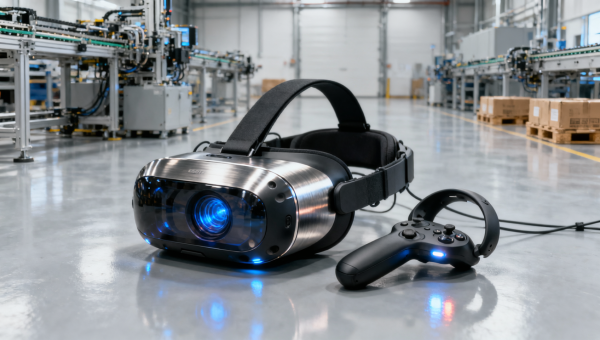
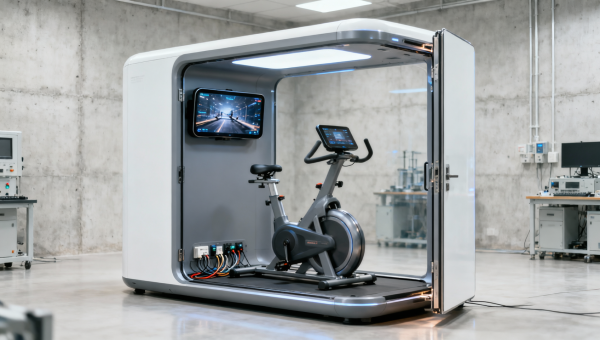
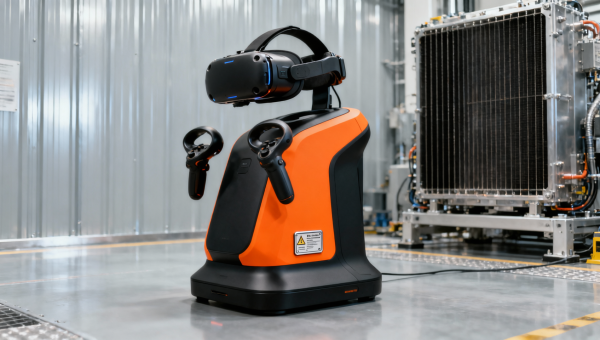
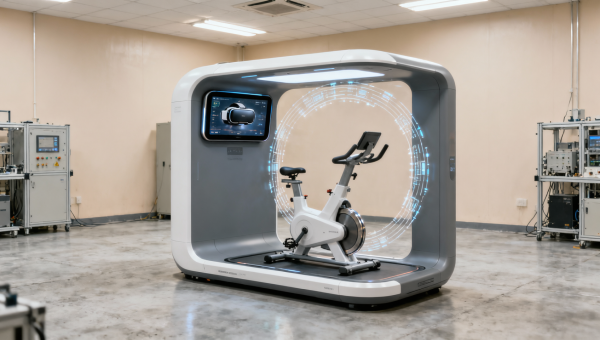
Global export prices for VR fitness devices rose 12% quarter-on-quarter to USD 3,820 per unit in Q1 2026, according to a trade monitoring report released on April 22, 2026. This shift signals material implications for export-oriented manufacturers, component suppliers, and distribution partners serving Western fitness-tech integrators — particularly those engaged in high-specification B2B supply chains.
Event Overview
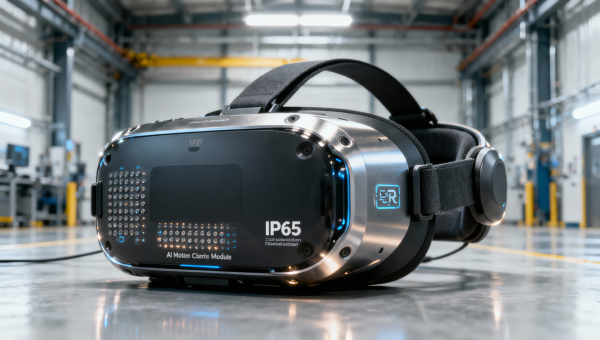
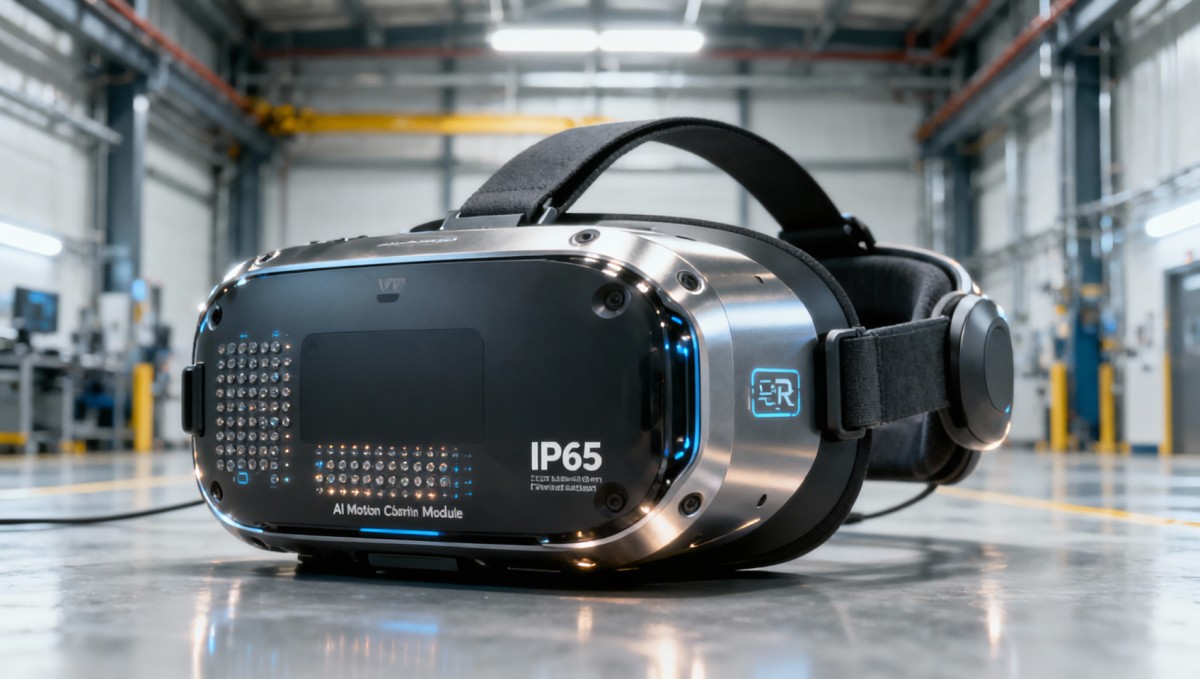
On April 22, 2026, the China Chamber of Commerce for Import and Export of Machinery and Electronic Products published its Q1 2026 Global VR Fitness Device Trade Monitoring Report. The report confirmed that China’s average export price for VR fitness devices reached USD 3,820 per unit in Q1 2026 — a 12% increase from the previous quarter. The rise was attributed primarily to heightened demand in Europe and North America for units featuring IP65 ingress protection, multi-user concurrent management capabilities, and AI-powered motion calibration modules. Concurrently, leading Chinese manufacturers — including DJI Intelligent Fitness (note: distinct from DJI’s drone division; name used per report) and Huanjing Technology — achieved an average on-time delivery rate of 98.7%, significantly above the industry-wide average of 89.2%.
Impact on Specific Industry Segments
Direct Exporters & OEM/ODM Manufacturers
These firms face dual pressure: rising input costs may constrain margin expansion despite higher realized prices, while demand for enhanced specifications (e.g., IP65-rated enclosures, embedded AI inference chips) raises BOM complexity and certification timelines. The premium pricing reflects not volume growth but selective demand for verifiably robust, enterprise-grade hardware — shifting competitive emphasis from cost leadership toward technical compliance and delivery reliability.
Component Suppliers (e.g., motion sensors, ruggedized housings, edge AI modules)
Suppliers aligned with IP65-rated mechanical design, certified industrial-grade IMUs, or low-latency AI acceleration hardware are seeing stronger order visibility. Conversely, generic sensor or consumer-grade enclosure vendors may experience reduced share in top-tier export orders. Demand is becoming more specification-driven than volume-driven — making technical documentation, test reports, and traceable compliance evidence critical for qualification.
Supply Chain & Logistics Service Providers
Higher unit value increases cargo insurance premiums, customs valuation scrutiny, and documentation requirements (e.g., origin certificates, conformity declarations for EU CE/UKCA). The 98.7% on-time delivery benchmark set by leaders also raises expectations across the logistics layer — especially for cross-border lead time predictability and real-time shipment visibility in air-freight-dependent lanes.
Distribution & Integration Partners (EU/US)
Overseas system integrators are increasingly prioritizing supplier stability over marginal cost differences. With delivery reliability now a differentiator, channel partners must reassess vendor scorecards — placing greater weight on verified on-time performance data and modular compatibility (e.g., API readiness for multi-user session orchestration), rather than standalone device specs alone.
What Stakeholders Should Monitor and Act On
Track official updates on export classification and tariff treatment
The 12% price increase coincides with evolving regulatory attention on AI-integrated consumer hardware in the EU (e.g., upcoming CRA Annex VI assessments) and US (e.g., NIST AI Risk Management Framework alignment). Exporters should monitor whether VR fitness units with AI motion calibration begin appearing in updated Harmonized System (HS) subheadings or require new conformity statements.
Validate specification demand beyond headline features
While IP65, multi-user support, and AI calibration are cited drivers, stakeholders should verify which specific implementations (e.g., ISO 20653-certified enclosures vs. internal rating claims; ONVIF-compliant streaming APIs vs. proprietary SDKs) are triggering actual purchase decisions — as commercial adoption lags technical capability in many integration workflows.
Assess delivery performance benchmarks against contractual SLAs
The 98.7% on-time rate reported for leaders reflects factory-to-dock timing, not end-customer delivery. Firms should clarify whether their own SLAs cover port-of-discharge handover or final-mile integration — and audit internal processes (e.g., customs pre-clearance readiness, documentation turnaround) that influence real-world fulfillment consistency.
Prepare for tighter inventory planning cycles
Higher unit value and longer validation cycles for upgraded modules (e.g., AI co-processors requiring firmware certification) reduce buffer flexibility. Procurement teams should prioritize dual-sourcing for certified components and formalize lead-time escalation protocols with Tier-2 suppliers — especially where single-source parts impact IP65 or AI functionality.
Editorial Observation / Industry Perspective
This data point is best understood not as a broad market upturn, but as a structural tightening in the high-end VR fitness hardware segment. Analysis来看, the price lift reflects constrained supply capacity for certified, production-ready configurations — not generalized inflation or speculative demand. From industry角度, the 98.7% delivery rate highlights that operational discipline is now a prerequisite for accessing premium-tier contracts, not merely a competitive advantage. Current更值得关注的是 whether this delivery benchmark becomes codified in RFPs issued by major European gym-tech platforms — which would convert a performance observation into a de facto entry barrier. It更适合理解为一个 procurement maturity signal: buyers are shifting from evaluating devices in isolation to assessing end-to-end technical and logistical execution capability.
In summary, the Q1 2026 export pricing and delivery data reflect a narrowing of viable participation in the global VR fitness hardware value chain — favoring firms with certified engineering rigor and predictable operational execution. This is not a cyclical uptick, but an inflection in buyer expectations around technical assurance and supply continuity.
Source: China Chamber of Commerce for Import and Export of Machinery and Electronic Products, Q1 2026 Global VR Fitness Device Trade Monitoring Report, released April 22, 2026. Note: Manufacturer names ‘DJI Intelligent Fitness’ and ‘Huanjing Technology’ appear as cited in the report; further corporate affiliations or product line details remain unconfirmed and are under observation.
Search News
Hot Articles
- Indoor PlaygroundFan Zhendong Visits Silicon Valley as MLTT Investor, AI Ping-Pong Tech Draws AttentionApr 23, 2026
- Stage Lighting & Truss2026 FIBA Women's World Cup Draw Opens Export Window for Arena Lighting & Timing SystemsApr 23, 2026
- Pro Stage AudioChina Upgrades Security Compliance for International Sports EventsApr 23, 2026
Popular Tags
Need ExpertConsultation?
Connect with our specialized leisureengineering team for procurementstrategies.
Recommended News
 Apr 23, 2026Global VR Fitness Device Export Prices Rise 12% QoQVR fitness device export prices surge 12% QoQ to $3,820 — discover why IP65, AI calibration & 98.7% on-time delivery now define premium global supply.● Theme Park Strategist
 Apr 23, 2026Vietnam TUV SUD Enforces Local Type Testing for VR Fitness CabinsVR fitness cabins entering Vietnam must now undergo local TUV SUD type testing—mandatory from Apr 22, 2026. Learn costs, timelines & compliance steps.● Theme Park Strategist
 Apr 23, 2026SASO Updates EMC Standard for VR Motion Devices to Class BSASO Updates EMC Standard for VR Motion Devices to Class B: Critical compliance shift for VR fitness pods, AR/VR amusement systems & exporters targeting Saudi Arabia.● Theme Park Strategist
 Apr 22, 2026SASO Updates EMC Standard for VR Haptic Devices in Saudi ArabiaSASO EMC standard update for VR haptic devices in Saudi Arabia: Class B compliance required by July 1, 2026 — critical for VR treadmills, AR walls & training pods.● Theme Park Strategist
 Apr 22, 2026Global VR Fitness Device Export Price Up 12% in Q1 2026VR fitness device export prices surge 12% to $1,842/unit in Q1 2026 — discover why China’s 38-day lead times are reshaping global procurement strategies.● Theme Park Strategist
 Apr 22, 2026Vietnam TUV SUD New Rule: VR Fitness Pods Require Local Type TestVR fitness pods now require local type testing in Vietnam per TUV SUD’s new rule—impacting exporters, costs & lead times. Act now!● Theme Park Strategist
 Apr 21, 2026Global VR Fitness Equipment Export Prices Rise 12% in Q1 2026VR fitness equipment export prices surge 12% in Q1 2026—driven by EU safety mandates. Discover cost impacts, compliance risks & supply chain insights.● Theme Park Strategist
 Apr 21, 2026Vietnam TUV SUD Enforces Local Type Testing for VR Fitness CabinsVR fitness cabins entering Vietnam must now undergo local TUV SUD type testing—EMC & safety checks in Hanoi or Ho Chi Minh City starting April 2026. Key for exporters, certifiers & distributors.● Theme Park Strategist
 Apr 21, 2026SASO Updates EMC Standard for VR Motion Devices in Saudi ArabiaSASO EMC update for VR motion devices in Saudi Arabia: Class B compliance now mandatory for fitness pods, edutainment cabins & arcade systems—act now to avoid shipment delays.● Theme Park Strategist
 Apr 20, 2026Global VR Fitness Device Export Price Up 12% in Q1 2026VR fitness device export prices surged 12% in Q1 2026—discover key drivers, regional impacts, and strategic actions for exporters, suppliers & logistics partners.● Theme Park Strategist
 Apr 20, 2026SASO Updates VR Haptic Device EMC Standard to Class B in Saudi ArabiaSASO VR haptic device EMC update: Class B standard now mandatory in Saudi Arabia from July 1, 2026. Ensure compliance for VR/AR hardware, imports & venues.● Theme Park Strategist
 Apr 20, 2026Vietnam TUV SUD Enforces Local Type Test for Commercial VR Fitness CabinsVietnam TUV SUD now mandates local type testing for commercial VR fitness cabins — including latency, EMC & safety checks. Act now to secure QCVN compliance and market access.● Theme Park Strategist
 Apr 17, 2026Global VR Fitness Equipment Export Prices Rise 12% in Q1 2026VR fitness equipment export prices surge 12.3% in Q1 2026—key insights for exporters, manufacturers & supply chain partners on compliance, pricing, and delivery trends.● Theme Park Strategist
 Apr 17, 2026SASO 2891:2026 Updated: VR Haptic Devices Now Require EMC Class B in Saudi ArabiaSASO 2891:2026 update mandates EMC Class B for VR haptic devices in Saudi Arabia — critical for OEMs, exporters & EdTech suppliers. Act now to avoid delays!● Theme Park Strategist
 Apr 17, 2026Vietnam TUV SUD Mandates Local Type Testing for VR Fitness CabinsVR fitness cabins for gyms & hotels in Vietnam now require local type testing—EMC, thermal, and AI fall detection—to obtain VIEC certification. Act now to avoid delays!● Theme Park Strategist
 Apr 16, 2026VR Fitness Device Export Prices Up 12% — China Supply Stability LeadsVR fitness device export prices up 12%—China’s supply stability and modular hardware-software delivery redefine global competitiveness. Act now.● Theme Park Strategist
 Apr 16, 2026Vietnam Mandates Local TUV SUD Type Testing for VR Fitness CabinsVR fitness cabins entering Vietnam must now pass local TÜV SÜD type testing in Hanoi—key for compliance, customs clearance & market access by July 1, 2026.● Theme Park Strategist
 Apr 16, 2026SASO Updates Playground Standards: VR Devices Now Require EMC TestingSASO now mandates EMC testing for VR playground devices in Saudi Arabia—key update for VR cycling, climbing & motion cabins exporters.● Theme Park Strategist
 Apr 15, 2026Vietnam's New Regulation: Commercial VR Fitness Pods Require Local TUV SUD TestingVietnam's new regulation mandates TUV SUD testing for commercial VR fitness pods. Learn how this impacts exporters, compliance timelines, and market entry strategies for Chinese manufacturers.● Theme Park Strategist
 Apr 15, 2026Global VR Fitness Equipment Export Prices Rise 12% YoY, China Maintains Supply Chain StabilityGlobal VR fitness equipment export prices surge 12% YoY in 2026 Q1, with China maintaining 96.3% delivery reliability. Key insights for VR hardware manufacturers & fitness distributors facing cost pressures.● Theme Park Strategist
 Apr 14, 2026US CPSC Seeks Comments on New Fitness Tracker Rules, Chinese Exporters Need UL/ETL ComplianceUS CPSC proposes new UL/ETL compliance rules for fitness trackers, impacting Chinese exporters. Learn key action points and industry impacts to stay ahead of regulatory changes affecting wearable tech exports to America.● Theme Park Strategist
 Apr 13, 20262026 Chinese Youth League Upgrades Format with VR Training PodsDiscover how China's 2026 Youth League VR training pods revolutionize football development, boosting exports by 210%. Learn about FIFA-certified tech transforming player training.● Theme Park Strategist
 Apr 09, 2026US CPSC Proposes New VR Safety Standards for Children's Indoor Play EquipmentUS CPSC proposes new VR safety standards for children's indoor play equipment, including dizziness testing and age grading. Learn how these regulations impact VR manufacturers and get compliance strategies.● Theme Park Strategist
 Apr 22, 2026Why Some Arcade Games Perform Well at First Then Fade FastArcade games can shine early then fade fast. Learn how trampoline park, indoor playground, and adventure playground buyers can spot ROI risks and choose longer-lasting winners.● Theme Park Strategist