Global VR Fitness Device Export Price Up 12% in Q1 2026
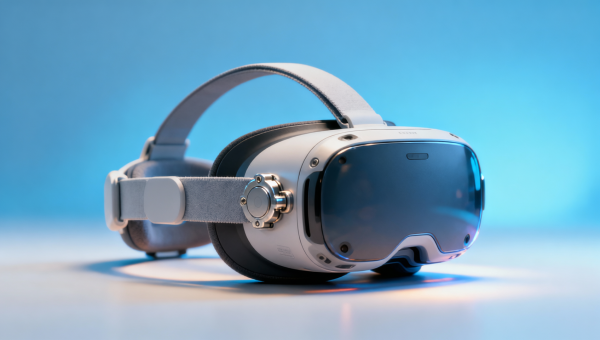
Global export prices for VR fitness devices rose 12% quarter-on-quarter to $1,842 per unit in Q1 2026, with Chinese manufacturers maintaining the shortest and most stable delivery lead times among major exporting nations — a development with tangible implications for international trade, procurement, and supply chain planning across hardware-dependent sectors.
Event Overview
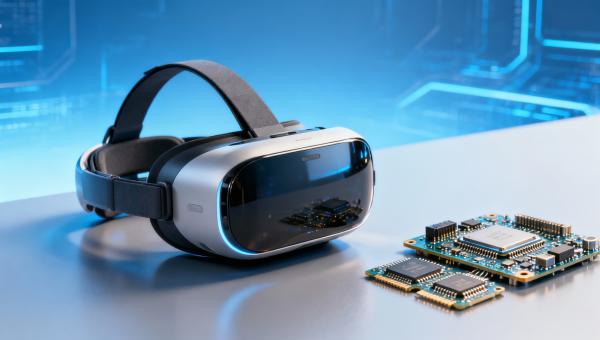
According to joint statistics from UN Comtrade and China’s General Administration of Customs, the average export price of VR fitness devices (HS code 9504.50) reached $1,842 per unit in Q1 2026 — an increase of $196 (+12%) compared to Q4 2025. The rise is attributed to upstream cost pressures, including higher chip module costs, and downstream pricing adjustments by Western brand partners. Concurrently, the top five Chinese manufacturers reported an average delivery lead time of 38 days (±3 days), outperforming South Korea (49 days) and Mexico (61 days).
Industries Affected
Direct Exporters & International Trading Firms
Exporters handling VR fitness hardware face tighter margin pressure as rising unit prices may constrain order volume growth in price-sensitive markets. At the same time, improved delivery reliability strengthens competitiveness in tender-based procurement — especially where contractual penalties apply for late delivery.
Component Sourcing & Raw Material Procurement Firms
Firms sourcing semiconductors, motion sensors, or display modules for VR fitness devices may observe delayed pass-through of cost increases, given that the $196 price hike reflects both input inflation and branding-driven premium positioning. This suggests procurement strategies should differentiate between commoditized components and value-added subsystems.
OEM/ODM Manufacturing Service Providers
Contract manufacturers serving global brands must reconcile tighter delivery windows with rising component costs. The 38-day benchmark set by leading Chinese producers implies increased operational discipline — particularly in inventory turnover and production scheduling — is now a competitive baseline, not a differentiator.
Distribution & Channel Partners in North America & EU
Importers and regional distributors face dual dynamics: higher landed costs per unit, but also reduced risk of shipment delays. This shifts negotiation leverage toward buyers who prioritize schedule certainty over marginal cost savings — especially in B2B fitness center deployments or corporate wellness programs with fixed rollout timelines.
What Stakeholders Should Monitor & Act On
Track official tariff and classification updates for HS 9504.50
Given the product’s dual classification as both gaming (9504) and fitness equipment, customs authorities in key markets may revisit valuation rules or origin requirements — particularly amid ongoing trade policy reviews in the EU and US. Stakeholders should monitor notifications from WCO and national customs agencies.
Monitor pricing trends in high-value subcomponents, not just final units
The $196 increase is not evenly distributed across the bill of materials. Firms should isolate price movements in application-specific integrated circuits (ASICs), wide-field-of-view lenses, and haptic feedback modules — as these are likely drivers rather than outcomes of the headline figure.
Distinguish between delivery stability signals and actual capacity expansion
The 38-day lead time reflects operational consistency, not necessarily expanded factory capacity. Buyers should verify whether quoted timelines include buffer stock or rely on just-in-time replenishment — especially before committing to large-volume, time-bound rollouts.
Prepare contingency assessments for alternative sourcing regions
While China currently leads on delivery reliability, geopolitical risk assessments remain active. Firms should update dual-sourcing checklists covering assembly location, firmware signing authority, and logistics corridor resilience — not only for new orders, but for existing multi-year contracts.
Editorial Perspective / Industry Observation
From an industry perspective, this data point is best understood not as a short-term pricing anomaly, but as an early indicator of structural recalibration: VR fitness hardware is shifting from a novelty category toward a vertically integrated, brand-managed product line — where cost, schedule, and compliance are co-optimized. The fact that delivery stability has become a primary differentiator (not just cost or feature set) signals that procurement teams now treat VR fitness devices more like industrial equipment than consumer electronics. Analysis来看, this trend is likely to persist through 2026, especially as EU Digital Product Passport requirements begin phased implementation for connected devices. It is less a one-off market fluctuation and more a signal of tightening integration between hardware manufacturing discipline and global brand execution.
Current more appropriate interpretation is that pricing and lead time metrics are converging into a single performance benchmark — making historical comparisons based on cost alone increasingly insufficient for strategic decision-making.
Conclusion
This Q1 2026 data confirms that VR fitness device exports are undergoing a functional shift: from discretionary consumer goods to mission-critical hardware in commercial wellness and remote training applications. For stakeholders, the takeaway is not about reacting to a 12% price change, but recognizing that delivery predictability — backed by verifiable lead time consistency — has become a core procurement criterion. The current situation is better understood as a normalization of expectations around manufacturing maturity, not a temporary supply shock.
Information Source: UN Comtrade database and China’s General Administration of Customs (joint Q1 2026 statistical release). Note: Ongoing observation is recommended for Q2 2026 export volume figures and regional breakdowns by end-market destination, which are scheduled for release on 2026-07-15.
Search News
Hot Articles
- Stage Lighting & TrussCCTV5 Snooker Broadcast Drives 37% Surge in Stage Lighting Export InquiriesApr 21, 2026
- Indoor PlaygroundVietnam Mandates Child Finger-Trap Sensors for Indoor Play EquipmentApr 21, 2026
- Stage Lighting & TrussGuangdong vs. Shanxi CBA Game Highlights Domestic Smart Arena LightingApr 21, 2026
Popular Tags
Need ExpertConsultation?
Connect with our specialized leisureengineering team for procurementstrategies.
Recommended News
 Apr 21, 2026Global VR Fitness Equipment Export Prices Rise 12% in Q1 2026VR fitness equipment export prices surge 12% in Q1 2026—driven by EU safety mandates. Discover cost impacts, compliance risks & supply chain insights.● Theme Park Strategist
 Apr 21, 2026Vietnam TUV SUD Enforces Local Type Testing for VR Fitness CabinsVR fitness cabins entering Vietnam must now undergo local TUV SUD type testing—EMC & safety checks in Hanoi or Ho Chi Minh City starting April 2026. Key for exporters, certifiers & distributors.● Theme Park Strategist
 Apr 21, 2026SASO Updates EMC Standard for VR Motion Devices in Saudi ArabiaSASO EMC update for VR motion devices in Saudi Arabia: Class B compliance now mandatory for fitness pods, edutainment cabins & arcade systems—act now to avoid shipment delays.● Theme Park Strategist
 Apr 20, 2026Global VR Fitness Device Export Price Up 12% in Q1 2026VR fitness device export prices surged 12% in Q1 2026—discover key drivers, regional impacts, and strategic actions for exporters, suppliers & logistics partners.● Theme Park Strategist
 Apr 20, 2026SASO Updates VR Haptic Device EMC Standard to Class B in Saudi ArabiaSASO VR haptic device EMC update: Class B standard now mandatory in Saudi Arabia from July 1, 2026. Ensure compliance for VR/AR hardware, imports & venues.● Theme Park Strategist
 Apr 20, 2026Vietnam TUV SUD Enforces Local Type Test for Commercial VR Fitness CabinsVietnam TUV SUD now mandates local type testing for commercial VR fitness cabins — including latency, EMC & safety checks. Act now to secure QCVN compliance and market access.● Theme Park Strategist
 Apr 17, 2026Global VR Fitness Equipment Export Prices Rise 12% in Q1 2026VR fitness equipment export prices surge 12.3% in Q1 2026—key insights for exporters, manufacturers & supply chain partners on compliance, pricing, and delivery trends.● Theme Park Strategist
 Apr 17, 2026SASO 2891:2026 Updated: VR Haptic Devices Now Require EMC Class B in Saudi ArabiaSASO 2891:2026 update mandates EMC Class B for VR haptic devices in Saudi Arabia — critical for OEMs, exporters & EdTech suppliers. Act now to avoid delays!● Theme Park Strategist
 Apr 17, 2026Vietnam TUV SUD Mandates Local Type Testing for VR Fitness CabinsVR fitness cabins for gyms & hotels in Vietnam now require local type testing—EMC, thermal, and AI fall detection—to obtain VIEC certification. Act now to avoid delays!● Theme Park Strategist
 Apr 16, 2026VR Fitness Device Export Prices Up 12% — China Supply Stability LeadsVR fitness device export prices up 12%—China’s supply stability and modular hardware-software delivery redefine global competitiveness. Act now.● Theme Park Strategist
 Apr 16, 2026Vietnam Mandates Local TUV SUD Type Testing for VR Fitness CabinsVR fitness cabins entering Vietnam must now pass local TÜV SÜD type testing in Hanoi—key for compliance, customs clearance & market access by July 1, 2026.● Theme Park Strategist
 Apr 16, 2026SASO Updates Playground Standards: VR Devices Now Require EMC TestingSASO now mandates EMC testing for VR playground devices in Saudi Arabia—key update for VR cycling, climbing & motion cabins exporters.● Theme Park Strategist
 Apr 15, 2026Vietnam's New Regulation: Commercial VR Fitness Pods Require Local TUV SUD TestingVietnam's new regulation mandates TUV SUD testing for commercial VR fitness pods. Learn how this impacts exporters, compliance timelines, and market entry strategies for Chinese manufacturers.● Theme Park Strategist
 Apr 15, 2026Global VR Fitness Equipment Export Prices Rise 12% YoY, China Maintains Supply Chain StabilityGlobal VR fitness equipment export prices surge 12% YoY in 2026 Q1, with China maintaining 96.3% delivery reliability. Key insights for VR hardware manufacturers & fitness distributors facing cost pressures.● Theme Park Strategist
 Apr 14, 2026US CPSC Seeks Comments on New Fitness Tracker Rules, Chinese Exporters Need UL/ETL ComplianceUS CPSC proposes new UL/ETL compliance rules for fitness trackers, impacting Chinese exporters. Learn key action points and industry impacts to stay ahead of regulatory changes affecting wearable tech exports to America.● Theme Park Strategist
 Apr 13, 20262026 Chinese Youth League Upgrades Format with VR Training PodsDiscover how China's 2026 Youth League VR training pods revolutionize football development, boosting exports by 210%. Learn about FIFA-certified tech transforming player training.● Theme Park Strategist
 Apr 09, 2026US CPSC Proposes New VR Safety Standards for Children's Indoor Play EquipmentUS CPSC proposes new VR safety standards for children's indoor play equipment, including dizziness testing and age grading. Learn how these regulations impact VR manufacturers and get compliance strategies.● Theme Park Strategist
 Apr 22, 2026SASO Updates EMC Standard for VR Haptic Devices in Saudi ArabiaSASO EMC standard update for VR haptic devices in Saudi Arabia: Class B compliance required by July 1, 2026 — critical for VR treadmills, AR walls & training pods.● Theme Park Strategist
 Apr 22, 2026Global VR Fitness Device Export Price Up 12% in Q1 2026VR fitness device export prices surge 12% to $1,842/unit in Q1 2026 — discover why China’s 38-day lead times are reshaping global procurement strategies.● Theme Park Strategist
 Apr 22, 2026Vietnam TUV SUD New Rule: VR Fitness Pods Require Local Type TestVR fitness pods now require local type testing in Vietnam per TUV SUD’s new rule—impacting exporters, costs & lead times. Act now!● Theme Park Strategist
 Apr 22, 2026Why Some Arcade Games Perform Well at First Then Fade FastArcade games can shine early then fade fast. Learn how trampoline park, indoor playground, and adventure playground buyers can spot ROI risks and choose longer-lasting winners.● Theme Park Strategist
 Apr 22, 2026Arcade Games That Keep Players Longer Without Prize InflationArcade games that boost dwell time in trampoline park, indoor playground, and adventure playground venues—discover smarter, prize-controlled strategies that improve replay, margins, and ROI.● Theme Park Strategist
 Apr 19, 2026Global VR Fitness Device Export Prices Rise 12.3% QoQVR fitness device export prices surge 12.3% QoQ to $2,840 — driven by EU EN 1176-7 & US CPSC compliance. Key insights for exporters, manufacturers & logistics partners.● Theme Park Strategist
 Apr 19, 2026SASO Updates EMC Standard for VR Haptic Devices in Saudi ArabiaSASO EMC update for VR haptic devices in Saudi Arabia: Class B limits effective July 2026 — retest now to avoid shipment delays & customs hold.● Theme Park Strategist