Arcade Games That Keep Players Longer Without Prize Inflation
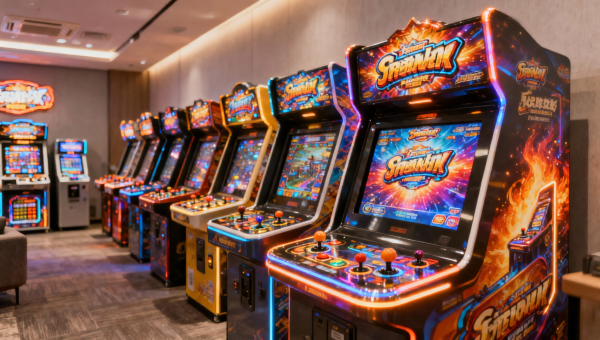
For operators, buyers, and distributors in amusement and leisure parks, arcade games that extend playtime without prize inflation offer a smarter path to revenue and guest satisfaction. From trampoline park and indoor playground venues to larger adventure playground concepts, the right arcade games can improve dwell time, optimize cost control, and strengthen long-term commercial performance.
The core commercial question is not simply which arcade games are popular, but which game formats keep players engaged longer without forcing operators to raise prize costs to maintain appeal. For procurement teams and business evaluators, the best-performing machines are typically those built around repeatable skill, social competition, redemption balance, and durable replay value rather than expensive prize escalation. In practice, this means selecting games that sustain earning potential through gameplay design, cabinet reliability, and venue fit.
What Buyers Are Really Looking For in Arcade Games With Longer Play Value
When people search for arcade games that keep players longer without prize inflation, they are usually trying to solve a business problem: how to increase dwell time and repeat play without allowing redemption costs to erode margins. This is especially relevant in family entertainment centers, trampoline parks, indoor playgrounds, and mixed-use amusement venues where arcade revenue must remain healthy alongside admissions, food service, and event packages.
For commercial buyers, the most important concerns usually include:
- How to improve per-guest spending without making prizes more expensive
- Which game categories create repeat play instead of one-and-done participation
- How to balance redemption appeal with payout control
- Whether a machine can stay attractive over time without constant promotional support
- How to evaluate ROI, maintenance burden, and floor-space productivity
In other words, the most valuable arcade games are not always the ones that deliver the biggest jackpots or the flashiest prize walls. They are the ones that create a strong play loop, encourage rematches, and make guests feel progress, challenge, or social excitement.
Why Prize Inflation Is a Risk for Operators
Prize inflation happens when venues gradually increase redemption value, prize attractiveness, or ticket payout expectations just to keep guests interested. While this may temporarily lift engagement, it often creates a margin problem that becomes difficult to reverse. Once players expect higher-value rewards, lowering payout can negatively affect satisfaction, especially in competitive local markets.
For operators and sourcing teams, prize inflation creates several practical risks:
- Higher redemption liability and lower gross profit per play
- Pressure to refresh prize inventory more frequently
- Reduced flexibility in campaign planning and seasonal promotions
- Greater sensitivity to supply chain cost changes in toys, electronics, and branded rewards
- A less sustainable arcade model over the long term
This is why many commercial buyers are shifting attention toward arcade machines that naturally keep players engaged through experience design rather than reward escalation. A well-selected game can support strong replay behavior even with disciplined ticket settings.
Which Arcade Game Types Tend to Keep Players Longer
Not all arcade games perform equally when the goal is long engagement without prize inflation. Buyers should focus on categories that promote replay, near-win excitement, skill development, and group interaction.
1. Skill-based redemption games
Games that reward timing, coordination, precision, or pattern recognition often keep players engaged because users believe they can improve. That sense of control is commercially powerful. Instead of chasing a larger prize, players chase a better outcome on the next round.
Examples include:
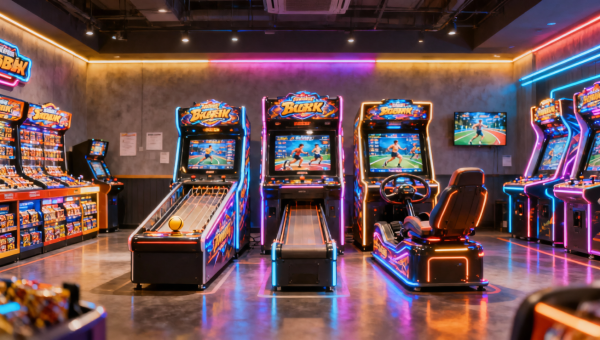
- Ball toss or target-based machines
- Timing-stop games with visible mastery potential
- Interactive sports challenge units
- Stacking or precision-drop formats
These machines can be effective in venues serving children, teens, and young adults because they support self-challenge and peer observation.
2. Competitive multiplayer games
Games that allow side-by-side play often extend session time because they create social momentum. Friends challenge each other, parents play with children, and groups remain in the arcade zone longer. This makes multiplayer arcade games especially attractive for trampoline parks and indoor playgrounds where social activity is already central to the customer journey.
Look for:
- Racing games with linked cabinets
- Sports or reaction-based competitive games
- Cooperative shooting or adventure games
- Fast party-style games with clear score comparison
These titles may or may not be redemption-based, but they often improve dwell time and support secondary spend across the venue.
3. Games with layered difficulty or progression
Machines that reveal deeper challenge over time tend to outperform simple novelty games in long-term engagement. A player who feels there is still something to unlock, beat, or master is more likely to replay without focusing only on ticket payout.
For buyers, this means evaluating whether the game offers:
- Multiple levels or stages
- Increasing challenge curves
- Performance feedback
- Score memory or ranking appeal
4. Compact high-replay games for mixed-use venues
In smaller family entertainment formats, compact games with quick rounds and strong repeat appeal can outperform larger cabinets that consume too much space relative to earnings. Fast-cycle games are particularly useful near food areas, transition zones, and waiting areas where dwell time can be captured in short bursts.
How to Judge Commercial Value Beyond Ticket Payout
A common sourcing mistake is to compare machines too heavily on visible payout potential while overlooking broader business performance. Procurement professionals should assess arcade games using a more complete commercial lens.
Replayability
Ask whether players are likely to play again because the game itself is satisfying. Strong replayability reduces dependence on prize inflation.
Throughput
A game with quick rounds can generate more turns per hour, especially in high-traffic venues. Even moderate pricing can produce strong daily revenue if queue formation and turnover are healthy.
Demographic fit
The best game for a trampoline park may differ from the best game for an indoor playground or adventure playground. Buyers should map game choice to audience composition:
- Young children: simple, colorful, low-friction interaction
- Families: cooperative or easy competitive play
- Teens: skill challenge, speed, social comparison
- Mixed audiences: intuitive games with broad appeal
Floor-space efficiency
Revenue per square meter remains a core metric in commercial amusement environments. A machine that keeps players engaged but blocks circulation or underperforms at peak times may not be the best choice.
Maintenance and uptime
Longer player engagement means little if the machine is frequently offline. Durable components, accessible servicing, parts availability, and supplier support matter as much as game concept.
Best-Fit Arcade Strategies for Trampoline Parks and Indoor Play Venues
For trampoline parks, indoor playgrounds, and related leisure venues, arcade placement strategy matters almost as much as machine selection. The goal is usually not to replace the core attraction but to extend total visit value.
Effective strategies often include:
- Placing quick, high-replay games near entry and exit zones
- Using multiplayer games to capture sibling and group activity
- Balancing redemption with video or sports-style games to avoid overdependence on prizes
- Creating a mix of low-commitment and high-engagement cabinets
- Positioning compact games in waiting or party areas
For venues already centered around physical activity, interactive arcade games with movement, reaction, or sports themes can fit naturally with the guest mindset. This thematic alignment often improves engagement without requiring inflated payouts.
Questions Procurement Teams Should Ask Suppliers Before Buying
For sourcing managers and distributors, supplier evaluation should go beyond price and visuals. A commercially sound purchase depends on operational data, support structure, and configuration flexibility.
Key questions include:
- What is the average earnings profile in similar venue types?
- Can payout settings be adjusted without harming gameplay appeal?
- What are the recommended ticket ranges for sustainable operation?
- How durable are high-contact components?
- What is the expected maintenance schedule?
- Are spare parts stocked regionally?
- Can cabinet branding or software settings be customized for local markets?
- What compliance and safety certifications are available?
Distributors and agents should also consider whether the game has cross-market potential. Machines with broad age appeal and configurable settings are often easier to resell across different amusement formats.
How to Avoid Buying Games That Need Constant Incentive Support
Some machines generate early excitement but lose momentum unless operators continuously increase rewards, run promotions, or reposition them. These games may look attractive in short demonstrations but deliver weak long-term economics.
Warning signs include:
- Gameplay that becomes repetitive after one or two rounds
- No visible skill progression or improvement path
- Player motivation driven almost entirely by prize output
- Low spectator appeal
- Poor fit with venue traffic patterns or audience age mix
To reduce this risk, buyers should request field performance references from similar venue types and ask for real operating data where possible. Observing player behavior is often more revealing than reviewing marketing materials alone.
A Smarter Selection Framework for Long-Term Arcade Profitability
If the objective is to keep players longer without prize inflation, the strongest commercial approach is usually a balanced arcade mix rather than reliance on a single hero machine. A resilient lineup often includes:
- Skill-based redemption games for repeat challenge
- Multiplayer games for social dwell time
- Fast-cycle compact units for space efficiency
- Selected non-redemption games that strengthen experience value
- Machines with configurable payout and durable build quality
This type of mix helps operators protect margins while maintaining guest excitement. It also gives procurement teams more room to optimize by venue size, customer profile, and regional spending patterns.
Conclusion: The Best Arcade Games Win on Engagement, Not Just Rewards
Arcade games that keep players longer without prize inflation are valuable because they support a more sustainable business model. For buyers, evaluators, and distributors in the amusement and leisure parks sector, the best options are usually those that combine replayable gameplay, controlled redemption economics, strong social or skill appeal, and reliable commercial durability.
The key takeaway is simple: longer playtime does not have to come from bigger prizes. It can come from better game design, stronger venue fit, and smarter sourcing decisions. Buyers who evaluate arcade machines through that lens are far more likely to improve dwell time, preserve margins, and build long-term earning performance across family entertainment and active leisure environments.
Search News
Hot Articles
- Stage Lighting & TrussCCTV5 Snooker Broadcast Drives 37% Surge in Stage Lighting Export InquiriesApr 21, 2026
- Indoor PlaygroundVietnam Mandates Child Finger-Trap Sensors for Indoor Play EquipmentApr 21, 2026
- Stage Lighting & TrussGuangdong vs. Shanxi CBA Game Highlights Domestic Smart Arena LightingApr 21, 2026
Popular Tags
Need ExpertConsultation?
Connect with our specialized leisureengineering team for procurementstrategies.
Recommended News
 Apr 21, 2026Global VR Fitness Equipment Export Prices Rise 12% in Q1 2026VR fitness equipment export prices surge 12% in Q1 2026—driven by EU safety mandates. Discover cost impacts, compliance risks & supply chain insights.● Theme Park Strategist
 Apr 21, 2026Vietnam TUV SUD Enforces Local Type Testing for VR Fitness CabinsVR fitness cabins entering Vietnam must now undergo local TUV SUD type testing—EMC & safety checks in Hanoi or Ho Chi Minh City starting April 2026. Key for exporters, certifiers & distributors.● Theme Park Strategist
 Apr 21, 2026SASO Updates EMC Standard for VR Motion Devices in Saudi ArabiaSASO EMC update for VR motion devices in Saudi Arabia: Class B compliance now mandatory for fitness pods, edutainment cabins & arcade systems—act now to avoid shipment delays.● Theme Park Strategist
 Apr 20, 2026Global VR Fitness Device Export Price Up 12% in Q1 2026VR fitness device export prices surged 12% in Q1 2026—discover key drivers, regional impacts, and strategic actions for exporters, suppliers & logistics partners.● Theme Park Strategist
 Apr 20, 2026SASO Updates VR Haptic Device EMC Standard to Class B in Saudi ArabiaSASO VR haptic device EMC update: Class B standard now mandatory in Saudi Arabia from July 1, 2026. Ensure compliance for VR/AR hardware, imports & venues.● Theme Park Strategist
 Apr 20, 2026Vietnam TUV SUD Enforces Local Type Test for Commercial VR Fitness CabinsVietnam TUV SUD now mandates local type testing for commercial VR fitness cabins — including latency, EMC & safety checks. Act now to secure QCVN compliance and market access.● Theme Park Strategist
 Apr 17, 2026Global VR Fitness Equipment Export Prices Rise 12% in Q1 2026VR fitness equipment export prices surge 12.3% in Q1 2026—key insights for exporters, manufacturers & supply chain partners on compliance, pricing, and delivery trends.● Theme Park Strategist
 Apr 17, 2026SASO 2891:2026 Updated: VR Haptic Devices Now Require EMC Class B in Saudi ArabiaSASO 2891:2026 update mandates EMC Class B for VR haptic devices in Saudi Arabia — critical for OEMs, exporters & EdTech suppliers. Act now to avoid delays!● Theme Park Strategist
 Apr 17, 2026Vietnam TUV SUD Mandates Local Type Testing for VR Fitness CabinsVR fitness cabins for gyms & hotels in Vietnam now require local type testing—EMC, thermal, and AI fall detection—to obtain VIEC certification. Act now to avoid delays!● Theme Park Strategist
 Apr 16, 2026VR Fitness Device Export Prices Up 12% — China Supply Stability LeadsVR fitness device export prices up 12%—China’s supply stability and modular hardware-software delivery redefine global competitiveness. Act now.● Theme Park Strategist
 Apr 16, 2026Vietnam Mandates Local TUV SUD Type Testing for VR Fitness CabinsVR fitness cabins entering Vietnam must now pass local TÜV SÜD type testing in Hanoi—key for compliance, customs clearance & market access by July 1, 2026.● Theme Park Strategist
 Apr 16, 2026SASO Updates Playground Standards: VR Devices Now Require EMC TestingSASO now mandates EMC testing for VR playground devices in Saudi Arabia—key update for VR cycling, climbing & motion cabins exporters.● Theme Park Strategist
 Apr 15, 2026Vietnam's New Regulation: Commercial VR Fitness Pods Require Local TUV SUD TestingVietnam's new regulation mandates TUV SUD testing for commercial VR fitness pods. Learn how this impacts exporters, compliance timelines, and market entry strategies for Chinese manufacturers.● Theme Park Strategist
 Apr 15, 2026Global VR Fitness Equipment Export Prices Rise 12% YoY, China Maintains Supply Chain StabilityGlobal VR fitness equipment export prices surge 12% YoY in 2026 Q1, with China maintaining 96.3% delivery reliability. Key insights for VR hardware manufacturers & fitness distributors facing cost pressures.● Theme Park Strategist
 Apr 14, 2026US CPSC Seeks Comments on New Fitness Tracker Rules, Chinese Exporters Need UL/ETL ComplianceUS CPSC proposes new UL/ETL compliance rules for fitness trackers, impacting Chinese exporters. Learn key action points and industry impacts to stay ahead of regulatory changes affecting wearable tech exports to America.● Theme Park Strategist
 Apr 13, 20262026 Chinese Youth League Upgrades Format with VR Training PodsDiscover how China's 2026 Youth League VR training pods revolutionize football development, boosting exports by 210%. Learn about FIFA-certified tech transforming player training.● Theme Park Strategist
 Apr 09, 2026US CPSC Proposes New VR Safety Standards for Children's Indoor Play EquipmentUS CPSC proposes new VR safety standards for children's indoor play equipment, including dizziness testing and age grading. Learn how these regulations impact VR manufacturers and get compliance strategies.● Theme Park Strategist
 Apr 22, 2026SASO Updates EMC Standard for VR Haptic Devices in Saudi ArabiaSASO EMC standard update for VR haptic devices in Saudi Arabia: Class B compliance required by July 1, 2026 — critical for VR treadmills, AR walls & training pods.● Theme Park Strategist
 Apr 22, 2026Global VR Fitness Device Export Price Up 12% in Q1 2026VR fitness device export prices surge 12% to $1,842/unit in Q1 2026 — discover why China’s 38-day lead times are reshaping global procurement strategies.● Theme Park Strategist
 Apr 22, 2026Vietnam TUV SUD New Rule: VR Fitness Pods Require Local Type TestVR fitness pods now require local type testing in Vietnam per TUV SUD’s new rule—impacting exporters, costs & lead times. Act now!● Theme Park Strategist
 Apr 22, 2026Why Some Arcade Games Perform Well at First Then Fade FastArcade games can shine early then fade fast. Learn how trampoline park, indoor playground, and adventure playground buyers can spot ROI risks and choose longer-lasting winners.● Theme Park Strategist
 Apr 22, 2026Arcade Games That Keep Players Longer Without Prize InflationArcade games that boost dwell time in trampoline park, indoor playground, and adventure playground venues—discover smarter, prize-controlled strategies that improve replay, margins, and ROI.● Theme Park Strategist
 Apr 19, 2026Global VR Fitness Device Export Prices Rise 12.3% QoQVR fitness device export prices surge 12.3% QoQ to $2,840 — driven by EU EN 1176-7 & US CPSC compliance. Key insights for exporters, manufacturers & logistics partners.● Theme Park Strategist
 Apr 19, 2026SASO Updates EMC Standard for VR Haptic Devices in Saudi ArabiaSASO EMC update for VR haptic devices in Saudi Arabia: Class B limits effective July 2026 — retest now to avoid shipment delays & customs hold.● Theme Park Strategist