Global VR Fitness Device Export Prices Rise 12.3% QoQ
On April 18, 2026, Global Trade Data Monitor reported a 12.3% quarter-on-quarter increase in the average export price of VR fitness devices (classified under Arcade & VR Machines), reaching $2,840 per unit in Q1 2026 — driven primarily by heightened compliance costs from new EU EN 1176-7 and U.S. CPSC regulations. This development is especially relevant for export-oriented hardware manufacturers, international trade service providers, and supply chain stakeholders serving Western markets.
Event Overview
According to data released by Global Trade Data Monitor on April 18, 2026, the global average export unit price for VR fitness devices stood at $2,840 in Q1 2026 — a 12.3% increase from the previous quarter. The rise is attributed to regulatory updates: EN 1176-7 in the European Union and new safety requirements from the U.S. Consumer Product Safety Commission (CPSC). Concurrently, the top five Chinese manufacturers achieved an average on-time delivery rate of 98.7%, outperforming Vietnam (89.2%) and Mexico (83.5%).
Which Subsectors Are Affected
Direct Export Trading Firms
These firms face margin pressure as higher compliance-related production and certification costs are passed through in export pricing. The 12.3% price increase reflects not demand-driven inflation but cost-driven recalibration — meaning pricing power remains constrained unless buyers absorb added compliance overhead.
Contract Manufacturing & Assembly Providers
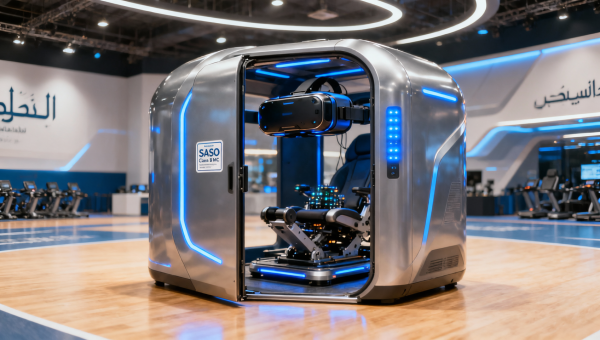
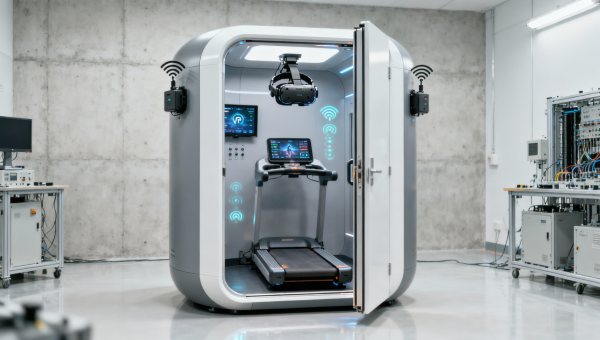
Manufacturers supporting global VR fitness brands must now allocate additional resources for documentation, third-party testing, and design adjustments to meet EN 1176-7 (playground equipment safety, extended to VR fitness enclosures) and CPSC-mandated electrical/mechanical safeguards. Lead times may extend if certification bottlenecks emerge.
Supply Chain & Logistics Service Providers
With Chinese suppliers maintaining >98% on-time delivery amid rising compliance complexity, logistics partners handling cross-border shipments — particularly air-freight-forwarded high-value units — see increased demand for traceability, customs pre-clearance support, and regulatory documentation management. Delay risks remain low for China-sourced goods but elevated for alternative sourcing bases.
Component Sourcing & Raw Material Procurement Firms
Suppliers of structural frames, haptic feedback modules, and certified display subsystems may experience selective demand shifts — favoring vendors with existing EN/CPSC-aligned material certifications. Unverified or generic-grade components risk rejection during final product conformity assessments.
What Relevant Enterprises or Practitioners Should Focus On
Monitor official implementation timelines for EN 1176-7 Annex updates and CPSC enforcement guidance
While the price impact is already visible, full enforcement phases — including post-market surveillance and importer liability rules — have not yet been finalized. Firms should track updates from CEN (European Committee for Standardization) and CPSC’s Office of Compliance to distinguish mandatory deadlines from transitional allowances.
Review export destination-specific compliance pathways for current and planned SKUs
Not all VR fitness configurations fall equally under EN 1176-7 scope (e.g., freestanding vs. floor-anchored units); similarly, CPSC thresholds vary by weight, voltage, and user age classification. A SKU-level compliance audit — rather than blanket certification — can avoid over-engineering and unnecessary cost inflation.
Validate supplier delivery performance metrics beyond headline rates
The 98.7% on-time delivery figure reflects aggregate performance across top-tier Chinese manufacturers. However, delivery stability may vary significantly by order size, customization level, and shipping port. Buyers should request granular data — e.g., OTD by shipment mode, by destination country, and by order value bracket — before revising sourcing strategies.
Prepare contingency protocols for non-China sourcing alternatives
Although Vietnam and Mexico show lower delivery reliability today, both regions are scaling local testing labs and regulatory advisory services. Firms diversifying manufacturing geography should initiate parallel compliance mapping and pilot batch validation now — rather than waiting for cost or lead time pressures to escalate.
Editorial Perspective / Industry Observation
From an industry perspective, this data point is better understood as a signal of tightening regulatory convergence — not merely a short-term price blip. The fact that compliance-driven cost increases are being absorbed transparently in export pricing (rather than masked via reduced margins or delayed launches) suggests market maturity is advancing. Analysis来看, the sustained delivery advantage held by leading Chinese manufacturers indicates that regulatory capability is increasingly inseparable from operational reliability — a dual threshold now shaping buyer evaluations. Current more appropriate interpretation is that ‘compliance readiness’ has evolved from a gatekeeping requirement into a core supply chain KPI.
Conclusion
This update underscores a structural shift: VR fitness device exports are transitioning from volume- and cost-led dynamics toward compliance-integrated, reliability-anchored trade. For stakeholders, it signals not urgency to pivot, but necessity to formalize regulatory intelligence functions, align procurement with certification roadmaps, and treat delivery consistency as a direct outcome of compliance infrastructure — not just logistics execution.
Source Attribution
Data source: Global Trade Data Monitor (April 18, 2026 release). Note: Enforcement timelines for EN 1176-7 revisions and CPSC VR-specific guidance remain pending formal publication and are subject to ongoing monitoring.
Search News
Hot Articles
Popular Tags
Need ExpertConsultation?
Connect with our specialized leisureengineering team for procurementstrategies.
Recommended News
 Apr 20, 2026Global VR Fitness Device Export Price Up 12% in Q1 2026VR fitness device export prices surged 12% in Q1 2026—discover key drivers, regional impacts, and strategic actions for exporters, suppliers & logistics partners.● Theme Park Strategist
 Apr 20, 2026SASO Updates VR Haptic Device EMC Standard to Class B in Saudi ArabiaSASO VR haptic device EMC update: Class B standard now mandatory in Saudi Arabia from July 1, 2026. Ensure compliance for VR/AR hardware, imports & venues.● Theme Park Strategist
 Apr 20, 2026Vietnam TUV SUD Enforces Local Type Test for Commercial VR Fitness CabinsVietnam TUV SUD now mandates local type testing for commercial VR fitness cabins — including latency, EMC & safety checks. Act now to secure QCVN compliance and market access.● Theme Park Strategist
 Apr 17, 2026Global VR Fitness Equipment Export Prices Rise 12% in Q1 2026VR fitness equipment export prices surge 12.3% in Q1 2026—key insights for exporters, manufacturers & supply chain partners on compliance, pricing, and delivery trends.● Theme Park Strategist
 Apr 17, 2026SASO 2891:2026 Updated: VR Haptic Devices Now Require EMC Class B in Saudi ArabiaSASO 2891:2026 update mandates EMC Class B for VR haptic devices in Saudi Arabia — critical for OEMs, exporters & EdTech suppliers. Act now to avoid delays!● Theme Park Strategist
 Apr 17, 2026Vietnam TUV SUD Mandates Local Type Testing for VR Fitness CabinsVR fitness cabins for gyms & hotels in Vietnam now require local type testing—EMC, thermal, and AI fall detection—to obtain VIEC certification. Act now to avoid delays!● Theme Park Strategist
 Apr 16, 2026VR Fitness Device Export Prices Up 12% — China Supply Stability LeadsVR fitness device export prices up 12%—China’s supply stability and modular hardware-software delivery redefine global competitiveness. Act now.● Theme Park Strategist
 Apr 16, 2026Vietnam Mandates Local TUV SUD Type Testing for VR Fitness CabinsVR fitness cabins entering Vietnam must now pass local TÜV SÜD type testing in Hanoi—key for compliance, customs clearance & market access by July 1, 2026.● Theme Park Strategist
 Apr 16, 2026SASO Updates Playground Standards: VR Devices Now Require EMC TestingSASO now mandates EMC testing for VR playground devices in Saudi Arabia—key update for VR cycling, climbing & motion cabins exporters.● Theme Park Strategist
 Apr 15, 2026Vietnam's New Regulation: Commercial VR Fitness Pods Require Local TUV SUD TestingVietnam's new regulation mandates TUV SUD testing for commercial VR fitness pods. Learn how this impacts exporters, compliance timelines, and market entry strategies for Chinese manufacturers.● Theme Park Strategist
 Apr 15, 2026Global VR Fitness Equipment Export Prices Rise 12% YoY, China Maintains Supply Chain StabilityGlobal VR fitness equipment export prices surge 12% YoY in 2026 Q1, with China maintaining 96.3% delivery reliability. Key insights for VR hardware manufacturers & fitness distributors facing cost pressures.● Theme Park Strategist
 Apr 14, 2026US CPSC Seeks Comments on New Fitness Tracker Rules, Chinese Exporters Need UL/ETL ComplianceUS CPSC proposes new UL/ETL compliance rules for fitness trackers, impacting Chinese exporters. Learn key action points and industry impacts to stay ahead of regulatory changes affecting wearable tech exports to America.● Theme Park Strategist
 Apr 13, 20262026 Chinese Youth League Upgrades Format with VR Training PodsDiscover how China's 2026 Youth League VR training pods revolutionize football development, boosting exports by 210%. Learn about FIFA-certified tech transforming player training.● Theme Park Strategist
 Apr 09, 2026US CPSC Proposes New VR Safety Standards for Children's Indoor Play EquipmentUS CPSC proposes new VR safety standards for children's indoor play equipment, including dizziness testing and age grading. Learn how these regulations impact VR manufacturers and get compliance strategies.● Theme Park Strategist
 Apr 21, 2026Global VR Fitness Equipment Export Prices Rise 12% in Q1 2026VR fitness equipment export prices surge 12% in Q1 2026—driven by EU safety mandates. Discover cost impacts, compliance risks & supply chain insights.● Theme Park Strategist
 Apr 21, 2026Vietnam TUV SUD Enforces Local Type Testing for VR Fitness CabinsVR fitness cabins entering Vietnam must now undergo local TUV SUD type testing—EMC & safety checks in Hanoi or Ho Chi Minh City starting April 2026. Key for exporters, certifiers & distributors.● Theme Park Strategist
 Apr 21, 2026SASO Updates EMC Standard for VR Motion Devices in Saudi ArabiaSASO EMC update for VR motion devices in Saudi Arabia: Class B compliance now mandatory for fitness pods, edutainment cabins & arcade systems—act now to avoid shipment delays.● Theme Park Strategist
 Apr 19, 2026Global VR Fitness Device Export Prices Rise 12.3% QoQVR fitness device export prices surge 12.3% QoQ to $2,840 — driven by EU EN 1176-7 & US CPSC compliance. Key insights for exporters, manufacturers & logistics partners.● Theme Park Strategist
 Apr 19, 2026SASO Updates EMC Standard for VR Haptic Devices in Saudi ArabiaSASO EMC update for VR haptic devices in Saudi Arabia: Class B limits effective July 2026 — retest now to avoid shipment delays & customs hold.● Theme Park Strategist
 Apr 19, 2026Vietnam TUV SUD New Rule: VR Fitness Cabins Require Local Type TestingVR fitness cabins entering Vietnam now require local TUV SUD type testing — EMC, motion sickness & Wi-Fi 6E stability checks. Act now to avoid delays & customs rejection.● Theme Park Strategist
 Apr 19, 2026SMT Launches 'PopBadminton AI' Standard API ProtocolPopBadminton AI Standard API Protocol launched — unified badminton equipment interface for serve speed, landing tracking & motion recognition. Open-source, cross-platform (HarmonyOS/Android 15/iOS 19), adopted by Macau & Malaysia.● Theme Park Strategist
 Apr 18, 2026Global VR Fitness Device Export Prices Rise 12% QoQVR fitness device export prices surge 12% QoQ—key insight for OEMs, logistics providers & distributors in SEA and Middle East markets.● Theme Park Strategist
 Apr 18, 2026Vietnam TUV SUD New Rule: VR Fitness Cabins Require Local Type TestVR fitness cabins for commercial use in Vietnam now require local type testing per TUV SUD’s new rule—act before July 1, 2026 to avoid delays & extra costs.● Theme Park Strategist
 Apr 18, 2026SASO Updates EMC Standard for VR Haptic Devices in Saudi ArabiaSASO EMC update for VR haptic devices: Class B testing now mandatory in Saudi Arabia — critical for exporters, ODMs & distributors targeting gyms, malls & schools.● Theme Park Strategist