SASO Updates EMC Standard for VR Haptic Devices in Saudi Arabia
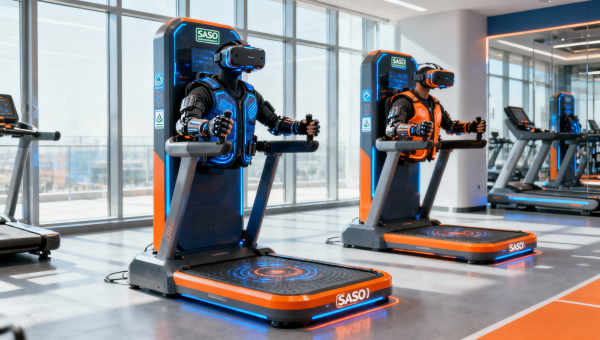
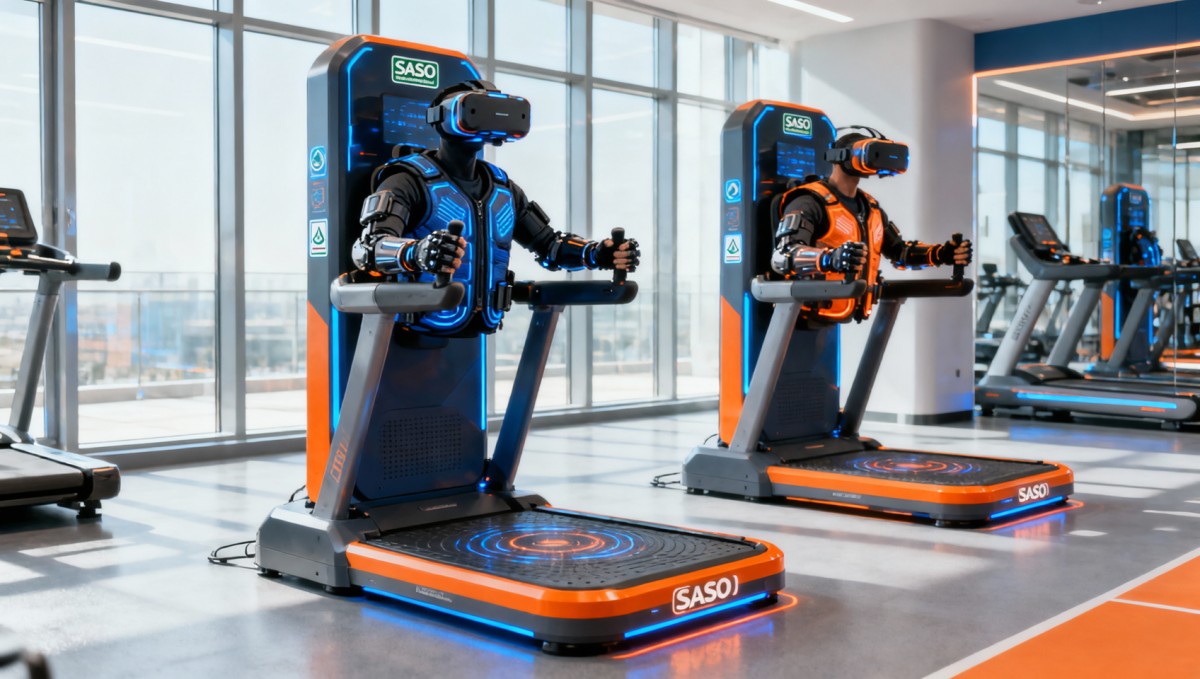
Saudi Arabia’s Standards, Metrology and Quality Organization (SASO) has enforced Revision 2 of SASO 2891:2026 on April 17, 2026, introducing mandatory EMC Class B testing for commercial VR haptic devices. This update directly affects exporters supplying to fitness centers, shopping mall entertainment venues, and educational institutions in the Kingdom — a critical market for global VR hardware. With China accounting for 68% of global VR haptic device exports, the revision carries immediate operational implications for manufacturing, compliance, and logistics stakeholders.
Event Overview
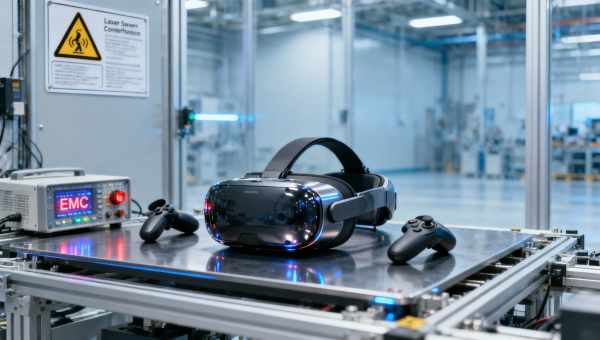
On April 17, 2026, SASO officially implemented SASO 2891:2026 (Revision 2), which adds compulsory electromagnetic compatibility (EMC) Class B testing requirements for imported VR haptic devices intended for commercial use. The scope explicitly covers products deployed in gyms, shopping mall entertainment centers, and educational institutions. Non-compliant products will be denied customs clearance. No transitional period or grandfathering clause has been publicly announced.
Which Subsectors Are Affected
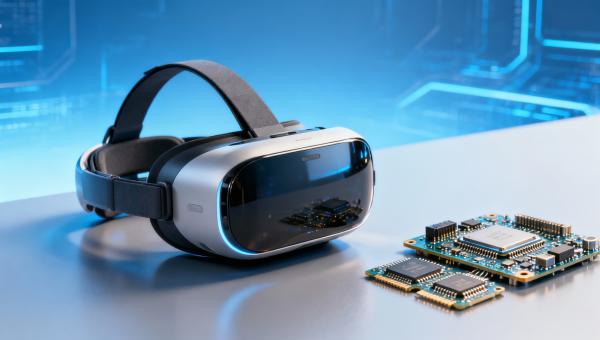
Original Design Manufacturers (ODMs) and Contract Manufacturers: As primary producers of VR haptic systems for global brands, Chinese ODMs face direct impact. Class B testing imposes stricter radiated and conducted emission limits than Class A, requiring layout revisions, shielding enhancements, and revised power supply filtering. Several leading ODMs have confirmed production line upgrades and extended lead times by 2–3 weeks.
Export Trading Companies and Distributors: Firms handling documentation, certification coordination, and shipment scheduling must now verify Class B test reports prior to dispatch. Absence of valid SASO-recognized Class B EMC reports will halt customs release — creating new pre-shipment checkpoints and potential delays at Jeddah and Dammam ports.
Supply Chain Service Providers (e.g., Certification Labs, Notified Bodies): Demand for accredited Class B EMC testing — particularly per IEC 61000-6-3 and IEC 61000-6-4 — has increased sharply among labs with SASO recognition. Lead times for test bookings and report issuance are reported to be rising, especially for multi-unit or high-power haptic platforms.
What Relevant Enterprises or Practitioners Should Focus On and How to Respond Now
Monitor official SASO communications for implementation clarifications
While SASO 2891:2026 (Rev. 2) is effective as of April 17, 2026, no public guidance has yet clarified whether legacy stock (pre-April 17 shipments with Class A reports) qualifies for entry. Stakeholders should track SASO’s official portal and registered conformity assessment bodies for any interim notices.
Prioritize verification of product classification and deployment context
Class B applies only to devices marketed or installed in non-industrial environments — i.e., consumer-facing or institutional settings. Products exclusively supplied to industrial training labs or R&D facilities may remain under Class A. Exporters must document and declare end-use context clearly in technical files and customs declarations.
Align procurement and PCB design timelines with updated test cycles
EMC Class B retesting often requires multiple design iterations. Procurement teams should adjust component sourcing schedules to accommodate longer validation windows; engineering teams should review PCB stack-up, grounding schemes, and cable shielding early in the NPI phase — not post-factory.
Confirm lab accreditation status before initiating testing
Only test reports issued by SASO-recognized laboratories — listed in SASO’s official database — are accepted. Reports from non-recognized labs, even if technically compliant with IEC standards, will not satisfy regulatory requirements. Verify lab status before commissioning tests.
Editorial Perspective / Industry Observation
From an industry perspective, this revision signals SASO’s broader alignment with international EMC frameworks for consumer-adjacent electronics — particularly those operating in shared public spaces where interference sensitivity is higher. Analysis来看, it is less a sudden policy shift and more a formalized extension of existing enforcement trends observed since 2024 in SASO’s handling of smart entertainment hardware. Current more appropriate interpretation is that this is a compliance checkpoint already embedded in ongoing market access planning — not an emergency disruption. However, its timing coincides with peak Q2 export cycles for education and retail sectors, making near-term operational readiness essential.
Observation来看, the 2–3 week production delay reported by ODMs reflects real-world engineering effort, not administrative friction alone. That suggests underlying design gaps in current VR haptic platforms — especially around high-frequency actuator drivers and wireless synchronization modules — which were previously optimized for cost and performance over Class B margins.
Current more appropriate understanding is that SASO 2891:2026 (Rev. 2) functions primarily as a market filter: it raises the bar for entry-level or uncertified VR hardware, reinforcing the advantage of vertically integrated exporters with in-house EMC engineering capacity.
Conclusion: This update does not redefine the VR haptic export landscape, but it does recalibrate the minimum compliance threshold for Saudi market access. For manufacturers and trade service providers, it underscores that EMC is no longer a ‘final-step’ certification item — but a foundational design requirement. The revision is best understood not as a one-off regulatory change, but as a structural indicator of tightening conformity expectations across GCC digital infrastructure markets.
Information Source: Official SASO Gazette notice for SASO 2891:2026 (Revision 2), published April 2026; public statements from three major Chinese VR ODMs confirming production adjustments (dated April 18–20, 2026); SASO’s publicly accessible list of recognized conformity assessment bodies (updated April 2026). Note: Clarification on grandfathering of pre-effective-date shipments remains pending and requires continued observation.
Search News
Hot Articles
Popular Tags
Need ExpertConsultation?
Connect with our specialized leisureengineering team for procurementstrategies.
Recommended News
 Apr 17, 2026Global VR Fitness Equipment Export Prices Rise 12% in Q1 2026VR fitness equipment export prices surge 12.3% in Q1 2026—key insights for exporters, manufacturers & supply chain partners on compliance, pricing, and delivery trends.● Theme Park Strategist
 Apr 17, 2026SASO 2891:2026 Updated: VR Haptic Devices Now Require EMC Class B in Saudi ArabiaSASO 2891:2026 update mandates EMC Class B for VR haptic devices in Saudi Arabia — critical for OEMs, exporters & EdTech suppliers. Act now to avoid delays!● Theme Park Strategist
 Apr 17, 2026Vietnam TUV SUD Mandates Local Type Testing for VR Fitness CabinsVR fitness cabins for gyms & hotels in Vietnam now require local type testing—EMC, thermal, and AI fall detection—to obtain VIEC certification. Act now to avoid delays!● Theme Park Strategist
 Apr 16, 2026VR Fitness Device Export Prices Up 12% — China Supply Stability LeadsVR fitness device export prices up 12%—China’s supply stability and modular hardware-software delivery redefine global competitiveness. Act now.● Theme Park Strategist
 Apr 16, 2026Vietnam Mandates Local TUV SUD Type Testing for VR Fitness CabinsVR fitness cabins entering Vietnam must now pass local TÜV SÜD type testing in Hanoi—key for compliance, customs clearance & market access by July 1, 2026.● Theme Park Strategist
 Apr 16, 2026SASO Updates Playground Standards: VR Devices Now Require EMC TestingSASO now mandates EMC testing for VR playground devices in Saudi Arabia—key update for VR cycling, climbing & motion cabins exporters.● Theme Park Strategist
 Apr 15, 2026Vietnam's New Regulation: Commercial VR Fitness Pods Require Local TUV SUD TestingVietnam's new regulation mandates TUV SUD testing for commercial VR fitness pods. Learn how this impacts exporters, compliance timelines, and market entry strategies for Chinese manufacturers.● Theme Park Strategist
 Apr 15, 2026Global VR Fitness Equipment Export Prices Rise 12% YoY, China Maintains Supply Chain StabilityGlobal VR fitness equipment export prices surge 12% YoY in 2026 Q1, with China maintaining 96.3% delivery reliability. Key insights for VR hardware manufacturers & fitness distributors facing cost pressures.● Theme Park Strategist
 Apr 14, 2026US CPSC Seeks Comments on New Fitness Tracker Rules, Chinese Exporters Need UL/ETL ComplianceUS CPSC proposes new UL/ETL compliance rules for fitness trackers, impacting Chinese exporters. Learn key action points and industry impacts to stay ahead of regulatory changes affecting wearable tech exports to America.● Theme Park Strategist
 Apr 13, 20262026 Chinese Youth League Upgrades Format with VR Training PodsDiscover how China's 2026 Youth League VR training pods revolutionize football development, boosting exports by 210%. Learn about FIFA-certified tech transforming player training.● Theme Park Strategist
 Apr 09, 2026US CPSC Proposes New VR Safety Standards for Children's Indoor Play EquipmentUS CPSC proposes new VR safety standards for children's indoor play equipment, including dizziness testing and age grading. Learn how these regulations impact VR manufacturers and get compliance strategies.● Theme Park Strategist
 Apr 18, 2026Global VR Fitness Device Export Prices Rise 12% QoQVR fitness device export prices surge 12% QoQ—key insight for OEMs, logistics providers & distributors in SEA and Middle East markets.● Theme Park Strategist
 Apr 18, 2026Vietnam TUV SUD New Rule: VR Fitness Cabins Require Local Type TestVR fitness cabins for commercial use in Vietnam now require local type testing per TUV SUD’s new rule—act before July 1, 2026 to avoid delays & extra costs.● Theme Park Strategist
 Apr 18, 2026SASO Updates EMC Standard for VR Haptic Devices in Saudi ArabiaSASO EMC update for VR haptic devices: Class B testing now mandatory in Saudi Arabia — critical for exporters, ODMs & distributors targeting gyms, malls & schools.● Theme Park Strategist
 Apr 18, 2026Arcade games ROI timeline: When do redemption units typically break even?Arcade games ROI timeline revealed: redemption units break even in 8–18 months. Compare performance with trampoline park, indoor playground & adventure playground investments.● Theme Park Strategist
 Apr 17, 2026Arcade games with cashless payment: Is retrofitting worth it?Arcade games cashless retrofitting boosts revenue & compliance—explore ROI, TCO, and certified kits for trampoline parks, indoor playgrounds & adventure playgrounds.● Theme Park Strategist
 Apr 17, 2026Amusement equipment maintenance costs no one talks about upfrontAmusement equipment maintenance costs shock buyers—especially for sensory playgrounds, playground climbers & borders. Discover hidden TCO drivers in commercial furniture, hotel equipment & playground safety systems.● Theme Park Strategist
 Apr 17, 2026Arcade machines with music accessories that distort sound at high volumeArcade machines with music accessories that distort sound at high volume—premium amusement equipment for sensory playgrounds, hotels & schools. Compliant, customizable, and built for impact.● Theme Park Strategist
 Apr 15, 2026VR arcade machines with heat dissipation designed for 10+ hours/dayCommercial VR arcade machines with advanced heat dissipation—ideal for amusement equipment, sensory playgrounds, hotel equipment & educational supplies. Built for 10+ hrs/day reliability.● Theme Park Strategist
 Apr 15, 2026Arcade machines with service access points designed for technicians — not engineersCommercial furniture & amusement equipment with technician-first service access—ideal for hotel equipment, sensory playgrounds, and playground safety compliance. Boost uptime, cut labor costs.● Theme Park Strategist
 Apr 14, 2026Arcade game cabinets with field-replaceable PCBs—cutting downtime by 70%Arcade games with field-replaceable PCBs cut downtime by 70%—ideal for office supplies, indoor playgrounds, trampoline parks & adventure playgrounds. Reliable, upgradable, certified.● Theme Park Strategist
 Apr 14, 2026Arcade games with the lowest long-term maintenance costArcade games offer the lowest long-term maintenance cost vs. trampoline parks, indoor playgrounds, adventure playgrounds & office supplies—discover TCO-optimized, certified solutions.● Theme Park Strategist
 Apr 08, 2026Middle East Tensions Raise Shipping Costs for Sports EquipmentMiddle East tensions spike shipping costs by 12% for sports equipment like smart fitness gear & e-scooters. Learn how exporters can navigate rising air freight fees & supply chain disruptions.● Theme Park Strategist
 Apr 08, 2026EU Updates EN 16830:2026 Eyewear Safety Standards, Chinese Sports Goggles Exporters Face 6-Month Certification DeadlineEU's EN 16830:2026 update raises safety standards for sports goggles, giving Chinese exporters just 6 months to comply with new impact resistance and UV protection rules. Learn critical deadlines and action steps for EU market access.● Theme Park Strategist