Global VR Fitness Device Export Prices Rise 12% QoQ
Global export prices for VR fitness devices rose 12% quarter-on-quarter to $2,840 per unit in Q1 2026, while Chinese top-tier manufacturers maintained a 98.3% on-time delivery rate—significantly above the global average of 89.1%. This development is especially relevant for trade-focused OEM/ODM firms, cross-border logistics providers, and regional distributors operating in emerging markets such as Southeast Asia and the Middle East.
Event Overview
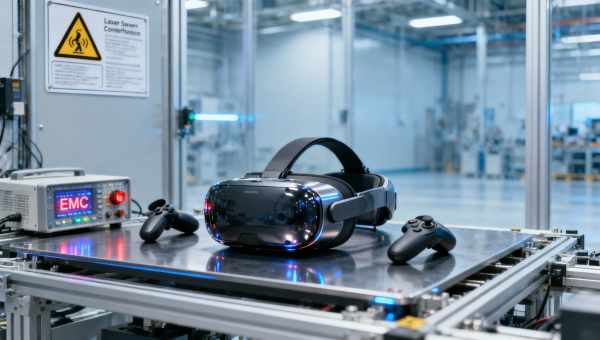
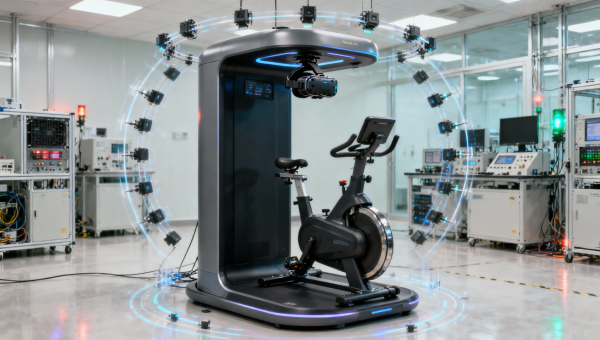
According to joint data released by China’s General Administration of Customs and Statista on April 17, 2026, the average export price of VR fitness devices worldwide reached $2,840 per unit in Q1 2026, up 12% from Q4 2025. The increase is attributed primarily to newly incurred compliance costs—including EMC testing, laser safety certification, and behavioral recognition algorithm validation. During the same period, the top five Chinese VR fitness device exporters achieved an average on-time delivery rate of 98.3%, outperforming the global average (89.1%). Buyers in Southeast Asia and the Middle East are increasingly shifting orders from Vietnamese and Mexican suppliers to Chinese ODMs offering ‘end-to-end compliant delivery’ capabilities.
Industries Affected
Direct Exporters & ODM Providers
Export-oriented manufacturers—especially those serving international B2B buyers—are directly impacted by both pricing pressure and rising compliance expectations. The 12% price increase reflects pass-through costs rather than margin expansion, meaning profitability may remain flat unless volume or value-added services compensate. Meanwhile, the strong delivery performance of leading Chinese ODMs reinforces their competitive advantage in complex, regulated categories—potentially consolidating buyer relationships around fewer, more reliable partners.
Supply Chain & Logistics Service Providers
Firms offering customs brokerage, compliance documentation support, or last-mile fulfillment in target markets (e.g., UAE, Thailand, Saudi Arabia) face growing demand for integrated services that align with updated regulatory requirements. As buyers prioritize ‘compliance-ready’ shipments over lowest-cost sourcing, service providers must verify whether their current offerings cover new technical validation steps (e.g., laser Class 1 certification, behavioral biometric data handling under GDPR-aligned frameworks).
Regional Distributors & Channel Partners
Distributors in Southeast Asia and the Middle East are adjusting procurement strategies in response to observed reliability gaps among alternative manufacturing bases. With order flows shifting toward Chinese ODMs, these partners may need to reassess lead time assumptions, inventory planning cycles, and contractual terms—particularly clauses tied to delivery timeliness, compliance liability, and post-shipment technical support.
Key Considerations for Stakeholders
Monitor upcoming updates to regional technical standards
EMC, laser safety, and behavioral AI-related requirements are evolving rapidly across key import markets. Stakeholders should track official notifications from bodies such as the EU’s CE Notified Bodies, Saudi SABER, and Thailand’s NBTC—not just for final rules but also for draft consultation timelines, which often signal enforcement windows.
Verify compliance scope in current ODM contracts
‘One-stop compliant delivery’ implies responsibility for full regulatory alignment—not only product certification but also labeling, user manual localization, and post-market surveillance readiness. Buyers should audit existing agreements to confirm which party bears cost and liability for newly mandated validations.
Assess regional sourcing alternatives beyond cost alone
The shift away from Vietnam and Mexico highlights that delivery stability and regulatory agility now outweigh marginal labor or tariff advantages. Companies evaluating nearshoring or friend-shoring options should benchmark not just landed cost, but also documented on-time delivery rates and certified compliance coverage across recent shipments.
Prepare for tighter pre-shipment validation windows
As more buyers require third-party test reports prior to release, procurement teams should align internal QA timelines with external lab capacity—particularly for behavioral recognition modules, where test cycles can extend beyond standard EMC or RF testing.
Editorial Insight / Industry Observation
From an industry perspective, this data point signals a structural shift—not just a short-term price adjustment. The 12% price increase is less about inflationary pressure and more about the market beginning to price in persistent, non-negotiable compliance complexity. Meanwhile, the sustained delivery leadership of top Chinese exporters suggests that operational resilience is becoming a defensible differentiator in hardware-intensive, regulation-sensitive categories. This trend is better understood as an early-stage consolidation signal: buyers are prioritizing predictability over fragmentation, and regulators are raising the bar for market access in ways that favor vertically integrated, technically fluent suppliers.
It is not yet a fully matured outcome—regional enforcement timelines vary, and smaller vendors still operate below radar—but it reflects a directional change in procurement logic and supply chain risk calculus.
Current developments are best interpreted as a reinforcement of compliance-as-infrastructure: technical due diligence is no longer a back-office task but a core input into commercial decision-making, contract structuring, and channel strategy.
This information is sourced from publicly released joint data by China’s General Administration of Customs and Statista, dated April 17, 2026. Ongoing observation is recommended regarding enforcement timelines for laser safety and behavioral AI regulations in key export markets—including the EU’s upcoming AI Act implementation guidance and Saudi Arabia’s updated medical-device-adjacent classification for fitness analytics hardware.
Search News
Hot Articles
Popular Tags
Need ExpertConsultation?
Connect with our specialized leisureengineering team for procurementstrategies.
Recommended News
 Apr 17, 2026Global VR Fitness Equipment Export Prices Rise 12% in Q1 2026VR fitness equipment export prices surge 12.3% in Q1 2026—key insights for exporters, manufacturers & supply chain partners on compliance, pricing, and delivery trends.● Theme Park Strategist
 Apr 17, 2026SASO 2891:2026 Updated: VR Haptic Devices Now Require EMC Class B in Saudi ArabiaSASO 2891:2026 update mandates EMC Class B for VR haptic devices in Saudi Arabia — critical for OEMs, exporters & EdTech suppliers. Act now to avoid delays!● Theme Park Strategist
 Apr 17, 2026Vietnam TUV SUD Mandates Local Type Testing for VR Fitness CabinsVR fitness cabins for gyms & hotels in Vietnam now require local type testing—EMC, thermal, and AI fall detection—to obtain VIEC certification. Act now to avoid delays!● Theme Park Strategist
 Apr 16, 2026VR Fitness Device Export Prices Up 12% — China Supply Stability LeadsVR fitness device export prices up 12%—China’s supply stability and modular hardware-software delivery redefine global competitiveness. Act now.● Theme Park Strategist
 Apr 16, 2026Vietnam Mandates Local TUV SUD Type Testing for VR Fitness CabinsVR fitness cabins entering Vietnam must now pass local TÜV SÜD type testing in Hanoi—key for compliance, customs clearance & market access by July 1, 2026.● Theme Park Strategist
 Apr 16, 2026SASO Updates Playground Standards: VR Devices Now Require EMC TestingSASO now mandates EMC testing for VR playground devices in Saudi Arabia—key update for VR cycling, climbing & motion cabins exporters.● Theme Park Strategist
 Apr 15, 2026Vietnam's New Regulation: Commercial VR Fitness Pods Require Local TUV SUD TestingVietnam's new regulation mandates TUV SUD testing for commercial VR fitness pods. Learn how this impacts exporters, compliance timelines, and market entry strategies for Chinese manufacturers.● Theme Park Strategist
 Apr 15, 2026Global VR Fitness Equipment Export Prices Rise 12% YoY, China Maintains Supply Chain StabilityGlobal VR fitness equipment export prices surge 12% YoY in 2026 Q1, with China maintaining 96.3% delivery reliability. Key insights for VR hardware manufacturers & fitness distributors facing cost pressures.● Theme Park Strategist
 Apr 14, 2026US CPSC Seeks Comments on New Fitness Tracker Rules, Chinese Exporters Need UL/ETL ComplianceUS CPSC proposes new UL/ETL compliance rules for fitness trackers, impacting Chinese exporters. Learn key action points and industry impacts to stay ahead of regulatory changes affecting wearable tech exports to America.● Theme Park Strategist
 Apr 13, 20262026 Chinese Youth League Upgrades Format with VR Training PodsDiscover how China's 2026 Youth League VR training pods revolutionize football development, boosting exports by 210%. Learn about FIFA-certified tech transforming player training.● Theme Park Strategist
 Apr 09, 2026US CPSC Proposes New VR Safety Standards for Children's Indoor Play EquipmentUS CPSC proposes new VR safety standards for children's indoor play equipment, including dizziness testing and age grading. Learn how these regulations impact VR manufacturers and get compliance strategies.● Theme Park Strategist
 Apr 18, 2026Global VR Fitness Device Export Prices Rise 12% QoQVR fitness device export prices surge 12% QoQ—key insight for OEMs, logistics providers & distributors in SEA and Middle East markets.● Theme Park Strategist
 Apr 18, 2026Vietnam TUV SUD New Rule: VR Fitness Cabins Require Local Type TestVR fitness cabins for commercial use in Vietnam now require local type testing per TUV SUD’s new rule—act before July 1, 2026 to avoid delays & extra costs.● Theme Park Strategist
 Apr 18, 2026SASO Updates EMC Standard for VR Haptic Devices in Saudi ArabiaSASO EMC update for VR haptic devices: Class B testing now mandatory in Saudi Arabia — critical for exporters, ODMs & distributors targeting gyms, malls & schools.● Theme Park Strategist
 Apr 18, 2026Arcade games ROI timeline: When do redemption units typically break even?Arcade games ROI timeline revealed: redemption units break even in 8–18 months. Compare performance with trampoline park, indoor playground & adventure playground investments.● Theme Park Strategist
 Apr 17, 2026Arcade games with cashless payment: Is retrofitting worth it?Arcade games cashless retrofitting boosts revenue & compliance—explore ROI, TCO, and certified kits for trampoline parks, indoor playgrounds & adventure playgrounds.● Theme Park Strategist
 Apr 17, 2026Amusement equipment maintenance costs no one talks about upfrontAmusement equipment maintenance costs shock buyers—especially for sensory playgrounds, playground climbers & borders. Discover hidden TCO drivers in commercial furniture, hotel equipment & playground safety systems.● Theme Park Strategist
 Apr 17, 2026Arcade machines with music accessories that distort sound at high volumeArcade machines with music accessories that distort sound at high volume—premium amusement equipment for sensory playgrounds, hotels & schools. Compliant, customizable, and built for impact.● Theme Park Strategist
 Apr 15, 2026VR arcade machines with heat dissipation designed for 10+ hours/dayCommercial VR arcade machines with advanced heat dissipation—ideal for amusement equipment, sensory playgrounds, hotel equipment & educational supplies. Built for 10+ hrs/day reliability.● Theme Park Strategist
 Apr 15, 2026Arcade machines with service access points designed for technicians — not engineersCommercial furniture & amusement equipment with technician-first service access—ideal for hotel equipment, sensory playgrounds, and playground safety compliance. Boost uptime, cut labor costs.● Theme Park Strategist
 Apr 14, 2026Arcade game cabinets with field-replaceable PCBs—cutting downtime by 70%Arcade games with field-replaceable PCBs cut downtime by 70%—ideal for office supplies, indoor playgrounds, trampoline parks & adventure playgrounds. Reliable, upgradable, certified.● Theme Park Strategist
 Apr 14, 2026Arcade games with the lowest long-term maintenance costArcade games offer the lowest long-term maintenance cost vs. trampoline parks, indoor playgrounds, adventure playgrounds & office supplies—discover TCO-optimized, certified solutions.● Theme Park Strategist
 Apr 08, 2026Middle East Tensions Raise Shipping Costs for Sports EquipmentMiddle East tensions spike shipping costs by 12% for sports equipment like smart fitness gear & e-scooters. Learn how exporters can navigate rising air freight fees & supply chain disruptions.● Theme Park Strategist
 Apr 08, 2026EU Updates EN 16830:2026 Eyewear Safety Standards, Chinese Sports Goggles Exporters Face 6-Month Certification DeadlineEU's EN 16830:2026 update raises safety standards for sports goggles, giving Chinese exporters just 6 months to comply with new impact resistance and UV protection rules. Learn critical deadlines and action steps for EU market access.● Theme Park Strategist