FDA Proposes Chinese Label Translation Requirement for US Sports Supplements
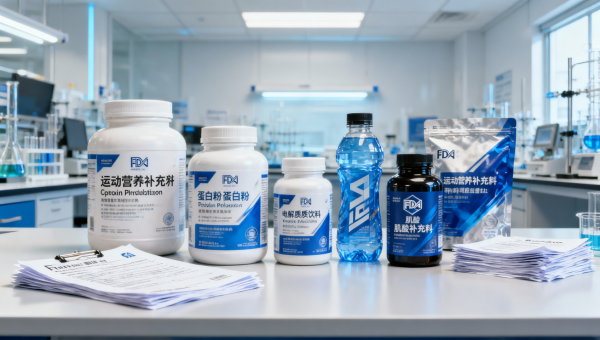
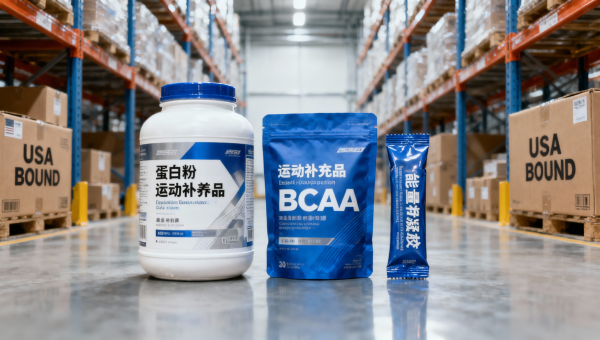
FDA has proposed new labeling requirements for dietary supplements marketed in the U.S., specifically targeting products with Chinese-language labels — including sports nutrition items such as protein powders, BCAAs, and energy gels. Effective April 16, 2026, the draft guidance introduces a mandatory FDA备案 translation process, signaling potential operational and cost implications for manufacturers, exporters, and brand owners engaged in the U.S.-China supplement supply chain.
Event Overview
On April 16, 2026, the U.S. Food and Drug Administration (FDA) released the Draft Guidance on Dietary Supplement Labeling. This document proposes that all dietary supplements sold in the U.S. bearing Chinese-language labeling must submit an English translation to the FDA for备案 (registration/acknowledgement), and that the label must include the statement: ‘Translation verified by FDA-registered translator’. The draft is currently open for public comment and has not yet been finalized.
Industries Affected
Contract Manufacturers (OEM/ODM Facilities in China)
Chinese contract manufacturers producing private-label sports supplements for U.S.-based brands will be directly impacted. Since many export products carry bilingual (English + Chinese) labels — often for domestic marketing or logistics clarity — this requirement applies even when Chinese text appears only on inner packaging, cartons, or documentation accompanying bulk shipments. Compliance will necessitate formal translation submission and verification for each SKU, increasing administrative burden and traceability requirements.
U.S.-Based Supplement Brands Using Chinese Contract Manufacturing
Brands relying on Chinese OEM partners face new upstream compliance responsibilities. Under the draft, the ‘responsible party’ listed on the supplement label (typically the U.S. distributor or importer) remains legally accountable for label accuracy — including translated content. This shifts verification obligations upstream, requiring brands to coordinate closely with manufacturers and translators to ensure alignment with FDA expectations before product release.
Translation & Regulatory Support Providers
The proposal introduces a de facto qualification layer for translation service providers. While the term ‘FDA-registered translator’ is not defined in current regulations, the draft implies that translators may need to self-register or be vetted through an FDA-recognized system. This could reshape demand for specialized regulatory linguists and prompt third-party verification platforms to develop compliant workflows — though no official registry or accreditation mechanism has been announced.
What Stakeholders Should Monitor and Do Now
Track the finalization timeline and scope clarifications
The draft remains non-binding. Stakeholders should monitor FDA’s docket (Docket No. FDA-2026-D-XXXXX, if assigned) for updates, public comment summaries, and any revised language — especially regarding whether the requirement extends beyond consumer-facing labels (e.g., to shipping labels, certificates of analysis, or internal documentation).
Review current label versions across SKUs and packaging tiers
Companies should audit all products destined for the U.S. market to identify where Chinese text appears — including outer boxes, inner pouches, instruction inserts, and digital assets linked via QR codes. Even incidental Chinese characters (e.g., manufacturer names, lot codes, or certifications) may fall under scrutiny depending on how FDA interprets ‘labeling’ under 21 CFR §101.95.
Distinguish between policy signal and enforceable rule
This is a draft guidance, not a regulation. It reflects FDA’s current thinking but does not carry the force of law until codified. Companies should avoid premature investment in unverified ‘FDA-registered translator’ services and instead prioritize documentation of existing translation processes, including translator credentials and quality assurance steps.
Prepare internal coordination protocols for translation submission
For companies managing multiple SKUs, begin mapping translation ownership (brand vs. manufacturer vs. third-party), version control for label iterations, and record retention practices. Anticipate that FDA may require submission of translation files alongside facility registrations or prior notice submissions — making early process alignment critical.
Editorial Perspective / Industry Observation
From industry perspective, this draft guidance is best understood as a regulatory signal — not an immediate compliance mandate. It reflects growing FDA attention to multilingual labeling integrity, particularly in categories with high import volume and documented labeling violations (e.g., undeclared ingredients, structure/function claims). Analysis来看, the $320 per-SKU cost estimate cited in the summary likely includes translation, verification, documentation, and internal review time — but actual costs will vary significantly based on label complexity and existing vendor relationships. Observation来看, FDA has not yet defined what constitutes an ‘FDA-registered translator’, nor indicated whether it plans to establish a formal registry. Current more appropriate interpretation is that FDA seeks greater accountability for translation accuracy — not necessarily centralized credentialing — at least in the near term.
Conclusion
This draft guidance marks a procedural shift rather than a substantive change in labeling science or safety standards. Its significance lies in reinforcing FDA’s expectation that all label elements — regardless of language — must be subject to verifiable quality control. For now, it is more accurately read as a notice of intent and a call for stakeholder input than as an impending enforcement threshold. A measured, documentation-first response — aligned with existing Good Manufacturing Practice (GMP) and labeling recordkeeping requirements — remains the most pragmatic approach.
Information Source
Main source: U.S. FDA, Draft Guidance on Dietary Supplement Labeling, issued April 16, 2026. Note: This is a draft document; final requirements, effective dates, and implementation details remain pending FDA review and public comment. No official translator registry or fee structure has been published as of the draft release date.
Search News
Hot Articles
Popular Tags
Need ExpertConsultation?
Connect with our specialized leisureengineering team for procurementstrategies.
Recommended News
 Apr 15, 2026SASO Updates Playground Standard SASO 2770:2026 with VR EMC RequirementsSASO 2770:2026 now mandates VR EMC testing for playground equipment — vital for Chinese exporters & VR-integrated system suppliers targeting Saudi Arabia.● Hospitality Sourcing Dir
 Apr 15, 2026Global VR Fitness Equipment Export Prices Up 12% MoMVR fitness equipment export prices surge 12% MoM—driven by XR2 Gen3 chip shortages & TÜV certification costs. Key insights for global trade & manufacturing stakeholders.● Hospitality Sourcing Dir
 Apr 15, 2026Vietnam Requires Local TUV SUD Type Testing for VR Fitness Cabins from Q2 2026VR fitness cabins for Vietnam must pass local TUV SUD Hanoi type testing from July 2026—no more CNAS reports. Act now to avoid delays & extra costs.● Hospitality Sourcing Dir
 Apr 15, 2026FDA Proposes Chinese Label Translation Requirement for Sports Nutrition SupplementsFDA proposes Chinese label translation requirements for sports nutrition supplements—learn how protein powders, creatine & electrolyte drinks are affected and what exporters must do now.● Hospitality Sourcing Dir
 Apr 15, 2026RCEP Round 3 Tariff Cuts Effective: China Optical Lenses 0% Duty to ASEANRCEP Round 3 cuts China optical lenses duty to 0% for ASEAN—boosting exports of sports goggles, ride lenses & stage optics. Faster Pingxiang Port clearance too!● Hospitality Sourcing Dir
 Apr 15, 2026CPSC Proposes New Fitness Tracker RF/Bio-Sensor Compliance RuleCPSC proposes new RF/bio-sensor compliance rule for fitness trackers—learn how heart rate, SpO₂ & exercise algorithm devices must prepare for UL/ETL dual-mode certification.● Hospitality Sourcing Dir
 Apr 18, 2026FDA Proposes Chinese Label Translation Requirement for US Sports SupplementsFDA proposes Chinese label translation requirements for US sports supplements—impacting protein powders, BCAAs & energy gels. Learn compliance steps, costs, and what brands must do before April 2026.● Hospitality Sourcing Dir
 Apr 18, 2026Catering equipment with dual-voltage capability: A real flexibility boost or just extra wiring?Dual-voltage catering equipment delivers real flexibility for leisure parks, theme park rides & hotels—cutting downtime, simplifying custom furniture integration, and boosting ROI. Discover if it’s worth the premium.● Hospitality Sourcing Dir
 Apr 18, 2026Catering equipment that fails quietly—why noise isn’t the only red flagCatering equipment, hotel beds, playground structures & theme park rides can fail silently—discover hidden risks in soundproofing materials, custom furniture & instrument cables.● Hospitality Sourcing Dir
 Apr 17, 2026Commercial kitchen furniture vs. office furniture: Why load ratings differ so muchCommercial furniture load ratings ensure safety for playground borders, sensory playgrounds, amusement equipment & hotel tables—discover why they far exceed office standards.● Hospitality Sourcing Dir
 Apr 15, 2026Commercial kitchen furniture that handles steam, spills, and 18-hour shiftsCommercial furniture built for steam, spills & 18-hour shifts—ideal for playground borders, sensory playgrounds, hotel tables, amusement equipment & more.● Hospitality Sourcing Dir
 Apr 12, 2026Catering equipment that survives festival chaos—what commercial kitchens won’t tell youOutdoor playgrounds, theme park rides & inclusive playgrounds demand rugged catering equipment—discover NSF-certified, soundproofing-ready, modular solutions built for festival chaos.● Hospitality Sourcing Dir
 Apr 12, 2026Catering equipment rated for indoor use—why it fails fast when moved outdoorsOutdoor playground & theme park rides need certified outdoor catering equipment—not indoor-rated gear. Avoid failures with UV-, salt-, and thermal-resistant solutions for playground structures, inclusive playgrounds, and custom furniture.● Hospitality Sourcing Dir
 Apr 10, 2026Commercial sound systems with Dante support—do they require certified switches to avoid dropouts?Discover why commercial sound systems with Dante support need certified switches—plus pro audio equipment, microphone systems, and soundproofing materials for drop-free live sound.● Hospitality Sourcing Dir
 Apr 10, 2026Commercial sound systems rated for 10,000 sq ft—but what happens at 35°C ambient temperature?Discover thermal-resilient commercial sound systems, pro audio equipment & soundproofing materials engineered for 35°C—plus instrument cables, microphone systems, and music production tools tested to 96-hour IEC standards.● Hospitality Sourcing Dir
 Apr 07, 2026Catering equipment energy labels: Why kWh/year doesn’t reflect peak-load realityCatering equipment energy labels mislead—discover why kWh/year fails luxury retail. Explore real-world peak-load insights for hotel furniture, soundproofing materials & custom furniture.● Hospitality Sourcing Dir
 Apr 07, 2026Catering equipment specs that get overlooked in commercial kitchen layout planningDiscover overlooked catering equipment specs critical for luxury retail—outdoor playground safety, custom furniture integration, soundproofing materials, hotel chairs & more.● Hospitality Sourcing Dir
 Apr 04, 2026Commercial Kitchen Equipment Orders Include More Office Supplies Than You’d Expect — Here’s the PatternOffice supplies supplier? Discover how top office supplies wholesalers & OEM manufacturers win commercial kitchen-linked orders—get cross-category verified now!● Hospitality Sourcing Dir
 Apr 02, 2026The hidden cost of choosing cheaper soundproofing materials for high-occupancy hotel corridorsDiscover why budget soundproofing materials undermine hotel furniture, hospitality procurement, and guest satisfaction—learn the true ROI of premium acoustic solutions.● Hospitality Sourcing Dir
") Apr 02, 2026Soundproofing materials that pass fire codes—and ones that don’t (but still get installed)Discover fire-code-compliant soundproofing materials for hotel furniture, recording studio gear & outdoor play structures—plus risky non-compliant picks still in use.● Hospitality Sourcing Dir
Apr 02, 2026Soundproofing materials that pass fire codes—and ones that don’t (but still get installed)Discover fire-code-compliant soundproofing materials for hotel furniture, recording studio gear & outdoor play structures—plus risky non-compliant picks still in use.● Hospitality Sourcing Dir Mar 31, 2026Commercial kitchen equipment sourcing: when UL listing doesn’t cover installation contextcommercial sourcing for amusement park lighting, hotel restaurant furniture, playground investment & electronic music gear—context-aware compliance beyond UL listing.● Hospitality Sourcing Dir
 Mar 29, 2026Park trash cans rated for ‘heavy-duty use’ — but not for coastal salt sprayPark trash cans, hotel sofas & playground surfacing—discover coastal-grade durability for hospitality procurement and playground safety surfacing.● Hospitality Sourcing Dir
 Mar 29, 2026Park trash cans that disappear by July: the hidden cost of ‘budget’ materialsPark trash cans, hotel sofas & playground surfacing—why 'budget' materials fail by July. Discover the hidden TCO of subpar procurement in hospitality and leisure.● Hospitality Sourcing Dir
 Mar 28, 2026Commercial kitchen exhaust specs that pass code—yet fail during simultaneous peak loadsTrampoline park, arcade games, luxury furniture & musical instruments venues need kitchen exhaust that handles peak loads—not just code. Discover why static specs fail.● Hospitality Sourcing Dir