Vietnam TUV SUD New Rule: VR Fitness Cabins Require Local Type Test
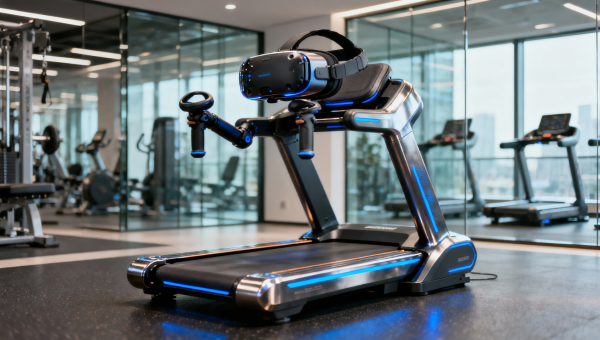
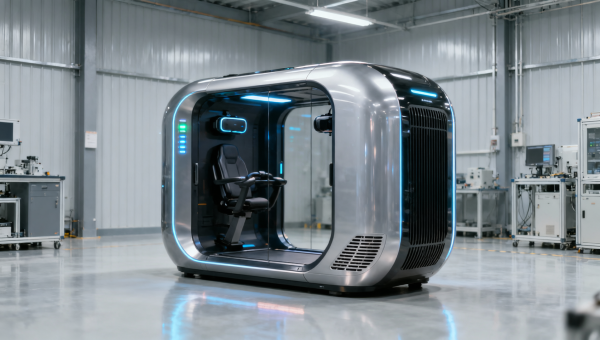
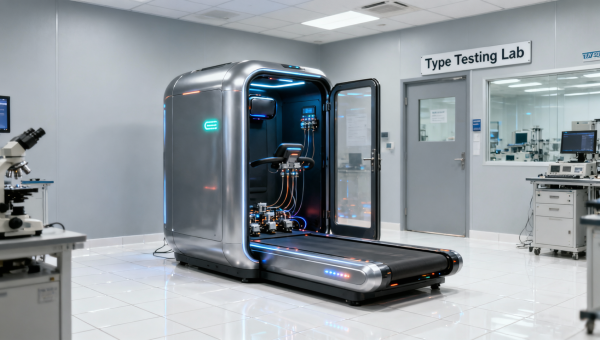
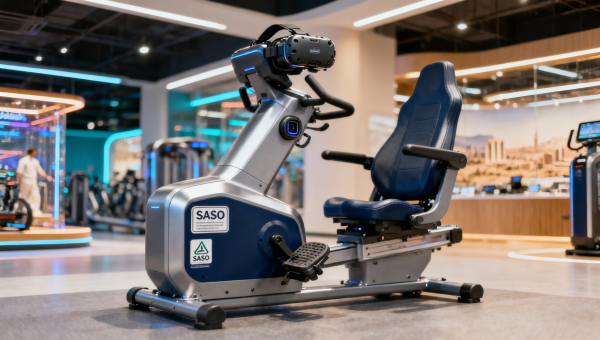
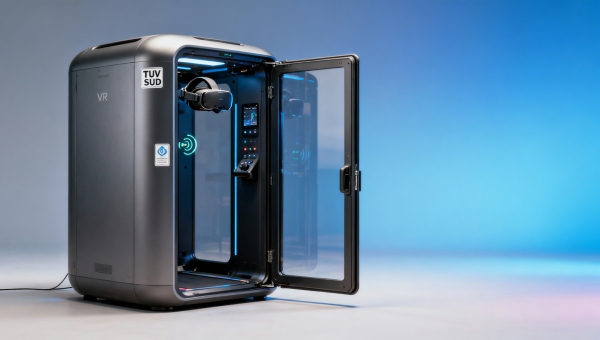
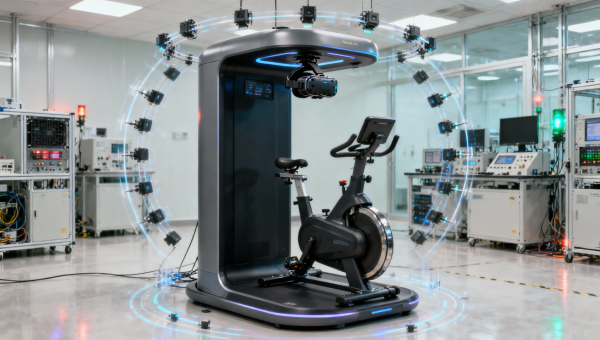
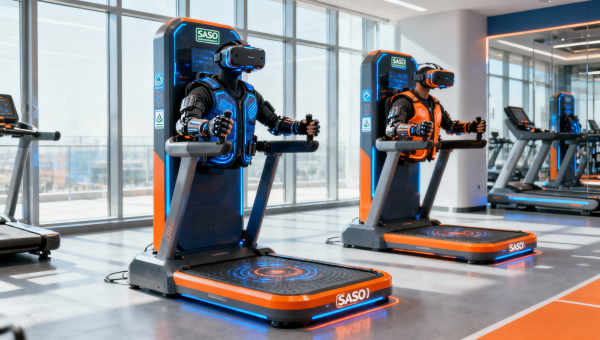
On April 16, 2026, TUV SUD Vietnam issued an urgent technical notice requiring all imported commercial VR fitness cabins—including interactive VR-enabled exercise bikes and VR treadmills—to undergo local type testing in designated laboratories in Hanoi or Ho Chi Minh City starting July 1, 2026. This development directly affects exporters, importers, and supply chain stakeholders operating in the smart fitness equipment, immersive wellness tech, and cross-border hardware trade sectors—and signals a tightening of conformity assessment requirements for interactive consumer electronics in Vietnam.
Event Overview
On April 16, 2026, TUV SUD Vietnam published an urgent technical notice stating that, effective July 1, 2026, all commercial VR fitness cabins imported into Vietnam must complete local type testing at authorized laboratories in Hanoi or Ho Chi Minh City. Third-party test reports from CNAS-accredited or IEC-recognized laboratories—including those based in China—are no longer accepted for import clearance. The notice is publicly available and does not reference transitional provisions or exemptions.
Industries Affected by Segment
Direct Exporters & Importers
Exporters shipping VR fitness cabins to Vietnam will face mandatory re-testing locally, regardless of prior compliance with international standards. This eliminates reliance on existing certification documentation, increasing both cost and timeline risk for each shipment.
Hardware Manufacturers (OEM/ODM)
Manufacturers—particularly those supplying white-label or contract-built VR fitness systems—must now coordinate with Vietnamese import partners to schedule and fund local type tests. Product variants (e.g., different motor configurations or sensor integrations) may require separate test submissions, adding complexity to model-level compliance planning.
Distribution & Channel Operators
Local distributors and brand representatives responsible for market entry must absorb or pass through additional costs (~USD 1,200–1,800 per batch) and manage extended customs clearance delays (10–14 days). Inventory planning and launch timelines for new models will need adjustment to accommodate the new testing window.
Supply Chain & Compliance Service Providers
Logistics firms, customs brokers, and regulatory consultants supporting Vietnam-bound hardware shipments must update internal checklists and client advisories to reflect the mandatory local testing requirement. Pre-shipment coordination—including lab booking slots and sample dispatch logistics—becomes a critical path item.
What Stakeholders Should Monitor & Do Now
Track official implementation guidance
Monitor TUV SUD Vietnam’s website and official communications for laboratory accreditation lists, test scope definitions (e.g., which safety or EMC standards apply), and any clarification on whether previously cleared models qualify for grandfathering.
Map affected product categories precisely
Confirm whether your product falls under the defined scope: ‘commercial VR fitness cabins’, including interactive VR-enabled exercise bikes and VR treadmills. Standalone VR headsets, non-VR fitness equipment, or home-use units are not referenced in the notice—and should not be assumed covered without verification.
Distinguish policy signal from operational reality
This notice reflects a formal regulatory shift—not yet enforcement data. There is no public information confirming inspection rates, penalty mechanisms, or retrospective application. Treat it as a binding requirement for new shipments post-July 1, 2026—but avoid extrapolating to broader ASEAN markets without evidence.
Prepare sample logistics and budget buffers now
Factor in USD 1,200–1,800 per batch for testing fees and reserve 10–14 extra days in your Q3 2026 shipment schedules. Confirm lab capacity and lead times with TUV SUD’s local offices in Hanoi or Ho Chi Minh City before finalizing purchase orders.
Editorial Observation / Industry Perspective
From an industry perspective, this measure is better understood as a procedural localization step—not a technical barrier escalation. It aligns with Vietnam’s broader trend of reinforcing domestic conformity infrastructure for high-interaction consumer electronics. Analysis来看, the requirement appears targeted at ensuring real-world safety and electromagnetic compatibility performance under local grid and usage conditions, rather than rejecting international test rigor outright. Observation来看, similar shifts have preceded national accreditation expansions in other ASEAN markets; however, no parallel announcements exist for Thailand, Malaysia, or Indonesia at this time. Current more appropriate interpretation is that this is a Vietnam-specific administrative tightening—not an emerging regional standard.
It is neither a temporary pilot nor a fully matured regulatory regime: its operational impact is immediate for July 2026 shipments, but long-term stability depends on how consistently labs interpret test criteria and whether TUV SUD publishes supplementary technical guidelines before the effective date.
Conclusion
This notice marks a concrete change in Vietnam’s market access pathway for commercial VR fitness hardware—shifting responsibility for conformity evidence from internationally recognized labs to local physical verification. Its significance lies less in technical novelty and more in the added cost, time, and coordination burden it imposes on cross-border hardware supply chains. For now, it is best understood as a localized compliance checkpoint, not a signal of wider regulatory divergence—or an invitation to delay market entry. Pragmatic preparation—not speculation—is the most appropriate response.
Source Attribution
Main source: TUV SUD Vietnam, Urgent Technical Notice dated April 16, 2026.
Points pending observation: Official list of accredited laboratories, detailed test protocol documents, and confirmation of applicability to bundled vs. modular VR fitness systems remain unconfirmed as of publication.
Search News
Hot Articles
Popular Tags
Need ExpertConsultation?
Connect with our specialized leisureengineering team for procurementstrategies.
Recommended News
 Apr 17, 2026Global VR Fitness Equipment Export Prices Rise 12% in Q1 2026VR fitness equipment export prices surge 12.3% in Q1 2026—key insights for exporters, manufacturers & supply chain partners on compliance, pricing, and delivery trends.● Theme Park Strategist
 Apr 17, 2026SASO 2891:2026 Updated: VR Haptic Devices Now Require EMC Class B in Saudi ArabiaSASO 2891:2026 update mandates EMC Class B for VR haptic devices in Saudi Arabia — critical for OEMs, exporters & EdTech suppliers. Act now to avoid delays!● Theme Park Strategist
 Apr 17, 2026Vietnam TUV SUD Mandates Local Type Testing for VR Fitness CabinsVR fitness cabins for gyms & hotels in Vietnam now require local type testing—EMC, thermal, and AI fall detection—to obtain VIEC certification. Act now to avoid delays!● Theme Park Strategist
 Apr 16, 2026VR Fitness Device Export Prices Up 12% — China Supply Stability LeadsVR fitness device export prices up 12%—China’s supply stability and modular hardware-software delivery redefine global competitiveness. Act now.● Theme Park Strategist
 Apr 16, 2026Vietnam Mandates Local TUV SUD Type Testing for VR Fitness CabinsVR fitness cabins entering Vietnam must now pass local TÜV SÜD type testing in Hanoi—key for compliance, customs clearance & market access by July 1, 2026.● Theme Park Strategist
 Apr 16, 2026SASO Updates Playground Standards: VR Devices Now Require EMC TestingSASO now mandates EMC testing for VR playground devices in Saudi Arabia—key update for VR cycling, climbing & motion cabins exporters.● Theme Park Strategist
 Apr 15, 2026Vietnam's New Regulation: Commercial VR Fitness Pods Require Local TUV SUD TestingVietnam's new regulation mandates TUV SUD testing for commercial VR fitness pods. Learn how this impacts exporters, compliance timelines, and market entry strategies for Chinese manufacturers.● Theme Park Strategist
 Apr 15, 2026Global VR Fitness Equipment Export Prices Rise 12% YoY, China Maintains Supply Chain StabilityGlobal VR fitness equipment export prices surge 12% YoY in 2026 Q1, with China maintaining 96.3% delivery reliability. Key insights for VR hardware manufacturers & fitness distributors facing cost pressures.● Theme Park Strategist
 Apr 14, 2026US CPSC Seeks Comments on New Fitness Tracker Rules, Chinese Exporters Need UL/ETL ComplianceUS CPSC proposes new UL/ETL compliance rules for fitness trackers, impacting Chinese exporters. Learn key action points and industry impacts to stay ahead of regulatory changes affecting wearable tech exports to America.● Theme Park Strategist
 Apr 13, 20262026 Chinese Youth League Upgrades Format with VR Training PodsDiscover how China's 2026 Youth League VR training pods revolutionize football development, boosting exports by 210%. Learn about FIFA-certified tech transforming player training.● Theme Park Strategist
 Apr 09, 2026US CPSC Proposes New VR Safety Standards for Children's Indoor Play EquipmentUS CPSC proposes new VR safety standards for children's indoor play equipment, including dizziness testing and age grading. Learn how these regulations impact VR manufacturers and get compliance strategies.● Theme Park Strategist
 Apr 18, 2026Global VR Fitness Device Export Prices Rise 12% QoQVR fitness device export prices surge 12% QoQ—key insight for OEMs, logistics providers & distributors in SEA and Middle East markets.● Theme Park Strategist
 Apr 18, 2026Vietnam TUV SUD New Rule: VR Fitness Cabins Require Local Type TestVR fitness cabins for commercial use in Vietnam now require local type testing per TUV SUD’s new rule—act before July 1, 2026 to avoid delays & extra costs.● Theme Park Strategist
 Apr 18, 2026SASO Updates EMC Standard for VR Haptic Devices in Saudi ArabiaSASO EMC update for VR haptic devices: Class B testing now mandatory in Saudi Arabia — critical for exporters, ODMs & distributors targeting gyms, malls & schools.● Theme Park Strategist
 Apr 18, 2026Arcade games ROI timeline: When do redemption units typically break even?Arcade games ROI timeline revealed: redemption units break even in 8–18 months. Compare performance with trampoline park, indoor playground & adventure playground investments.● Theme Park Strategist
 Apr 17, 2026Arcade games with cashless payment: Is retrofitting worth it?Arcade games cashless retrofitting boosts revenue & compliance—explore ROI, TCO, and certified kits for trampoline parks, indoor playgrounds & adventure playgrounds.● Theme Park Strategist
 Apr 17, 2026Amusement equipment maintenance costs no one talks about upfrontAmusement equipment maintenance costs shock buyers—especially for sensory playgrounds, playground climbers & borders. Discover hidden TCO drivers in commercial furniture, hotel equipment & playground safety systems.● Theme Park Strategist
 Apr 17, 2026Arcade machines with music accessories that distort sound at high volumeArcade machines with music accessories that distort sound at high volume—premium amusement equipment for sensory playgrounds, hotels & schools. Compliant, customizable, and built for impact.● Theme Park Strategist
 Apr 15, 2026VR arcade machines with heat dissipation designed for 10+ hours/dayCommercial VR arcade machines with advanced heat dissipation—ideal for amusement equipment, sensory playgrounds, hotel equipment & educational supplies. Built for 10+ hrs/day reliability.● Theme Park Strategist
 Apr 15, 2026Arcade machines with service access points designed for technicians — not engineersCommercial furniture & amusement equipment with technician-first service access—ideal for hotel equipment, sensory playgrounds, and playground safety compliance. Boost uptime, cut labor costs.● Theme Park Strategist
 Apr 14, 2026Arcade game cabinets with field-replaceable PCBs—cutting downtime by 70%Arcade games with field-replaceable PCBs cut downtime by 70%—ideal for office supplies, indoor playgrounds, trampoline parks & adventure playgrounds. Reliable, upgradable, certified.● Theme Park Strategist
 Apr 14, 2026Arcade games with the lowest long-term maintenance costArcade games offer the lowest long-term maintenance cost vs. trampoline parks, indoor playgrounds, adventure playgrounds & office supplies—discover TCO-optimized, certified solutions.● Theme Park Strategist
 Apr 08, 2026Middle East Tensions Raise Shipping Costs for Sports EquipmentMiddle East tensions spike shipping costs by 12% for sports equipment like smart fitness gear & e-scooters. Learn how exporters can navigate rising air freight fees & supply chain disruptions.● Theme Park Strategist
 Apr 08, 2026EU Updates EN 16830:2026 Eyewear Safety Standards, Chinese Sports Goggles Exporters Face 6-Month Certification DeadlineEU's EN 16830:2026 update raises safety standards for sports goggles, giving Chinese exporters just 6 months to comply with new impact resistance and UV protection rules. Learn critical deadlines and action steps for EU market access.● Theme Park Strategist