EN 1176-7:2026 Enforced: AI Behavior Recognition Mandatory for EU Outdoor Play Equipment
On 18 April 2026, the European Committee for Standardization (CEN) formally enforced EN 1176-7:2026, mandating certified AI behavior recognition systems for all new outdoor interactive playground equipment placed on the EU market. This development directly affects outdoor play equipment manufacturers, exporters, certification service providers, and CE marking authorities — particularly those engaged in EU trade — as non-compliant products will be barred from CE marking and sale.
Event Overview
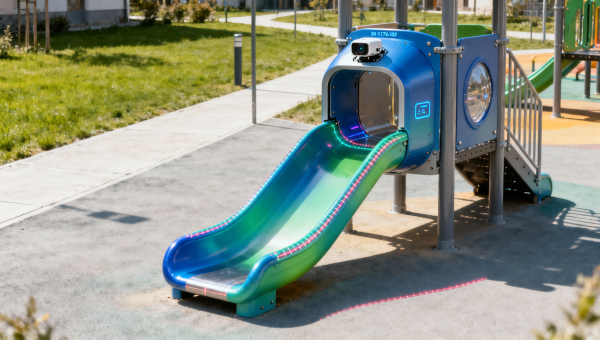
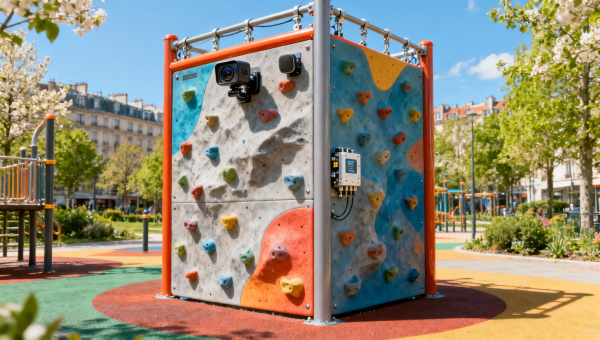
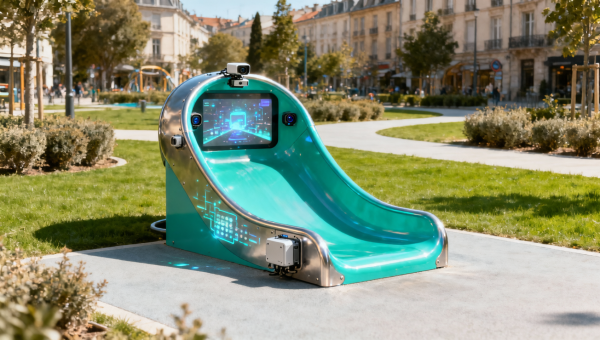
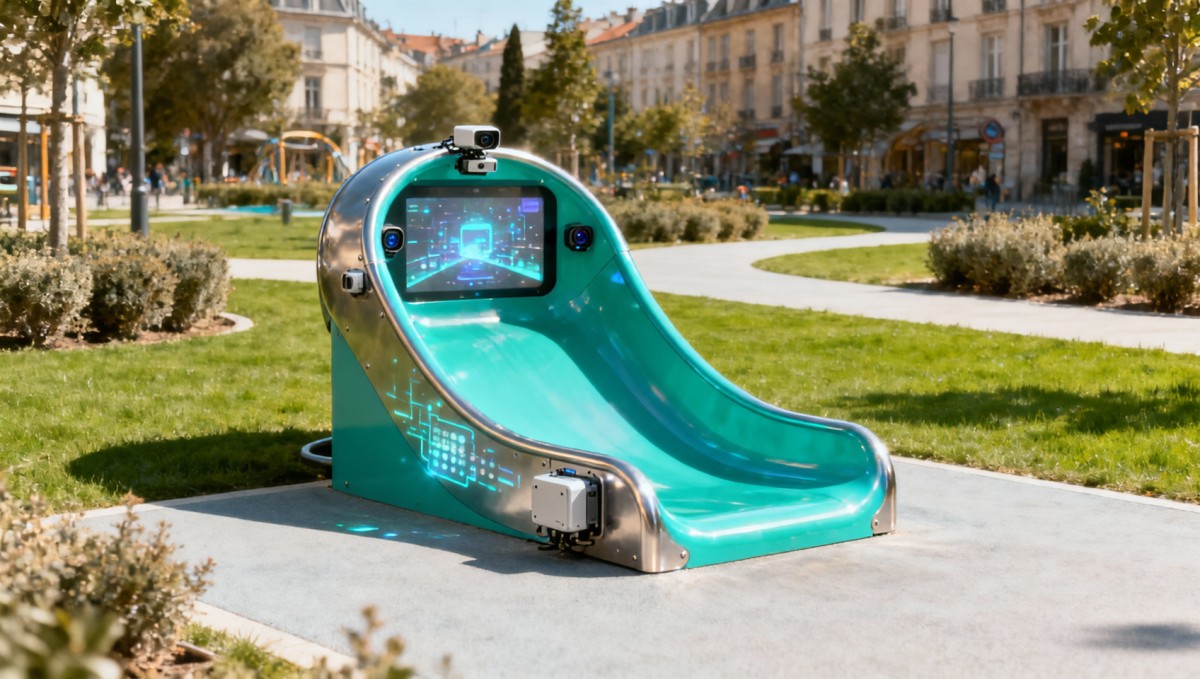
The European Committee for Standardization (CEN) confirmed that EN 1176-7:2026 entered into mandatory force on 18 April 2026. Under this standard, newly introduced outdoor interactive playground equipment — including smart climbing walls, AR sandpits, and sensor-activated slides — must integrate a certified AI behavior recognition system capable of real-time response with latency ≤200 ms. Products failing to meet this requirement are prohibited from bearing the CE mark and may not be placed on the EU market. TÜV Rheinland has issued the first batch of certifications to leading Chinese outdoor playground equipment exporters; however, smaller manufacturers face challenges related to algorithm adaptation and hardware re-evaluation.
Industries Affected by This Standard
Outdoor Play Equipment Exporters (Direct Trade Enterprises)
Exporters supplying to the EU must now ensure full compliance before shipment. The enforcement means immediate eligibility checks for CE marking — any product lacking certified AI behavior recognition will be rejected at customs or during post-market surveillance. Compliance is no longer optional for market access.
Manufacturers (Equipment Design & Production Firms)
Manufacturers — especially SMEs — are impacted at the design, testing, and certification stages. Integration of low-latency AI recognition requires co-development with software vendors, hardware-level validation (e.g., camera placement, edge processing units), and alignment with CEN’s certification protocols. Re-certification of existing models is not required unless modified or newly launched after 18 April 2026.
Certification & Testing Service Providers
Third-party bodies such as TÜV Rheinland are now gatekeepers for technical validation. Demand is rising for AI-specific test protocols, latency benchmarking, and behavioral scenario coverage (e.g., fall detection, crowding, unauthorized access). Providers must demonstrate competence in both playground safety standards and AI system assessment — a capability not previously required under earlier EN 1176 editions.
Component Suppliers (Sensors, Edge AI Modules, Cameras)
Suppliers of vision sensors, embedded AI accelerators, and real-time OS platforms face increased scrutiny. Their components must support end-to-end latency ≤200 ms under operational conditions — not just lab benchmarks. OEMs are likely to require pre-validated component lists and interoperability documentation aligned with EN 1176-7:2026 test criteria.
Key Considerations and Recommended Actions for Stakeholders
Monitor official interpretations from CEN and EU national market surveillance authorities
While EN 1176-7:2026 is now mandatory, guidance on acceptable AI validation methods, minimum behavioral scenario sets, and transitional arrangements for pending applications remains limited. Stakeholders should track updates from CEN/TC 136 and national bodies like Germany’s BAuA or France’s DGCCRF.
Prioritize certification readiness for high-volume or high-risk product categories
Smart climbing walls and AR-integrated installations carry higher regulatory visibility due to their complexity and user interaction intensity. Exporters and manufacturers should allocate verification resources first to these categories — especially where latency-critical functions (e.g., emergency stop triggers) depend on AI output.
Distinguish between policy signal and implementation reality
Analysis来看, the standard signals a structural shift toward performance-based digital safety requirements in playground standards — but actual enforcement rigor will depend on national market surveillance capacity and incident reporting trends. Early-stage non-compliance may trigger warnings rather than immediate bans, particularly for first-time applicants.
Prepare supply chain coordination for hardware-software co-validation
Manufacturers should initiate joint testing protocols with AI software developers and sensor suppliers *before* formal certification submission. This includes defining shared latency measurement methodology, environmental test conditions (e.g., lighting, weather), and failure mode documentation — all prerequisites for notified body review.
Editorial Perspective / Industry Observation
From an industry perspective, EN 1176-7:2026 is less a sudden regulatory shock and more a formalized milestone in the convergence of physical playground safety and real-time digital monitoring. It reflects growing EU emphasis on preventive, adaptive safety — moving beyond static structural checks toward dynamic risk mitigation. Observation来看, this standard is best understood not as a one-off compliance hurdle, but as the first binding precedent for AI-integrated safety systems across broader recreational infrastructure. Current enforcement focuses narrowly on latency and certification scope; however, future revisions may expand to data privacy, model transparency, or long-term performance drift monitoring — areas not yet addressed in EN 1176-7:2026.
Current more appropriate understanding is that EN 1176-7:2026 establishes a foundational requirement, not a comprehensive AI governance framework. Its immediate effect is gatekeeping — not transformation — but its existence signals that AI integration is now a baseline expectation for regulated interactive play products in the EU.
Conclusion
EN 1176-7:2026 marks a definitive step toward embedding real-time AI safety logic into outdoor playground equipment regulation. Its significance lies not only in the technical mandate itself, but in its role as a precedent: it confirms that AI functionality is now subject to harmonized, enforceable safety standards within the CE framework. For stakeholders, the priority is not speculation about future versions, but ensuring demonstrable, auditable compliance for new product introductions after 18 April 2026 — with particular attention to latency validation, certification pathway clarity, and cross-supplier alignment.
Information Sources
Primary source: Official announcement by the European Committee for Standardization (CEN), dated 18 April 2026, confirming enforcement of EN 1176-7:2026.
Note: Ongoing developments — including national enforcement practices, notified body guidance documents, and potential amendments — remain subject to observation and are not yet publicly confirmed.
Search News
Hot Articles
Popular Tags
Need ExpertConsultation?
Connect with our specialized leisureengineering team for procurementstrategies.
Recommended News
 Apr 17, 2026Popular Badminton AI Protocol Launched in ChengduPopular Badminton AI protocol launched in Chengdu — a game-changer for smart sports hardware, VR simulators & outdoor ride manufacturers targeting Asian youth academies.● Theme Park Strategist
 Apr 17, 2026EN 1176-7:2026 Enforced: AI Behavior Recognition Required for EU Outdoor Interactive Play EquipmentEN 1176-7:2026 is now enforced — AI behavior recognition is mandatory for EU outdoor interactive play equipment. Ensure CE compliance now.● Theme Park Strategist
 Apr 16, 2026EN 1176-7:2026 Enforces AI Safety Rules for EU Outdoor Interactive Play EquipmentEN 1176-7:2026 enforces AI safety rules for EU outdoor interactive play equipment — mandatory false-trigger ≤0.3% & local-only data processing. Act now to comply.● Theme Park Strategist
 Apr 13, 20262026 CKC China Karting Championship in Macau Sparks Export Interest for Domestic Racing GearThe 2026 CKC China Karting Championship in Macau showcased FIA-compliant racing gear, sparking export interest for domestic timing systems, carbon fiber kits & sustainable tires. Discover how this event opens global opportunities.● Theme Park Strategist
 Apr 13, 2026Japan Revises Sports Equipment Safety Standards: Mandatory Multilingual E-Manuals for Imported Fitness Gear from April 2026Japan's new Sports Equipment Safety Standards mandate multilingual e-manuals for imported fitness gear from 2026. Learn how this impacts global exporters and key compliance strategies for smooth market entry.● Theme Park Strategist
 Apr 10, 2026Middle East Tensions Raise Shipping Risks in Hormuz Strait, Air Freight Costs for Sports Equipment Surge 12%Middle East tensions escalate shipping risks in Hormuz Strait, causing a 12% surge in air freight costs for sports equipment. Learn how this impacts supply chains and strategies to mitigate delays.● Theme Park Strategist
 Apr 18, 20262026 Shanghai Sailing Open Adopts Domestic Smart Timing System2026 Shanghai Sailing Open adopts China's first ITU-R M.2412–certified smart timing system — a game-changer for marine sports exporters, integrators & event organizers worldwide.● Theme Park Strategist
 Apr 18, 2026EN 1176-7:2026 Enforced: AI Behavior Recognition Mandatory for EU Outdoor Play EquipmentEN 1176-7:2026 is now mandatory — AI behavior recognition required for EU outdoor play equipment. Ensure CE compliance, low-latency certification & market access before shipment.● Theme Park Strategist
 Apr 18, 2026Playground structures with integrated solar lighting: Is battery life consistent across seasons?Playground structures with integrated solar lighting: Discover seasonal battery performance data for leisure parks, theme park rides & inclusive playgrounds—backed by real-world climate testing and OEM validation.● Theme Park Strategist
 Apr 18, 2026Theme park rides using recycled steel: How does material origin affect fatigue testing?Theme park rides, playground swings & inclusive playground structures using recycled steel demand origin-aware fatigue testing—discover how material provenance impacts safety, durability & compliance.● Theme Park Strategist
 Apr 18, 2026Leisure park shade structures that fade unevenly—UV resistance vs. pigment qualityLeisure park shade structures fading unevenly? Discover why pigment quality—not just UV resistance—dictates longevity, brand integrity & ROI for playground structures, theme park rides & inclusive playgrounds.● Theme Park Strategist
 Apr 18, 2026Playground swings rated for 300kg: Does weight capacity include dynamic load?Playground swings rated for 300kg—do they handle real dynamic loads? Discover certified, inclusive playground structures for leisure parks, theme park rides & more.● Theme Park Strategist
 Apr 18, 2026Playground structures built for coastal climates—do salt-spray tests matter?Playground structures, inclusive playgrounds & theme park rides built for coastal climates—discover why ASTM B117 salt-spray testing matters for safety, compliance & TCO.● Theme Park Strategist
 Apr 18, 2026Theme park rides and service intervals: Why ‘5-year maintenance’ rarely holds upTheme park rides, playground swings & inclusive playground systems demand real-world maintenance—not '5-year' myths. Discover evidence-based service intervals, compliance benchmarks, and smarter sourcing strategies.● Theme Park Strategist
 Apr 18, 2026Leisure park flooring that wears faster than expected—here’s whyLeisure park flooring failing early? Discover why—linked to playground structures, inclusive playground specs, theme park rides & material science. Get data-backed solutions.● Theme Park Strategist
 Apr 18, 2026Playground swings with rust-resistant hardware—what’s actually tested?Playground swings with verified rust-resistant hardware—tested to ASTM F1487 & 2,000h salt spray. Also sourcing hotel beds, custom furniture, catering equipment, soundproofing materials, and instrument cables.● Theme Park Strategist
 Apr 18, 2026Custom furniture for leisure parks: When 'bespoke' means longer lead timesCustom furniture for leisure parks—covering playground swings, inclusive playgrounds, theme park rides & soundproofing materials. Discover how to balance bespoke quality with realistic lead times.● Theme Park Strategist
 Apr 18, 2026Adventure playground surfacing: How ASTM F1292 compliance affects long-term costAdventure playground surfacing must meet ASTM F1292—avoid costly rework, insurance hikes & delays. Essential for trampoline park, indoor playground & arcade games operators.● Theme Park Strategist
 Apr 17, 2026Adventure playground design trends: Why natural materials are gaining tractionAdventure playground design is shifting to natural materials for safety, sustainability & sensory impact—key for trampoline parks and indoor playgrounds. Discover why.● Theme Park Strategist
 Apr 17, 2026Playground borders that actually stop erosion — not just look goodCommercial furniture & playground borders that stop erosion—engineered for sensory playgrounds, hotel tables, educational supplies & amusement equipment safety.● Theme Park Strategist
 Apr 17, 2026Playground climbers made for real-world use — not just certification testsCommercial playground climbers engineered for real-world durability, safety & seamless integration—beyond certification. Ideal for sensory playgrounds, hotels, schools & amusement equipment.● Theme Park Strategist
 Apr 17, 2026Playground safety isn’t just about padding — what the surface layer hidesPlayground safety, commercial furniture & sensory playground surfaces—discover ASTM-compliant solutions for hotels, schools & resorts. Boost safety, cut liability, and elevate play experiences.● Theme Park Strategist
 Apr 17, 2026Outdoor rides with playground borders designed for freeze-thaw climatesCommercial furniture & playground borders engineered for freeze-thaw climates—sensory playgrounds, climbers, safety-certified amusement equipment & hotel tables.● Theme Park Strategist
 Apr 16, 2026Outdoor playground equipment with minimal seasonal maintenanceOutdoor playground equipment with minimal seasonal maintenance — durable, low-TCO, and design-integrated. Ideal for campuses, resorts & smart offices. Explore luxury furniture, park benches & more.● Theme Park Strategist