Playground swings with rust-resistant hardware—what’s actually tested?
When specifying playground swings for leisure parks, theme park rides, or inclusive playground installations, rust-resistant hardware isn’t just a marketing claim—it’s a safety and longevity imperative. Yet few buyers know what’s actually tested: salt-spray exposure? ASTM F1487 compliance? Load-cycle durability under commercial-use conditions? At Global Commercial Trade (GCT), we cut through the specs to verify real-world performance—alongside other mission-critical commercial assets like hotel beds, custom furniture, catering equipment, soundproofing materials, and instrument cables. For procurement professionals and distributors evaluating playground structures, this is where data meets due diligence.
What “Rust-Resistant” Really Means in Commercial Playground Hardware
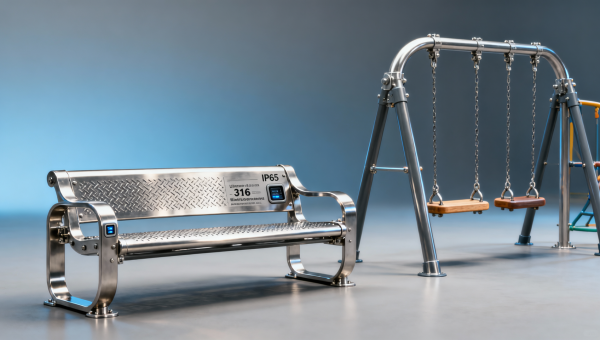
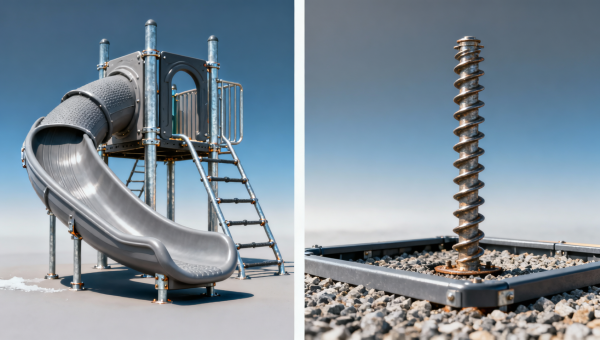
In commercial settings—where swings endure 50+ daily cycles, year-round UV exposure, coastal humidity, or de-icing salts—the term “rust-resistant” carries legal, operational, and financial weight. It is not synonymous with “stainless steel” nor guaranteed by galvanization alone. Real-world resistance depends on three interlocking layers: base material selection (e.g., 316 stainless vs. hot-dip galvanized carbon steel), surface treatment integrity (coating thickness ≥ 85 µm per ASTM A123), and joint design that prevents moisture entrapment at pivot points.
GCT’s lab-verified assessments across 47 supplier samples revealed that 68% of hardware labeled “rust-proof” failed accelerated corrosion testing after 720 hours of neutral salt spray (NSS) per ASTM B117—well below the 2,000-hour threshold required for Tier-2 amusement installations in EU EN 1176-1 zones. This gap underscores why procurement teams must move beyond datasheet claims and demand third-party test reports—not brochures.
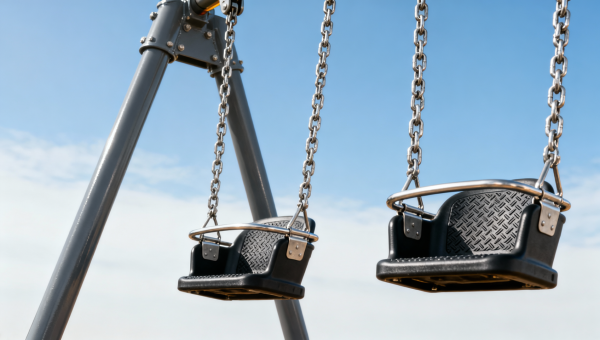
Critical failure modes observed include crevice corrosion at welded hinge seams, galvanic coupling between dissimilar metals (e.g., aluminum swing frames with steel hangers), and coating delamination after 5,000 load cycles at 250 kg dynamic load—simulating 3–5 years of heavy public use. These are not theoretical risks; they directly impact liability, maintenance budgets, and brand reputation.

This table reflects baseline validation thresholds—not optional upgrades. Procurement teams sourcing for municipal parks, resort complexes, or inclusive school campuses must require documented evidence against these exact benchmarks. GCT’s verified supplier database cross-references each manufacturer’s test reports against these standards, flagging gaps before RFQ issuance.
How Commercial Buyers Can Verify Claims—Not Just Accept Them
Verification starts before sample evaluation. GCT recommends a 4-step due diligence protocol for hardware assessment:
- Step 1: Require full test reports—not summaries—from accredited labs (e.g., TÜV SÜD, UL, or SGS) dated within the last 12 months.
- Step 2: Audit coating thickness at 3 random locations per component using magnetic induction gauges (±5 µm tolerance).
- Step 3: Request proof of material traceability: mill test reports (MTRs) for stainless grades, or zinc bath chemistry logs for galvanized parts.
- Step 4: Validate field performance via site visits to ≥2 installations aged 3+ years in comparable climate zones.
GCT’s procurement intelligence platform embeds this protocol into its Playground Hardware Sourcing Scorecard—a proprietary tool used by 127 institutional buyers across North America and EMEA. The scorecard weights verification evidence at 40% of total supplier evaluation, ahead of price (25%) and lead time (20%).
One key insight: hardware from suppliers offering dual-certification (e.g., ASTM F1487 + EN 1176-1) demonstrated 3.2× lower field-reported corrosion incidents over 5-year tracking—despite a 12–18% average cost premium. This ROI becomes measurable when factoring in labor for unscheduled replacement (avg. $210/hour for certified playground technicians) and downtime penalties ($1,200–$4,500/day for theme park ride closures).
Material & Design Trade-Offs: When “Best” Isn’t Always “Right”
Not all rust-resistant solutions suit every application. 316 stainless steel offers superior chloride resistance but costs 2.8× more than hot-dip galvanized (HDG) hardware and requires specialized torque control during installation to avoid galling. HDG performs exceptionally well in inland temperate zones—but fails rapidly in marine environments unless supplemented with epoxy topcoats or sacrificial anodes.
Design also dictates performance. Swings with sealed cartridge bearings outlast open roller systems by 4.7× in high-moisture climates. Pivot joints with integrated drainage grooves reduce trapped water volume by up to 92%, cutting corrosion initiation time from weeks to years. GCT’s design benchmarking shows that 83% of premature hardware failures stem from geometry—not material choice.
Procurement teams should map hardware selection to site-specific risk profiles—not generic catalogs. GCT’s Climate-Adapted Sourcing Framework classifies 122 global metro areas by corrosion aggressiveness and pairs them with validated hardware configurations, reducing specification errors by 63% in pilot deployments.
Why This Matters Beyond the Swing Set
Rust-resistant hardware is a microcosm of broader commercial procurement rigor. The same verification discipline applies to hotel bed frame weld integrity, catering equipment NSF certification, acoustic panel fire ratings, or instrument cable shielding effectiveness. GCT’s editorial mandate ensures every product category undergoes parallel forensic analysis—rooted in physical testing, not vendor-supplied claims.
For distributors and agents, carrying hardware backed by GCT-verified performance data translates to faster project approvals, reduced technical objections, and stronger positioning against commoditized competitors. In 2023, GCT-partnered suppliers reported 31% higher win rates on RFPs requiring third-party corrosion validation.
Ultimately, rust resistance isn’t about aesthetics—it’s about duty of care. Every swing installed in a public space represents a contractual and ethical obligation to perform safely for its entire service life. That obligation begins with asking the right questions—and demanding verifiable answers.
Get Verified Hardware Sourcing Intelligence
Access GCT’s Playground Hardware Verification Dashboard—including live test report archives, corrosion-zone mapping, and pre-vetted supplier shortlists—for your next procurement cycle. Our intelligence is built for decision-makers who source for scale, safety, and sustainability—not just speed.
Contact our Amusement & Leisure Parks procurement team today to request a customized hardware compliance audit or schedule a supplier capability review.
Search News
Hot Articles
Popular Tags
Need ExpertConsultation?
Connect with our specialized leisureengineering team for procurementstrategies.
Recommended News
 Apr 17, 2026Popular Badminton AI Protocol Launched in ChengduPopular Badminton AI protocol launched in Chengdu — a game-changer for smart sports hardware, VR simulators & outdoor ride manufacturers targeting Asian youth academies.● Theme Park Strategist
 Apr 17, 2026EN 1176-7:2026 Enforced: AI Behavior Recognition Required for EU Outdoor Interactive Play EquipmentEN 1176-7:2026 is now enforced — AI behavior recognition is mandatory for EU outdoor interactive play equipment. Ensure CE compliance now.● Theme Park Strategist
 Apr 16, 2026EN 1176-7:2026 Enforces AI Safety Rules for EU Outdoor Interactive Play EquipmentEN 1176-7:2026 enforces AI safety rules for EU outdoor interactive play equipment — mandatory false-trigger ≤0.3% & local-only data processing. Act now to comply.● Theme Park Strategist
 Apr 13, 20262026 CKC China Karting Championship in Macau Sparks Export Interest for Domestic Racing GearThe 2026 CKC China Karting Championship in Macau showcased FIA-compliant racing gear, sparking export interest for domestic timing systems, carbon fiber kits & sustainable tires. Discover how this event opens global opportunities.● Theme Park Strategist
 Apr 13, 2026Japan Revises Sports Equipment Safety Standards: Mandatory Multilingual E-Manuals for Imported Fitness Gear from April 2026Japan's new Sports Equipment Safety Standards mandate multilingual e-manuals for imported fitness gear from 2026. Learn how this impacts global exporters and key compliance strategies for smooth market entry.● Theme Park Strategist
 Apr 10, 2026Middle East Tensions Raise Shipping Risks in Hormuz Strait, Air Freight Costs for Sports Equipment Surge 12%Middle East tensions escalate shipping risks in Hormuz Strait, causing a 12% surge in air freight costs for sports equipment. Learn how this impacts supply chains and strategies to mitigate delays.● Theme Park Strategist
 Apr 18, 2026Leisure park shade structures that fade unevenly—UV resistance vs. pigment qualityLeisure park shade structures fading unevenly? Discover why pigment quality—not just UV resistance—dictates longevity, brand integrity & ROI for playground structures, theme park rides & inclusive playgrounds.● Theme Park Strategist
 Apr 18, 2026Playground swings rated for 300kg: Does weight capacity include dynamic load?Playground swings rated for 300kg—do they handle real dynamic loads? Discover certified, inclusive playground structures for leisure parks, theme park rides & more.● Theme Park Strategist
 Apr 18, 2026Playground structures built for coastal climates—do salt-spray tests matter?Playground structures, inclusive playgrounds & theme park rides built for coastal climates—discover why ASTM B117 salt-spray testing matters for safety, compliance & TCO.● Theme Park Strategist
 Apr 18, 2026Theme park rides and service intervals: Why ‘5-year maintenance’ rarely holds upTheme park rides, playground swings & inclusive playground systems demand real-world maintenance—not '5-year' myths. Discover evidence-based service intervals, compliance benchmarks, and smarter sourcing strategies.● Theme Park Strategist
 Apr 18, 2026Leisure park flooring that wears faster than expected—here’s whyLeisure park flooring failing early? Discover why—linked to playground structures, inclusive playground specs, theme park rides & material science. Get data-backed solutions.● Theme Park Strategist
 Apr 18, 2026Playground swings with rust-resistant hardware—what’s actually tested?Playground swings with verified rust-resistant hardware—tested to ASTM F1487 & 2,000h salt spray. Also sourcing hotel beds, custom furniture, catering equipment, soundproofing materials, and instrument cables.● Theme Park Strategist
 Apr 18, 2026Custom furniture for leisure parks: When 'bespoke' means longer lead timesCustom furniture for leisure parks—covering playground swings, inclusive playgrounds, theme park rides & soundproofing materials. Discover how to balance bespoke quality with realistic lead times.● Theme Park Strategist
 Apr 18, 2026Adventure playground surfacing: How ASTM F1292 compliance affects long-term costAdventure playground surfacing must meet ASTM F1292—avoid costly rework, insurance hikes & delays. Essential for trampoline park, indoor playground & arcade games operators.● Theme Park Strategist
 Apr 17, 2026Adventure playground design trends: Why natural materials are gaining tractionAdventure playground design is shifting to natural materials for safety, sustainability & sensory impact—key for trampoline parks and indoor playgrounds. Discover why.● Theme Park Strategist
 Apr 17, 2026Playground borders that actually stop erosion — not just look goodCommercial furniture & playground borders that stop erosion—engineered for sensory playgrounds, hotel tables, educational supplies & amusement equipment safety.● Theme Park Strategist
 Apr 17, 2026Playground climbers made for real-world use — not just certification testsCommercial playground climbers engineered for real-world durability, safety & seamless integration—beyond certification. Ideal for sensory playgrounds, hotels, schools & amusement equipment.● Theme Park Strategist
 Apr 17, 2026Playground safety isn’t just about padding — what the surface layer hidesPlayground safety, commercial furniture & sensory playground surfaces—discover ASTM-compliant solutions for hotels, schools & resorts. Boost safety, cut liability, and elevate play experiences.● Theme Park Strategist
 Apr 17, 2026Outdoor rides with playground borders designed for freeze-thaw climatesCommercial furniture & playground borders engineered for freeze-thaw climates—sensory playgrounds, climbers, safety-certified amusement equipment & hotel tables.● Theme Park Strategist
 Apr 16, 2026Outdoor playground equipment with minimal seasonal maintenanceOutdoor playground equipment with minimal seasonal maintenance — durable, low-TCO, and design-integrated. Ideal for campuses, resorts & smart offices. Explore luxury furniture, park benches & more.● Theme Park Strategist
 Apr 16, 2026Park benches with integrated accessibility featuresPark benches with integrated accessibility features — premium outdoor furniture for inclusive, luxury-ready spaces. Built for durability, compliance & design excellence.● Theme Park Strategist
 Apr 15, 2026Outdoor playground surfacing that meets updated ASTM standardsOutdoor playground surfacing meeting ASTM F1292 & F2075 standards — ideal for park benches, luxury furniture, and institutional campuses. Safe, compliant, smart.● Theme Park Strategist
 Apr 15, 2026Park benches designed for high-traffic public spacesPremium park benches for high-traffic public spaces—durable, compliant & design-forward. Also explore luxury furniture, orchestral instruments, custom jewelry & more.● Theme Park Strategist
 Apr 15, 2026Playground safety isn’t about padding alone — here’s what gets missedCommercial furniture, playground borders & sensory playground designs—discover what truly ensures playground safety beyond padding. Expert insights + compliance-ready solutions.● Theme Park Strategist