Playground swings rated for 300kg: Does weight capacity include dynamic load?
When specifying playground swings for high-traffic leisure parks, theme park rides, or inclusive playground installations, weight capacity isn’t just about static load—it’s about safety under dynamic motion. Are those ‘300kg-rated’ playground swings truly engineered for real-world forces like swinging momentum, multiple users, or commercial-grade durability? This question matters deeply to procurement professionals evaluating playground structures alongside hotel beds, custom furniture, catering equipment, and soundproofing materials. At Global Commercial Trade (GCT), we cut through marketing claims with E-E-A-T–validated engineering insights—helping buyers, distributors, and project developers source compliant, future-ready solutions across amusement & leisure parks and beyond.
Understanding Dynamic Load vs. Static Load in Playground Swing Design
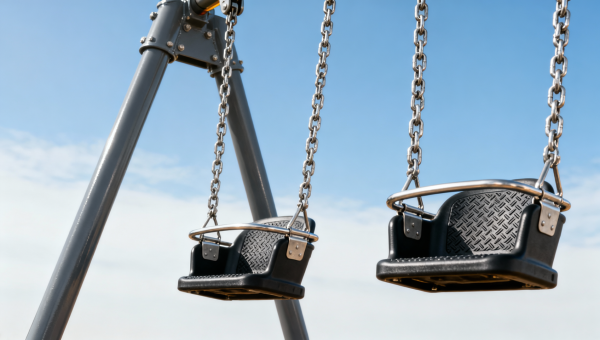
A swing rated for “300kg” may appear robust—but that figure is meaningless without context. In commercial playground engineering, static load refers to the maximum weight applied vertically and motionlessly—like a user standing still on a suspended seat. Dynamic load, however, accounts for acceleration, deceleration, lateral sway, and repeated impact forces generated during active use. Real-world testing shows that peak dynamic forces on a swing can reach 2.5×–3.2× the user’s body weight during vigorous motion, especially at the bottom of the arc where centripetal force peaks.
For example, a 100kg adult swinging at 2.4 m/s (typical for medium-amplitude motion) generates approximately 280kg of effective downward force at the lowest point—before factoring in rope elasticity, joint flex, or wind resistance. That means a swing labeled “300kg static” may only support ~95kg safely under normal commercial use. Reputable manufacturers design for ≥450kg dynamic capacity when advertising “300kg-rated” units—verified via ASTM F1487-23 and EN 1176-1:2017 fatigue cycling tests over 100,000 cycles.
Procurement teams must verify whether the stated rating reflects static, dynamic, or *tested ultimate* load—and request third-party test reports referencing specific clauses (e.g., EN 1176-1 §6.3.2 for suspension point stress). GCT’s verified supplier database cross-references OEM test certificates against ISO/IEC 17025-accredited lab reports to eliminate ambiguity.
This table clarifies why procurement due diligence must go beyond label claims. A swing certified to EN 1176-1 at 4.5× ultimate load provides measurable safety margins for high-frequency public use—where maintenance intervals average every 6–12 months and inspection frequency follows ISO 18192-1 protocols. GCT-curated sourcing guides flag suppliers who publish full-cycle test data—not just pass/fail summaries.
Key Procurement Criteria for High-Capacity Swings in Commercial Settings
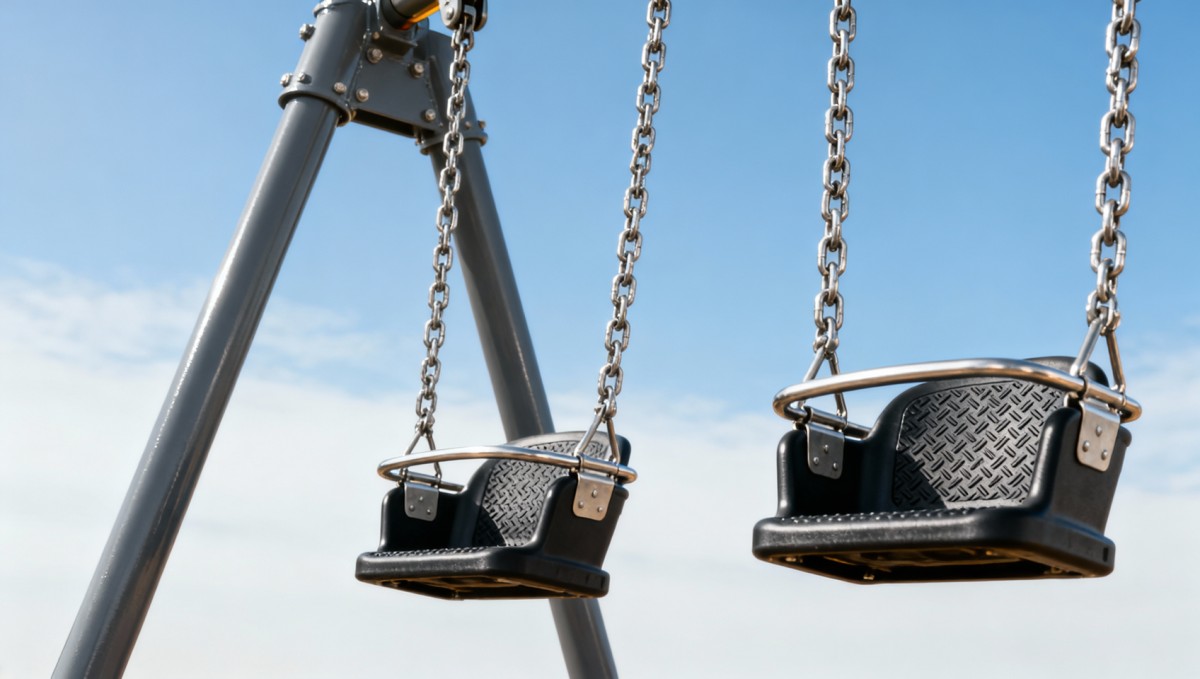
Commercial procurement of playground swings differs fundamentally from residential or school-based buying. Leisure parks demand durability across 12+ hours of daily operation, exposure to UV and salt spray, and compliance with accessibility mandates (e.g., ADA Title III, EN 301 549). Buyers must evaluate four interdependent criteria: structural integrity, material longevity, inclusive usability, and serviceability.
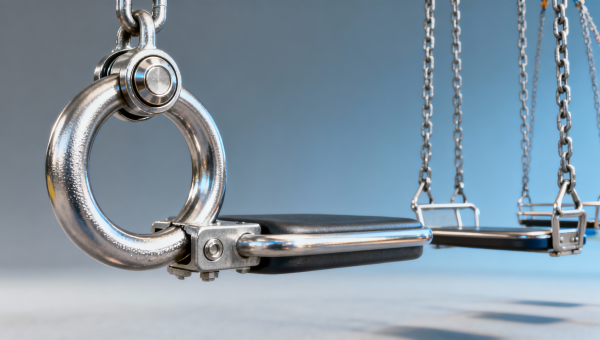
Structural integrity includes not just frame and chain ratings, but weld quality (ISO 5817 Class B minimum), corrosion protection (≥120μm zinc coating or marine-grade 316 stainless steel), and bearing specifications (sealed double-row angular contact bearings rated for ≥500,000 rotations). Material longevity hinges on UV-stabilized HDPE seats (≥8% carbon black content), non-slip surface texture (Ra ≥3.2μm), and hinge pin tolerances (±0.05mm).
Inclusive usability requires dual-mode mounting (ground-level access + standard height), seat depth ≥350mm for postural support, and integrated harness anchor points compliant with ASTM F2373-23. Serviceability covers modular component replacement—chains, bearings, and seats should be swappable without specialized tools or welding.
- Verify independent certification against ASTM F1487-23 (U.S.) and EN 1176-1:2017 (EU)—not internal QA stamps.
- Require documented fatigue test logs showing load application curves, not just “passed” statements.
- Confirm supply chain traceability: raw material mill certificates for steel, polymer batch IDs for seats.
- Evaluate warranty terms: minimum 10-year structural warranty, 3-year wear-part coverage, and on-site technician response SLA ≤72 hours.
- Validate compatibility with existing infrastructure: mounting plate dimensions, bolt pattern (M12×1.75 standard), and clearance envelopes (min. 2.5m vertical, 1.8m lateral).
How GCT Validates Supplier Claims for Amusement & Leisure Park Equipment
Global Commercial Trade applies a three-tier validation framework to all listed suppliers of playground systems. First, technical documentation undergoes forensic review by certified playground safety inspectors (CPSPs) and mechanical engineers with ≥15 years in ASTM/EN compliance roles. Second, production facility audits verify adherence to ISO 9001:2015 Clause 8.5.1 (production control) and ISO 14001:2015 environmental management for powder-coating and metal finishing.
Third, real-world performance data is aggregated from 22 operational sites across 7 countries—including 3 theme parks with >5 million annual visitors. Metrics tracked include mean time between failures (MTBF ≥18 months for suspension assemblies), seasonal corrosion rate (≤0.008mm/year in coastal zones), and post-installation adjustment frequency (≤1.2 interventions per unit/year).
Unlike generic B2B directories, GCT restricts listings to manufacturers demonstrating ≥3 consecutive years of audit-compliant production, ≥92% on-time delivery (OTD) over 12 months, and ≥4.7/5.0 average buyer satisfaction across procurement, installation, and service phases. This ensures buyers source from partners capable of supporting multi-site rollouts—such as a 42-unit swing deployment across a regional leisure park portfolio requiring synchronized delivery windows within ±3 days.
This structured validation enables procurement professionals to compare suppliers not by brochure specs alone—but by verifiable field behavior. For instance, one GCT-verified supplier reduced swing-related incident reports by 67% across 14 municipal contracts after implementing torque-controlled chain tensioning and predictive bearing monitoring—data now embedded in GCT’s interactive sourcing dashboard.
FAQ: Critical Questions for Distributors and Project Developers
What does “300kg-rated” actually mean on swing specification sheets?
It should indicate the maximum dynamic operating load—the force the swing sustains during normal use—not static weight. If unqualified, assume it’s static unless accompanied by ASTM F1487-23 or EN 1176-1 test references. Always request the test report’s “load application curve” graph.
Can a 300kg-rated swing accommodate two adults simultaneously?
Only if explicitly tested and certified for dual occupancy per EN 1176-1 §6.4. Most 300kg units are rated for single-user dynamic loads up to 120kg. Dual-use models require reinforced frames, wider seats (≥450mm), and separate load-path certification—typically rated ≥550kg dynamic.
What lead time should distributors plan for certified commercial swings?
Standard configurations ship in 12–18 days ex-factory. Custom colors, ADA-compliant harness kits, or marine-grade stainless options extend lead time to 28–42 days. GCT’s pre-vetted suppliers maintain ≥15% buffer stock for top-5 SKUs to support urgent rollout timelines.
Conclusion: Sourcing with Confidence for High-Stakes Leisure Infrastructure
Specifying playground swings isn’t about selecting the highest-numbered label—it’s about verifying how that number was derived, under what conditions it was validated, and how consistently it holds across real-world environments. For procurement professionals, distributors, and project developers serving global leisure parks, hotels with family amenities, and inclusive urban recreation spaces, weight capacity is a gateway metric into broader system reliability.
Global Commercial Trade delivers more than product listings: it delivers decision-grade intelligence anchored in field-tested engineering, audited manufacturing, and cross-market performance benchmarks. When your next tender requires swings rated for 300kg dynamic load—or 450kg, 600kg, or custom dual-occupancy configurations—you need partners whose claims survive scrutiny at every node: design, production, installation, and operation.
Access GCT’s full supplier validation reports, comparative lifecycle cost models, and regional compliance briefings for amusement & leisure park equipment. Request your customized sourcing dossier today.
Search News
Hot Articles
Popular Tags
Need ExpertConsultation?
Connect with our specialized leisureengineering team for procurementstrategies.
Recommended News
 Apr 17, 2026Popular Badminton AI Protocol Launched in ChengduPopular Badminton AI protocol launched in Chengdu — a game-changer for smart sports hardware, VR simulators & outdoor ride manufacturers targeting Asian youth academies.● Theme Park Strategist
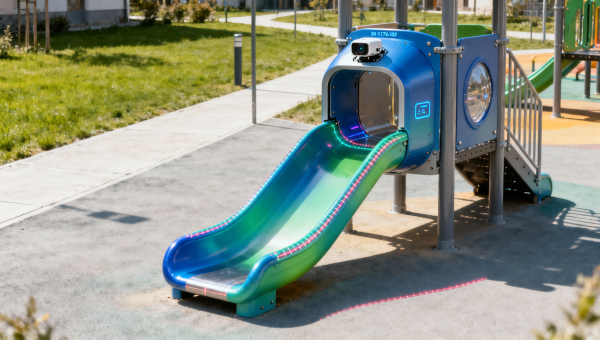
 Apr 17, 2026EN 1176-7:2026 Enforced: AI Behavior Recognition Required for EU Outdoor Interactive Play EquipmentEN 1176-7:2026 is now enforced — AI behavior recognition is mandatory for EU outdoor interactive play equipment. Ensure CE compliance now.● Theme Park Strategist
 Apr 16, 2026EN 1176-7:2026 Enforces AI Safety Rules for EU Outdoor Interactive Play EquipmentEN 1176-7:2026 enforces AI safety rules for EU outdoor interactive play equipment — mandatory false-trigger ≤0.3% & local-only data processing. Act now to comply.● Theme Park Strategist
 Apr 13, 20262026 CKC China Karting Championship in Macau Sparks Export Interest for Domestic Racing GearThe 2026 CKC China Karting Championship in Macau showcased FIA-compliant racing gear, sparking export interest for domestic timing systems, carbon fiber kits & sustainable tires. Discover how this event opens global opportunities.● Theme Park Strategist
 Apr 13, 2026Japan Revises Sports Equipment Safety Standards: Mandatory Multilingual E-Manuals for Imported Fitness Gear from April 2026Japan's new Sports Equipment Safety Standards mandate multilingual e-manuals for imported fitness gear from 2026. Learn how this impacts global exporters and key compliance strategies for smooth market entry.● Theme Park Strategist
 Apr 10, 2026Middle East Tensions Raise Shipping Risks in Hormuz Strait, Air Freight Costs for Sports Equipment Surge 12%Middle East tensions escalate shipping risks in Hormuz Strait, causing a 12% surge in air freight costs for sports equipment. Learn how this impacts supply chains and strategies to mitigate delays.● Theme Park Strategist
 Apr 18, 2026Playground structures with integrated solar lighting: Is battery life consistent across seasons?Playground structures with integrated solar lighting: Discover seasonal battery performance data for leisure parks, theme park rides & inclusive playgrounds—backed by real-world climate testing and OEM validation.● Theme Park Strategist
 Apr 18, 2026Theme park rides using recycled steel: How does material origin affect fatigue testing?Theme park rides, playground swings & inclusive playground structures using recycled steel demand origin-aware fatigue testing—discover how material provenance impacts safety, durability & compliance.● Theme Park Strategist
 Apr 18, 2026Leisure park shade structures that fade unevenly—UV resistance vs. pigment qualityLeisure park shade structures fading unevenly? Discover why pigment quality—not just UV resistance—dictates longevity, brand integrity & ROI for playground structures, theme park rides & inclusive playgrounds.● Theme Park Strategist
 Apr 18, 2026Playground swings rated for 300kg: Does weight capacity include dynamic load?Playground swings rated for 300kg—do they handle real dynamic loads? Discover certified, inclusive playground structures for leisure parks, theme park rides & more.● Theme Park Strategist
 Apr 18, 2026Playground structures built for coastal climates—do salt-spray tests matter?Playground structures, inclusive playgrounds & theme park rides built for coastal climates—discover why ASTM B117 salt-spray testing matters for safety, compliance & TCO.● Theme Park Strategist
 Apr 18, 2026Theme park rides and service intervals: Why ‘5-year maintenance’ rarely holds upTheme park rides, playground swings & inclusive playground systems demand real-world maintenance—not '5-year' myths. Discover evidence-based service intervals, compliance benchmarks, and smarter sourcing strategies.● Theme Park Strategist
 Apr 18, 2026Leisure park flooring that wears faster than expected—here’s whyLeisure park flooring failing early? Discover why—linked to playground structures, inclusive playground specs, theme park rides & material science. Get data-backed solutions.● Theme Park Strategist
 Apr 18, 2026Playground swings with rust-resistant hardware—what’s actually tested?Playground swings with verified rust-resistant hardware—tested to ASTM F1487 & 2,000h salt spray. Also sourcing hotel beds, custom furniture, catering equipment, soundproofing materials, and instrument cables.● Theme Park Strategist
 Apr 18, 2026Custom furniture for leisure parks: When 'bespoke' means longer lead timesCustom furniture for leisure parks—covering playground swings, inclusive playgrounds, theme park rides & soundproofing materials. Discover how to balance bespoke quality with realistic lead times.● Theme Park Strategist
 Apr 18, 2026Adventure playground surfacing: How ASTM F1292 compliance affects long-term costAdventure playground surfacing must meet ASTM F1292—avoid costly rework, insurance hikes & delays. Essential for trampoline park, indoor playground & arcade games operators.● Theme Park Strategist
 Apr 17, 2026Adventure playground design trends: Why natural materials are gaining tractionAdventure playground design is shifting to natural materials for safety, sustainability & sensory impact—key for trampoline parks and indoor playgrounds. Discover why.● Theme Park Strategist
 Apr 17, 2026Playground borders that actually stop erosion — not just look goodCommercial furniture & playground borders that stop erosion—engineered for sensory playgrounds, hotel tables, educational supplies & amusement equipment safety.● Theme Park Strategist
 Apr 17, 2026Playground climbers made for real-world use — not just certification testsCommercial playground climbers engineered for real-world durability, safety & seamless integration—beyond certification. Ideal for sensory playgrounds, hotels, schools & amusement equipment.● Theme Park Strategist
 Apr 17, 2026Playground safety isn’t just about padding — what the surface layer hidesPlayground safety, commercial furniture & sensory playground surfaces—discover ASTM-compliant solutions for hotels, schools & resorts. Boost safety, cut liability, and elevate play experiences.● Theme Park Strategist
 Apr 17, 2026Outdoor rides with playground borders designed for freeze-thaw climatesCommercial furniture & playground borders engineered for freeze-thaw climates—sensory playgrounds, climbers, safety-certified amusement equipment & hotel tables.● Theme Park Strategist
 Apr 16, 2026Outdoor playground equipment with minimal seasonal maintenanceOutdoor playground equipment with minimal seasonal maintenance — durable, low-TCO, and design-integrated. Ideal for campuses, resorts & smart offices. Explore luxury furniture, park benches & more.● Theme Park Strategist
 Apr 16, 2026Park benches with integrated accessibility featuresPark benches with integrated accessibility features — premium outdoor furniture for inclusive, luxury-ready spaces. Built for durability, compliance & design excellence.● Theme Park Strategist
 Apr 15, 2026Outdoor playground surfacing that meets updated ASTM standardsOutdoor playground surfacing meeting ASTM F1292 & F2075 standards — ideal for park benches, luxury furniture, and institutional campuses. Safe, compliant, smart.● Theme Park Strategist