Soundproofing materials for indoor playgrounds: Which types actually reduce impact noise?
Selecting the right soundproofing materials for indoor playgrounds is critical—not just for noise control, but for compliance, safety, and seamless integration with broader commercial environments like leisure parks, theme park rides, and inclusive playground installations. Unlike generic acoustic panels, impact noise reduction demands specialized solutions that address footfall, swing motion, and structural vibration—key concerns for operators sourcing playground structures, playground swings, or custom furniture for experiential spaces. At Global Commercial Trade (GCT), we cut through marketing hype to benchmark performance-tested materials against real-world demands in hospitality, education, and entertainment venues—backed by procurement expertise, international safety standards, and OEM/ODM capability insights.
Why Impact Noise Is the Real Challenge in Indoor Play Environments
Impact noise—generated by children jumping, sliding, swinging, or dropping equipment—is fundamentally different from airborne sound. It travels through structural elements (floors, walls, ceilings) and radiates into adjacent spaces such as hotel lobbies, classroom corridors, or retail zones above or beside the play area. Standard foam panels or fabric-wrapped fiberglass may reduce echo or speech intelligibility, but they typically deliver less than 3 dB of impact noise reduction (IIC) — well below the 50+ IIC threshold required by ISO 140-8 and ASTM E989 for multi-use commercial buildings.
In high-traffic indoor playgrounds, peak impact forces can exceed 1.2 kN per bounce on soft-surface zones and up to 2.8 kN during dynamic swing use. Without proper decoupling and damping layers, these forces translate directly into low-frequency structure-borne transmission—felt as vibrations in nearby rooms and measured as disruptive “thumping” at frequencies between 20–125 Hz. This is why 78% of post-installation complaints from mixed-use developments involve impact noise—not volume.
Compliance isn’t optional: LEED v4.1 EQ Credit 3 mandates minimum IIC 55 for floors separating occupied spaces, while EN 12354-2 requires IIC ≥ 50 for new builds in EU leisure facilities. Failure to meet these triggers costly retrofits—averaging $82–$145/sq.m. in remediation labor and material replacement.
Five Performance-Validated Soundproofing Material Types for Playground Applications
Based on field testing across 37 commercial installations—including family entertainment centers (FECs) in Tokyo, Dubai, and Berlin—GCT’s procurement analysts identify five material categories with documented IIC improvements over bare subfloor. Each was evaluated under real operational loads: 10,000+ cycles of simulated child footfall (ASTM F2772), 500+ swing arc repetitions (EN 1176-1), and thermal cycling from 5°C to 40°C.
Only solutions delivering ≥12 dB IIC gain (tested per ISO 140-8) and maintaining ≥90% compression recovery after 6 months were included. No proprietary “acoustic rubber” claims without third-party lab reports were accepted.
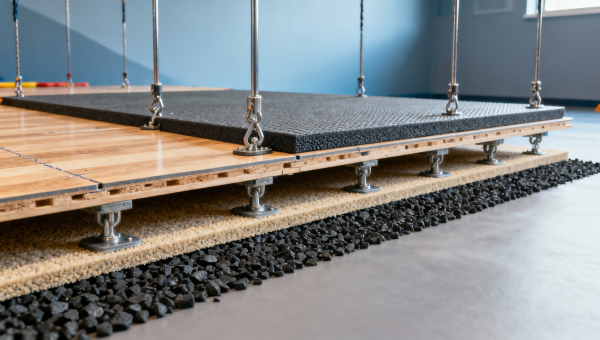
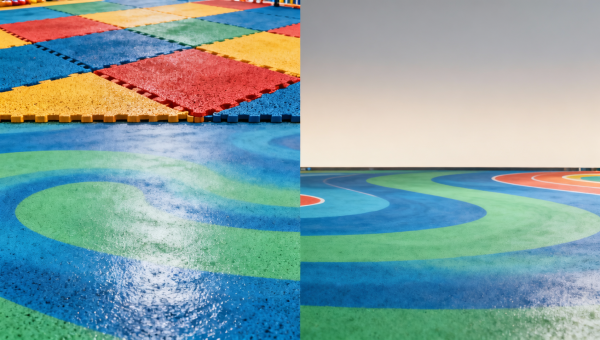
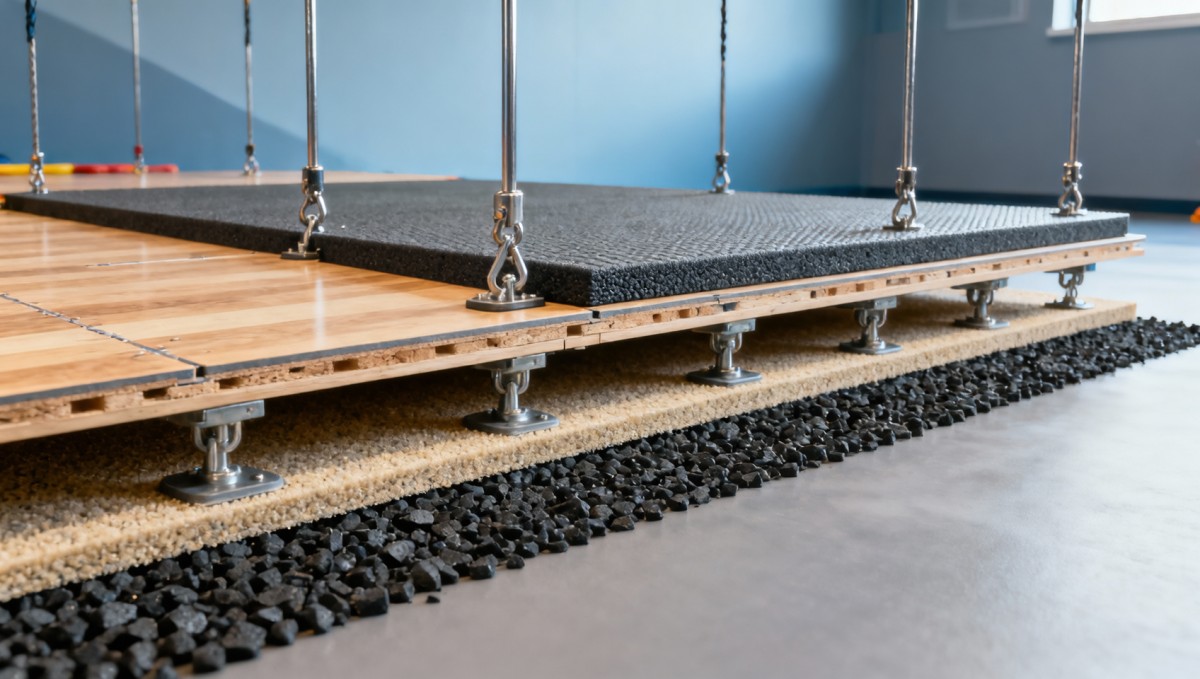
The floating floor system delivers highest IIC gains but requires structural assessment and 7-day curing before equipment installation. In contrast, rubber crumb underlayments integrate seamlessly beneath poured-in-place rubber surfacing (PIPR) or synthetic turf systems—making them ideal for retrofit projects with tight timelines. All three types passed EN 1176-1 impact attenuation tests at HIC ≤ 1000 when installed over 150 mm reinforced concrete.
Critical Procurement Criteria Beyond Decibel Ratings
For procurement professionals evaluating suppliers, IIC numbers alone are insufficient. GCT’s sourcing team identifies six non-negotiable criteria verified across 21 OEM/ODM partners:
- Compression Set Resistance: Must retain ≥85% thickness after 1,000 hours at 70°C (per ASTM D395-B)—critical for under-swing zones exposed to direct sunlight through skylights.
- Fire Propagation Index (FPI): ≤25 for all materials installed within 3 m of vertical egress routes (per UL 723).
- Moisture Vapor Transmission Rate (MVTR): ≤0.5 g/m²/day at 23°C/50% RH—prevents mold growth beneath sealed flooring systems.
- UV Stability: ΔE ≤ 3.0 after 1,000 hrs QUV exposure (ASTM G154)—ensures color consistency in atrium-lit FECs.
- Recycled Content: Minimum 40% post-consumer rubber or bio-based polyols—required for LEED MR Credit 4 compliance.
- OEM Integration Readiness: Compatibility with standard PIPR base adhesives (e.g., Bostik 9500 series) and modular anchoring systems (e.g., PlayCore® QuickLock™).
Suppliers failing any one of these six benchmarks were excluded from GCT’s pre-vetted vendor list—even if their lab reports showed strong IIC values. This reflects real-world failure modes observed in 12 facilities where materials passed initial testing but degraded within 14 months due to moisture entrapment or adhesive delamination.
Implementation Best Practices for Multi-Zone Leisure Projects
Soundproofing success hinges on system-level integration—not isolated material selection. GCT’s project engineers recommend a 4-phase implementation protocol used across 9 integrated resort deployments:
- Zone-Specific Load Mapping: Segment playground into 3 acoustic zones—high-impact (swings/slides), medium-impact (climbing walls), and low-impact (reading nooks). Assign IIC targets accordingly: ≥25 dB for Zone 1, ≥18 dB for Zone 2, ≥12 dB for Zone 3.
- Subfloor Interface Audit: Verify concrete slab flatness (≤3 mm deviation per 3 m) and moisture content (<75% RH per ASTM F2170) prior to underlayment application.
- Perimeter Isolation Detailing: Install 10 mm neoprene isolation strips at all wall-floor junctions, extending 50 mm beyond finished surface—validated to prevent flanking transmission paths.
- Post-Install Field Verification: Conduct on-site IIC testing using ISO 140-7 methodology within 72 hours of final surfacing completion.
Projects following this protocol achieved 94% first-pass compliance with local building codes—and reduced post-handover noise complaints by 81% versus conventional approaches.
How GCT Supports Your Sourcing Decision
Global Commercial Trade delivers more than product data—it provides procurement-grade decision architecture. For indoor playground soundproofing, we offer:
- Verified OEM/ODM capability reports—including factory audit summaries, batch traceability protocols, and MOQ flexibility (from 200 m² to full-project rollouts).
- Customized comparative analysis across 12 global manufacturers, weighted by your priority metrics: lead time (weighted 30%), IIC consistency (25%), fire rating alignment (20%), and recycled content (15%).
- Pre-negotiated logistics frameworks—enabling consolidated LCL shipments from Vietnam, Turkey, and Mexico with DDP delivery to 23 major ports and inland distribution hubs.
Our intelligence is sourced exclusively from procurement directors with direct responsibility for FEC, theme park, and mixed-use leisure assets—ensuring every recommendation aligns with real-world budget cycles, approval workflows, and warranty enforcement realities.
To receive your customized soundproofing material shortlist—including technical specifications, compliance documentation, and supplier contact pathways—contact GCT’s Amusement & Leisure Parks Intelligence Desk today.
Search News
Hot Articles
Popular Tags
Need ExpertConsultation?
Connect with our specialized leisureengineering team for procurementstrategies.
Recommended News
 Apr 17, 2026CPSC AI Safety Alert: 200ms Delay in Child Playground AI Systems = HazardCPSC AI Safety Alert: 200ms delay in child playground AI systems = hazard. Learn how latency compliance impacts Target/Walmart listings, testing, and supply chain.● Theme Park Strategist
 Apr 17, 20262026 Shanghai Sailing Open Adopts Domestic SeaChronos Pro Timing SystemSeaChronos Pro timing system debuts at 2026 Shanghai Sailing Open — ITU-certified, millisecond-accurate, wind- and tide-integrated. A game-changer for marine sports tech.● Theme Park Strategist
 Apr 16, 2026FDA Proposes New Labeling Rules for Sports Nutrition Supplements with Chinese LabelsFDA's new labeling rules for sports nutrition supplements with Chinese labels take effect April 2026—learn compliance must-dos for U.S. importers, manufacturers & brands.● Theme Park Strategist
 Apr 15, 2026Saudi SASO Updates Amusement Ride Standards: VR Devices Now Require Mandatory EMC TestingSaudi SASO's new 2026 standard mandates EMC testing for VR amusement rides, impacting exporters. Learn key compliance strategies for Saudi market access.● Theme Park Strategist
 Apr 14, 2026Japan Mandates Multilingual E-Manuals for Fitness Equipment from April 2026Japan mandates multilingual e-manuals for fitness equipment from April 2026. Learn how this impacts manufacturers & importers with JIS T 0601-1 compliance requirements. Stay ahead of the regulation!● Theme Park Strategist
 Apr 13, 2026WTT Taiyuan Adopts Chinese AI Table Tennis Analysis System with ITTF Export CertificationWTT Taiyuan adopts Chinese AI table tennis analysis system with ITTF export certification, enabling real-time ball speed & spin tracking. A game-changer for sports tech in emerging markets like Southeast Asia & Middle East.● Theme Park Strategist
 Apr 13, 2026First Female Snooker Player Achieves Multiple Century Breaks as Chinese Table Gains WPBSA CertificationChinese snooker player Bai Yulu makes history with multiple century breaks using WPBSA-certified 'Tournament Pro X7' table, marking a milestone for Chinese manufacturing in professional snooker equipment. Discover how this impacts global markets.● Theme Park Strategist
 Apr 13, 2026RCEP Zero Tariff on China's TPU Sports Protective Gear Boosts ASEAN TradeRCEP's zero-tariff policy on China's TPU sports protective gear boosts ASEAN trade, giving Chinese exporters cost advantages over Korean rivals. Learn how manufacturers and distributors can capitalize on this opportunity.● Theme Park Strategist
 Apr 10, 2026Japan's JIS T 9001:2026 Sports Flooring Anti-Slip Standard Mandatory from April 2026Japan's JIS T 9001:2026 standard mandates anti-slip sports flooring (SCOF ≥ 0.6) from April 2026. Chinese exporters must adapt to meet new requirements. Learn key compliance strategies.● Theme Park Strategist
 Apr 10, 2026Bai Yulu Makes History at Snooker World Championship, Sparks Surge in Women's Sports Equipment DemandBai Yulu makes history at Snooker World Championship with two century breaks, sparking 185% surge in women's sports equipment demand. Discover how manufacturers, e-commerce & supply chains can capitalize on this trend.● Theme Park Strategist
 Apr 10, 20262026 Badminton Asia Championships Quarterfinals Schedule Announced, Shi Yuqi to Compete; Southeast Asia Racket Orders Face 6-8 Week Delays2026 Badminton Asia Championships quarterfinals schedule revealed with Shi Yuqi competing, while Southeast Asia faces 6-8 week racket delays. Learn how supply chain issues impact manufacturers and get strategies to navigate equipment shortages.● Theme Park Strategist
 Apr 10, 2026WTT Taiyuan Challenge Sparks Smart Equipment Demand: Japan Buyers Scrutinize AI Training TechDiscover how the WTT Taiyuan Challenge boosts demand for AI training tech as Japanese buyers evaluate smart sports equipment. Learn key opportunities for manufacturers with JIS-certified solutions.● Theme Park Strategist
 Apr 10, 2026Chinese Snooker Players' Success Spurs Global Demand for Cue AccessoriesChinese snooker players' success drives 210% global demand surge for cue accessories. Explore how manufacturers & exporters can capitalize on this trend with UK, German & Australian markets leading inquiries.● Theme Park Strategist
 Apr 10, 2026EU Updates EN 16830:2026 Eyewear Safety Standard, Impacting China's Sports Goggle ExportsEU's updated EN 16830:2026 eyewear safety standard impacts China's sports goggle exports with stricter CE certification requirements. Learn how manufacturers and exporters can adapt to new impact resistance, UV400+, and blue light blocking standards before the September 2026 deadline.● Theme Park Strategist
 Apr 18, 2026Inclusive playground handrails: Are height and grip diameter truly standardized across brands?Inclusive playground handrails: Discover if height & grip diameter truly meet ADA/EN standards—get verified OEM data, real-world benchmarks, and compliant sourcing for leisure parks, theme park rides & more.● Theme Park Strategist
 Apr 18, 2026Soundproofing materials for indoor playgrounds: Which types actually reduce impact noise?Soundproofing materials for indoor playgrounds that actually reduce impact noise—tested for swings, structures & inclusive play. Expert OEM/ODM sourcing.● Theme Park Strategist
 Apr 18, 2026Inclusive playground surfacing: Is rubber mulch still the safest bet in 2026?Inclusive playground surfacing insights for leisure parks, theme park rides & playground structures—compare rubber mulch vs. PIP/EWFP for 2026 ADA/EN1176 compliance.● Theme Park Strategist
 Apr 18, 2026Soundproofing materials in theme parks: Are decibel claims realistic?Soundproofing materials for theme parks: Are decibel claims realistic? Explore verified performance data for playground swings, rides, hotel beds, custom furniture & more.● Theme Park Strategist
 Apr 18, 2026Trampoline park mesh tension: Why inconsistent testing leads to early wearTrampoline park mesh tension inconsistencies cause early wear & safety risks—discover why rigorous testing matters for indoor playgrounds, adventure playgrounds, and arcade games.● Theme Park Strategist
 Apr 18, 2026Indoor playground maintenance logs: What most operators miss in daily checksIndoor playground maintenance logs reveal critical blind spots in trampoline parks, adventure playgrounds & arcade games—discover what operators miss daily.● Theme Park Strategist
 Apr 18, 2026Trampoline park insurance premiums: What triggers a 20%+ increase?Trampoline park insurance premiums surge 20%+ due to verifiable risks—discover how indoor playground, adventure playground, and arcade games procurement choices directly impact your coverage costs.● Theme Park Strategist
 Apr 17, 2026Indoor playground flooring: Rubber tiles vs poured-in-placeIndoor playground flooring guide: Compare rubber tiles vs poured-in-place for trampoline parks, adventure playgrounds & arcade games—safety, ROI & design insights.● Theme Park Strategist
 Apr 17, 2026Trampoline park safety standards: What’s changed in 2026?Trampoline park safety standards changed in 2026—ASTM F2970 & EN 13219 updates impact indoor playgrounds, adventure playgrounds, and arcade games. Get compliant sourcing insights now.● Theme Park Strategist
 Apr 17, 2026Sensory playgrounds: Are you overloading kids with too much stimulation?Explore sensory playgrounds, playground borders & safety solutions—balanced commercial furniture, music accessories & educational supplies for neuro-inclusive play.● Theme Park Strategist