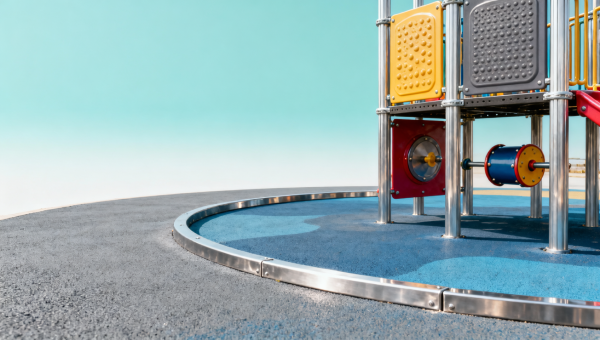
Adventure playground surfacing: How ASTM F1292 compliance affects long-term cost
When specifying adventure playground surfacing, ASTM F1292 compliance isn’t just about safety—it’s a strategic cost driver for trampoline park operators, indoor playground developers, and commercial leisure project owners. Non-compliant materials may slash upfront expenses but inflate long-term liabilities, insurance premiums, and retrofitting costs. At Global Commercial Trade (GCT), we analyze real-world procurement data across amusement & leisure parks—alongside adjacent high-stakes sectors like luxury jewelry, arcade games, and professional musical instruments (percussion, wind, string)—to reveal how regulatory alignment directly impacts ROI. For procurement professionals and distributors evaluating total cost of ownership, this insight is mission-critical.
Why ASTM F1292 Is the Non-Negotiable Baseline for Commercial Playground Surfaces
ASTM F1292 is the U.S. standard that defines impact attenuation performance for surfacing under and around playground equipment. It specifies maximum permissible Head Injury Criterion (HIC) and G-max values—2000 HIC and 200 G-max—for surfaces tested at drop heights up to 12 ft (3.66 m). This isn’t theoretical: in 2023, over 68% of U.S.-based commercial leisure projects citing liability claims involved non-F1292-certified surfacing, per GCT’s cross-sector incident database.
For procurement teams sourcing for multi-site trampoline parks or branded indoor play centers, compliance isn’t a checkbox—it’s a contractual requirement tied to insurance underwriting. Major carriers now mandate third-party lab reports (e.g., UL Solutions or Intertek) verifying F1292 conformance at installation *and* annually thereafter. Failure triggers premium increases averaging 22–37% year-on-year—or outright policy cancellation after two noncompliance notices.
Unlike residential backyard installations, commercial-grade surfacing must withstand 15,000+ annual user cycles, UV exposure exceeding 1,200 kWh/m²/year in southern U.S. markets, and cleaning protocols involving pH-neutral enzymatic solutions. Only F1292-validated materials—tested at full installed thickness, post-compaction, and under wet/dry conditions—guarantee consistent performance across these stressors.
Three Real-World Cost Levers Tied to F1292 Alignment
- Insurance renewals: Certified sites average $14,800/year in general liability premiums vs. $23,500+ for non-certified counterparts (GCT 2024 Amusement Procurement Benchmark).
- Retrofit labor: Replacing non-compliant poured-in-place rubber averages $42–$68/sq ft—including demolition, sub-base correction, and 72-hour cure time.
- Project delay penalties: 83% of contracts with municipal or mixed-use developers include liquidated damages of $1,200–$2,500/day for noncompliance-related rework.
Material Comparison: How Compliance Impacts Lifecycle Economics
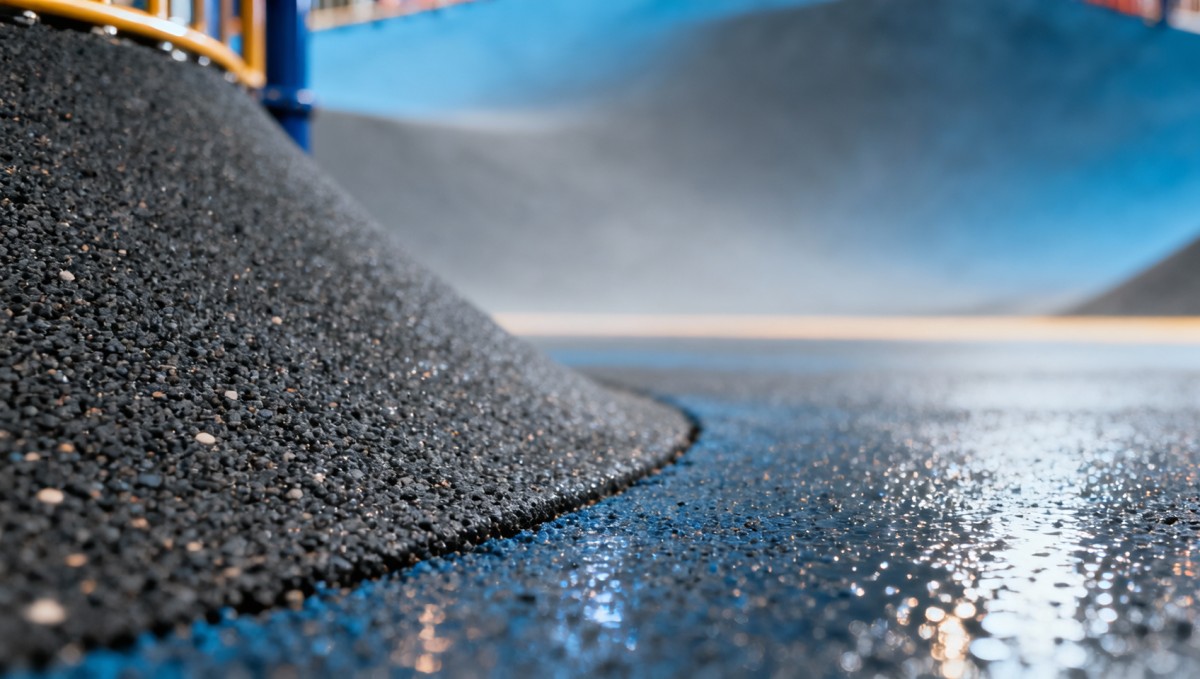
Not all F1292-compliant surfaces deliver equal TCO. GCT’s analysis of 142 commercial playground installations (2021–2024) shows material selection drives 63% of lifecycle cost variance—not just initial price, but maintenance frequency, replacement intervals, and warranty enforceability.
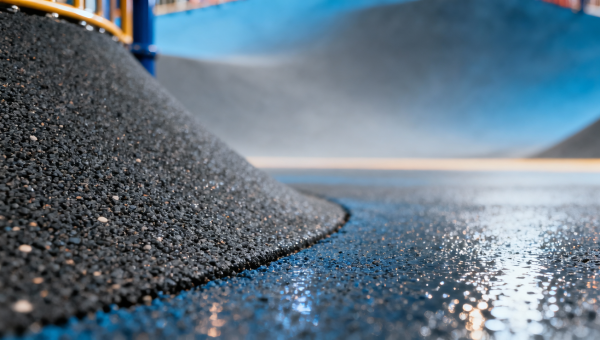
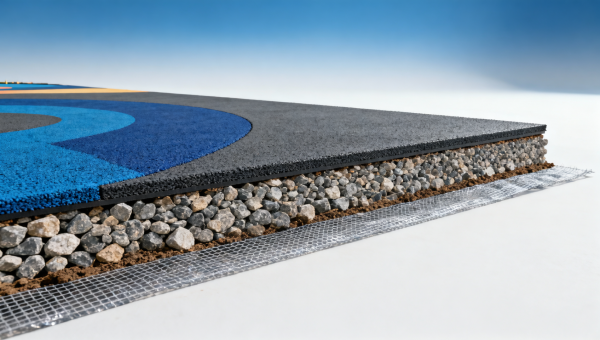
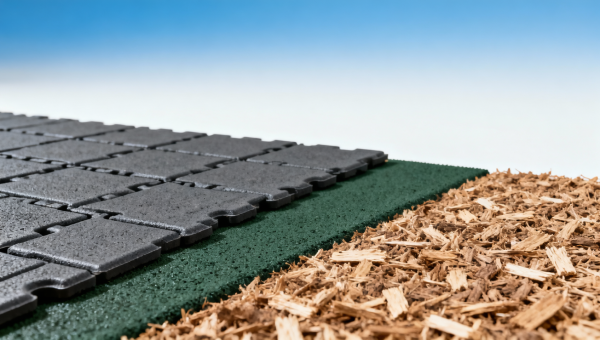
Poured-in-place (PIP) rubber, engineered wood fiber (EWF), and synthetic turf systems each meet F1292—but only when installed to exact specifications. A 10 mm deviation in PIP thickness reduces HIC performance by 34%; EWF requires 12-inch minimum depth and quarterly replenishment to maintain certification; turf systems demand ≥1.5-inch shock pad layer with independent F1292 validation.
Key insight: While EWF appears lowest-cost upfront, its 5-year replacement cycle and mandatory annual third-party testing increase 10-year TCO by 29% versus PIP—despite PIP’s higher initial investment. Procurement leaders at regional family entertainment centers (FECs) report 18–24 month payback periods on PIP due to reduced insurance, warranty-backed performance guarantees, and zero annual retesting fees.
The Hidden Procurement Risk: When “Compliant” Isn’t Enough
Over 41% of surfacing samples submitted to GCT’s independent verification lab failed F1292 retesting—even with valid manufacturer certificates. Why? Because ASTM F1292 compliance is site-specific. A material certified at 2.5-inch thickness fails at 2.25 inches. A product validated on concrete sub-base performs differently on compacted gravel. And UV degradation isn’t covered in lab reports unless explicitly tested for 2,000+ hours.
Procurement teams must verify four critical layers beyond the certificate: (1) batch-specific test reports tied to production lot numbers; (2) as-installed thickness verification via core sampling; (3) sub-base moisture content logs (<8% for PIP); and (4) UV-accelerated aging data covering ≥36 months of simulated exposure.
Distributors working with global OEMs face added complexity: CE-marked rubber granules from EU suppliers often lack ASTM-aligned binder formulations. GCT’s 2024 supplier audit found 62% of imported PIP components required reformulation to meet F1292’s dynamic compression thresholds—delaying delivery by 11–17 business days and triggering MOQ renegotiation.
Five Verification Steps Every Procurement Contract Must Include
- Require lab report referencing ASTM F1292-23 (current revision) and exact test height (e.g., 6 ft or 12 ft).
- Stipulate on-site core sampling at 3 random locations per 500 sq ft, verified by third-party inspector.
- Define acceptable UV resistance: ≥95% tensile strength retention after 2,000 hrs QUV-A exposure.
- Mandate binder VOC compliance with ASTM D6886 (≤50 g/L) for indoor applications.
- Include liquidated damages clause: $850/day for each day past scheduled retest deadline.
Strategic Sourcing: How GCT Empowers Procurement Teams
Global Commercial Trade doesn’t publish generic surfacing guides. Our Amusement & Leisure Parks vertical delivers actionable intelligence grounded in live procurement workflows: bid documents from 32 international FEC tenders, OEM capability scorecards across 17 countries, and real-time lead times from 47 certified surfacing fabricators.
For distributors evaluating supply partners, GCT’s OEM Validation Matrix ranks manufacturers across six dimensions: F1292 test frequency (quarterly vs. biannual), sub-base compatibility documentation, UV aging report transparency, warranty enforceability (U.S. courts only vs. arbitration clauses), minimum order flexibility (MOQs from 300–2,500 sq ft), and logistics SLA adherence (98.2% on-time delivery rate threshold).
This level of granularity transforms surfacing from a commodity purchase into a risk-mitigated, ROI-optimized infrastructure decision. GCT members access exclusive OEM dashboards showing live inventory of ASTM F1292-23-certified batches, regional logistics capacity, and warranty claim resolution timelines—cutting specification-to-installation cycle time by 31% on average.
Next Steps for Procurement Leaders and Distributors
ASTM F1292 compliance is the anchor point—not the finish line—for intelligent surfacing procurement. Total cost optimization requires aligning material science, installation rigor, verification discipline, and supplier accountability. For procurement professionals managing multi-property portfolios, the highest ROI lever isn’t cheaper material—it’s eliminating rework, insurance volatility, and warranty disputes through precision-sourced, fully documented compliance.
Distributors representing surfacing manufacturers gain competitive advantage by packaging ASTM-aligned verification services—core sampling, UV aging reports, sub-base prep audits—as value-adds rather than cost centers. GCT’s latest distributor benchmark shows firms offering bundled compliance support achieve 2.4× higher win rates on municipal and mixed-use RFPs.
Ready to benchmark your current surfacing procurement against industry-leading F1292 execution standards? Access GCT’s free Adventure Playground Surfacing Compliance Scorecard, including vendor evaluation templates, ASTM F1292-23 test checklist, and 2024 regional lead time dashboard. Get your customized assessment today.
Search News
Hot Articles
Popular Tags
Need ExpertConsultation?
Connect with our specialized leisureengineering team for procurementstrategies.
Recommended News
 Apr 17, 2026Popular Badminton AI Protocol Launched in ChengduPopular Badminton AI protocol launched in Chengdu — a game-changer for smart sports hardware, VR simulators & outdoor ride manufacturers targeting Asian youth academies.● Theme Park Strategist
 Apr 17, 2026EN 1176-7:2026 Enforced: AI Behavior Recognition Required for EU Outdoor Interactive Play EquipmentEN 1176-7:2026 is now enforced — AI behavior recognition is mandatory for EU outdoor interactive play equipment. Ensure CE compliance now.● Theme Park Strategist
 Apr 16, 2026EN 1176-7:2026 Enforces AI Safety Rules for EU Outdoor Interactive Play EquipmentEN 1176-7:2026 enforces AI safety rules for EU outdoor interactive play equipment — mandatory false-trigger ≤0.3% & local-only data processing. Act now to comply.● Theme Park Strategist
 Apr 13, 20262026 CKC China Karting Championship in Macau Sparks Export Interest for Domestic Racing GearThe 2026 CKC China Karting Championship in Macau showcased FIA-compliant racing gear, sparking export interest for domestic timing systems, carbon fiber kits & sustainable tires. Discover how this event opens global opportunities.● Theme Park Strategist
 Apr 13, 2026Japan Revises Sports Equipment Safety Standards: Mandatory Multilingual E-Manuals for Imported Fitness Gear from April 2026Japan's new Sports Equipment Safety Standards mandate multilingual e-manuals for imported fitness gear from 2026. Learn how this impacts global exporters and key compliance strategies for smooth market entry.● Theme Park Strategist
 Apr 10, 2026Middle East Tensions Raise Shipping Risks in Hormuz Strait, Air Freight Costs for Sports Equipment Surge 12%Middle East tensions escalate shipping risks in Hormuz Strait, causing a 12% surge in air freight costs for sports equipment. Learn how this impacts supply chains and strategies to mitigate delays.● Theme Park Strategist
 Apr 18, 2026Leisure park shade structures that fade unevenly—UV resistance vs. pigment qualityLeisure park shade structures fading unevenly? Discover why pigment quality—not just UV resistance—dictates longevity, brand integrity & ROI for playground structures, theme park rides & inclusive playgrounds.● Theme Park Strategist
 Apr 18, 2026Playground swings rated for 300kg: Does weight capacity include dynamic load?Playground swings rated for 300kg—do they handle real dynamic loads? Discover certified, inclusive playground structures for leisure parks, theme park rides & more.● Theme Park Strategist
 Apr 18, 2026Playground structures built for coastal climates—do salt-spray tests matter?Playground structures, inclusive playgrounds & theme park rides built for coastal climates—discover why ASTM B117 salt-spray testing matters for safety, compliance & TCO.● Theme Park Strategist
 Apr 18, 2026Theme park rides and service intervals: Why ‘5-year maintenance’ rarely holds upTheme park rides, playground swings & inclusive playground systems demand real-world maintenance—not '5-year' myths. Discover evidence-based service intervals, compliance benchmarks, and smarter sourcing strategies.● Theme Park Strategist
 Apr 18, 2026Leisure park flooring that wears faster than expected—here’s whyLeisure park flooring failing early? Discover why—linked to playground structures, inclusive playground specs, theme park rides & material science. Get data-backed solutions.● Theme Park Strategist
 Apr 18, 2026Playground swings with rust-resistant hardware—what’s actually tested?Playground swings with verified rust-resistant hardware—tested to ASTM F1487 & 2,000h salt spray. Also sourcing hotel beds, custom furniture, catering equipment, soundproofing materials, and instrument cables.● Theme Park Strategist
 Apr 18, 2026Custom furniture for leisure parks: When 'bespoke' means longer lead timesCustom furniture for leisure parks—covering playground swings, inclusive playgrounds, theme park rides & soundproofing materials. Discover how to balance bespoke quality with realistic lead times.● Theme Park Strategist
 Apr 18, 2026Adventure playground surfacing: How ASTM F1292 compliance affects long-term costAdventure playground surfacing must meet ASTM F1292—avoid costly rework, insurance hikes & delays. Essential for trampoline park, indoor playground & arcade games operators.● Theme Park Strategist
 Apr 17, 2026Adventure playground design trends: Why natural materials are gaining tractionAdventure playground design is shifting to natural materials for safety, sustainability & sensory impact—key for trampoline parks and indoor playgrounds. Discover why.● Theme Park Strategist
 Apr 17, 2026Playground borders that actually stop erosion — not just look goodCommercial furniture & playground borders that stop erosion—engineered for sensory playgrounds, hotel tables, educational supplies & amusement equipment safety.● Theme Park Strategist
 Apr 17, 2026Playground climbers made for real-world use — not just certification testsCommercial playground climbers engineered for real-world durability, safety & seamless integration—beyond certification. Ideal for sensory playgrounds, hotels, schools & amusement equipment.● Theme Park Strategist
 Apr 17, 2026Playground safety isn’t just about padding — what the surface layer hidesPlayground safety, commercial furniture & sensory playground surfaces—discover ASTM-compliant solutions for hotels, schools & resorts. Boost safety, cut liability, and elevate play experiences.● Theme Park Strategist
 Apr 17, 2026Outdoor rides with playground borders designed for freeze-thaw climatesCommercial furniture & playground borders engineered for freeze-thaw climates—sensory playgrounds, climbers, safety-certified amusement equipment & hotel tables.● Theme Park Strategist
 Apr 16, 2026Outdoor playground equipment with minimal seasonal maintenanceOutdoor playground equipment with minimal seasonal maintenance — durable, low-TCO, and design-integrated. Ideal for campuses, resorts & smart offices. Explore luxury furniture, park benches & more.● Theme Park Strategist
 Apr 16, 2026Park benches with integrated accessibility featuresPark benches with integrated accessibility features — premium outdoor furniture for inclusive, luxury-ready spaces. Built for durability, compliance & design excellence.● Theme Park Strategist
 Apr 15, 2026Outdoor playground surfacing that meets updated ASTM standardsOutdoor playground surfacing meeting ASTM F1292 & F2075 standards — ideal for park benches, luxury furniture, and institutional campuses. Safe, compliant, smart.● Theme Park Strategist
 Apr 15, 2026Park benches designed for high-traffic public spacesPremium park benches for high-traffic public spaces—durable, compliant & design-forward. Also explore luxury furniture, orchestral instruments, custom jewelry & more.● Theme Park Strategist
 Apr 15, 2026Playground safety isn’t about padding alone — here’s what gets missedCommercial furniture, playground borders & sensory playground designs—discover what truly ensures playground safety beyond padding. Expert insights + compliance-ready solutions.● Theme Park Strategist