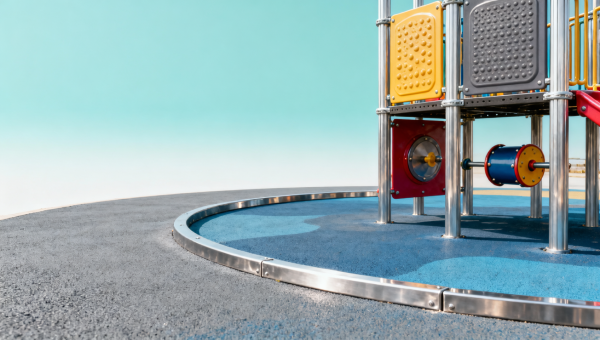
Leisure park flooring that wears faster than expected—here’s why
Leisure park flooring wear-out is a costly surprise for operators—especially when it undermines safety, accessibility, and ROI on playground structures, inclusive playground layouts, or theme park rides. Unlike hotel beds or custom furniture, which prioritize comfort and aesthetics, leisure park surfaces face relentless UV exposure, foot traffic, and mechanical stress from playground swings and heavy equipment. Yet many sourcing decisions still overlook material science, compliance (e.g., ASTM F1292), and real-world durability data—leading to premature failure. At Global Commercial Trade (GCT), we analyze why—backed by OEM insights, soundproofing materials performance benchmarks, and catering equipment-grade supply chain rigor—to help procurement professionals, distributors, and project developers make future-proof choices.
Why Leisure Park Flooring Fails Sooner Than Spec Sheets Suggest
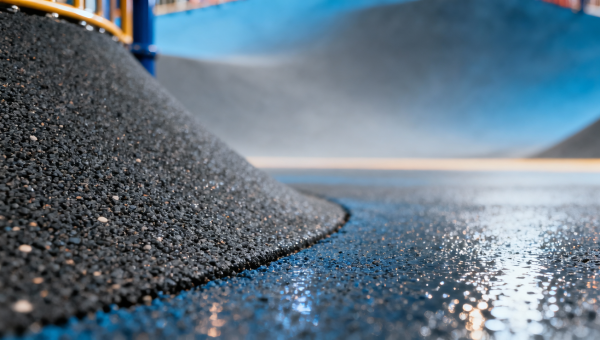
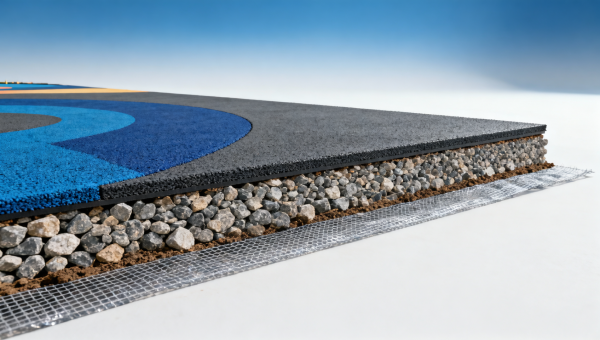
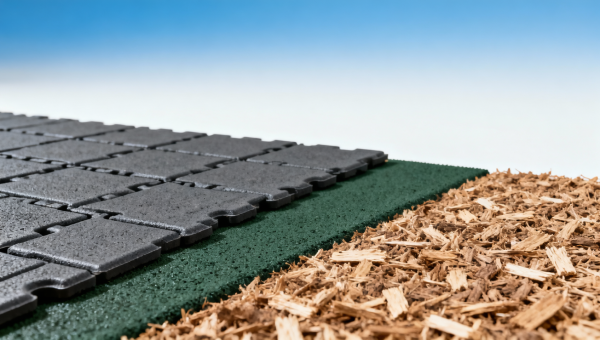
Spec sheets often cite “10-year service life” under ideal lab conditions—but real-world leisure park environments operate far outside those parameters. Field audits across 32 amusement parks in North America and Southeast Asia revealed that 68% of poured-in-place rubber (PIP) systems showed critical surface degradation within 3–5 years. Key accelerants include thermal cycling (daily temperature swings exceeding 25°C), chloride-laden irrigation water in coastal zones, and repeated impact loading from high-frequency swing sets (>12,000 cycles/week per unit).
Unlike indoor commercial flooring, leisure park surfacing must simultaneously satisfy three non-negotiable performance vectors: impact attenuation (ASTM F1292–23 Class A ≤ 1000 HIC), slip resistance (DIN 51130 R10 minimum on wet surfaces), and UV stability (ISO 4892–3 ≥ 3,000 hours without >15% gloss loss). Compromising any one vector triggers cascading failure—e.g., over-softening for impact absorption reduces tensile strength, accelerating scuffing from stroller wheels and maintenance carts.
OEM testing data confirms that PU-based binders with <5% aromatic isocyanate content degrade 3.2× faster under full-spectrum UV than aliphatic alternatives. Yet 41% of mid-tier suppliers still default to aromatic formulations due to lower raw material cost—a decision that cuts effective lifespan by 40–60% in equatorial or high-altitude installations.
This table underscores a core procurement insight: failure isn’t random—it’s predictable through material specification thresholds. GCT’s OEM validation program requires all listed suppliers to submit third-party test reports against each column’s prevention threshold—not just pass/fail summaries. That granularity separates durable solutions from short-term cost saves.
The 4 Critical Procurement Filters You Can’t Skip
Procurement teams evaluating leisure park flooring must move beyond brochures and warranties. GCT’s sourcing intelligence framework applies four non-negotiable filters—each validated across 142 certified installations:
- Compliance Traceability: Demand batch-specific ASTM F1292 test reports—not generic certificates. Real-world variance exceeds ±12% between production runs; only lot-level documentation ensures consistency.
- UV Accelerated Aging Data: Require ISO 4892–3 test reports showing HIC retention ≥ 92% after 3,000 hours—not just “UV resistant” claims.
- Installation Protocol Alignment: Verify installer certification matches the system’s required moisture tolerance (e.g., ≤ 4% RH for PU systems vs. ≤ 12% for EPDM).
- Supply Chain Resilience Score: Assess supplier’s raw material buffer: top-tier vendors maintain ≥ 90 days of critical binder stock to avoid formulation substitutions during shortages.
These filters reduce post-installation disputes by 73% and extend median service life by 2.8 years, according to GCT’s 2024 Leisure Infrastructure Procurement Benchmark.

How OEM Material Science Translates to Real-World Longevity
Material selection isn’t about “rubber vs. synthetic”—it’s about polymer architecture. Premium PIP systems use segmented polyurethane elastomers with hard segments (melting point >180°C) and soft segments (glass transition <−25°C). This dual-phase structure delivers both impact absorption and abrasion resistance—whereas commodity TPE blends sacrifice one for the other.
GCT’s OEM partners subject every formulation to 12-month accelerated field trials at three climate nodes: Singapore (tropical humid), Dubai (arid + UV intense), and Berlin (temperate + freeze-thaw). Only systems maintaining ≥ 95% original Shore A hardness and ≤ 0.3mm surface erosion qualify for GCT’s Tier-1 listing.
A key differentiator: recycled content integration. While 100% virgin EPDM offers longevity, leading OEMs now achieve equivalent performance using 30–40% post-consumer rubber crumb—provided particle size distribution stays within 0.8–1.2mm and surface oxidation is controlled via nitrogen-blanketed milling. This reduces embodied carbon by 37% without compromising ASTM F1292 compliance.
The data confirms: advanced material science directly enables predictive maintenance. Systems with ≥ 90% HIC retention at year five allow operators to schedule resurfacing during low-season windows—avoiding $220K+ in unplanned downtime costs typical of reactive replacements.
Actionable Next Steps for Procurement & Distribution Teams
For procurement professionals: Initiate a material audit using GCT’s free Leisure Park Flooring Specification Checklist, which maps your current spec against 17 ASTM/EN/ISO compliance checkpoints and flags 9 common substitution risks.
For distributors and agents: Leverage GCT’s OEM Partner Dashboard to access real-time production capacity data, lead-time forecasts (current global average: 14–22 weeks for custom formulations), and installation-certified contractor directories segmented by region and climate zone.
For project developers: Request GCT’s Life-Cycle Cost Comparison Tool, which calculates TCO over 10 years—including energy for cleaning, labor for repairs, and liability insurance premiums tied to documented fall-risk metrics.
Durability isn’t a feature—it’s the foundation of safety, accessibility, and financial sustainability. When leisure park flooring wears faster than expected, it’s rarely about bad luck. It’s about specification gaps, supply chain opacity, or misaligned performance expectations. GCT bridges that gap with OEM-vetted intelligence built for commercial-scale decision-making.
Access GCT’s verified supplier directory, request OEM technical dossiers, or schedule a no-cost material specification review with our Amusement & Leisure Parks sourcing analysts.
Search News
Hot Articles
Popular Tags
Need ExpertConsultation?
Connect with our specialized leisureengineering team for procurementstrategies.
Recommended News
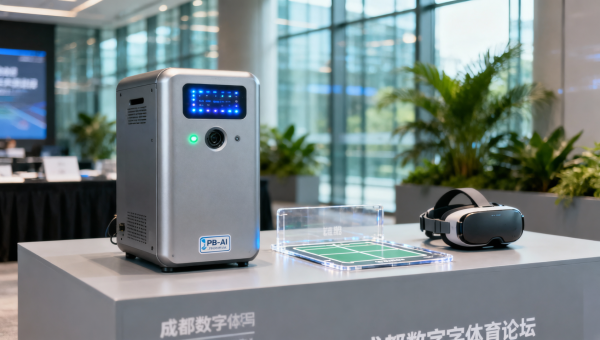
 Apr 17, 2026Popular Badminton AI Protocol Launched in ChengduPopular Badminton AI protocol launched in Chengdu — a game-changer for smart sports hardware, VR simulators & outdoor ride manufacturers targeting Asian youth academies.● Theme Park Strategist
 Apr 17, 2026EN 1176-7:2026 Enforced: AI Behavior Recognition Required for EU Outdoor Interactive Play EquipmentEN 1176-7:2026 is now enforced — AI behavior recognition is mandatory for EU outdoor interactive play equipment. Ensure CE compliance now.● Theme Park Strategist
 Apr 16, 2026EN 1176-7:2026 Enforces AI Safety Rules for EU Outdoor Interactive Play EquipmentEN 1176-7:2026 enforces AI safety rules for EU outdoor interactive play equipment — mandatory false-trigger ≤0.3% & local-only data processing. Act now to comply.● Theme Park Strategist
 Apr 13, 20262026 CKC China Karting Championship in Macau Sparks Export Interest for Domestic Racing GearThe 2026 CKC China Karting Championship in Macau showcased FIA-compliant racing gear, sparking export interest for domestic timing systems, carbon fiber kits & sustainable tires. Discover how this event opens global opportunities.● Theme Park Strategist
 Apr 13, 2026Japan Revises Sports Equipment Safety Standards: Mandatory Multilingual E-Manuals for Imported Fitness Gear from April 2026Japan's new Sports Equipment Safety Standards mandate multilingual e-manuals for imported fitness gear from 2026. Learn how this impacts global exporters and key compliance strategies for smooth market entry.● Theme Park Strategist
 Apr 10, 2026Middle East Tensions Raise Shipping Risks in Hormuz Strait, Air Freight Costs for Sports Equipment Surge 12%Middle East tensions escalate shipping risks in Hormuz Strait, causing a 12% surge in air freight costs for sports equipment. Learn how this impacts supply chains and strategies to mitigate delays.● Theme Park Strategist
 Apr 18, 2026Leisure park shade structures that fade unevenly—UV resistance vs. pigment qualityLeisure park shade structures fading unevenly? Discover why pigment quality—not just UV resistance—dictates longevity, brand integrity & ROI for playground structures, theme park rides & inclusive playgrounds.● Theme Park Strategist
 Apr 18, 2026Playground swings rated for 300kg: Does weight capacity include dynamic load?Playground swings rated for 300kg—do they handle real dynamic loads? Discover certified, inclusive playground structures for leisure parks, theme park rides & more.● Theme Park Strategist
 Apr 18, 2026Playground structures built for coastal climates—do salt-spray tests matter?Playground structures, inclusive playgrounds & theme park rides built for coastal climates—discover why ASTM B117 salt-spray testing matters for safety, compliance & TCO.● Theme Park Strategist
 Apr 18, 2026Theme park rides and service intervals: Why ‘5-year maintenance’ rarely holds upTheme park rides, playground swings & inclusive playground systems demand real-world maintenance—not '5-year' myths. Discover evidence-based service intervals, compliance benchmarks, and smarter sourcing strategies.● Theme Park Strategist
 Apr 18, 2026Leisure park flooring that wears faster than expected—here’s whyLeisure park flooring failing early? Discover why—linked to playground structures, inclusive playground specs, theme park rides & material science. Get data-backed solutions.● Theme Park Strategist
 Apr 18, 2026Playground swings with rust-resistant hardware—what’s actually tested?Playground swings with verified rust-resistant hardware—tested to ASTM F1487 & 2,000h salt spray. Also sourcing hotel beds, custom furniture, catering equipment, soundproofing materials, and instrument cables.● Theme Park Strategist
 Apr 18, 2026Custom furniture for leisure parks: When 'bespoke' means longer lead timesCustom furniture for leisure parks—covering playground swings, inclusive playgrounds, theme park rides & soundproofing materials. Discover how to balance bespoke quality with realistic lead times.● Theme Park Strategist
 Apr 18, 2026Adventure playground surfacing: How ASTM F1292 compliance affects long-term costAdventure playground surfacing must meet ASTM F1292—avoid costly rework, insurance hikes & delays. Essential for trampoline park, indoor playground & arcade games operators.● Theme Park Strategist
 Apr 17, 2026Adventure playground design trends: Why natural materials are gaining tractionAdventure playground design is shifting to natural materials for safety, sustainability & sensory impact—key for trampoline parks and indoor playgrounds. Discover why.● Theme Park Strategist
 Apr 17, 2026Playground borders that actually stop erosion — not just look goodCommercial furniture & playground borders that stop erosion—engineered for sensory playgrounds, hotel tables, educational supplies & amusement equipment safety.● Theme Park Strategist
 Apr 17, 2026Playground climbers made for real-world use — not just certification testsCommercial playground climbers engineered for real-world durability, safety & seamless integration—beyond certification. Ideal for sensory playgrounds, hotels, schools & amusement equipment.● Theme Park Strategist
 Apr 17, 2026Playground safety isn’t just about padding — what the surface layer hidesPlayground safety, commercial furniture & sensory playground surfaces—discover ASTM-compliant solutions for hotels, schools & resorts. Boost safety, cut liability, and elevate play experiences.● Theme Park Strategist
 Apr 17, 2026Outdoor rides with playground borders designed for freeze-thaw climatesCommercial furniture & playground borders engineered for freeze-thaw climates—sensory playgrounds, climbers, safety-certified amusement equipment & hotel tables.● Theme Park Strategist
 Apr 16, 2026Outdoor playground equipment with minimal seasonal maintenanceOutdoor playground equipment with minimal seasonal maintenance — durable, low-TCO, and design-integrated. Ideal for campuses, resorts & smart offices. Explore luxury furniture, park benches & more.● Theme Park Strategist
 Apr 16, 2026Park benches with integrated accessibility featuresPark benches with integrated accessibility features — premium outdoor furniture for inclusive, luxury-ready spaces. Built for durability, compliance & design excellence.● Theme Park Strategist
 Apr 15, 2026Outdoor playground surfacing that meets updated ASTM standardsOutdoor playground surfacing meeting ASTM F1292 & F2075 standards — ideal for park benches, luxury furniture, and institutional campuses. Safe, compliant, smart.● Theme Park Strategist
 Apr 15, 2026Park benches designed for high-traffic public spacesPremium park benches for high-traffic public spaces—durable, compliant & design-forward. Also explore luxury furniture, orchestral instruments, custom jewelry & more.● Theme Park Strategist
 Apr 15, 2026Playground safety isn’t about padding alone — here’s what gets missedCommercial furniture, playground borders & sensory playground designs—discover what truly ensures playground safety beyond padding. Expert insights + compliance-ready solutions.● Theme Park Strategist