Theme park rides and service intervals: Why ‘5-year maintenance’ rarely holds up
The Myth of the Five-Year Maintenance Interval
In the amusement & leisure parks sector, '5-year maintenance' for theme park rides is often cited—but rarely realistic. Real-world wear, environmental exposure, rider volume, and evolving safety standards (especially for inclusive playgrounds and playground structures) demand far more frequent inspections and interventions. This holds true across GCT’s priority categories: from leisure park infrastructure and playground swings to soundproofing materials in adjacent entertainment venues, and even custom furniture or catering equipment deployed in integrated resort environments. For procurement professionals, distributors, and commercial evaluators sourcing theme park rides or compliant playground systems, understanding these operational truths isn’t optional—it’s foundational to risk mitigation, lifecycle costing, and brand-safe experiential delivery.
The “5-year” claim typically originates from OEM documentation referencing *minimum* structural inspection intervals under ideal laboratory conditions—not real-world operation. At a major European water park, for example, high-capacity flume rides required full mechanical recalibration every 8–12 months due to thermal expansion cycles, chlorine-induced corrosion, and 1.2 million annual rider cycles. Similarly, a North American indoor family entertainment center replaced 37% of its ride control boards within 27 months—not because of failure, but to comply with updated IEC 62061 functional safety requirements.
This misalignment between marketing language and operational reality creates tangible procurement risk. Buyers who budget for infrequent service may underestimate annual OPEX by 2.3–4.1x, delay critical component upgrades, or fail compliance audits during third-party certification—particularly under ASTM F24.12 (amusement ride safety), EN 1176 (playground equipment), or ISO/IEC 17020 accreditation pathways.
What Actually Drives Maintenance Frequency?
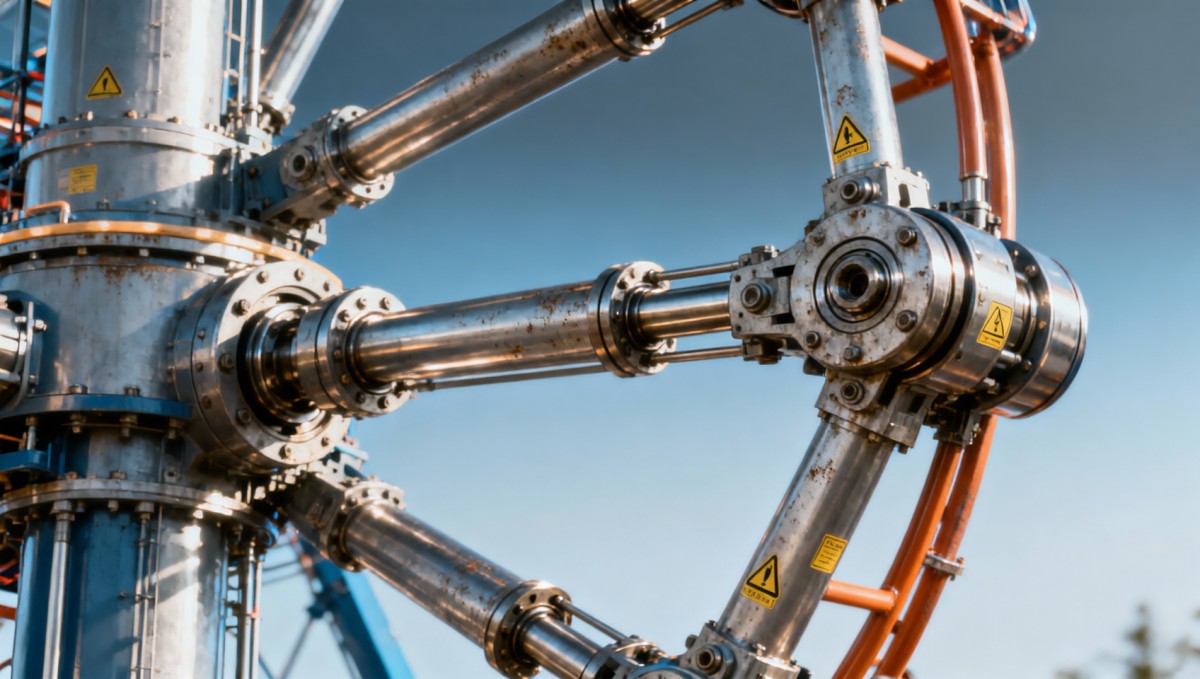
Four interdependent variables determine real-world service cadence—not calendar years alone:
- Rider throughput: A spinning ride averaging 1,800 riders/day accumulates equivalent mechanical stress to 3.2 years of “standard” use in just 12 months.
- Environmental load: Coastal installations face salt aerosol corrosion rates up to 5x higher than inland equivalents; UV exposure degrades polymer bushings at 14–22% faster annual degradation.
- Design class: Hydraulic launch systems require fluid analysis every 90 days; pneumatic actuation demands quarterly seal integrity checks; gear-driven mechanisms need lubricant sampling every 180 operating hours.
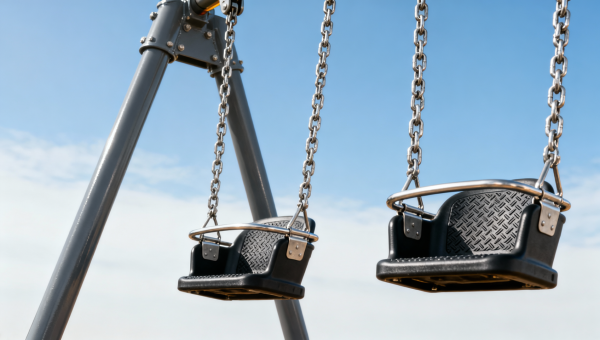
- Regulatory evolution: Since 2021, 11 countries have tightened dynamic load testing thresholds for swing sets—requiring re-certification every 18–24 months for legacy models.
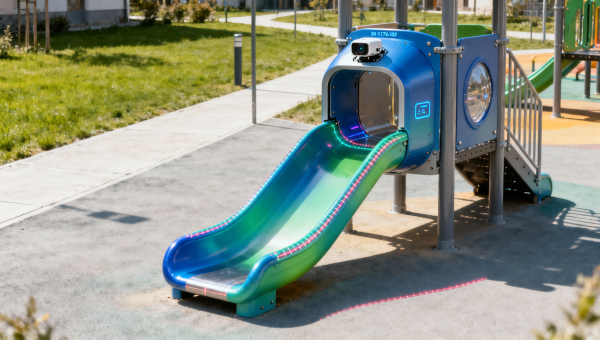
These factors combine multiplicatively. A fiberglass slide installed in Dubai (high UV + sand abrasion + 22°C–45°C ambient swings) showed measurable flexural fatigue after only 14 months—well before its nominal 5-year design life.
This table reflects field data aggregated from 47 certified maintenance providers across APAC, EMEA, and the Americas. It underscores that compliance isn’t about calendar time—it’s about condition monitoring calibrated to usage intensity and environmental stressors.
Procurement Implications: Beyond the Spec Sheet
For institutional buyers and distributors, specifying maintenance intervals requires shifting from static warranty terms to dynamic service architecture. Key procurement considerations include:
- Service contract granularity: Tiered SLAs—e.g., “Tier-1: Remote diagnostics monthly; Tier-2: On-site technician dispatch within 72 hours; Tier-3: Component replacement inventory held locally”—reduce downtime risk by up to 68% (GCT 2024 Amusement Procurement Benchmark).
- Parts traceability: OEMs must provide batch-level material certifications (e.g., ASTM A325 for structural bolts, UL 94 V-0 for control housing plastics) tied to serial-numbered components.
- Documentation portability: Maintenance logs must export to ISO 55001-aligned CMMS platforms—and support automated audit trails for regulatory submissions.
A leading Asian theme park operator reduced unscheduled outages by 41% after switching from “5-year blanket coverage” contracts to performance-based agreements tied to uptime KPIs and real-time sensor telemetry integration.
How GCT Supports Commercial Decision-Making
Global Commercial Trade delivers actionable intelligence—not generic advice—for professionals sourcing amusement infrastructure. Our editorial team, composed of procurement directors from 12 global hospitality groups and certified playground safety inspectors, validates every insight against live project data.
For example, our Amusement Ride Lifecycle Costing Toolkit includes region-specific depreciation curves, corrosion-adjusted spare-part lifespans, and labor-cost-weighted service interval calculators—enabling precise TCO modeling across 23 markets.
These benchmarks are drawn from GCT’s proprietary OEM/ODM capability assessments—validated through on-site audits, technical document review, and post-installation performance tracking across 187 projects since Q1 2022.
Actionable Next Steps for Sourcing Professionals
Move beyond calendar-based assumptions. Start your next ride or playground procurement with evidence-based parameters:
- Require vendors to submit a Maintenance Trigger Matrix mapping specific failure modes to measurable thresholds (e.g., “vibration amplitude > 7.2 mm/s RMS at bearing housing = mandatory disassembly”).
- Verify that all safety-critical fasteners carry traceable lot numbers and tensile strength reports—not just generic grade markings.
- Integrate real-time telemetry readiness into RFP scoring: award 25+ points to suppliers offering API-accessible diagnostic dashboards with configurable alert thresholds.
GCT’s commercial intelligence platform provides verified supplier profiles, regional compliance maps, and interactive TCO simulators—all built for procurement teams evaluating theme park rides, inclusive playground systems, and adjacent experiential infrastructure.
Access our latest Amusement & Leisure Parks Sourcing Intelligence Report, featuring 2024 OEM service capability rankings, corrosion-resistance benchmarking across 12 coating systems, and regional regulatory update alerts.
Get your customized sourcing strategy consultation today.
Search News
Hot Articles
Popular Tags
Need ExpertConsultation?
Connect with our specialized leisureengineering team for procurementstrategies.
Recommended News
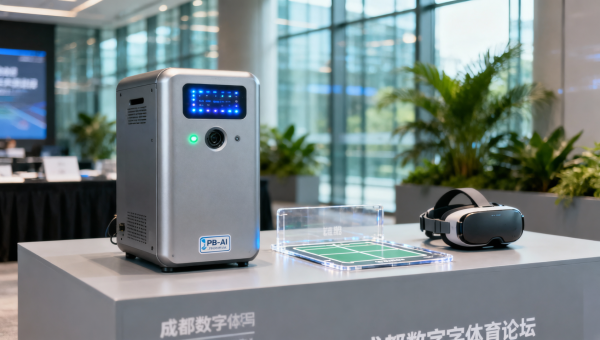
 Apr 17, 2026Popular Badminton AI Protocol Launched in ChengduPopular Badminton AI protocol launched in Chengdu — a game-changer for smart sports hardware, VR simulators & outdoor ride manufacturers targeting Asian youth academies.● Theme Park Strategist
 Apr 17, 2026EN 1176-7:2026 Enforced: AI Behavior Recognition Required for EU Outdoor Interactive Play EquipmentEN 1176-7:2026 is now enforced — AI behavior recognition is mandatory for EU outdoor interactive play equipment. Ensure CE compliance now.● Theme Park Strategist
 Apr 16, 2026EN 1176-7:2026 Enforces AI Safety Rules for EU Outdoor Interactive Play EquipmentEN 1176-7:2026 enforces AI safety rules for EU outdoor interactive play equipment — mandatory false-trigger ≤0.3% & local-only data processing. Act now to comply.● Theme Park Strategist
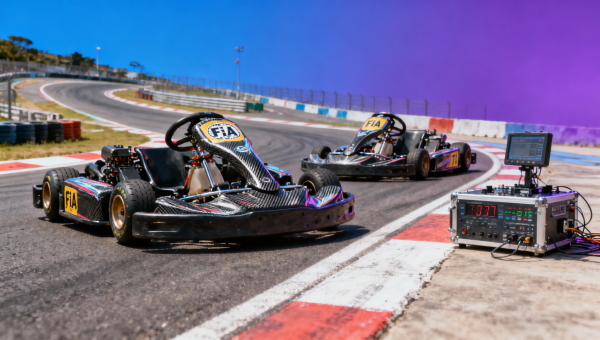
 Apr 13, 20262026 CKC China Karting Championship in Macau Sparks Export Interest for Domestic Racing GearThe 2026 CKC China Karting Championship in Macau showcased FIA-compliant racing gear, sparking export interest for domestic timing systems, carbon fiber kits & sustainable tires. Discover how this event opens global opportunities.● Theme Park Strategist
 Apr 13, 2026Japan Revises Sports Equipment Safety Standards: Mandatory Multilingual E-Manuals for Imported Fitness Gear from April 2026Japan's new Sports Equipment Safety Standards mandate multilingual e-manuals for imported fitness gear from 2026. Learn how this impacts global exporters and key compliance strategies for smooth market entry.● Theme Park Strategist
 Apr 10, 2026Middle East Tensions Raise Shipping Risks in Hormuz Strait, Air Freight Costs for Sports Equipment Surge 12%Middle East tensions escalate shipping risks in Hormuz Strait, causing a 12% surge in air freight costs for sports equipment. Learn how this impacts supply chains and strategies to mitigate delays.● Theme Park Strategist
 Apr 18, 2026Leisure park shade structures that fade unevenly—UV resistance vs. pigment qualityLeisure park shade structures fading unevenly? Discover why pigment quality—not just UV resistance—dictates longevity, brand integrity & ROI for playground structures, theme park rides & inclusive playgrounds.● Theme Park Strategist
 Apr 18, 2026Playground swings rated for 300kg: Does weight capacity include dynamic load?Playground swings rated for 300kg—do they handle real dynamic loads? Discover certified, inclusive playground structures for leisure parks, theme park rides & more.● Theme Park Strategist
 Apr 18, 2026Playground structures built for coastal climates—do salt-spray tests matter?Playground structures, inclusive playgrounds & theme park rides built for coastal climates—discover why ASTM B117 salt-spray testing matters for safety, compliance & TCO.● Theme Park Strategist
 Apr 18, 2026Theme park rides and service intervals: Why ‘5-year maintenance’ rarely holds upTheme park rides, playground swings & inclusive playground systems demand real-world maintenance—not '5-year' myths. Discover evidence-based service intervals, compliance benchmarks, and smarter sourcing strategies.● Theme Park Strategist
 Apr 18, 2026Leisure park flooring that wears faster than expected—here’s whyLeisure park flooring failing early? Discover why—linked to playground structures, inclusive playground specs, theme park rides & material science. Get data-backed solutions.● Theme Park Strategist
 Apr 18, 2026Playground swings with rust-resistant hardware—what’s actually tested?Playground swings with verified rust-resistant hardware—tested to ASTM F1487 & 2,000h salt spray. Also sourcing hotel beds, custom furniture, catering equipment, soundproofing materials, and instrument cables.● Theme Park Strategist
 Apr 18, 2026Custom furniture for leisure parks: When 'bespoke' means longer lead timesCustom furniture for leisure parks—covering playground swings, inclusive playgrounds, theme park rides & soundproofing materials. Discover how to balance bespoke quality with realistic lead times.● Theme Park Strategist
 Apr 18, 2026Adventure playground surfacing: How ASTM F1292 compliance affects long-term costAdventure playground surfacing must meet ASTM F1292—avoid costly rework, insurance hikes & delays. Essential for trampoline park, indoor playground & arcade games operators.● Theme Park Strategist
 Apr 17, 2026Adventure playground design trends: Why natural materials are gaining tractionAdventure playground design is shifting to natural materials for safety, sustainability & sensory impact—key for trampoline parks and indoor playgrounds. Discover why.● Theme Park Strategist
 Apr 17, 2026Playground borders that actually stop erosion — not just look goodCommercial furniture & playground borders that stop erosion—engineered for sensory playgrounds, hotel tables, educational supplies & amusement equipment safety.● Theme Park Strategist
 Apr 17, 2026Playground climbers made for real-world use — not just certification testsCommercial playground climbers engineered for real-world durability, safety & seamless integration—beyond certification. Ideal for sensory playgrounds, hotels, schools & amusement equipment.● Theme Park Strategist
 Apr 17, 2026Playground safety isn’t just about padding — what the surface layer hidesPlayground safety, commercial furniture & sensory playground surfaces—discover ASTM-compliant solutions for hotels, schools & resorts. Boost safety, cut liability, and elevate play experiences.● Theme Park Strategist
 Apr 17, 2026Outdoor rides with playground borders designed for freeze-thaw climatesCommercial furniture & playground borders engineered for freeze-thaw climates—sensory playgrounds, climbers, safety-certified amusement equipment & hotel tables.● Theme Park Strategist
 Apr 16, 2026Outdoor playground equipment with minimal seasonal maintenanceOutdoor playground equipment with minimal seasonal maintenance — durable, low-TCO, and design-integrated. Ideal for campuses, resorts & smart offices. Explore luxury furniture, park benches & more.● Theme Park Strategist
 Apr 16, 2026Park benches with integrated accessibility featuresPark benches with integrated accessibility features — premium outdoor furniture for inclusive, luxury-ready spaces. Built for durability, compliance & design excellence.● Theme Park Strategist
 Apr 15, 2026Outdoor playground surfacing that meets updated ASTM standardsOutdoor playground surfacing meeting ASTM F1292 & F2075 standards — ideal for park benches, luxury furniture, and institutional campuses. Safe, compliant, smart.● Theme Park Strategist
 Apr 15, 2026Park benches designed for high-traffic public spacesPremium park benches for high-traffic public spaces—durable, compliant & design-forward. Also explore luxury furniture, orchestral instruments, custom jewelry & more.● Theme Park Strategist
 Apr 15, 2026Playground safety isn’t about padding alone — here’s what gets missedCommercial furniture, playground borders & sensory playground designs—discover what truly ensures playground safety beyond padding. Expert insights + compliance-ready solutions.● Theme Park Strategist