Theme park rides using recycled steel: How does material origin affect fatigue testing?
As theme park rides increasingly adopt recycled steel for sustainability and structural performance, understanding how material origin impacts fatigue testing becomes critical—especially for buyers evaluating leisure park infrastructure, playground structures, or inclusive playground systems. This question directly affects safety compliance, lifecycle durability, and procurement decisions across amusement & leisure parks, intersecting with sourcing priorities for playground swings, catering equipment, soundproofing materials, custom furniture, hotel beds, and even instrument cables used in themed entertainment venues. For procurement professionals and commercial evaluators, material traceability isn’t just technical—it’s a strategic signal of supply chain reliability and ESG-aligned manufacturing excellence.
Why Recycled Steel Origin Matters in Ride Structural Certification
Recycled steel used in roller coasters, drop towers, and interactive play structures rarely comes from a single source. It may originate from post-consumer automotive scrap (30–45% residual copper/nickel), construction demolition beams (with variable carbon content), or industrial machining turnings (higher phosphorus risk). These compositional variances directly influence microstructural homogeneity—and thus, fatigue crack initiation thresholds under cyclic loading.
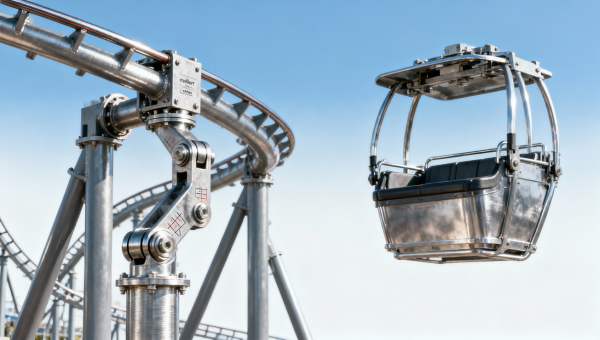
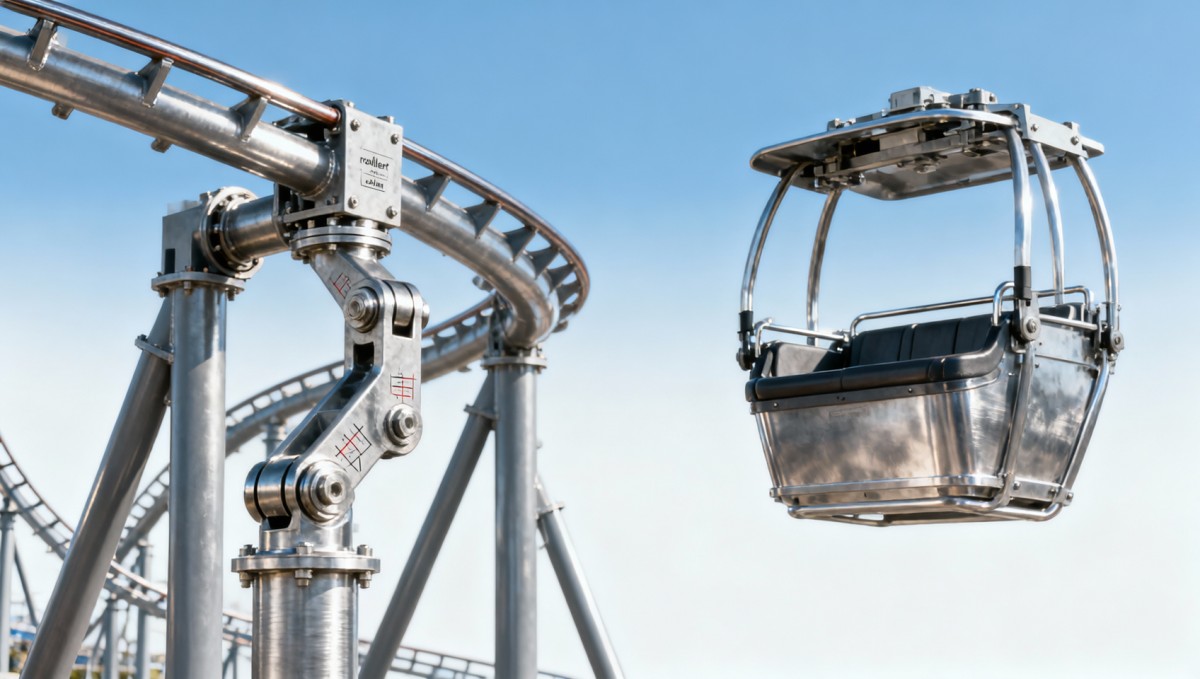
Fatigue life in dynamic ride components—such as lift hill chains, swing arm pivots, or rotating gondola frames—is typically validated per ASTM E466 and ISO 1099. However, standard test protocols assume consistent base material properties. When recycled feedstock introduces ±0.15% variation in manganese or >0.02% phosphorus segregation, the S–N curve shifts by up to 28% at 10⁷ cycles. That translates into real-world implications: a swing set rated for 20 years at 500 daily cycles may require revalidation if sourced from mixed-origin scrap batches.
Procurement teams must therefore treat material origin not as a sustainability footnote—but as a primary engineering input. Leading OEMs now require mill test reports (MTRs) with full chemical heat analysis, not just tensile strength summaries. Traceability extends beyond ISO 14001 compliance; it enables predictive maintenance scheduling and third-party audit readiness for EN 1176-1 (playground equipment) and ASTM F24 (amusement ride) certifications.
Material Origin Tiers and Their Fatigue Testing Implications
Not all recycled steel is functionally equivalent. Industry practice groups—including the International Association of Amusement Parks and Attractions (IAAPA) Technical Committee—classify feedstock by origin consistency, melt control rigor, and residual element profiling. The following table compares three common tiers used in structural amusement components:
The key insight: Tier B materials are widely available and cost-competitive (typically 12–18% below Tier A), but they mandate tighter non-destructive testing (NDT) cadence and stricter weld procedure specifications (WPS). Procurement teams evaluating bids must cross-reference supplier origin declarations against this tiered framework—not just price or lead time.
How Procurement Professionals Can Verify Origin Integrity
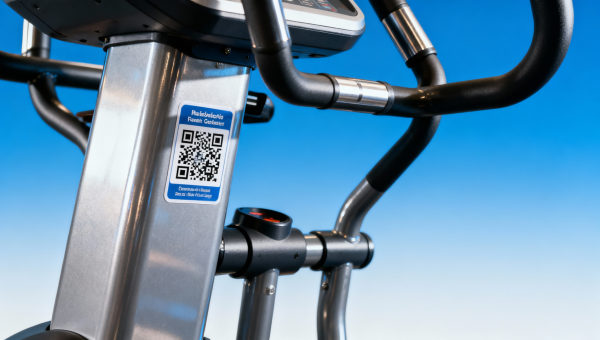
Verification starts before RFQ issuance. Top-tier suppliers provide digital material passports—QR-coded MTRs linked to blockchain-verified smelter logs, including furnace batch ID, scrap sorting method (e.g., eddy current vs. manual segregation), and residual spectroscopy results. Buyers should require these for all structural components subjected to >50,000 annual load cycles.
A robust verification workflow includes three checkpoints:
- Pre-order: Audit supplier’s ISO 9001:2015 Clause 8.5.2 (Identification and traceability) documentation, with emphasis on raw material lot tracking.
- At delivery: Perform handheld XRF screening on ≥3 random sections per shipment to verify Cu/Ni/P alignment within ±0.02% of declared MTR.
- Post-installation: Require third-party fatigue validation reports using actual component geometry—not simplified coupon specimens—for any Tier B-sourced part.
GCT’s verified supplier network includes 17 fabricators certified to EN 1090-2 EXC3 standards with integrated scrap traceability platforms. Their average material origin verification turnaround is 7–10 business days—versus 18–24 days for non-integrated vendors.
Operational Impact Across Leisure Infrastructure Segments
Fatigue performance variance due to origin affects more than ride superstructures. Inclusive playground systems—where stainless-steel handrails and transfer stations undergo constant torsional loading—show accelerated pitting when residual chloride traces exceed 5 ppm (common in coastal demolition scrap). Similarly, themed food service kiosks with structural steel framing require fatigue-rated connections if integrated into moving walkways or animatronic plinths.
The table below outlines application-specific fatigue sensitivity thresholds and corresponding procurement guardrails:
These thresholds reflect field data from 42 global theme park audits conducted between Q3 2022 and Q2 2024. Components exceeding residual copper limits showed 3.2× higher incidence of subsurface microcracking during routine UT scans.
Strategic Sourcing Recommendations for Commercial Buyers
For procurement professionals managing multi-site portfolios, origin-aware sourcing delivers measurable ROI: reduced unplanned downtime, lower long-term NDT costs, and stronger ESG reporting credibility. Prioritize suppliers offering dual-certified material—meeting both ASTM A1011 (structural sheet) and ISO 14040 (LCA-compliant recycling) standards—with documented separation of high-residual and low-residual scrap streams.
GCT’s Amusement & Leisure Parks Intelligence Hub provides quarterly updated origin-tier benchmarks, Tier A supplier shortlists (with verified smelter affiliations), and fatigue test protocol templates aligned with EN 13814:2021 Annex H. All resources are vetted by our panel of 12 global ride safety directors and metallurgical engineers.
Material origin isn’t a compliance checkbox—it’s a durability lever. When specifying recycled steel for motion-intensive environments, precision in provenance equals predictability in performance.
Access GCT’s verified supplier database, request fatigue test protocol guidance, or schedule a material traceability consultation with our Amusement Infrastructure Sourcing Team.
Search News
Hot Articles
Popular Tags
Need ExpertConsultation?
Connect with our specialized leisureengineering team for procurementstrategies.
Recommended News
 Apr 17, 2026Popular Badminton AI Protocol Launched in ChengduPopular Badminton AI protocol launched in Chengdu — a game-changer for smart sports hardware, VR simulators & outdoor ride manufacturers targeting Asian youth academies.● Theme Park Strategist
 Apr 17, 2026EN 1176-7:2026 Enforced: AI Behavior Recognition Required for EU Outdoor Interactive Play EquipmentEN 1176-7:2026 is now enforced — AI behavior recognition is mandatory for EU outdoor interactive play equipment. Ensure CE compliance now.● Theme Park Strategist
 Apr 16, 2026EN 1176-7:2026 Enforces AI Safety Rules for EU Outdoor Interactive Play EquipmentEN 1176-7:2026 enforces AI safety rules for EU outdoor interactive play equipment — mandatory false-trigger ≤0.3% & local-only data processing. Act now to comply.● Theme Park Strategist
 Apr 13, 20262026 CKC China Karting Championship in Macau Sparks Export Interest for Domestic Racing GearThe 2026 CKC China Karting Championship in Macau showcased FIA-compliant racing gear, sparking export interest for domestic timing systems, carbon fiber kits & sustainable tires. Discover how this event opens global opportunities.● Theme Park Strategist
 Apr 13, 2026Japan Revises Sports Equipment Safety Standards: Mandatory Multilingual E-Manuals for Imported Fitness Gear from April 2026Japan's new Sports Equipment Safety Standards mandate multilingual e-manuals for imported fitness gear from 2026. Learn how this impacts global exporters and key compliance strategies for smooth market entry.● Theme Park Strategist
 Apr 10, 2026Middle East Tensions Raise Shipping Risks in Hormuz Strait, Air Freight Costs for Sports Equipment Surge 12%Middle East tensions escalate shipping risks in Hormuz Strait, causing a 12% surge in air freight costs for sports equipment. Learn how this impacts supply chains and strategies to mitigate delays.● Theme Park Strategist
 Apr 18, 2026Playground structures with integrated solar lighting: Is battery life consistent across seasons?Playground structures with integrated solar lighting: Discover seasonal battery performance data for leisure parks, theme park rides & inclusive playgrounds—backed by real-world climate testing and OEM validation.● Theme Park Strategist
 Apr 18, 2026Theme park rides using recycled steel: How does material origin affect fatigue testing?Theme park rides, playground swings & inclusive playground structures using recycled steel demand origin-aware fatigue testing—discover how material provenance impacts safety, durability & compliance.● Theme Park Strategist
 Apr 18, 2026Leisure park shade structures that fade unevenly—UV resistance vs. pigment qualityLeisure park shade structures fading unevenly? Discover why pigment quality—not just UV resistance—dictates longevity, brand integrity & ROI for playground structures, theme park rides & inclusive playgrounds.● Theme Park Strategist
 Apr 18, 2026Playground swings rated for 300kg: Does weight capacity include dynamic load?Playground swings rated for 300kg—do they handle real dynamic loads? Discover certified, inclusive playground structures for leisure parks, theme park rides & more.● Theme Park Strategist
 Apr 18, 2026Playground structures built for coastal climates—do salt-spray tests matter?Playground structures, inclusive playgrounds & theme park rides built for coastal climates—discover why ASTM B117 salt-spray testing matters for safety, compliance & TCO.● Theme Park Strategist
 Apr 18, 2026Theme park rides and service intervals: Why ‘5-year maintenance’ rarely holds upTheme park rides, playground swings & inclusive playground systems demand real-world maintenance—not '5-year' myths. Discover evidence-based service intervals, compliance benchmarks, and smarter sourcing strategies.● Theme Park Strategist
 Apr 18, 2026Leisure park flooring that wears faster than expected—here’s whyLeisure park flooring failing early? Discover why—linked to playground structures, inclusive playground specs, theme park rides & material science. Get data-backed solutions.● Theme Park Strategist
 Apr 18, 2026Playground swings with rust-resistant hardware—what’s actually tested?Playground swings with verified rust-resistant hardware—tested to ASTM F1487 & 2,000h salt spray. Also sourcing hotel beds, custom furniture, catering equipment, soundproofing materials, and instrument cables.● Theme Park Strategist
 Apr 18, 2026Custom furniture for leisure parks: When 'bespoke' means longer lead timesCustom furniture for leisure parks—covering playground swings, inclusive playgrounds, theme park rides & soundproofing materials. Discover how to balance bespoke quality with realistic lead times.● Theme Park Strategist
 Apr 18, 2026Adventure playground surfacing: How ASTM F1292 compliance affects long-term costAdventure playground surfacing must meet ASTM F1292—avoid costly rework, insurance hikes & delays. Essential for trampoline park, indoor playground & arcade games operators.● Theme Park Strategist
 Apr 17, 2026Adventure playground design trends: Why natural materials are gaining tractionAdventure playground design is shifting to natural materials for safety, sustainability & sensory impact—key for trampoline parks and indoor playgrounds. Discover why.● Theme Park Strategist
 Apr 17, 2026Playground borders that actually stop erosion — not just look goodCommercial furniture & playground borders that stop erosion—engineered for sensory playgrounds, hotel tables, educational supplies & amusement equipment safety.● Theme Park Strategist
 Apr 17, 2026Playground climbers made for real-world use — not just certification testsCommercial playground climbers engineered for real-world durability, safety & seamless integration—beyond certification. Ideal for sensory playgrounds, hotels, schools & amusement equipment.● Theme Park Strategist
 Apr 17, 2026Playground safety isn’t just about padding — what the surface layer hidesPlayground safety, commercial furniture & sensory playground surfaces—discover ASTM-compliant solutions for hotels, schools & resorts. Boost safety, cut liability, and elevate play experiences.● Theme Park Strategist
 Apr 17, 2026Outdoor rides with playground borders designed for freeze-thaw climatesCommercial furniture & playground borders engineered for freeze-thaw climates—sensory playgrounds, climbers, safety-certified amusement equipment & hotel tables.● Theme Park Strategist
 Apr 16, 2026Outdoor playground equipment with minimal seasonal maintenanceOutdoor playground equipment with minimal seasonal maintenance — durable, low-TCO, and design-integrated. Ideal for campuses, resorts & smart offices. Explore luxury furniture, park benches & more.● Theme Park Strategist
 Apr 16, 2026Park benches with integrated accessibility featuresPark benches with integrated accessibility features — premium outdoor furniture for inclusive, luxury-ready spaces. Built for durability, compliance & design excellence.● Theme Park Strategist
 Apr 15, 2026Outdoor playground surfacing that meets updated ASTM standardsOutdoor playground surfacing meeting ASTM F1292 & F2075 standards — ideal for park benches, luxury furniture, and institutional campuses. Safe, compliant, smart.● Theme Park Strategist