CPSC AI Safety Alert: >200ms Delay = Substantial Hazard
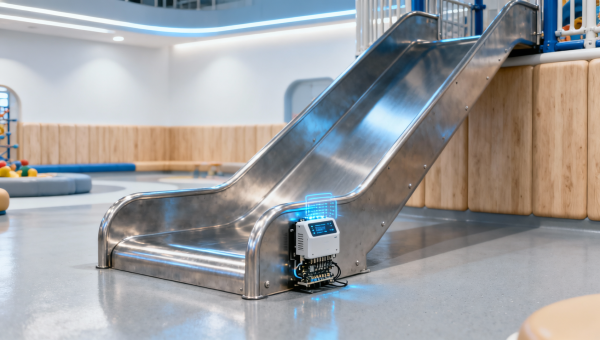
On April 17, 2026, the U.S. Consumer Product Safety Commission (CPSC) issued an AI Safety Alert targeting indoor play equipment — classifying AI response latency exceeding 200 milliseconds as a ‘Substantial Product Hazard’. While not a formal regulation, the alert is now embedded in compliance screening protocols of major U.S. e-commerce platforms including Amazon and Walmart. Exporters of children’s indoor play equipment from China, particularly those relying on low-cost AI modules, are already adjusting procurement and design practices — making this development highly relevant for manufacturers, ODMs, platform sellers, and supply chain service providers serving the North American market.
Event Overview
The U.S. Consumer Product Safety Commission (CPSC) published the AI Safety Alert for Indoor Play Equipment on April 17, 2026. The document explicitly identifies AI system response delay greater than 200 milliseconds as a ‘Substantial Product Hazard’, which may trigger mandatory recall actions under existing CPSC enforcement authority. The alert is advisory in nature and does not constitute a new regulation or rulemaking. However, it has been formally adopted into the compliance review criteria of Amazon, Walmart, and other U.S. retail platforms. No additional technical specifications, testing methodologies, or enforcement timelines were disclosed in the initial release.
Industries Affected by This Alert
Direct Exporters & Brand Operators Selling to U.S. Markets
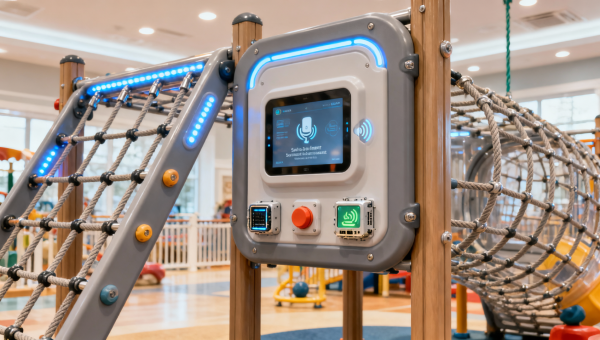
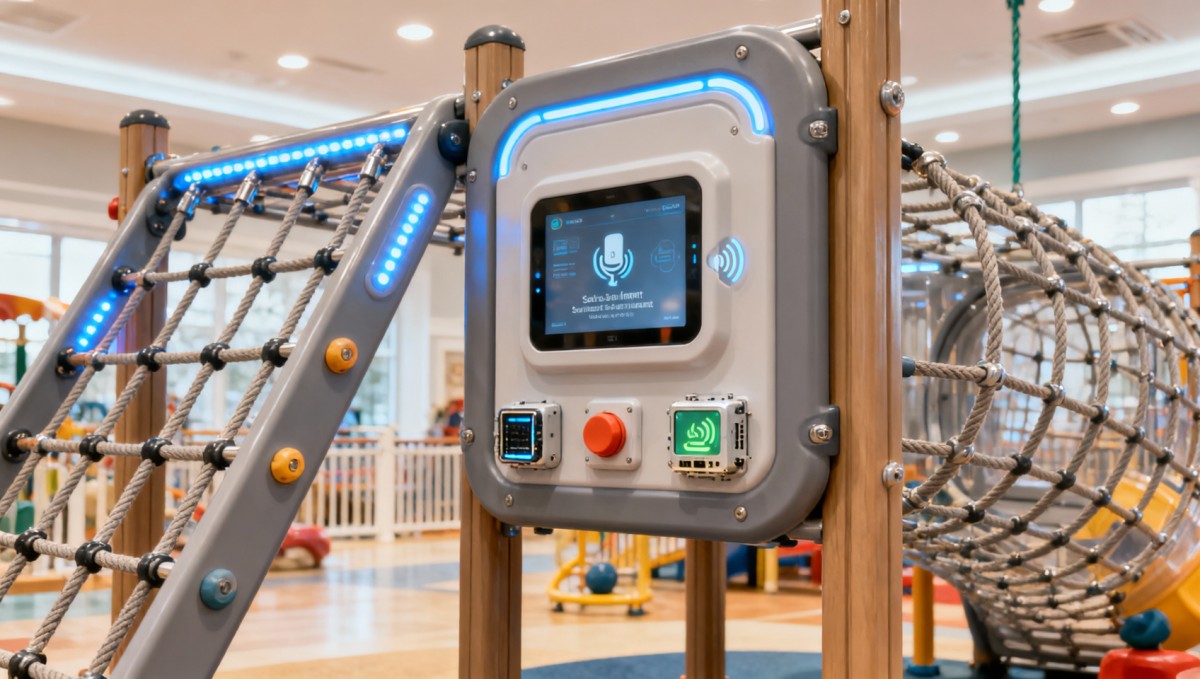
These businesses face immediate compliance pressure: products incorporating AI functionality (e.g., gesture-responsive lighting, voice-activated safety interlocks, or motion-triggered audio feedback) must now meet the 200ms latency benchmark to pass platform-level pre-listing checks. Non-compliant listings risk suspension or removal — even if no injury incident has occurred.
ODM/OEM Manufacturers of Indoor Play Equipment
Manufacturers integrating third-party AI modules — especially budget-tier suppliers — report supply disruptions, with some vendors halting shipments pending internal latency validation. This forces rapid requalification of edge computing hardware, shifting demand toward domestically sourced high-precision edge AI modules capable of deterministic real-time inference.
Suppliers of AI Modules & Embedded Systems
Module vendors previously marketing ‘AI-enabled’ features without latency guarantees are now subject to heightened technical scrutiny. Buyers increasingly request documented worst-case response time metrics under load, thermal stress, and concurrent I/O conditions — not just nominal lab-test figures.
Supply Chain & Compliance Service Providers
Third-party labs and certification consultants are updating test scopes to include AI latency measurement per CPSC’s referenced methodology (though no official test standard has yet been published). Clients are seeking gap assessments against the 200ms threshold — particularly for firmware-level timing analysis and sensor-to-actuator pipeline profiling.
What Enterprises and Practitioners Should Focus On Now
Monitor CPSC’s next procedural steps
While the Alert itself carries no binding force, CPSC may follow up with guidance documents, enforcement case summaries, or references in future rulemakings. Tracking official CPSC communications — especially updates to its Business Guidance Portal — remains essential for early signal detection.
Review AI-integrated product portfolios by U.S.-bound SKU
Focus audit efforts on models shipped to Amazon US, Walmart.com, or brick-and-mortar retailers with CPSC-aligned compliance programs. Prioritize units where AI functionality directly impacts child interaction or safety-critical behavior (e.g., automatic shutdown upon obstacle detection), rather than purely decorative features.
Distinguish between policy signal and operational requirement
The Alert functions primarily as a compliance expectation — not a certified test standard. Platform enforcement is currently driven by self-declaration and vendor documentation, not independent lab verification. Companies should avoid assuming full regulatory codification has occurred; instead, treat it as a de facto marketplace gatekeeper criterion.
Initiate internal latency benchmarking and supplier qualification
Begin measuring end-to-end AI inference latency across representative operating conditions (e.g., ambient temperature, battery voltage, concurrent sensor inputs). Document test setups and results transparently. Where module suppliers cannot provide verifiable latency data, initiate qualification of alternative edge AI solutions — especially those with published real-time performance profiles.
Editorial Perspective / Industry Observation
From industry perspective, this Alert is best understood not as an isolated technical notice, but as a calibrated escalation in CPSC’s broader effort to extend traditional product safety frameworks to AI-augmented consumer goods. Analysis来看, it signals growing institutional readiness to treat algorithmic responsiveness as a physical safety parameter — analogous to mechanical tolerances or electrical insulation ratings. Observation来看, the 200ms threshold appears aligned with human perceptual-motor response benchmarks (e.g., ISO 9241-411), suggesting CPSC is anchoring AI safety expectations in established ergonomics science. Current more appropriate interpretation is that this is a strong policy signal — not yet a fully implemented enforcement regime — but one with rapidly materializing commercial consequences via platform-level adoption.
Conclusion
This CPSC AI Safety Alert marks a concrete step toward treating AI system responsiveness as a measurable, enforceable safety attribute for children’s products. Its immediate impact lies not in legal mandate, but in market access requirements imposed by major U.S. retail platforms. For affected stakeholders, the most rational stance is neither alarm nor dismissal — but disciplined, evidence-based alignment with the 200ms benchmark through technical validation, supply chain reassessment, and proactive documentation. The Alert is better suited as a catalyst for engineering rigor than as a trigger for regulatory panic.
Source Attribution
Main source: U.S. Consumer Product Safety Commission (CPSC), AI Safety Alert for Indoor Play Equipment, issued April 17, 2026. Platform adoption status confirmed via publicly available Amazon Seller Central and Walmart Marketplace compliance documentation (as of April 2026). Supplier response patterns reported by multiple Chinese export manufacturers in verified trade correspondence; no third-party verification of individual supplier actions is claimed. Ongoing developments — including potential CPSC test method publication or formal rulemaking — remain subject to observation.
Search News
Hot Articles
Popular Tags
Need ExpertConsultation?
Connect with our specialized leisureengineering team for procurementstrategies.
Recommended News
 Apr 17, 2026CPSC AI Safety Alert: 200ms Delay in Child Playground AI Systems = HazardCPSC AI Safety Alert: 200ms delay in child playground AI systems = hazard. Learn how latency compliance impacts Target/Walmart listings, testing, and supply chain.● Theme Park Strategist
 Apr 17, 20262026 Shanghai Sailing Open Adopts Domestic SeaChronos Pro Timing SystemSeaChronos Pro timing system debuts at 2026 Shanghai Sailing Open — ITU-certified, millisecond-accurate, wind- and tide-integrated. A game-changer for marine sports tech.● Theme Park Strategist
 Apr 16, 2026FDA Proposes New Labeling Rules for Sports Nutrition Supplements with Chinese LabelsFDA's new labeling rules for sports nutrition supplements with Chinese labels take effect April 2026—learn compliance must-dos for U.S. importers, manufacturers & brands.● Theme Park Strategist
 Apr 15, 2026Saudi SASO Updates Amusement Ride Standards: VR Devices Now Require Mandatory EMC TestingSaudi SASO's new 2026 standard mandates EMC testing for VR amusement rides, impacting exporters. Learn key compliance strategies for Saudi market access.● Theme Park Strategist
 Apr 14, 2026Japan Mandates Multilingual E-Manuals for Fitness Equipment from April 2026Japan mandates multilingual e-manuals for fitness equipment from April 2026. Learn how this impacts manufacturers & importers with JIS T 0601-1 compliance requirements. Stay ahead of the regulation!● Theme Park Strategist
 Apr 13, 2026WTT Taiyuan Adopts Chinese AI Table Tennis Analysis System with ITTF Export CertificationWTT Taiyuan adopts Chinese AI table tennis analysis system with ITTF export certification, enabling real-time ball speed & spin tracking. A game-changer for sports tech in emerging markets like Southeast Asia & Middle East.● Theme Park Strategist
 Apr 13, 2026First Female Snooker Player Achieves Multiple Century Breaks as Chinese Table Gains WPBSA CertificationChinese snooker player Bai Yulu makes history with multiple century breaks using WPBSA-certified 'Tournament Pro X7' table, marking a milestone for Chinese manufacturing in professional snooker equipment. Discover how this impacts global markets.● Theme Park Strategist
 Apr 13, 2026RCEP Zero Tariff on China's TPU Sports Protective Gear Boosts ASEAN TradeRCEP's zero-tariff policy on China's TPU sports protective gear boosts ASEAN trade, giving Chinese exporters cost advantages over Korean rivals. Learn how manufacturers and distributors can capitalize on this opportunity.● Theme Park Strategist
 Apr 10, 2026Japan's JIS T 9001:2026 Sports Flooring Anti-Slip Standard Mandatory from April 2026Japan's JIS T 9001:2026 standard mandates anti-slip sports flooring (SCOF ≥ 0.6) from April 2026. Chinese exporters must adapt to meet new requirements. Learn key compliance strategies.● Theme Park Strategist
 Apr 10, 2026Bai Yulu Makes History at Snooker World Championship, Sparks Surge in Women's Sports Equipment DemandBai Yulu makes history at Snooker World Championship with two century breaks, sparking 185% surge in women's sports equipment demand. Discover how manufacturers, e-commerce & supply chains can capitalize on this trend.● Theme Park Strategist
 Apr 10, 20262026 Badminton Asia Championships Quarterfinals Schedule Announced, Shi Yuqi to Compete; Southeast Asia Racket Orders Face 6-8 Week Delays2026 Badminton Asia Championships quarterfinals schedule revealed with Shi Yuqi competing, while Southeast Asia faces 6-8 week racket delays. Learn how supply chain issues impact manufacturers and get strategies to navigate equipment shortages.● Theme Park Strategist
 Apr 10, 2026WTT Taiyuan Challenge Sparks Smart Equipment Demand: Japan Buyers Scrutinize AI Training TechDiscover how the WTT Taiyuan Challenge boosts demand for AI training tech as Japanese buyers evaluate smart sports equipment. Learn key opportunities for manufacturers with JIS-certified solutions.● Theme Park Strategist
 Apr 10, 2026Chinese Snooker Players' Success Spurs Global Demand for Cue AccessoriesChinese snooker players' success drives 210% global demand surge for cue accessories. Explore how manufacturers & exporters can capitalize on this trend with UK, German & Australian markets leading inquiries.● Theme Park Strategist
 Apr 10, 2026EU Updates EN 16830:2026 Eyewear Safety Standard, Impacting China's Sports Goggle ExportsEU's updated EN 16830:2026 eyewear safety standard impacts China's sports goggle exports with stricter CE certification requirements. Learn how manufacturers and exporters can adapt to new impact resistance, UV400+, and blue light blocking standards before the September 2026 deadline.● Theme Park Strategist
 Apr 18, 2026PopFeather AI Standard Launched at SMT Forum in ChengduPopFeather AI standard launched at SMT Forum in Chengdu — a breakthrough for AI-powered badminton training interoperability. Discover how this new interface protocol reshapes sports tech integration for manufacturers, AI platforms & global partners.● Theme Park Strategist
 Apr 18, 2026CPSC AI Safety Alert: >200ms Delay = Substantial HazardCPSC AI Safety Alert: >200ms latency = Substantial Hazard for indoor play equipment. Critical for exporters, ODMs & AI module suppliers targeting US markets.● Theme Park Strategist
 Apr 18, 2026Inclusive playground handrails: Are height and grip diameter truly standardized across brands?Inclusive playground handrails: Discover if height & grip diameter truly meet ADA/EN standards—get verified OEM data, real-world benchmarks, and compliant sourcing for leisure parks, theme park rides & more.● Theme Park Strategist
 Apr 18, 2026Soundproofing materials for indoor playgrounds: Which types actually reduce impact noise?Soundproofing materials for indoor playgrounds that actually reduce impact noise—tested for swings, structures & inclusive play. Expert OEM/ODM sourcing.● Theme Park Strategist
 Apr 18, 2026Inclusive playground surfacing: Is rubber mulch still the safest bet in 2026?Inclusive playground surfacing insights for leisure parks, theme park rides & playground structures—compare rubber mulch vs. PIP/EWFP for 2026 ADA/EN1176 compliance.● Theme Park Strategist
 Apr 18, 2026Soundproofing materials in theme parks: Are decibel claims realistic?Soundproofing materials for theme parks: Are decibel claims realistic? Explore verified performance data for playground swings, rides, hotel beds, custom furniture & more.● Theme Park Strategist
 Apr 18, 2026Trampoline park mesh tension: Why inconsistent testing leads to early wearTrampoline park mesh tension inconsistencies cause early wear & safety risks—discover why rigorous testing matters for indoor playgrounds, adventure playgrounds, and arcade games.● Theme Park Strategist
 Apr 18, 2026Indoor playground maintenance logs: What most operators miss in daily checksIndoor playground maintenance logs reveal critical blind spots in trampoline parks, adventure playgrounds & arcade games—discover what operators miss daily.● Theme Park Strategist
 Apr 18, 2026Trampoline park insurance premiums: What triggers a 20%+ increase?Trampoline park insurance premiums surge 20%+ due to verifiable risks—discover how indoor playground, adventure playground, and arcade games procurement choices directly impact your coverage costs.● Theme Park Strategist
 Apr 17, 2026Indoor playground flooring: Rubber tiles vs poured-in-placeIndoor playground flooring guide: Compare rubber tiles vs poured-in-place for trampoline parks, adventure playgrounds & arcade games—safety, ROI & design insights.● Theme Park Strategist