PopFeather AI Standard Launched at SMT Forum in Chengdu
SMT Digital Sports New Ecosystem Forum launched the 'PopFeather AI' standard interface protocol in Chengdu on April 17, 2026. This development signals a shift toward interoperability in AI-powered badminton training systems — a topic of relevance for sports technology manufacturers, AI platform developers, international integration partners, and national sports equipment certification bodies.
Event Overview
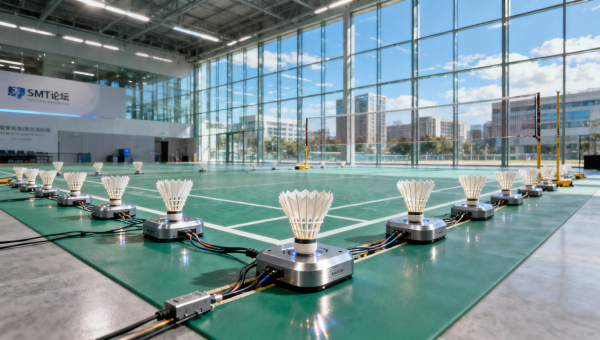
On April 17, 2026, the SMT Digital Sports New Ecosystem Forum held in Chengdu officially released the 'PopFeather AI' (Popular Feather AI) standard interface protocol. The protocol defines data formats, command sets, and secure handshake mechanisms between badminton training hardware devices and AI analytics platforms. It has been recommended by the Chinese Badminton Association and is under proposal for formal standardization at the International Telecommunication Union (ITU). Chinese equipment vendors including Shenzhen Ruiyu and Nanjing Zhixun have begun open-sourcing their SDKs to support overseas integrators.
Industries Affected
Sports Equipment Manufacturers (Hardware)
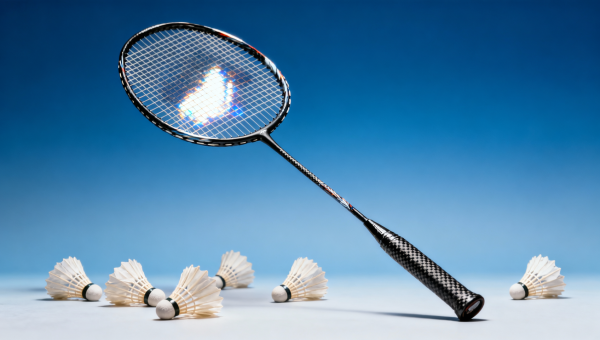
Manufacturers producing smart badminton training devices — such as shuttlecock trajectory sensors, court-mounted motion capture units, or wearable feedback tools — are directly affected because compliance with PopFeather AI may become a de facto requirement for domestic market access and export eligibility. Impact manifests in firmware architecture decisions, real-time data pipeline design, and certification timelines.
AI Analytics Platform Providers
Platforms offering performance analysis, stroke classification, or tactical simulation for badminton must adapt ingestion layers to accept standardized payloads defined by PopFeather AI. This reduces custom integration overhead but increases pressure to align with China’s domestic technical governance framework before expanding into adjacent sports verticals.
International Integration & Distribution Partners
Overseas system integrators, distributors, and education-tech resellers targeting Chinese sports academies or public training centers now face a new interoperability baseline. Adoption lowers integration risk but introduces dependency on SDK availability, documentation quality, and versioning discipline from Chinese vendors.
Sports Certification & Standards Bodies
National and regional sports equipment accreditation agencies — especially those engaged with ITU or ISO/IEC JTC 1 — may need to monitor PopFeather AI’s progression through ITU proposal stages. Its evolution could influence future test protocols for AI-assisted sports training devices beyond badminton.
What Enterprises and Practitioners Should Focus On Now
Track official status of the ITU proposal
Current ITU submission status is not publicly disclosed. Enterprises should monitor ITU Study Group 17 (SG17) meeting agendas and draft resolution documents — not just press releases — to distinguish formal standardization intent from industry advocacy.
Verify SDK scope and version control practices
While Shenzhen Ruiyu and Nanjing Zhixun have announced SDK open-sourcing, no public repository links or version history details are confirmed. Integrators should assess whether SDKs cover full protocol specifications (e.g., security handshake implementation) or only basic telemetry ingestion.
Distinguish between CBA recommendation and mandatory compliance
The Chinese Badminton Association’s recommendation does not equate to regulatory enforcement. Enterprises should avoid premature hardware redesigns unless procurement tenders or academy partnership agreements explicitly reference PopFeather AI as a selection criterion.
Assess readiness for dual-mode deployment
Given current lack of global adoption data, enterprises planning cross-border deployments may benefit from designing modular firmware that supports both legacy vendor-specific APIs and PopFeather AI — without committing fully to either until interoperability demand becomes measurable.
Editorial Perspective / Industry Observation
From an industry perspective, the release of PopFeather AI is best understood as a foundational signal — not yet an operational standard. Analysis来看, it reflects growing institutional coordination between sport governing bodies and domestic tech suppliers in defining domain-specific AI interfaces. Observation来看, its significance lies less in immediate technical novelty and more in its positioning as a potential ‘reference model’ for other racket-sport AI ecosystems (e.g., table tennis, tennis). Current more appropriate interpretation is that PopFeather AI represents an early-stage alignment effort within China’s digital sports infrastructure — one that warrants monitoring, but not wholesale architectural reengineering at this stage.
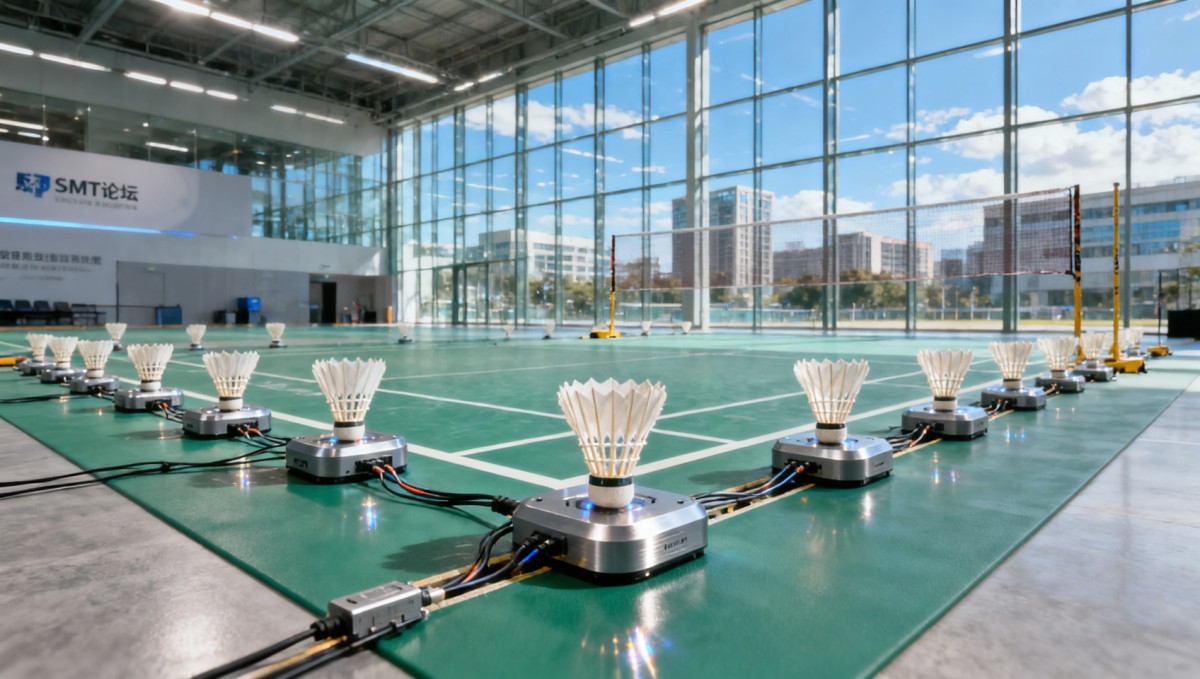
In summary, PopFeather AI introduces a structured interface framework for AI-enhanced badminton training systems. Its industry significance resides in its potential to reduce fragmentation among domestic hardware and software vendors — while also creating a new point of technical convergence for international partners. At present, it is more accurately interpreted as a coordinated industry initiative under formal standardization review, rather than an already-deployed interoperability mandate.
Source: SMT Digital Sports New Ecosystem Forum announcement (April 17, 2026); public statements from Chinese Badminton Association; vendor disclosures from Shenzhen Ruiyu and Nanjing Zhixun. Note: ITU proposal status and SDK repository details remain pending official confirmation and are subject to ongoing observation.
Search News
Hot Articles
Popular Tags
Need ExpertConsultation?
Connect with our specialized leisureengineering team for procurementstrategies.
Recommended News
 Apr 17, 2026CPSC AI Safety Alert: 200ms Delay in Child Playground AI Systems = HazardCPSC AI Safety Alert: 200ms delay in child playground AI systems = hazard. Learn how latency compliance impacts Target/Walmart listings, testing, and supply chain.● Theme Park Strategist
 Apr 17, 20262026 Shanghai Sailing Open Adopts Domestic SeaChronos Pro Timing SystemSeaChronos Pro timing system debuts at 2026 Shanghai Sailing Open — ITU-certified, millisecond-accurate, wind- and tide-integrated. A game-changer for marine sports tech.● Theme Park Strategist
 Apr 16, 2026FDA Proposes New Labeling Rules for Sports Nutrition Supplements with Chinese LabelsFDA's new labeling rules for sports nutrition supplements with Chinese labels take effect April 2026—learn compliance must-dos for U.S. importers, manufacturers & brands.● Theme Park Strategist
 Apr 15, 2026Saudi SASO Updates Amusement Ride Standards: VR Devices Now Require Mandatory EMC TestingSaudi SASO's new 2026 standard mandates EMC testing for VR amusement rides, impacting exporters. Learn key compliance strategies for Saudi market access.● Theme Park Strategist
 Apr 14, 2026Japan Mandates Multilingual E-Manuals for Fitness Equipment from April 2026Japan mandates multilingual e-manuals for fitness equipment from April 2026. Learn how this impacts manufacturers & importers with JIS T 0601-1 compliance requirements. Stay ahead of the regulation!● Theme Park Strategist
 Apr 13, 2026WTT Taiyuan Adopts Chinese AI Table Tennis Analysis System with ITTF Export CertificationWTT Taiyuan adopts Chinese AI table tennis analysis system with ITTF export certification, enabling real-time ball speed & spin tracking. A game-changer for sports tech in emerging markets like Southeast Asia & Middle East.● Theme Park Strategist
 Apr 13, 2026First Female Snooker Player Achieves Multiple Century Breaks as Chinese Table Gains WPBSA CertificationChinese snooker player Bai Yulu makes history with multiple century breaks using WPBSA-certified 'Tournament Pro X7' table, marking a milestone for Chinese manufacturing in professional snooker equipment. Discover how this impacts global markets.● Theme Park Strategist
 Apr 13, 2026RCEP Zero Tariff on China's TPU Sports Protective Gear Boosts ASEAN TradeRCEP's zero-tariff policy on China's TPU sports protective gear boosts ASEAN trade, giving Chinese exporters cost advantages over Korean rivals. Learn how manufacturers and distributors can capitalize on this opportunity.● Theme Park Strategist
 Apr 10, 2026Japan's JIS T 9001:2026 Sports Flooring Anti-Slip Standard Mandatory from April 2026Japan's JIS T 9001:2026 standard mandates anti-slip sports flooring (SCOF ≥ 0.6) from April 2026. Chinese exporters must adapt to meet new requirements. Learn key compliance strategies.● Theme Park Strategist
 Apr 10, 2026Bai Yulu Makes History at Snooker World Championship, Sparks Surge in Women's Sports Equipment DemandBai Yulu makes history at Snooker World Championship with two century breaks, sparking 185% surge in women's sports equipment demand. Discover how manufacturers, e-commerce & supply chains can capitalize on this trend.● Theme Park Strategist
 Apr 10, 20262026 Badminton Asia Championships Quarterfinals Schedule Announced, Shi Yuqi to Compete; Southeast Asia Racket Orders Face 6-8 Week Delays2026 Badminton Asia Championships quarterfinals schedule revealed with Shi Yuqi competing, while Southeast Asia faces 6-8 week racket delays. Learn how supply chain issues impact manufacturers and get strategies to navigate equipment shortages.● Theme Park Strategist
 Apr 10, 2026WTT Taiyuan Challenge Sparks Smart Equipment Demand: Japan Buyers Scrutinize AI Training TechDiscover how the WTT Taiyuan Challenge boosts demand for AI training tech as Japanese buyers evaluate smart sports equipment. Learn key opportunities for manufacturers with JIS-certified solutions.● Theme Park Strategist
 Apr 10, 2026Chinese Snooker Players' Success Spurs Global Demand for Cue AccessoriesChinese snooker players' success drives 210% global demand surge for cue accessories. Explore how manufacturers & exporters can capitalize on this trend with UK, German & Australian markets leading inquiries.● Theme Park Strategist
 Apr 10, 2026EU Updates EN 16830:2026 Eyewear Safety Standard, Impacting China's Sports Goggle ExportsEU's updated EN 16830:2026 eyewear safety standard impacts China's sports goggle exports with stricter CE certification requirements. Learn how manufacturers and exporters can adapt to new impact resistance, UV400+, and blue light blocking standards before the September 2026 deadline.● Theme Park Strategist
 Apr 18, 2026PopFeather AI Standard Launched at SMT Forum in ChengduPopFeather AI standard launched at SMT Forum in Chengdu — a breakthrough for AI-powered badminton training interoperability. Discover how this new interface protocol reshapes sports tech integration for manufacturers, AI platforms & global partners.● Theme Park Strategist
 Apr 18, 2026CPSC AI Safety Alert: >200ms Delay = Substantial HazardCPSC AI Safety Alert: >200ms latency = Substantial Hazard for indoor play equipment. Critical for exporters, ODMs & AI module suppliers targeting US markets.● Theme Park Strategist
 Apr 18, 2026Inclusive playground handrails: Are height and grip diameter truly standardized across brands?Inclusive playground handrails: Discover if height & grip diameter truly meet ADA/EN standards—get verified OEM data, real-world benchmarks, and compliant sourcing for leisure parks, theme park rides & more.● Theme Park Strategist
 Apr 18, 2026Soundproofing materials for indoor playgrounds: Which types actually reduce impact noise?Soundproofing materials for indoor playgrounds that actually reduce impact noise—tested for swings, structures & inclusive play. Expert OEM/ODM sourcing.● Theme Park Strategist
 Apr 18, 2026Inclusive playground surfacing: Is rubber mulch still the safest bet in 2026?Inclusive playground surfacing insights for leisure parks, theme park rides & playground structures—compare rubber mulch vs. PIP/EWFP for 2026 ADA/EN1176 compliance.● Theme Park Strategist
 Apr 18, 2026Soundproofing materials in theme parks: Are decibel claims realistic?Soundproofing materials for theme parks: Are decibel claims realistic? Explore verified performance data for playground swings, rides, hotel beds, custom furniture & more.● Theme Park Strategist
 Apr 18, 2026Trampoline park mesh tension: Why inconsistent testing leads to early wearTrampoline park mesh tension inconsistencies cause early wear & safety risks—discover why rigorous testing matters for indoor playgrounds, adventure playgrounds, and arcade games.● Theme Park Strategist
 Apr 18, 2026Indoor playground maintenance logs: What most operators miss in daily checksIndoor playground maintenance logs reveal critical blind spots in trampoline parks, adventure playgrounds & arcade games—discover what operators miss daily.● Theme Park Strategist
 Apr 18, 2026Trampoline park insurance premiums: What triggers a 20%+ increase?Trampoline park insurance premiums surge 20%+ due to verifiable risks—discover how indoor playground, adventure playground, and arcade games procurement choices directly impact your coverage costs.● Theme Park Strategist
 Apr 17, 2026Indoor playground flooring: Rubber tiles vs poured-in-placeIndoor playground flooring guide: Compare rubber tiles vs poured-in-place for trampoline parks, adventure playgrounds & arcade games—safety, ROI & design insights.● Theme Park Strategist