FDA Drafts New Labeling Rule for Chinese-Language Sports Supplements
On April 17, 2026, the U.S. Food and Drug Administration (FDA) released a draft guidance titled Dietary Supplement Labeling Guidance, proposing new requirements for Chinese-language labels on sports nutrition dietary supplements exported to the U.S. This development is especially relevant for Health & Wellness OEM manufacturers in China, contract packagers, and U.S.-bound supplement importers — as it introduces a formal translation validation step with direct implications for labeling compliance, packaging timelines, and supply chain cost structures.
Event Overview
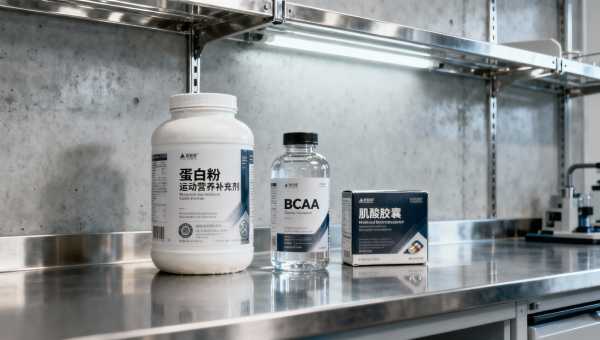
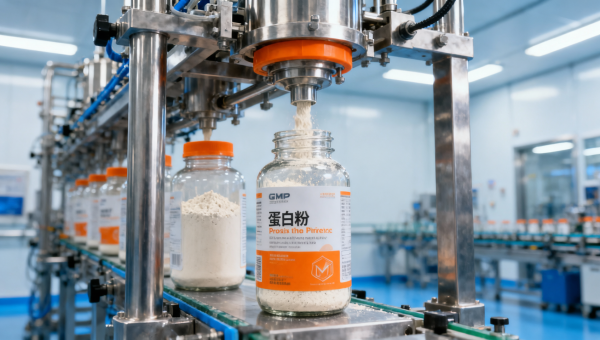
On April 17, 2026, the FDA published the Dietary Supplement Labeling Guidance (Draft) for public comment. The draft proposes that any sports nutrition dietary supplement marketed in the U.S. with Chinese-language labeling — including products such as whey protein powders, branched-chain amino acid (BCAA) formulations, and electrolyte effervescent tablets — must use Chinese text translated by an FDA-recognized translation service provider. Further, the label must display a visible ‘FDA-Approved Translation ID’ at the bottom of the Chinese section. As of this publication, the document remains in draft form and is subject to revision following stakeholder feedback.
Industries Affected
Direct Exporters & U.S.-Bound Trading Companies
These entities often manage final label design, regulatory submission, and customs clearance. Under the draft rule, they would be responsible for selecting and contracting FDA-recognized translation providers — adding a new verification layer before label approval and product release. Impact includes extended time-to-market for Chinese-labeled SKUs and potential rework if translations are rejected during FDA review or post-market inspection.
OEM/ODM Manufacturers in China
Health & Wellness OEM facilities producing for U.S. brands frequently handle multilingual packaging execution. The draft requirement shifts translation accountability from brand owners to the manufacturing site when Chinese labels are applied pre-shipment. This may necessitate revised quality agreements, updated internal SOPs for label proofing, and added documentation for audit readiness — particularly for facilities undergoing FDA inspections or third-party GMP audits.
Supply Chain & Labeling Service Providers
Contract label printers, packaging designers, and regulatory consultants supporting U.S.-focused supplement clients will need to verify whether their translation partners are listed (or applying to be listed) in FDA’s forthcoming registry. Absence of recognized status could delay label approvals or trigger client requests for alternate vendors — affecting service continuity and contractual scope.
What Stakeholders Should Monitor and Do Now
Track official updates and the finalization timeline
The draft is open for public comment; stakeholders should monitor the Federal Register docket and FDA’s Dietary Supplement Program updates for revisions, effective dates, and any phased implementation schedule. Final guidance may differ significantly from the current draft — especially regarding scope exclusions, grandfathering provisions, or transition periods.
Identify high-risk SKUs and labeling workflows
Companies should audit current and planned product lines containing Chinese-language labeling — especially those targeting bilingual consumer segments or sold via e-commerce platforms with localized interfaces. Prioritize review of labels used on protein powders, BCAA blends, and electrolyte products, as these are explicitly cited in the draft.
Distinguish between policy signal and operational mandate
This is a draft guidance — not a regulation or enforceable standard. It signals FDA’s growing focus on multilingual label accuracy but does not yet carry legal force. Companies should avoid premature capital investment (e.g., signing exclusive translation contracts) until the agency confirms recognition criteria and publishes the list of approved providers.
Prepare internal alignment and vendor coordination
Regulatory, QA, packaging, and procurement teams should jointly map current label sourcing practices. Where Chinese translations are outsourced, begin preliminary due diligence on translation vendors’ capacity to pursue FDA recognition — including documentation systems, subject-matter expertise in sports nutrition terminology, and experience with FDA-facing submissions.
Editorial Perspective / Industry Observation
From an industry perspective, this draft guidance is best understood as a regulatory signal — not an imminent compliance deadline. Analysis来看, it reflects FDA’s broader effort to strengthen oversight of non-English labeling in response to rising consumer complaints and misbranding findings in imported dietary supplements. Observation来看, the inclusion of specific product categories (e.g., BCAA, electrolyte tablets) suggests targeted scrutiny rather than blanket application across all supplement types. Current more appropriate interpretation is that FDA is testing stakeholder readiness for structured translation governance — especially where language-specific claims or usage instructions could impact safety or efficacy perception.
It is not yet clear whether the ‘FDA-Approved Translation ID’ will link to a public database, require annual renewal, or apply retroactively to existing SKUs. These details remain pending, and industry should treat the current version as preparatory — not prescriptive.
Conclusion
This draft guidance marks an early-stage shift toward formalized accountability for multilingual supplement labeling in the U.S. market. While it does not yet impose binding obligations, it introduces a new dimension of regulatory diligence for exporters, manufacturers, and service providers engaged in Chinese-language labeling. For now, the most rational interpretation is that this is a procedural warning — prompting proactive alignment, not immediate operational overhaul.
Source Attribution
Main source: U.S. FDA, Dietary Supplement Labeling Guidance (Draft), issued April 17, 2026. Status: Open for public comment; no final version published as of this article’s date. Ongoing observation is required for FDA’s official recognition framework for translation providers, which has not yet been released.
Search News
Hot Articles
Popular Tags
Need ExpertConsultation?
Connect with our specialized leisureengineering team for procurementstrategies.
Recommended News
 Apr 20, 2026Guangdong vs. Shanxi CBA Game Highlights Domestic Smart Arena LightingGuangdong vs. Shanxi CBA game spotlighted China-made smart arena lighting—FIBA-certified, broadcast-ready LED system with <0.1s dimming & 5600K stability.● Pro Audio Engineer
 Apr 20, 2026NES Launches Sports Community Curator ProgramSports Community Curator program launched by NES — join global fitness studios, uni clubs & outdoor groups to co-create, test gear & grow with Chinese sports brands.● Theme Park Strategist
 Apr 20, 2026Snooker World Championship: Xiao Guodong Secures Third Chinese SpotSnooker World Championship: Xiao Guodong secures third Chinese spot amid AI officiating & 4K HDR broadcast — tech and talent converge in elite cue sports.● Pro Audio Engineer
 Apr 20, 2026FDA Proposes Chinese Label Translation Requirements for Sports SupplementsFDA proposes Chinese label translation requirements for sports supplements—key for importers, manufacturers & global brands. Act now to ensure compliance by Jan 2027.● Pro Audio Engineer
 Apr 20, 2026China's Smart Timing System Gains ITU Certification at Shanghai Bike EventChina's smart timing system wins ITU-T L.1800 certification — the first Chinese sports timing platform approved for UCI-accredited cycling events. Discover how it reshapes reliability, security & global competitiveness in sports tech.● Theme Park Strategist
 Apr 20, 20262026 Shanghai Smart Campus Expo: VR EdTech Gains ITU & ISO/IEC Dual CertificationVR EdTech gains ITU & ISO/IEC dual certification at 2026 Shanghai Smart Campus Expo—key for global edtech exporters, procurement agencies & VR integrators.● Institutional Buyer
 Apr 20, 2026Global VR Fitness Device Export Price Up 12% in Q1 2026VR fitness device export prices surged 12% in Q1 2026—discover key drivers, regional impacts, and strategic actions for exporters, suppliers & logistics partners.● Theme Park Strategist
 Apr 20, 2026SASO Updates VR Haptic Device EMC Standard to Class B in Saudi ArabiaSASO VR haptic device EMC update: Class B standard now mandatory in Saudi Arabia from July 1, 2026. Ensure compliance for VR/AR hardware, imports & venues.● Theme Park Strategist
 Apr 20, 2026Vietnam TUV SUD Enforces Local Type Test for Commercial VR Fitness CabinsVietnam TUV SUD now mandates local type testing for commercial VR fitness cabins — including latency, EMC & safety checks. Act now to secure QCVN compliance and market access.● Theme Park Strategist
 Apr 20, 2026US CPSC Alert: PFAS in Fitness Apparel May Delay US Import ClearancePFAS in fitness apparel may delay US import clearance—learn how the Texas AG probe & CPSC alert impact compliance, testing, and supply chains now.● Luxury Retail Analyst
 Apr 17, 2026CPSC AI Safety Alert: 200ms Delay in Child Playground AI Systems = HazardCPSC AI Safety Alert: 200ms delay in child playground AI systems = hazard. Learn how latency compliance impacts Target/Walmart listings, testing, and supply chain.● Theme Park Strategist
 Apr 17, 2026Popular Badminton AI Protocol Launched in ChengduPopular Badminton AI protocol launched in Chengdu — a game-changer for smart sports hardware, VR simulators & outdoor ride manufacturers targeting Asian youth academies.● Theme Park Strategist
 Apr 17, 20262026 Shanghai Sailing Open Adopts Domestic SeaChronos Pro Timing SystemSeaChronos Pro timing system debuts at 2026 Shanghai Sailing Open — ITU-certified, millisecond-accurate, wind- and tide-integrated. A game-changer for marine sports tech.● Theme Park Strategist
 Apr 17, 2026Global VR Fitness Equipment Export Prices Rise 12% in Q1 2026VR fitness equipment export prices surge 12.3% in Q1 2026—key insights for exporters, manufacturers & supply chain partners on compliance, pricing, and delivery trends.● Theme Park Strategist
 Apr 17, 2026JIS T 0601-2-77:2026 Enforces Stricter Laser Limits for Stage Equipment in JapanJIS T 0601-2-77:2026 enforces stricter laser limits for stage equipment in Japan — 35% lower MPE, AI beam monitoring required. Act now to comply.● Pro Audio Engineer
 Apr 17, 2026FDA Drafts New Labeling Rule for Chinese-Labeled Sports SupplementsFDA's new draft rule for Chinese-labeled sports supplements mandates certified English translations—key for brands, CMOs & importers navigating U.S. market entry.● Pro Audio Engineer
 Apr 17, 20262026 Shanghai Smart Campus Expo: VR Teaching Devices Gain ITU & ISO/IEC Dual CertificationVR teaching devices with ITU & ISO/IEC dual certification headline the 2026 Shanghai Smart Campus Expo—unlock global edtech tenders now.● Institutional Buyer
 Apr 17, 2026SASO 2891:2026 Updated: VR Haptic Devices Now Require EMC Class B in Saudi ArabiaSASO 2891:2026 update mandates EMC Class B for VR haptic devices in Saudi Arabia — critical for OEMs, exporters & EdTech suppliers. Act now to avoid delays!● Theme Park Strategist
 Apr 17, 2026Vietnam TUV SUD Mandates Local Type Testing for VR Fitness CabinsVR fitness cabins for gyms & hotels in Vietnam now require local type testing—EMC, thermal, and AI fall detection—to obtain VIEC certification. Act now to avoid delays!● Theme Park Strategist
 Apr 17, 2026EN 1176-7:2026 Enforced: AI Behavior Recognition Required for EU Outdoor Interactive Play EquipmentEN 1176-7:2026 is now enforced — AI behavior recognition is mandatory for EU outdoor interactive play equipment. Ensure CE compliance now.● Theme Park Strategist
 Apr 16, 2026Vietnam's New Regulation: Commercial VR Fitness Pods Must Undergo Local TUV SUD TestingVietnam's new regulation mandates TUV SUD testing for commercial VR fitness pods from April 2026, impacting exporters with 23% higher costs and 18-day delays. Learn key compliance strategies.● Luxury Retail Analyst
 Apr 16, 2026SASO Updates Amusement Ride Standards: EMC Testing Now Mandatory for VR Fitness EquipmentSASO's new 2770:2026 standard mandates EMC testing for VR fitness equipment in Saudi Arabia. Learn how this impacts manufacturers, importers & certification services. Stay compliant with latest amusement ride regulations.● Luxury Retail Analyst
 Apr 16, 2026JIS T 0601-2-77:2026 Enforces New Audience Laser Limits in JapanJIS T 0601-2-77:2026 enforces strict new audience laser limits in Japan — ≤1.0 mW/cm² (0.25s). Critical for pro audio, stage lighting & laser exporters. Act now to ensure compliance.● Pro Audio Engineer
 Apr 16, 2026EN 1176-7:2026 Enforces AI Safety Rules for EU Outdoor Interactive Play EquipmentEN 1176-7:2026 enforces AI safety rules for EU outdoor interactive play equipment — mandatory false-trigger ≤0.3% & local-only data processing. Act now to comply.● Theme Park Strategist