2026 Shanghai Sailing Open Adopts ITU-Certified Chinese Timing System
On April 16, 2026, the Shanghai Sailing Open concluded its first edition fully powered by a domestically developed intelligent timing system — marking a milestone for China’s high-precision sports technology infrastructure. This development is of immediate relevance to precision instrumentation manufacturers, international sports event suppliers, maritime technology exporters, and certification service providers — as it signals formal recognition of Chinese timing solutions in global elite sailing governance frameworks.
Event Overview
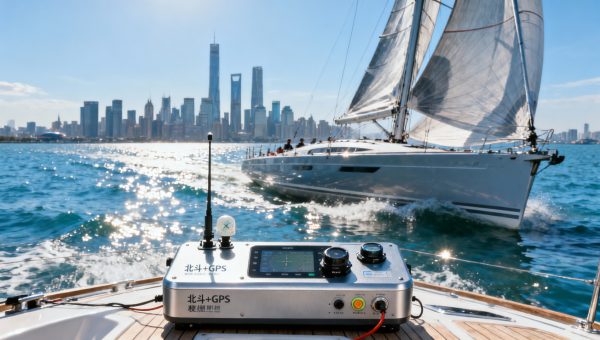
The 2026 Shanghai Sailing Open, held through April 16, 2026, deployed a国产 intelligent timing system across all race operations. The system integrates BeiDou + GPS dual-mode positioning, AI-powered false-start detection, and wind-speed adaptive calibration. It has received joint certification from World Sailing and the International Telecommunication Union (ITU), and holds ISO/IEC 17065 accreditation under ITU’s conformity assessment framework — making it the first Chinese赛事 timing solution to achieve this specific ITU certification. As confirmed in official reports, national sailing associations from Oman, Croatia, and New Zealand have expressed procurement intent.
Industries Affected
Precision Timing Equipment Manufacturers
Manufacturers producing timing hardware for aquatic or outdoor sports face renewed competitive dynamics: the ITU/World Sailing validation establishes a new benchmark for technical compliance in international sailing events. Impact manifests in tender eligibility — especially for federations requiring ISO/IEC 17065–accredited systems — and may shift procurement weight toward vendors with traceable conformity assessment pathways, not just performance specifications.
Sports Technology Exporters & Trade Service Providers
Exporters engaged in marine sports tech face both opportunity and complexity. The procurement interest from Oman, Croatia, and New Zealand reflects early market validation — but ITU certification does not automatically equate to national regulatory acceptance. Impact centers on documentation readiness: exporters must now align technical files, test reports, and quality management evidence with ITU’s ISO/IEC 17065 requirements, not just generic CE or FCC declarations.
Certification & Conformity Assessment Agencies
Accredited bodies offering ISO/IEC 17065 services — particularly those with ITU designation — may see increased demand for sports timing system evaluations. The precedent sets a template: ITU’s involvement in a non-telecom domain (sports timing) expands its scope beyond traditional ICT equipment. Impact lies in workload diversification and potential need to develop domain-specific evaluation criteria for real-time sports measurement systems.
Event Organizers & National Sailing Federations
Federations planning future World Sailing-sanctioned regattas now have a certified domestic alternative for timing infrastructure. While adoption remains voluntary, impact appears in risk mitigation: reliance on single-source foreign suppliers may be re-evaluated where certified local alternatives exist — especially amid supply chain volatility or geopolitical constraints on cross-border equipment deployment.
What Relevant Enterprises or Practitioners Should Focus On
Monitor Official Certification Scope & Validity Period
ITU’s ISO/IEC 17065 accreditation applies specifically to this timing system’s defined configuration and software version. Stakeholders should track whether updates (e.g., firmware patches, AI model retraining) trigger re-certification requirements — as confirmed by the certifying body, not vendor statements alone.
Track Procurement Intent Into Binding Agreements
The expressions of interest from Oman, Croatia, and New Zealand remain non-binding. Companies involved in export planning should prioritize verification of formal tender timelines, funding approvals, and local import regulatory pathways — rather than treating procurement intent as de facto market entry.
Distinguish Between ITU Accreditation and World Sailing Endorsement
ITU’s role here is conformity assessment accreditation; World Sailing’s involvement confirms sport-specific functional suitability. Stakeholders must avoid conflating the two: ITU certification enables eligibility, but final race-day approval remains under World Sailing’s technical delegates — whose operational protocols (e.g., redundancy requirements, manual override procedures) are separate from certification scope.
Prepare Documentation Alignment for Third-Party Evaluation
Suppliers seeking similar certification should begin aligning internal quality records, calibration logs, and AI model validation reports with ISO/IEC 17065 Annex A requirements — particularly clauses on impartiality, confidentiality, and technical competence demonstration — well before engaging an ITU-accredited body.
Editorial Perspective / Industry Observation
Observation shows this milestone is best understood as a procedural signal — not yet an established market shift. The ITU/World Sailing certification validates technical compliance against defined standards, but does not guarantee widespread replacement of incumbent timing vendors in major regattas. From an industry perspective, its significance lies in opening a formally recognized pathway for non-Western timing systems into elite sailing’s technical supply chain. Current attention should focus less on immediate displacement and more on how certification frameworks evolve to accommodate AI-integrated, environment-adaptive sports measurement tools — a trend likely to extend beyond sailing into triathlon, rowing, and drone racing.
Conclusion: This event marks the first verified instance of a Chinese-developed timing system meeting ITU’s ISO/IEC 17065 requirements for international sports use. It does not indicate broad market adoption, nor does it replace existing global timing standards — but it does confirm that formal technical gateways for Chinese precision sports infrastructure now exist within internationally accepted conformity frameworks. For stakeholders, it is more appropriately understood as a threshold-crossing moment in certification accessibility — not yet a tipping point in global supply chain composition.
Source: Official announcements from the 2026 Shanghai Sailing Open organizing committee and World Sailing’s public certification notices. Note: Procurement intent from Oman, Croatia, and New Zealand remains preliminary; binding contracts and delivery timelines are pending confirmation.
Search News
Hot Articles
Popular Tags
Need ExpertConsultation?
Connect with our specialized leisureengineering team for procurementstrategies.
Recommended News
 Apr 20, 2026Snooker World Championship: Xiao Guodong Secures Third Chinese SpotSnooker World Championship: Xiao Guodong secures third Chinese spot amid AI officiating & 4K HDR broadcast — tech and talent converge in elite cue sports.● Pro Audio Engineer
 Apr 20, 2026FDA Proposes Chinese Label Translation Requirements for Sports SupplementsFDA proposes Chinese label translation requirements for sports supplements—key for importers, manufacturers & global brands. Act now to ensure compliance by Jan 2027.● Pro Audio Engineer
 Apr 17, 2026FDA Drafts New Labeling Rule for Chinese-Labeled Sports SupplementsFDA's new draft rule for Chinese-labeled sports supplements mandates certified English translations—key for brands, CMOs & importers navigating U.S. market entry.● Pro Audio Engineer
 Apr 16, 20262026 Yangtze River Delta Triathlon Uses Certified Chinese Timing System2026 Yangtze River Delta Triathlon uses certified Chinese timing system — ChronoLink Pro, ITU-approved RFID+GPS dual-mode solution for global race organizers.● Pro Audio Engineer
 Apr 13, 2026Asian University Basketball League Secures Funding, Launches Smart Venue ProgramThe Asian University Basketball League (AUBL) secures Series A funding and launches its Smart Venue Program, partnering with tech firms for sustainable sports infrastructure. A key opportunity for sports tech exporters with ISO 50001 certification.● Pro Audio Engineer
 Apr 19, 20262026 Shanghai Sailing Open Adopts ITU-Certified Chinese Timing System2026 Shanghai Sailing Open adopts ITU-certified Chinese timing system — a breakthrough for precision sports tech exporters, certifiers & event organizers.● Pro Audio Engineer
 Apr 20, 2026What Causes Early Failure in Pro Audio Equipment?Pro audio equipment fails early due to heat, dust, unstable power, and weak components. Learn how musical instruments, instrument cables, music accessories, and sourcing choices affect reliability.● Pro Audio Engineer
 Apr 20, 2026Instrument Cables: Shielding, Durability, and the Price Gap ExplainedInstrument cables guide for buyers of pro audio equipment and music accessories across musical instruments, string instruments, keyboard instruments, percussion instruments, wind instruments, and orchestral instruments.● Pro Audio Engineer
 Apr 20, 2026Pro Audio Equipment Upgrades That Improve Sound Without OverspendingPro audio equipment upgrades for musical instruments: improve sound with instrument cables, music stands, and music accessories for keyboard, percussion, wind, string, and orchestral instruments—without overspending.● Pro Audio Engineer
 Apr 20, 2026Instrument Cables: Why Cheap Options Often Fail During Live UseInstrument cables for musical instruments often fail live when cheap builds meet pro audio equipment demands. Compare smarter options for string, wind, percussion, and keyboard instruments.● Pro Audio Engineer
 Apr 18, 2026Instrument cables with gold-plated connectors: Do they improve tone—or just resale value?Instrument cables with gold-plated connectors boost reliability & resale value in theme parks, leisure parks, and hotels—proven for soundproofing, playground structures, and catering equipment.● Pro Audio Engineer
 Apr 18, 2026Instrument cables that degrade mid-show—what causes sudden signal drop?Instrument cables failing mid-show? Discover why—bending fatigue, EMI, corrosion & thermal stress—in theme parks, hotels, playgrounds & leisure venues.● Pro Audio Engineer
 Apr 17, 2026Pro stage audio setups where music accessories become acoustic liabilitiesDiscover how commercial furniture, playground borders, sensory playground gear & music accessories impact acoustic safety—avoid liability in pro audio environments.● Pro Audio Engineer
 Apr 16, 2026Pro stage audio gear warranties: What ‘lifetime’ really covers when used in hospitality venuesPro audio equipment & designer eyewear warranties decoded for hotels. See what ‘lifetime’ really covers—OEM manufacturing, custom fabrication, supply chain solutions & more.● Pro Audio Engineer
 Apr 16, 2026Recording studio gear sourcing: Why local compliance often overrides ‘best-in-class’ specsRecording studio gear sourcing for luxury spaces: compliance-first pro audio equipment, designer eyewear integration, and OEM manufacturing solutions—avoid costly delays.● Pro Audio Engineer
 Apr 16, 2026Pro audio equipment for boutique hotels: Why studio-grade gear doesn’t always translate to lobby soundPro audio equipment for boutique hotels must integrate with hotel furniture, designer eyewear & jewelry displays—discover why studio gear fails and how custom fabrication + supply chain solutions deliver sonic & material harmony.● Pro Audio Engineer
 Apr 16, 2026DJ equipment brands prioritizing repairability over replacementDJ equipment brands leading in repairability—trusted alongside luxury furniture, orchestral instruments, music stands & park benches for sustainable, high-ROI commercial procurement.● Pro Audio Engineer
 Apr 15, 2026DJ equipment setups that scale from club nights to festivalsDiscover scalable DJ equipment for clubs & festivals—engineered like luxury furniture, orchestral instruments & music stands. Premium, certified, ready to grow with your venue.● Pro Audio Engineer
 Apr 15, 2026Pro stage audio cabinets tested for 90dB+ continuous playback — not just peaksCommercial furniture & amusement equipment: Pro audio cabinets tested for 90dB+ continuous playback—ideal for sensory playgrounds, hotels, and educational supplies.● Pro Audio Engineer
 Apr 13, 2026Microphone systems for multi-room venues: why one-size-fits-all doesn’t workMicrophone systems for multi-room venues—optimized for hotel desks, commercial playgrounds, trampoline park manufacturer needs & hospitality furniture integration.● Pro Audio Engineer
 Apr 13, 2026Microphone systems for outdoor stages: wind noise reduction that actually worksMicrophone systems engineered for outdoor stages—wind noise reduction that works. Trusted by trampoline park manufacturers, commercial playground & hospitality venues.● Pro Audio Engineer
 Apr 13, 2026Recording studio gear service networks: Why local support beats global warranty claimsRecording studio gear, pro audio equipment & indoor playground equipment demand local service—not global warranties. Faster repairs, OEM manufacturing alignment, and supply chain solutions ensure zero downtime for hotels, studios & leisure venues.● Pro Audio Engineer
 Apr 13, 2026Custom fabrication for studio control rooms: When millwork delays derail your launchCustom fabrication for studio control rooms—critical for pro audio equipment, hotel furniture & indoor playground equipment. Discover supply chain solutions that prevent costly launch delays.● Pro Audio Engineer
 Apr 13, 2026Pro audio equipment for hybrid spaces: Why acoustic load matters more than wattagePro audio equipment for hybrid spaces: Discover why acoustic load—not wattage—ensures reliability in hotel furniture, indoor playground equipment & OEM manufacturing.● Pro Audio Engineer