Guangdong vs. Shanxi CBA Game Highlights Domestic Smart Arena Lighting
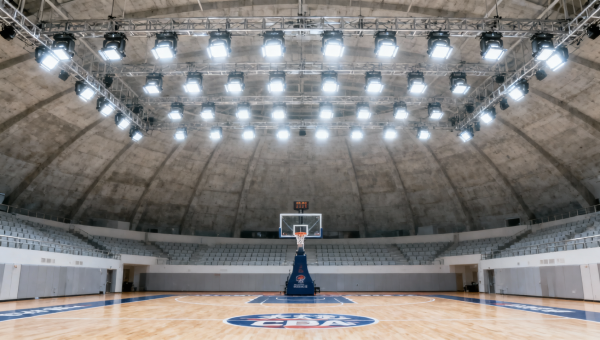
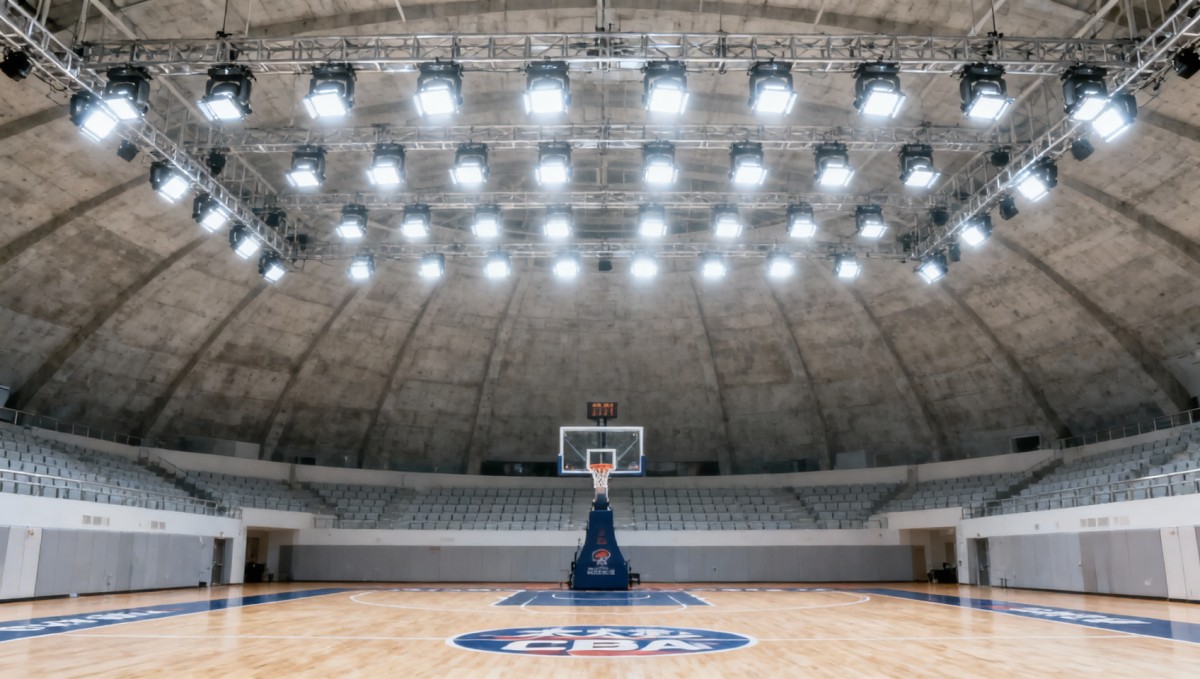
On April 20, 2026, during the CBA regular-season match between Guangdong and Shanxi at Taiyuan Binhe Sports Center, a domestically developed intelligent LED arena lighting system was deployed for live broadcast support — marking a verified operational milestone for Chinese-made sports venue lighting meeting international broadcast standards. This event signals relevance for lighting manufacturers, sports infrastructure integrators, broadcast technology providers, and stadium operations stakeholders.
Event Overview
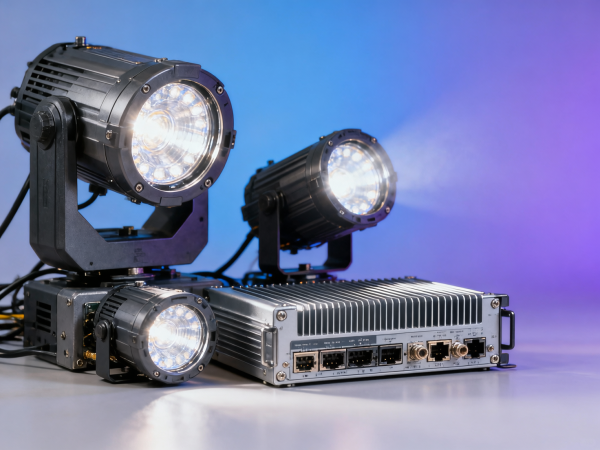
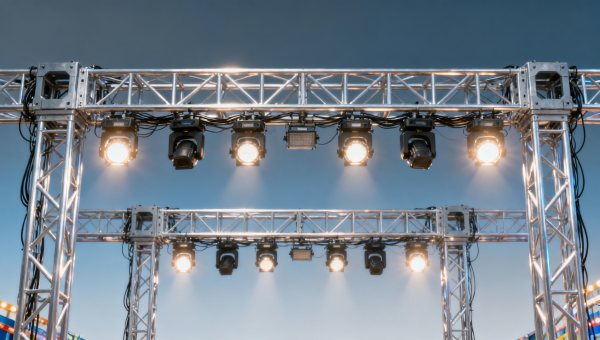
On the evening of April 20, 2026, the CBA regular-season game between Guangdong Southern Tigers and Shanxi Loongs was held at Taiyuan Binhe Sports Center. The venue utilized a domestically produced intelligent LED arena lighting system. According to publicly disclosed information, the system achieved sub-0.1-second dimming response time and maintained color temperature stability at 5600K ±50K. It has passed IESNA LM-79/LM-80 testing and received FIBA certification, confirming compatibility with broadcast illumination requirements for NBA, CBA, and FIBA-tier competitions.
Impact on Specific Industry Segments
LED Lighting Manufacturers (OEM/ODM)
This deployment validates performance benchmarks previously associated mainly with imported systems — particularly rapid-response dimming and tight spectral consistency under dynamic load. Manufacturers may face increased technical scrutiny in tender documents for future sports venues, especially where broadcast-grade lighting is specified. Competitive differentiation will increasingly hinge on verifiable third-party test reports (e.g., LM-79/80) rather than nominal specifications alone.
Sports Infrastructure Integrators & EPC Contractors
Integrators involved in arena upgrades or new builds must now treat lighting not as a standalone utility but as a broadcast-critical subsystem requiring interoperability verification. The case demonstrates that domestic systems can meet FIBA-level requirements — potentially reducing reliance on foreign-sourced fixtures in mid-tier venues. However, integration workflows must now include pre-commissioning validation against broadcast lighting metrics (e.g., uniformity, glare index, temporal light modulation), not just photometric compliance.
Broadcast Technology Providers & OB Van Operators
Camera operators and remote production teams benefit from stable, flicker-free illumination — but only if lighting control protocols (e.g., DALI, DMX, or proprietary APIs) are fully documented and tested prior to event day. This instance confirms that domestic systems can deliver broadcast-ready output; however, interoperability assurance remains a shared responsibility across lighting vendors, integrators, and broadcast engineers.
Venue Operations & Facility Management Teams
For arena operators managing multi-use facilities (sports, concerts, exhibitions), intelligent lighting systems introduce new maintenance considerations: firmware update cycles, sensor calibration schedules, and log-based diagnostics for luminous decay tracking. Unlike legacy HID systems, LED-based broadcast lighting requires proactive data-driven upkeep to sustain certified performance over time.
Key Considerations for Enterprises and Practitioners
Monitor Certification Pathways and Tender Language Evolution
From industry perspective, upcoming public tenders for provincial or municipal sports centers may begin referencing FIBA lighting standards or LM-80 lifetime reporting as mandatory clauses — not optional preferences. Track updates to China’s GB/T standards related to sports venue lighting, especially revisions aligning with FIBA’s Lighting Guidelines for Indoor Sports Facilities.
Verify Interoperability Documentation Before Procurement
Current more relevant than theoretical capability is documented proof of protocol compatibility — e.g., whether the lighting system supports standard broadcast synchronization signals (e.g., genlock-capable dimming, timecode-triggered scenes). Procurement teams should require test reports demonstrating real-time response under simulated broadcast switching conditions, not just static lab measurements.
Distinguish Between Certification and Operational Readiness
Analysis shows FIBA certification confirms laboratory-measured optical performance under controlled conditions — it does not guarantee seamless integration into existing venue BMS or resilience under real-world power fluctuations or thermal load cycling. Site-specific commissioning and stress-testing remain essential, regardless of certification status.
Prepare for Expanded Maintenance Protocols
Manufacturers and facility managers should jointly develop maintenance SOPs covering firmware version control, photometric recalibration intervals, and log-review procedures for lumen depreciation trends. Unlike traditional lamps, LED lighting performance degradation is gradual and non-linear — requiring data-informed intervention timing rather than fixed replacement cycles.
Editorial Perspective / Industry Observation
Observation suggests this deployment functions primarily as a validation signal — not yet a market inflection point. While technically confirmed, widespread adoption hinges less on capability demonstration and more on procurement confidence, lifecycle cost transparency, and service network maturity. From industry angle, the significance lies not in displacement of imports, but in raising the baseline expectation for domestic systems across Tier-2 and Tier-3 sports venues. Continued observation is warranted on whether similar deployments occur in non-CBA venues (e.g., university arenas, provincial games facilities) within the next 12 months — which would indicate broader institutional acceptance.
Concluding, this event reflects incremental progress in domestic high-performance sports lighting — one validated use case, not systemic transformation. It is better understood as evidence of technical readiness entering early operational deployment, rather than a shift in procurement norms or supply chain structure. Stakeholders should treat it as a reference point for capability assessment — not a trigger for immediate strategic pivot.
Source: Publicly announced deployment details from CBA league communications and venue operator disclosures (Taiyuan Binhe Sports Center), including cited test standards (IESNA LM-79/LM-80, FIBA certification). No additional technical specifications or commercial terms were confirmed or disclosed beyond those stated.
Search News
Hot Articles
Popular Tags
Need ExpertConsultation?
Connect with our specialized leisureengineering team for procurementstrategies.
Recommended News
 Apr 20, 2026Guangdong vs. Shanxi CBA Game Highlights Domestic Smart Arena LightingGuangdong vs. Shanxi CBA game spotlighted China-made smart arena lighting—FIBA-certified, broadcast-ready LED system with <0.1s dimming & 5600K stability.● Pro Audio Engineer
 Apr 17, 2026JIS T 0601-2-77:2026 Enforces Stricter Laser Limits for Stage Equipment in JapanJIS T 0601-2-77:2026 enforces stricter laser limits for stage equipment in Japan — 35% lower MPE, AI beam monitoring required. Act now to comply.● Pro Audio Engineer
 Apr 16, 2026JIS T 0601-2-77:2026 Enforces New Audience Laser Limits in JapanJIS T 0601-2-77:2026 enforces strict new audience laser limits in Japan — ≤1.0 mW/cm² (0.25s). Critical for pro audio, stage lighting & laser exporters. Act now to ensure compliance.● Pro Audio Engineer
 Apr 18, 2026JIS T 0601-2-77:2026 Enforces Tighter Laser Brightness Limits in JapanJIS T 0601-2-77:2026 enforces tighter laser brightness limits in Japan—35% stricter + instantaneous peak detection. Critical for stage laser exporters, integrators & distributors.● Pro Audio Engineer
 Apr 17, 2026Stage lighting truss compatibility issues nobody checks before ordering hotel equipmentAvoid costly rework: Verify stage lighting truss compatibility with hotel equipment, amusement equipment, sensory playgrounds & commercial furniture—before you order.● Pro Audio Engineer
 Apr 15, 2026Stage lighting truss systems that ship pre-aligned — no on-site calibrationPre-aligned stage lighting truss systems for amusement equipment, sensory playgrounds & hotel entertainment — zero on-site calibration, certified safety & rapid deployment.● Pro Audio Engineer
 Apr 13, 2026Stage equipment rentals vs. buying: when the break-even point surprises youStage equipment rentals vs. buying? Discover when renting hotel desks, commercial playgrounds, microphone systems & more slashes TCO by 37–52%—get your free break-even analysis now!● Pro Audio Engineer
 Apr 13, 2026Stage equipment rigging specs—why ‘rated for 500kg’ doesn’t mean safe for your trussStage equipment rigging specs matter—especially for trampoline park manufacturers, commercial playgrounds & hospitality furniture. Don’t trust '500kg rated' labels alone.● Pro Audio Engineer
 Apr 04, 2026Stage Lighting & Truss Projects Often Depend on Office Supplies Manufacturer Fasteners — Here’s Why They FitOffice supplies manufacturer fasteners trusted by stage lighting & truss projects—precision, ISO-certified, and B2B-ready. Discover top office supplies supplier, OEM, and exporter solutions.● Pro Audio Engineer
 Mar 30, 2026Amusement park lighting projects stall at the dimming curve—not the fixtureCommercial sourcing for amusement park lighting, playground development & compliance—solve dimming curve bottlenecks before procurement. Expert OEM/ODM insights.● Pro Audio Engineer
 Mar 30, 2026Why commercial sourcing for amusement park lighting rarely delivers on photometric specscommercial sourcing for amusement park lighting often fails photometric specs—risking playground compliance, safety & ROI. Discover why OEM-certified solutions outperform generic hotel restaurant furniture, ride parts & electronic music gear.● Pro Audio Engineer
 Mar 27, 2026How stage lighting & truss projects avoid 4–6 week delays using integrated supply chain solutions with real-time trackingDiscover how integrated supply chain solutions, OEM manufacturing & ODM services slash 4–6 week delays in amusement park equipment, pro audio, and stage lighting projects—real-time tracking included.● Pro Audio Engineer
 Mar 19, 2026What Stage Lighting Suppliers Don’t Tell You About Percussion Instrument ReflectivityDiscover why adventure playground, trampoline park & theme park rides need reflectivity-aware lighting—especially near percussion instruments, playground safety, and soundproofing materials.● Pro Audio Engineer