SASO Updates VR Haptic Device EMC Standard to Class B in Saudi Arabia
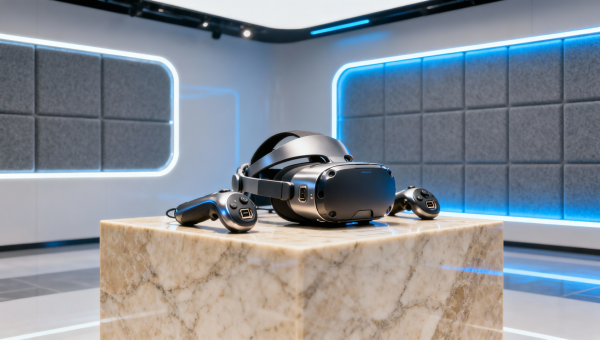
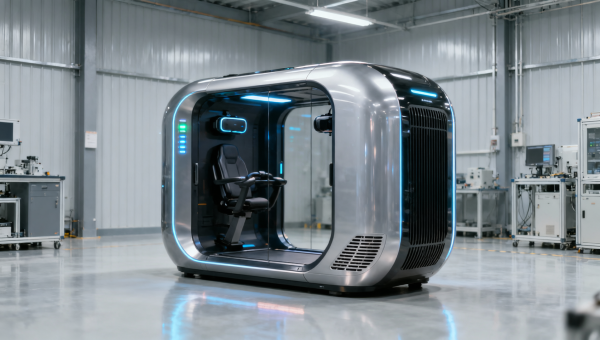
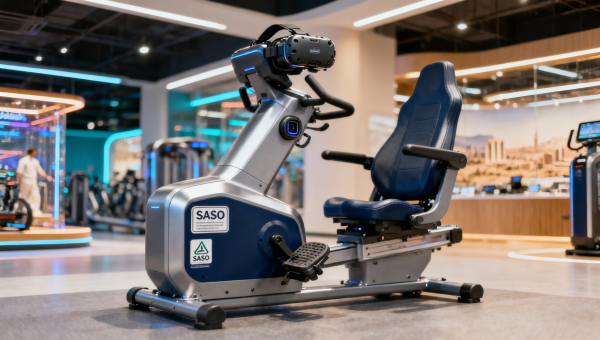
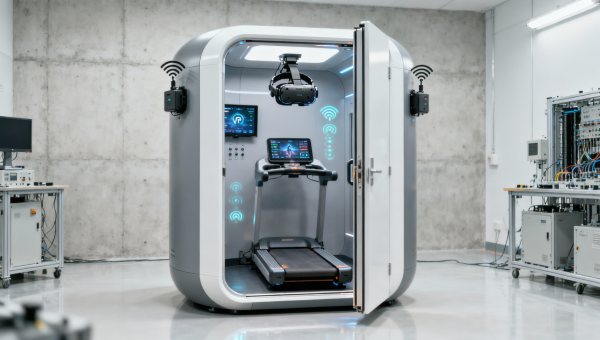
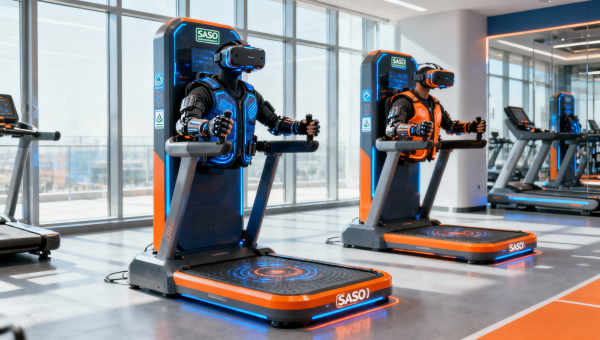
Saudi Arabia’s Standards, Metrology and Quality Organization (SASO) updated the electromagnetic compatibility (EMC) standard for VR and haptic entertainment devices on April 16, 2026 — mandating Class B emission limits for all equipment deployed in commercial venues such as fitness centers, theme parks, and mall-based VR zones. With enforcement beginning July 1, 2026, this change affects manufacturers, importers, and distributors supplying to the Saudi market and signals a tightening of technical market access requirements.
Event Overview
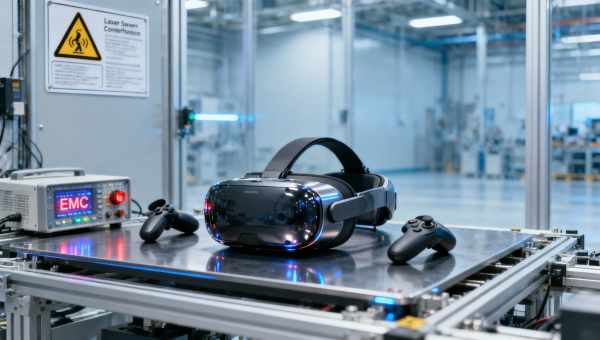
On April 16, 2026, SASO published the revised standard SR 2692:2026 — Electromagnetic Compatibility Requirements for Virtual Reality and Haptic Entertainment Devices. The update explicitly requires all VR and haptic devices intended for commercial deployment in Saudi Arabia to comply with Class B radiated and conducted emission limits — which are 10 dB stricter than Class A limits. Compliance must be verified by a SASO-recognized testing laboratory, and test reports must be submitted as part of the conformity assessment process. The regulation becomes mandatory on July 1, 2026, allowing an 82-day transition period from publication.
Industries Affected by the Update
VR/AR hardware manufacturers
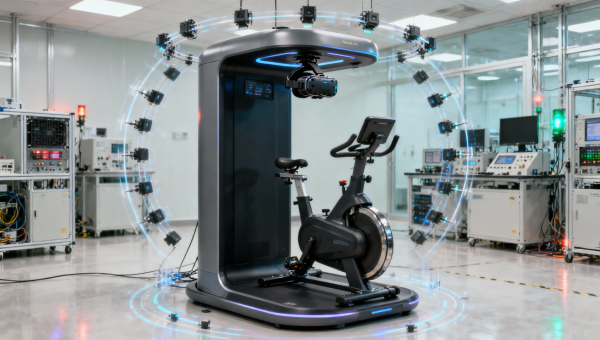
Manufacturers producing VR headsets, motion platforms, haptic suits, or full-body tracking systems intended for commercial installations must redesign or revalidate existing models to meet Class B EMC performance. Legacy products certified under Class A — even if previously accepted in Saudi Arabia — will no longer satisfy entry requirements unless retested and re-certified.
Importers and distributors targeting Saudi commercial venues
Companies sourcing VR/haptic equipment from overseas suppliers face increased pre-market validation burdens. Stock already cleared under prior Class A allowances may not be eligible for new sales or installations after July 1, 2026, unless accompanied by valid Class B test reports issued by SASO-recognized labs.
System integrators and venue operators
Firms integrating VR/haptic solutions into gyms, theme parks, or retail spaces must verify compliance status before procurement or installation. Non-compliant equipment risks rejection at customs, failure during SASO post-market surveillance, or operational suspension upon inspection.
Key Considerations and Recommended Actions
Confirm lab recognition status before scheduling testing
SASO maintains a publicly listed registry of accredited laboratories authorized to issue SR 2692:2026 compliance reports. Companies should verify that their chosen lab appears on the current list — as recognition is subject to periodic review and may vary by test scope (e.g., radiated vs. conducted emissions).
Review product families against Class B emission margins
Class B limits apply across the full frequency range specified in SR 2692:2026 (e.g., 30 MHz–1 GHz for radiated emissions). Manufacturers should assess whether shielding, filtering, or firmware-level timing adjustments are needed — especially for high-power motion actuators or wireless synchronization modules commonly found in haptic platforms.
Document and retain evidence of transition planning
Given the short 82-day window between publication and enforcement, companies should maintain internal records of test scheduling, lab engagement dates, and engineering change orders. Such documentation may support requests for limited case-by-case extensions — though SASO has not announced formal grace provisions.
Verify labeling and technical file alignment
The updated standard may require modifications to user manuals, technical specifications, and product labeling to reflect Class B compliance. All documentation submitted to SASO must consistently reference SR 2692:2026 (2026 edition), not earlier versions.
Editorial Perspective / Industry Observation
From industry perspective, this update is better understood as a regulatory signal than an isolated compliance event. It reflects SASO’s broader shift toward harmonizing local EMC requirements with international benchmarks — particularly IEC/CISPR standards used in EU and North American markets. Analysis来看, the choice of Class B — typically reserved for residential environments — suggests SASO prioritizes interference mitigation in dense urban deployments where VR venues often co-locate with other sensitive electronics (e.g., security systems, POS terminals, Wi-Fi infrastructure). Current more appropriate interpretation is that SR 2692:2026 marks the start of stricter technical gatekeeping for immersive tech entering Gulf commercial infrastructure — not just a one-time revision.
Observation来看, the absence of phased rollout or tiered implementation implies SASO expects manufacturers to treat this as baseline readiness — rather than a transitional measure. That said, actual enforcement rigor — including sampling frequency, penalties for non-compliance, or treatment of legacy stock — remains unconfirmed and warrants ongoing monitoring beyond the effective date.
Conclusion: This update does not introduce new product categories or redefine use cases, but it does raise the technical bar for market access. It is best interpreted as a procedural tightening — one that rewards proactive technical due diligence over reactive compliance firefighting.
Information Source:
— SASO Official Gazette Notice No. SR 2692:2026 (published April 16, 2026)
— SASO Accredited Laboratories List (current as of May 2026; subject to periodic updates)
Search News
Hot Articles
Popular Tags
Need ExpertConsultation?
Connect with our specialized leisureengineering team for procurementstrategies.
Recommended News
 Apr 20, 2026Global VR Fitness Device Export Price Up 12% in Q1 2026VR fitness device export prices surged 12% in Q1 2026—discover key drivers, regional impacts, and strategic actions for exporters, suppliers & logistics partners.● Theme Park Strategist
 Apr 20, 2026SASO Updates VR Haptic Device EMC Standard to Class B in Saudi ArabiaSASO VR haptic device EMC update: Class B standard now mandatory in Saudi Arabia from July 1, 2026. Ensure compliance for VR/AR hardware, imports & venues.● Theme Park Strategist
 Apr 20, 2026Vietnam TUV SUD Enforces Local Type Test for Commercial VR Fitness CabinsVietnam TUV SUD now mandates local type testing for commercial VR fitness cabins — including latency, EMC & safety checks. Act now to secure QCVN compliance and market access.● Theme Park Strategist
 Apr 17, 2026Global VR Fitness Equipment Export Prices Rise 12% in Q1 2026VR fitness equipment export prices surge 12.3% in Q1 2026—key insights for exporters, manufacturers & supply chain partners on compliance, pricing, and delivery trends.● Theme Park Strategist
 Apr 17, 2026SASO 2891:2026 Updated: VR Haptic Devices Now Require EMC Class B in Saudi ArabiaSASO 2891:2026 update mandates EMC Class B for VR haptic devices in Saudi Arabia — critical for OEMs, exporters & EdTech suppliers. Act now to avoid delays!● Theme Park Strategist
 Apr 17, 2026Vietnam TUV SUD Mandates Local Type Testing for VR Fitness CabinsVR fitness cabins for gyms & hotels in Vietnam now require local type testing—EMC, thermal, and AI fall detection—to obtain VIEC certification. Act now to avoid delays!● Theme Park Strategist
 Apr 16, 2026VR Fitness Device Export Prices Up 12% — China Supply Stability LeadsVR fitness device export prices up 12%—China’s supply stability and modular hardware-software delivery redefine global competitiveness. Act now.● Theme Park Strategist
 Apr 16, 2026Vietnam Mandates Local TUV SUD Type Testing for VR Fitness CabinsVR fitness cabins entering Vietnam must now pass local TÜV SÜD type testing in Hanoi—key for compliance, customs clearance & market access by July 1, 2026.● Theme Park Strategist
 Apr 16, 2026SASO Updates Playground Standards: VR Devices Now Require EMC TestingSASO now mandates EMC testing for VR playground devices in Saudi Arabia—key update for VR cycling, climbing & motion cabins exporters.● Theme Park Strategist
 Apr 15, 2026Vietnam's New Regulation: Commercial VR Fitness Pods Require Local TUV SUD TestingVietnam's new regulation mandates TUV SUD testing for commercial VR fitness pods. Learn how this impacts exporters, compliance timelines, and market entry strategies for Chinese manufacturers.● Theme Park Strategist
 Apr 15, 2026Global VR Fitness Equipment Export Prices Rise 12% YoY, China Maintains Supply Chain StabilityGlobal VR fitness equipment export prices surge 12% YoY in 2026 Q1, with China maintaining 96.3% delivery reliability. Key insights for VR hardware manufacturers & fitness distributors facing cost pressures.● Theme Park Strategist
 Apr 14, 2026US CPSC Seeks Comments on New Fitness Tracker Rules, Chinese Exporters Need UL/ETL ComplianceUS CPSC proposes new UL/ETL compliance rules for fitness trackers, impacting Chinese exporters. Learn key action points and industry impacts to stay ahead of regulatory changes affecting wearable tech exports to America.● Theme Park Strategist
 Apr 13, 20262026 Chinese Youth League Upgrades Format with VR Training PodsDiscover how China's 2026 Youth League VR training pods revolutionize football development, boosting exports by 210%. Learn about FIFA-certified tech transforming player training.● Theme Park Strategist
 Apr 09, 2026US CPSC Proposes New VR Safety Standards for Children's Indoor Play EquipmentUS CPSC proposes new VR safety standards for children's indoor play equipment, including dizziness testing and age grading. Learn how these regulations impact VR manufacturers and get compliance strategies.● Theme Park Strategist
 Apr 19, 2026Global VR Fitness Device Export Prices Rise 12.3% QoQVR fitness device export prices surge 12.3% QoQ to $2,840 — driven by EU EN 1176-7 & US CPSC compliance. Key insights for exporters, manufacturers & logistics partners.● Theme Park Strategist
 Apr 19, 2026SASO Updates EMC Standard for VR Haptic Devices in Saudi ArabiaSASO EMC update for VR haptic devices in Saudi Arabia: Class B limits effective July 2026 — retest now to avoid shipment delays & customs hold.● Theme Park Strategist
 Apr 19, 2026Vietnam TUV SUD New Rule: VR Fitness Cabins Require Local Type TestingVR fitness cabins entering Vietnam now require local TUV SUD type testing — EMC, motion sickness & Wi-Fi 6E stability checks. Act now to avoid delays & customs rejection.● Theme Park Strategist
 Apr 19, 2026SMT Launches 'PopBadminton AI' Standard API ProtocolPopBadminton AI Standard API Protocol launched — unified badminton equipment interface for serve speed, landing tracking & motion recognition. Open-source, cross-platform (HarmonyOS/Android 15/iOS 19), adopted by Macau & Malaysia.● Theme Park Strategist
 Apr 18, 2026Global VR Fitness Device Export Prices Rise 12% QoQVR fitness device export prices surge 12% QoQ—key insight for OEMs, logistics providers & distributors in SEA and Middle East markets.● Theme Park Strategist
 Apr 18, 2026Vietnam TUV SUD New Rule: VR Fitness Cabins Require Local Type TestVR fitness cabins for commercial use in Vietnam now require local type testing per TUV SUD’s new rule—act before July 1, 2026 to avoid delays & extra costs.● Theme Park Strategist
 Apr 18, 2026SASO Updates EMC Standard for VR Haptic Devices in Saudi ArabiaSASO EMC update for VR haptic devices: Class B testing now mandatory in Saudi Arabia — critical for exporters, ODMs & distributors targeting gyms, malls & schools.● Theme Park Strategist
 Apr 18, 2026Arcade games ROI timeline: When do redemption units typically break even?Arcade games ROI timeline revealed: redemption units break even in 8–18 months. Compare performance with trampoline park, indoor playground & adventure playground investments.● Theme Park Strategist
 Apr 17, 2026Arcade games with cashless payment: Is retrofitting worth it?Arcade games cashless retrofitting boosts revenue & compliance—explore ROI, TCO, and certified kits for trampoline parks, indoor playgrounds & adventure playgrounds.● Theme Park Strategist
 Apr 17, 2026Amusement equipment maintenance costs no one talks about upfrontAmusement equipment maintenance costs shock buyers—especially for sensory playgrounds, playground climbers & borders. Discover hidden TCO drivers in commercial furniture, hotel equipment & playground safety systems.● Theme Park Strategist