SMT Launches 'PopBadminton AI' Standard API Protocol
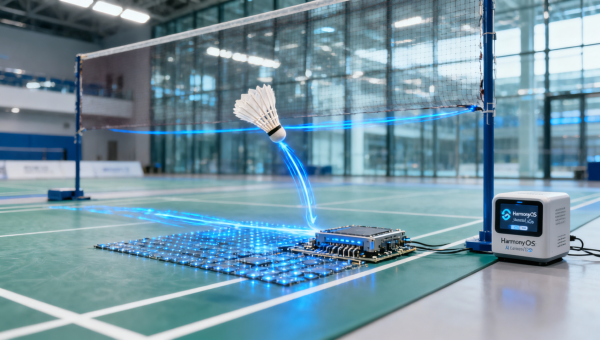
On April 15, 2026, the SMT Digital Sports New Ecosystem Forum released the 'PopBadminton AI' Standard Interface Protocol (v1.0) in Chengdu — a unified API framework for badminton赛事 equipment data exchange. The protocol defines three core interface categories: serve speed measurement, shuttlecock landing point tracking, and player motion recognition. With open-sourcing completed on April 18, 2026, it now supports native integration with HarmonyOS, Android 15, and iOS 19. Its adoption as a technical benchmark for smart venue tenders by the Macau Badminton Union and the Badminton Association of Malaysia signals early institutional validation — making it relevant for hardware manufacturers, smart campus solution providers, and integrators operating across the Greater Bay Area and Southeast Asia.
Event Overview
The 'PopBadminton AI' Standard Interface Protocol (v1.0) was officially launched on April 15, 2026, in Chengdu. It was made publicly available under an open-source license on April 18, 2026. The protocol specifies a standardized API framework for data interaction among badminton-specific sports equipment, covering three functional domains: real-time serve speed measurement, court-based shuttlecock landing point tracking, and player motion recognition. It is designed for native compatibility with HarmonyOS, Android 15, and iOS 19. The Macau Badminton Union and the Badminton Association of Malaysia have formally adopted it as a technical requirement in their respective smart venue procurement specifications. Chinese manufacturers including Arcade & VR Machines and Smart Campus Tech are positioned to develop compliant hardware leveraging this standard.
Impact on Specific Industry Segments
Smart Sports Hardware Manufacturers
These companies face immediate implications for product architecture and firmware development. Because the protocol mandates specific data schemas and call patterns for the three core functions, existing or planned devices must align with its interface definitions to qualify for tenders referencing the standard — especially those issued by Macau and Malaysia. Impact manifests in R&D timelines, certification readiness, and interoperability testing requirements.
Smart Campus Solution Integrators
Integrators deploying multi-vendor systems in educational or municipal facilities must now assess whether newly procured or upgraded badminton modules conform to the 'PopBadminton AI' specification. Non-compliant legacy hardware may require middleware adaptation or replacement to ensure seamless data ingestion into centralized analytics or facility management platforms — affecting project scope, budgeting, and delivery schedules.
Export-Oriented Electronics OEMs / ODMs
For Chinese OEMs supplying sensors, court cameras, or edge computing units to ASEAN or Greater Bay Area markets, the protocol introduces a de facto technical gate. Tender documents referencing this standard will likely require API conformance statements, test reports, or integration logs — shifting competitive differentiation from hardware specs alone toward software-defined interoperability assurance.
What Relevant Enterprises or Practitioners Should Focus On Now
Monitor official implementation guidelines from adopting bodies
The Macau Badminton Union and Malaysian Badminton Association have adopted the protocol as a tender benchmark, but detailed compliance criteria — such as mandatory test suites, certification authorities, or version-locking policies — remain unconfirmed. Current more actionable than broad speculation is tracking their upcoming procurement notices and technical annexes for concrete evaluation metrics.
Validate device-level compatibility against v1.0’s published API schema
Since the protocol is now open-sourced, manufacturers should prioritize hands-on verification: mapping existing firmware endpoints to the defined REST/JSON structures, checking authentication flows, and confirming timestamp synchronization and coordinate-system alignment (e.g., court origin, axis orientation). Early validation avoids late-stage rework during tender submission.
Distinguish between policy signal and commercial traction
Adoption by two national associations signals technical consensus-building, but does not yet equate to widespread deployment. From industry perspective, this remains an early-stage interoperability initiative — not a market-wide mandate. Enterprises should treat it as a strategic alignment priority rather than an immediate compliance deadline, focusing first on proof-of-concept integrations before scaling production.
Prepare cross-platform SDK documentation and developer support materials
Because the protocol supports three OS environments natively, vendors targeting integrators need concise, version-matched SDK guides for each platform — including sample code, error-handling examples, and latency benchmarks. Delaying these resources risks slowing downstream adoption, even if hardware meets spec.
Editorial Perspective / Industry Observation
This release is better understood as a coordination mechanism than a finished market standard. Analysis来看, its value lies less in technical novelty — similar capabilities exist in proprietary systems — and more in establishing a shared reference layer across fragmented hardware vendors and regional sports bodies. Observation来看, the choice to open-source v1.0 immediately after launch reflects intent to accelerate ecosystem formation, not just promote a single vendor stack. From industry angle, it signals growing institutional appetite for interoperable digital infrastructure in grassroots and semi-professional sports venues — a shift from isolated 'smart court' pilots toward scalable, vendor-agnostic deployments. Current more appropriate framing is that this is a foundational step toward modular smart sports infrastructure — one requiring sustained updates, third-party tooling, and broader federation buy-in to mature beyond pilot-stage relevance.
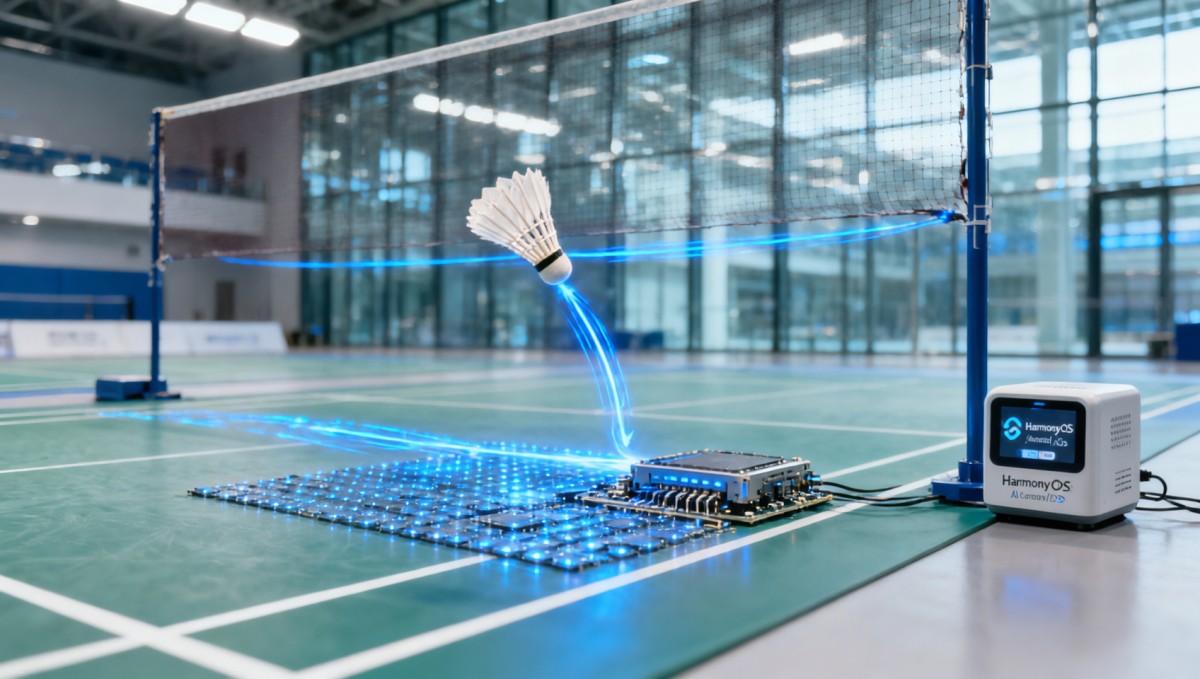
In summary, the 'PopBadminton AI' protocol introduces a concrete, open, and regionally endorsed interface framework for badminton-specific sports technology. Its significance lies not in replacing existing solutions, but in lowering integration friction for hardware developers and system integrators targeting smart venue upgrades in Macau, Malaysia, and adjacent markets. At present, it is best interpreted as an emerging technical baseline — one that warrants monitoring, selective validation, and incremental alignment, rather than wholesale platform migration.
Source: SMT Digital Sports New Ecosystem Forum (official announcement, April 15–18, 2026); public tender references from Macau Badminton Union and Badminton Association of Malaysia (as cited in event summary).
Note: Future versions of the protocol, certification procedures, and additional adopter announcements remain under observation.
Search News
Hot Articles
Popular Tags
Need ExpertConsultation?
Connect with our specialized leisureengineering team for procurementstrategies.
Recommended News
 Apr 20, 2026Global VR Fitness Device Export Price Up 12% in Q1 2026VR fitness device export prices surged 12% in Q1 2026—discover key drivers, regional impacts, and strategic actions for exporters, suppliers & logistics partners.● Theme Park Strategist
 Apr 20, 2026SASO Updates VR Haptic Device EMC Standard to Class B in Saudi ArabiaSASO VR haptic device EMC update: Class B standard now mandatory in Saudi Arabia from July 1, 2026. Ensure compliance for VR/AR hardware, imports & venues.● Theme Park Strategist
 Apr 20, 2026Vietnam TUV SUD Enforces Local Type Test for Commercial VR Fitness CabinsVietnam TUV SUD now mandates local type testing for commercial VR fitness cabins — including latency, EMC & safety checks. Act now to secure QCVN compliance and market access.● Theme Park Strategist
 Apr 17, 2026Global VR Fitness Equipment Export Prices Rise 12% in Q1 2026VR fitness equipment export prices surge 12.3% in Q1 2026—key insights for exporters, manufacturers & supply chain partners on compliance, pricing, and delivery trends.● Theme Park Strategist
 Apr 17, 2026SASO 2891:2026 Updated: VR Haptic Devices Now Require EMC Class B in Saudi ArabiaSASO 2891:2026 update mandates EMC Class B for VR haptic devices in Saudi Arabia — critical for OEMs, exporters & EdTech suppliers. Act now to avoid delays!● Theme Park Strategist
 Apr 17, 2026Vietnam TUV SUD Mandates Local Type Testing for VR Fitness CabinsVR fitness cabins for gyms & hotels in Vietnam now require local type testing—EMC, thermal, and AI fall detection—to obtain VIEC certification. Act now to avoid delays!● Theme Park Strategist
 Apr 16, 2026VR Fitness Device Export Prices Up 12% — China Supply Stability LeadsVR fitness device export prices up 12%—China’s supply stability and modular hardware-software delivery redefine global competitiveness. Act now.● Theme Park Strategist
 Apr 16, 2026Vietnam Mandates Local TUV SUD Type Testing for VR Fitness CabinsVR fitness cabins entering Vietnam must now pass local TÜV SÜD type testing in Hanoi—key for compliance, customs clearance & market access by July 1, 2026.● Theme Park Strategist
 Apr 16, 2026SASO Updates Playground Standards: VR Devices Now Require EMC TestingSASO now mandates EMC testing for VR playground devices in Saudi Arabia—key update for VR cycling, climbing & motion cabins exporters.● Theme Park Strategist
 Apr 15, 2026Vietnam's New Regulation: Commercial VR Fitness Pods Require Local TUV SUD TestingVietnam's new regulation mandates TUV SUD testing for commercial VR fitness pods. Learn how this impacts exporters, compliance timelines, and market entry strategies for Chinese manufacturers.● Theme Park Strategist
 Apr 15, 2026Global VR Fitness Equipment Export Prices Rise 12% YoY, China Maintains Supply Chain StabilityGlobal VR fitness equipment export prices surge 12% YoY in 2026 Q1, with China maintaining 96.3% delivery reliability. Key insights for VR hardware manufacturers & fitness distributors facing cost pressures.● Theme Park Strategist
 Apr 14, 2026US CPSC Seeks Comments on New Fitness Tracker Rules, Chinese Exporters Need UL/ETL ComplianceUS CPSC proposes new UL/ETL compliance rules for fitness trackers, impacting Chinese exporters. Learn key action points and industry impacts to stay ahead of regulatory changes affecting wearable tech exports to America.● Theme Park Strategist
 Apr 13, 20262026 Chinese Youth League Upgrades Format with VR Training PodsDiscover how China's 2026 Youth League VR training pods revolutionize football development, boosting exports by 210%. Learn about FIFA-certified tech transforming player training.● Theme Park Strategist
 Apr 09, 2026US CPSC Proposes New VR Safety Standards for Children's Indoor Play EquipmentUS CPSC proposes new VR safety standards for children's indoor play equipment, including dizziness testing and age grading. Learn how these regulations impact VR manufacturers and get compliance strategies.● Theme Park Strategist
 Apr 21, 2026Global VR Fitness Equipment Export Prices Rise 12% in Q1 2026VR fitness equipment export prices surge 12% in Q1 2026—driven by EU safety mandates. Discover cost impacts, compliance risks & supply chain insights.● Theme Park Strategist
 Apr 21, 2026Vietnam TUV SUD Enforces Local Type Testing for VR Fitness CabinsVR fitness cabins entering Vietnam must now undergo local TUV SUD type testing—EMC & safety checks in Hanoi or Ho Chi Minh City starting April 2026. Key for exporters, certifiers & distributors.● Theme Park Strategist
 Apr 21, 2026SASO Updates EMC Standard for VR Motion Devices in Saudi ArabiaSASO EMC update for VR motion devices in Saudi Arabia: Class B compliance now mandatory for fitness pods, edutainment cabins & arcade systems—act now to avoid shipment delays.● Theme Park Strategist
 Apr 19, 2026Global VR Fitness Device Export Prices Rise 12.3% QoQVR fitness device export prices surge 12.3% QoQ to $2,840 — driven by EU EN 1176-7 & US CPSC compliance. Key insights for exporters, manufacturers & logistics partners.● Theme Park Strategist
 Apr 19, 2026SASO Updates EMC Standard for VR Haptic Devices in Saudi ArabiaSASO EMC update for VR haptic devices in Saudi Arabia: Class B limits effective July 2026 — retest now to avoid shipment delays & customs hold.● Theme Park Strategist
 Apr 19, 2026Vietnam TUV SUD New Rule: VR Fitness Cabins Require Local Type TestingVR fitness cabins entering Vietnam now require local TUV SUD type testing — EMC, motion sickness & Wi-Fi 6E stability checks. Act now to avoid delays & customs rejection.● Theme Park Strategist
 Apr 19, 2026SMT Launches 'PopBadminton AI' Standard API ProtocolPopBadminton AI Standard API Protocol launched — unified badminton equipment interface for serve speed, landing tracking & motion recognition. Open-source, cross-platform (HarmonyOS/Android 15/iOS 19), adopted by Macau & Malaysia.● Theme Park Strategist
 Apr 18, 2026Global VR Fitness Device Export Prices Rise 12% QoQVR fitness device export prices surge 12% QoQ—key insight for OEMs, logistics providers & distributors in SEA and Middle East markets.● Theme Park Strategist
 Apr 18, 2026Vietnam TUV SUD New Rule: VR Fitness Cabins Require Local Type TestVR fitness cabins for commercial use in Vietnam now require local type testing per TUV SUD’s new rule—act before July 1, 2026 to avoid delays & extra costs.● Theme Park Strategist
 Apr 18, 2026SASO Updates EMC Standard for VR Haptic Devices in Saudi ArabiaSASO EMC update for VR haptic devices: Class B testing now mandatory in Saudi Arabia — critical for exporters, ODMs & distributors targeting gyms, malls & schools.● Theme Park Strategist