Vietnam TUV SUD Enforces Local Type Test for Commercial VR Fitness Cabins
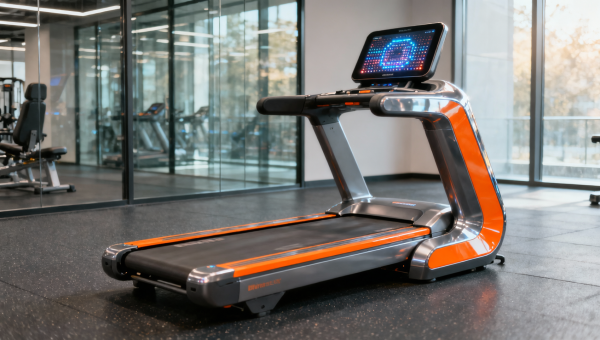
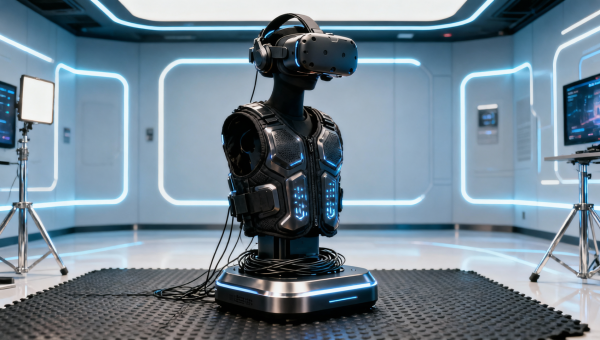
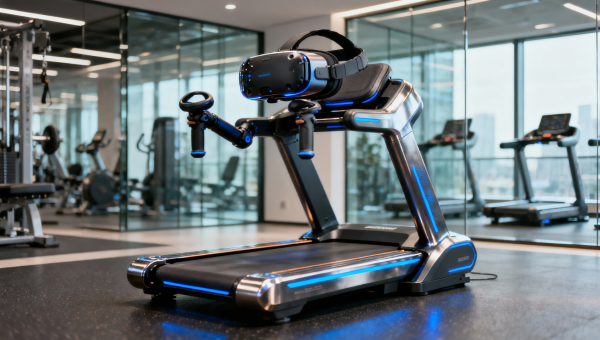
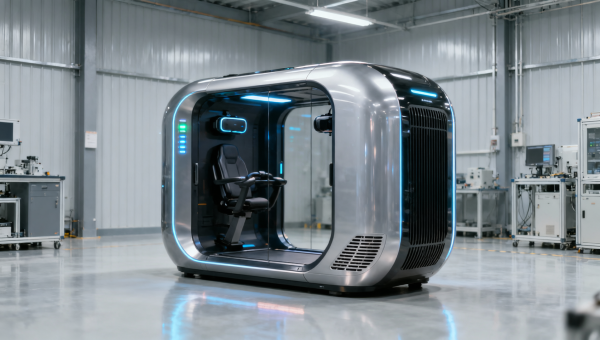
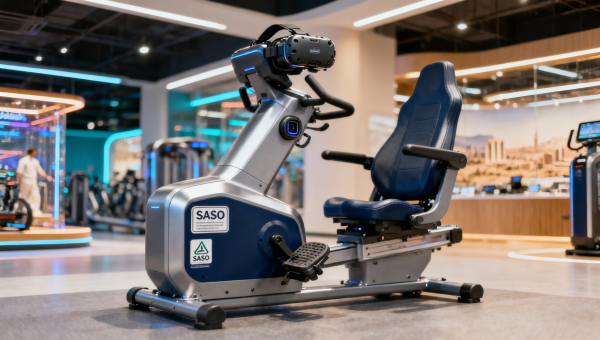
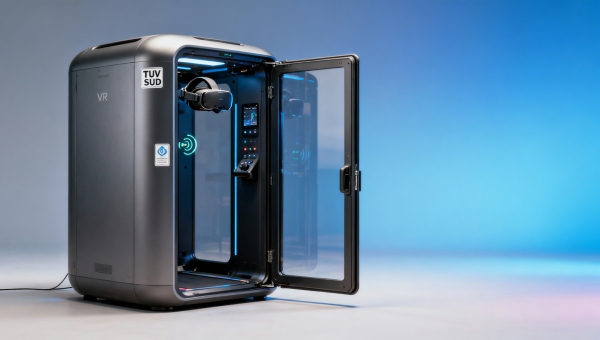
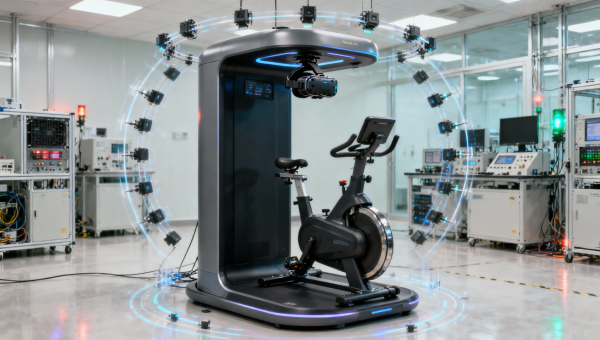
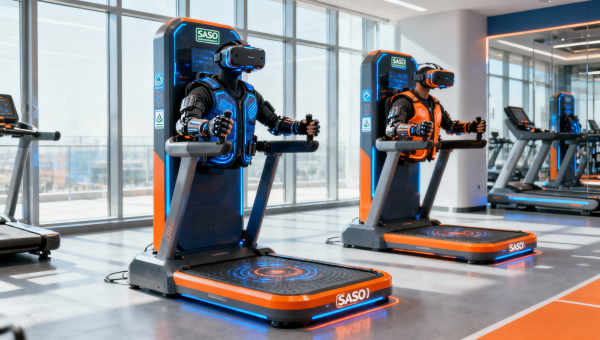
As of April 15, 2026, Vietnam’s TUV SUD has implemented a new regulatory requirement mandating local type testing for all commercial VR fitness cabins intended for import — including VR-enabled stationary bikes, interactive treadmills, and immersive strength training systems. This development directly impacts manufacturers, exporters, and distributors targeting the Vietnamese fitness technology market, and signals tightening conformity assessment for immersive hardware in Southeast Asia.
Event Overview
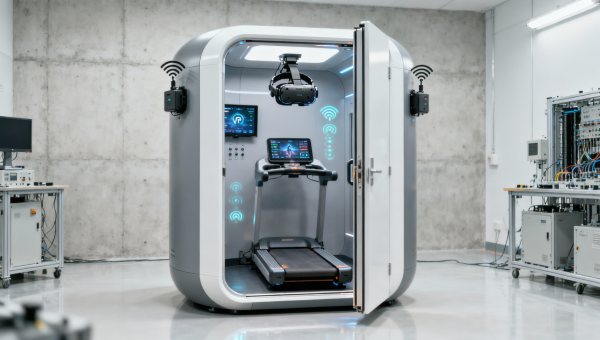
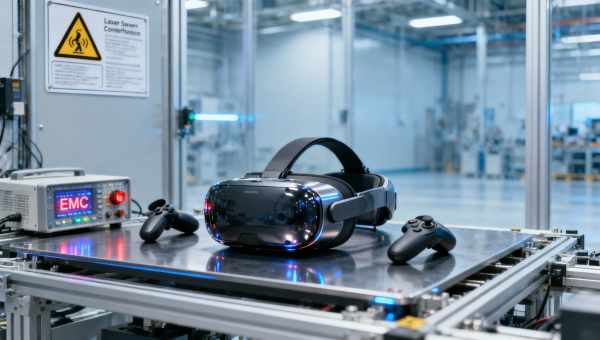
On April 15, 2026, TUV SUD Vietnam officially enforced a new regulation requiring all commercial VR fitness cabins destined for import into Vietnam to undergo local type testing and bear the QCVN marking prior to customs clearance. The test covers three mandatory technical criteria: electromagnetic compatibility (EMC), structural safety, and thermal management — plus a performance-specific requirement for VR system latency (≤150 ms). No exemptions apply.
Industries Affected
Direct Exporters & Importers
Companies exporting VR fitness equipment from China, South Korea, or the EU to Vietnam must now schedule and complete type testing in Vietnam before shipment. This extends lead time, adds cost (estimated at USD 8,000–12,000 per model), and eliminates post-arrival conformity options. Delays in test scheduling may directly impact Q2/Q3 2026 market entry timelines.
Hardware Manufacturers (OEM/ODM)
Manufacturers supplying VR fitness cabins — especially those integrating proprietary motion platforms, haptic feedback, or real-time rendering stacks — face revised design validation requirements. Firmware-level latency optimization (to meet ≤150 ms end-to-end VR response) must now be verified under Vietnamese lab conditions, not just internal or third-party labs abroad.
Distribution & Channel Partners
Vietnamese distributors holding inventory or pre-launching models must verify QCVN compliance status before marketing or sale. Non-compliant units already in-country cannot be legally placed on the market after April 15, 2026, even if imported earlier — as QCVN labeling is a prerequisite for customs release, not retroactive certification.
Key Focus Areas and Recommended Actions
Monitor official TUV SUD Vietnam guidance on test scope interpretation
While the regulation specifies EMC, structural safety, thermal management, and VR latency, TUV SUD Vietnam has not yet published detailed test protocols (e.g., exact latency measurement methodology or thermal ambient conditions). Analysis来看, this ambiguity means early applicants may face retesting if initial submissions don’t align with unpublished procedural expectations.
Prioritize models with high latency risk for pre-validation
From industry perspective, VR fitness cabins relying on wireless video streaming, cloud-based rendering, or multi-sensor fusion are most likely to exceed the 150 ms latency threshold. Current more practical approach is to conduct internal latency benchmarking using standardized motion-to-photon measurement tools before engaging local labs.
Confirm lab capacity and booking windows with TUV SUD Vietnam
Observation shows that Vietnamese accredited labs handling VR-related EMC and real-time performance testing remain limited in number. Early engagement — particularly for multi-unit or multi-model submissions — is advised, as current average queue time reported by early filers exceeds six weeks.
Review existing supply chain contracts for compliance liability clauses
Analysis indicates many OEM supply agreements do not allocate responsibility for local type testing costs or delays. Companies should now revisit contracts with manufacturing partners to clarify who bears cost, timeline risk, and retest liability — especially where firmware or hardware revisions are needed post-test failure.
Editorial Insight / Industry Observation
This requirement is better understood as an enforcement signal rather than a one-off compliance checkpoint. From industry angle, it reflects Vietnam’s broader shift toward localized conformity infrastructure for emerging tech categories — similar to recent moves in EV chargers and smart home gateways. It does not yet indicate full-scale national standardization (e.g., a dedicated QCVN standard for VR fitness), but marks the start of formalized market access gating. Ongoing observation is warranted for potential alignment with ASEAN harmonized standards or future expansion to other immersive wellness devices.
Conclusion: This regulation establishes a concrete, non-negotiable market access condition for VR fitness hardware in Vietnam — not merely a procedural update. It introduces measurable cost, time, and technical validation implications for exporters and manufacturers. Currently, it is best interpreted as the operationalization of Vietnam’s growing emphasis on localized technical verification for digitally integrated physical equipment — a trend likely to extend across adjacent health-tech segments in coming years.
Information Source: Official notice issued by TUV SUD Vietnam, effective April 15, 2026. Note: Detailed test procedures, fee schedules, and lab accreditation lists remain pending official publication and are subject to ongoing monitoring.
Search News
Hot Articles
Popular Tags
Need ExpertConsultation?
Connect with our specialized leisureengineering team for procurementstrategies.
Recommended News
 Apr 20, 2026Global VR Fitness Device Export Price Up 12% in Q1 2026VR fitness device export prices surged 12% in Q1 2026—discover key drivers, regional impacts, and strategic actions for exporters, suppliers & logistics partners.● Theme Park Strategist
 Apr 20, 2026SASO Updates VR Haptic Device EMC Standard to Class B in Saudi ArabiaSASO VR haptic device EMC update: Class B standard now mandatory in Saudi Arabia from July 1, 2026. Ensure compliance for VR/AR hardware, imports & venues.● Theme Park Strategist
 Apr 20, 2026Vietnam TUV SUD Enforces Local Type Test for Commercial VR Fitness CabinsVietnam TUV SUD now mandates local type testing for commercial VR fitness cabins — including latency, EMC & safety checks. Act now to secure QCVN compliance and market access.● Theme Park Strategist
 Apr 17, 2026Global VR Fitness Equipment Export Prices Rise 12% in Q1 2026VR fitness equipment export prices surge 12.3% in Q1 2026—key insights for exporters, manufacturers & supply chain partners on compliance, pricing, and delivery trends.● Theme Park Strategist
 Apr 17, 2026SASO 2891:2026 Updated: VR Haptic Devices Now Require EMC Class B in Saudi ArabiaSASO 2891:2026 update mandates EMC Class B for VR haptic devices in Saudi Arabia — critical for OEMs, exporters & EdTech suppliers. Act now to avoid delays!● Theme Park Strategist
 Apr 17, 2026Vietnam TUV SUD Mandates Local Type Testing for VR Fitness CabinsVR fitness cabins for gyms & hotels in Vietnam now require local type testing—EMC, thermal, and AI fall detection—to obtain VIEC certification. Act now to avoid delays!● Theme Park Strategist
 Apr 16, 2026VR Fitness Device Export Prices Up 12% — China Supply Stability LeadsVR fitness device export prices up 12%—China’s supply stability and modular hardware-software delivery redefine global competitiveness. Act now.● Theme Park Strategist
 Apr 16, 2026Vietnam Mandates Local TUV SUD Type Testing for VR Fitness CabinsVR fitness cabins entering Vietnam must now pass local TÜV SÜD type testing in Hanoi—key for compliance, customs clearance & market access by July 1, 2026.● Theme Park Strategist
 Apr 16, 2026SASO Updates Playground Standards: VR Devices Now Require EMC TestingSASO now mandates EMC testing for VR playground devices in Saudi Arabia—key update for VR cycling, climbing & motion cabins exporters.● Theme Park Strategist
 Apr 15, 2026Vietnam's New Regulation: Commercial VR Fitness Pods Require Local TUV SUD TestingVietnam's new regulation mandates TUV SUD testing for commercial VR fitness pods. Learn how this impacts exporters, compliance timelines, and market entry strategies for Chinese manufacturers.● Theme Park Strategist
 Apr 15, 2026Global VR Fitness Equipment Export Prices Rise 12% YoY, China Maintains Supply Chain StabilityGlobal VR fitness equipment export prices surge 12% YoY in 2026 Q1, with China maintaining 96.3% delivery reliability. Key insights for VR hardware manufacturers & fitness distributors facing cost pressures.● Theme Park Strategist
 Apr 14, 2026US CPSC Seeks Comments on New Fitness Tracker Rules, Chinese Exporters Need UL/ETL ComplianceUS CPSC proposes new UL/ETL compliance rules for fitness trackers, impacting Chinese exporters. Learn key action points and industry impacts to stay ahead of regulatory changes affecting wearable tech exports to America.● Theme Park Strategist
 Apr 13, 20262026 Chinese Youth League Upgrades Format with VR Training PodsDiscover how China's 2026 Youth League VR training pods revolutionize football development, boosting exports by 210%. Learn about FIFA-certified tech transforming player training.● Theme Park Strategist
 Apr 09, 2026US CPSC Proposes New VR Safety Standards for Children's Indoor Play EquipmentUS CPSC proposes new VR safety standards for children's indoor play equipment, including dizziness testing and age grading. Learn how these regulations impact VR manufacturers and get compliance strategies.● Theme Park Strategist
 Apr 19, 2026Global VR Fitness Device Export Prices Rise 12.3% QoQVR fitness device export prices surge 12.3% QoQ to $2,840 — driven by EU EN 1176-7 & US CPSC compliance. Key insights for exporters, manufacturers & logistics partners.● Theme Park Strategist
 Apr 19, 2026SASO Updates EMC Standard for VR Haptic Devices in Saudi ArabiaSASO EMC update for VR haptic devices in Saudi Arabia: Class B limits effective July 2026 — retest now to avoid shipment delays & customs hold.● Theme Park Strategist
 Apr 19, 2026Vietnam TUV SUD New Rule: VR Fitness Cabins Require Local Type TestingVR fitness cabins entering Vietnam now require local TUV SUD type testing — EMC, motion sickness & Wi-Fi 6E stability checks. Act now to avoid delays & customs rejection.● Theme Park Strategist
 Apr 19, 2026SMT Launches 'PopBadminton AI' Standard API ProtocolPopBadminton AI Standard API Protocol launched — unified badminton equipment interface for serve speed, landing tracking & motion recognition. Open-source, cross-platform (HarmonyOS/Android 15/iOS 19), adopted by Macau & Malaysia.● Theme Park Strategist
 Apr 18, 2026Global VR Fitness Device Export Prices Rise 12% QoQVR fitness device export prices surge 12% QoQ—key insight for OEMs, logistics providers & distributors in SEA and Middle East markets.● Theme Park Strategist
 Apr 18, 2026Vietnam TUV SUD New Rule: VR Fitness Cabins Require Local Type TestVR fitness cabins for commercial use in Vietnam now require local type testing per TUV SUD’s new rule—act before July 1, 2026 to avoid delays & extra costs.● Theme Park Strategist
 Apr 18, 2026SASO Updates EMC Standard for VR Haptic Devices in Saudi ArabiaSASO EMC update for VR haptic devices: Class B testing now mandatory in Saudi Arabia — critical for exporters, ODMs & distributors targeting gyms, malls & schools.● Theme Park Strategist
 Apr 18, 2026Arcade games ROI timeline: When do redemption units typically break even?Arcade games ROI timeline revealed: redemption units break even in 8–18 months. Compare performance with trampoline park, indoor playground & adventure playground investments.● Theme Park Strategist
 Apr 17, 2026Arcade games with cashless payment: Is retrofitting worth it?Arcade games cashless retrofitting boosts revenue & compliance—explore ROI, TCO, and certified kits for trampoline parks, indoor playgrounds & adventure playgrounds.● Theme Park Strategist
 Apr 17, 2026Amusement equipment maintenance costs no one talks about upfrontAmusement equipment maintenance costs shock buyers—especially for sensory playgrounds, playground climbers & borders. Discover hidden TCO drivers in commercial furniture, hotel equipment & playground safety systems.● Theme Park Strategist