China's Smart Timing System Gains ITU Certification at Shanghai Bike Event
On April 19, 2026, the domestic intelligent timing system deployed at the ‘Phoenix Fenix Cup’ Shanghai University Road Cycling Open — the first commercially available Chinese sports timing platform certified under ITU-T L.1800 — marked a milestone for China’s sports technology infrastructure. This development warrants attention from sports equipment manufacturers, timing service providers, UCI-accredited event organizers, and IoT device security compliance specialists.
Event Overview
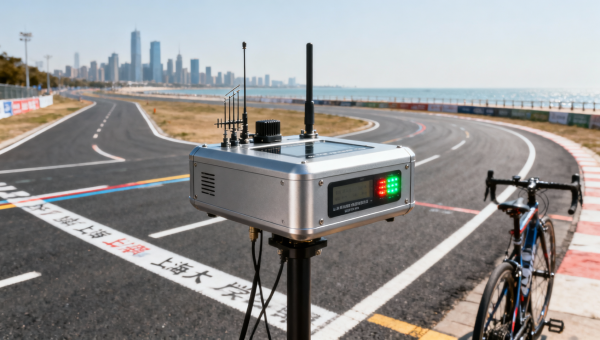
On April 19, 2026, the ‘Phoenix Fenix Cup’ Shanghai University Road Cycling Open — featuring 29 university cycling teams racing in Fengxian Bay — utilized a domestically developed intelligent timing system. The system delivered millisecond-level positioning accuracy and real-time results distribution. It has been certified under ITU-T L.1800 (‘Security and Reliability of IoT Devices for Sports Events’) and is recognized as the first ITU-endorsed commercial sports timing platform from China, qualified for use in Union Cycliste Internationale (UCI)-accredited events.
Industries Affected
Sports Timing & Measurement Equipment Manufacturers
This certification signals growing international technical validation pathways for Chinese-made timing hardware and firmware. Impact manifests in enhanced eligibility for bidding on UCI-sanctioned events and potential shifts in procurement criteria by national federations seeking ITU-aligned reliability benchmarks.
UCI-Accredited Event Organizers & Race Commissioners
Organizers may now consider domestically sourced timing platforms for official race operations without compromising compliance posture. The certification reduces perceived technical risk when evaluating alternatives to established Western vendors — particularly for regional or developmental-tier events where cost, local support, and data sovereignty are prioritized.
IoT Device Security & Compliance Service Providers
The application of ITU-T L.1800 — originally drafted for broader IoT contexts — to sports timing introduces a new vertical use case. Firms offering conformity assessment, test lab services, or certification consulting for IoT devices now have a concrete reference for how this standard applies to time-critical, location-dependent sports infrastructure.
What Enterprises and Practitioners Should Monitor and Do Now
Track official UCI policy updates on approved timing systems
While ITU certification supports technical credibility, UCI maintains its own approval process for timing equipment used in sanctioned races. Stakeholders should monitor whether this ITU endorsement triggers formal recognition or expedited review within UCI’s Technical Regulations framework.
Assess compatibility with existing timing workflows and data protocols
Adoption readiness depends less on certification alone and more on integration capability — including support for common race management software (e.g., RaceDB, ChronoTrack APIs), power/logistics requirements in field deployments, and redundancy configurations. Early technical documentation review is advisable.
Distinguish between certification scope and operational qualification
ITU-T L.1800 addresses security and reliability under defined environmental and functional conditions — not full race-day validation across all UCI categories (e.g., elite road vs. para-cycling). Users should avoid conflating ITU endorsement with blanket operational equivalence across all disciplines or sanctioning levels.
Prepare for potential supply chain localization discussions
With demonstrated compliance in a high-visibility domain, procurement teams at national sports associations or provincial event agencies may initiate internal reviews of timing system sourcing strategies. Suppliers should ensure traceability documentation and after-sales service capacity align with public-sector procurement expectations.
Editorial Perspective / Industry Observation
From an industry perspective, this milestone is best understood not as an immediate market shift, but as a signal of maturing technical governance capacity in China’s sports tech ecosystem. Analysis来看, the ITU-T L.1800 certification reflects alignment with internationally accepted baseline requirements — not necessarily superior performance over incumbent systems. Observation来看, its relevance grows where regulatory harmonization matters more than brand legacy: e.g., multi-sport university games, national youth championships, or emerging markets seeking cost-effective, standards-compliant infrastructure. Current more appropriate interpretation is that it expands the set of technically defensible options — not that it displaces existing solutions.
Conclusion
This certification represents a measured, standards-based advancement in China’s capability to deliver internationally recognized sports timing infrastructure. It does not replace vendor evaluation or UCI compliance verification, but adds a verifiable benchmark for reliability and security. For stakeholders, it is more accurately viewed as an incremental enabler — one that lowers entry barriers for domestic platforms in regulated environments, rather than a disruptive inflection point.
Source Attribution
Main source: Official announcement of the ‘Phoenix Fenix Cup’ Shanghai University Road Cycling Open (April 19, 2026); ITU-T L.1800 standard documentation; publicly confirmed certification status. Note: Ongoing observation is warranted regarding UCI’s formal response and any subsequent inclusion in its list of approved timing systems.
Search News
Hot Articles
Popular Tags
Need ExpertConsultation?
Connect with our specialized leisureengineering team for procurementstrategies.
Recommended News
 Apr 20, 2026China's Smart Timing System Gains ITU Certification at Shanghai Bike EventChina's smart timing system wins ITU-T L.1800 certification — the first Chinese sports timing platform approved for UCI-accredited cycling events. Discover how it reshapes reliability, security & global competitiveness in sports tech.● Theme Park Strategist
 Apr 17, 2026Popular Badminton AI Protocol Launched in ChengduPopular Badminton AI protocol launched in Chengdu — a game-changer for smart sports hardware, VR simulators & outdoor ride manufacturers targeting Asian youth academies.● Theme Park Strategist
 Apr 17, 2026EN 1176-7:2026 Enforced: AI Behavior Recognition Required for EU Outdoor Interactive Play EquipmentEN 1176-7:2026 is now enforced — AI behavior recognition is mandatory for EU outdoor interactive play equipment. Ensure CE compliance now.● Theme Park Strategist
 Apr 16, 2026EN 1176-7:2026 Enforces AI Safety Rules for EU Outdoor Interactive Play EquipmentEN 1176-7:2026 enforces AI safety rules for EU outdoor interactive play equipment — mandatory false-trigger ≤0.3% & local-only data processing. Act now to comply.● Theme Park Strategist
 Apr 13, 20262026 CKC China Karting Championship in Macau Sparks Export Interest for Domestic Racing GearThe 2026 CKC China Karting Championship in Macau showcased FIA-compliant racing gear, sparking export interest for domestic timing systems, carbon fiber kits & sustainable tires. Discover how this event opens global opportunities.● Theme Park Strategist
 Apr 13, 2026Japan Revises Sports Equipment Safety Standards: Mandatory Multilingual E-Manuals for Imported Fitness Gear from April 2026Japan's new Sports Equipment Safety Standards mandate multilingual e-manuals for imported fitness gear from 2026. Learn how this impacts global exporters and key compliance strategies for smooth market entry.● Theme Park Strategist
 Apr 10, 2026Middle East Tensions Raise Shipping Risks in Hormuz Strait, Air Freight Costs for Sports Equipment Surge 12%Middle East tensions escalate shipping risks in Hormuz Strait, causing a 12% surge in air freight costs for sports equipment. Learn how this impacts supply chains and strategies to mitigate delays.● Theme Park Strategist
 Apr 18, 20262026 Shanghai Sailing Open Adopts Domestic Smart Timing System2026 Shanghai Sailing Open adopts China's first ITU-R M.2412–certified smart timing system — a game-changer for marine sports exporters, integrators & event organizers worldwide.● Theme Park Strategist
 Apr 18, 2026EN 1176-7:2026 Enforced: AI Behavior Recognition Mandatory for EU Outdoor Play EquipmentEN 1176-7:2026 is now mandatory — AI behavior recognition required for EU outdoor play equipment. Ensure CE compliance, low-latency certification & market access before shipment.● Theme Park Strategist
 Apr 20, 2026Park benches with bolt corrosion you can’t see until it’s too latePark benches with hidden bolt corrosion risk luxury furniture, hotel furniture & commercial furniture safety—spot invisible degradation before failure.● Theme Park Strategist
 Apr 19, 2026Park benches built for coastal climates—what actually worksDiscover coastal-proof park benches, luxury furniture & custom hotel furniture built to last 25+ years in salt, sun & humidity—engineered for resorts, hotels & commercial spaces.● Theme Park Strategist
 Apr 19, 2026Why park benches fail after two seasons of outdoor usePark benches failing in 2 seasons? Discover why luxury furniture, hotel furniture, and commercial furniture specs matter—and how to choose resilient park benches, hotel chairs, and hotel tables.● Theme Park Strategist
 Apr 19, 2026Outdoor playground shade planning affects more than comfortOutdoor playground shade planning improves safety, durability, and visitor flow for outdoor playground, indoor playground, and trampoline park projects—explore smarter sourcing for swings and more.● Theme Park Strategist
 Apr 19, 2026Why playground swings fail early at busy public sitesPlayground swings at busy public sites fail early due to heavy traffic, weak materials, and poor maintenance. Compare outdoor playground, indoor playground, and trampoline park solutions for safer, longer-lasting performance.● Theme Park Strategist
 Apr 19, 2026Playground swings with fewer maintenance calls over timePlayground swings built for fewer maintenance calls: compare durable options for outdoor playground, indoor playground, and trampoline park projects with smarter lifecycle value.● Theme Park Strategist
 Apr 19, 2026How weather exposure changes outdoor playground safety plansOutdoor playground safety starts with weather planning. Learn how trampoline park, indoor playground, and playground swings buyers reduce risk, protect value, and choose climate-smart equipment.● Theme Park Strategist
 Apr 19, 2026Outdoor playground surfaces that hide higher lifetime costsOutdoor playground surface choices can raise hidden lifetime costs for trampoline park and indoor playground projects. Compare safer, longer-lasting options around playground swings.● Theme Park Strategist
 Apr 18, 2026Playground structures with integrated solar lighting: Is battery life consistent across seasons?Playground structures with integrated solar lighting: Discover seasonal battery performance data for leisure parks, theme park rides & inclusive playgrounds—backed by real-world climate testing and OEM validation.● Theme Park Strategist
 Apr 18, 2026Theme park rides using recycled steel: How does material origin affect fatigue testing?Theme park rides, playground swings & inclusive playground structures using recycled steel demand origin-aware fatigue testing—discover how material provenance impacts safety, durability & compliance.● Theme Park Strategist
 Apr 18, 2026Leisure park shade structures that fade unevenly—UV resistance vs. pigment qualityLeisure park shade structures fading unevenly? Discover why pigment quality—not just UV resistance—dictates longevity, brand integrity & ROI for playground structures, theme park rides & inclusive playgrounds.● Theme Park Strategist
 Apr 18, 2026Playground swings rated for 300kg: Does weight capacity include dynamic load?Playground swings rated for 300kg—do they handle real dynamic loads? Discover certified, inclusive playground structures for leisure parks, theme park rides & more.● Theme Park Strategist
 Apr 18, 2026Playground structures built for coastal climates—do salt-spray tests matter?Playground structures, inclusive playgrounds & theme park rides built for coastal climates—discover why ASTM B117 salt-spray testing matters for safety, compliance & TCO.● Theme Park Strategist
 Apr 18, 2026Theme park rides and service intervals: Why ‘5-year maintenance’ rarely holds upTheme park rides, playground swings & inclusive playground systems demand real-world maintenance—not '5-year' myths. Discover evidence-based service intervals, compliance benchmarks, and smarter sourcing strategies.● Theme Park Strategist
 Apr 18, 2026Leisure park flooring that wears faster than expected—here’s whyLeisure park flooring failing early? Discover why—linked to playground structures, inclusive playground specs, theme park rides & material science. Get data-backed solutions.● Theme Park Strategist