Playground swings with fewer maintenance calls over time
For buyers evaluating playground swings that generate fewer maintenance calls over time, long-term durability matters as much as play value. Whether for an outdoor playground, indoor playground, or trampoline park, selecting the right swing systems can reduce downtime, improve safety compliance, and lower total ownership costs. This guide helps procurement teams and commercial decision-makers compare materials, design features, and supplier capabilities for more reliable playground investments.
In commercial recreation environments, a swing is not a simple accessory. It is a high-use asset exposed to weather, impact, repetitive motion, and varying user loads. For municipal parks, schools, family entertainment centers, resorts, and mixed-use leisure projects, the wrong specification can trigger monthly repairs, rope replacements, seat damage, and avoidable safety inspections.
Procurement teams therefore need to look beyond appearance and unit price. The better question is which playground swings will remain stable after 12, 24, or even 36 months of use, while keeping service calls low and user satisfaction high. That evaluation requires attention to materials, frame engineering, bearings, hardware, maintenance access, and supplier after-sales discipline.
Why low-maintenance playground swings matter in commercial settings
Maintenance frequency directly affects operating cost in the sports and entertainment sector. A swing set that needs inspection-based tightening every 2 to 4 weeks may still be compliant, but it adds labor hours, downtime, and replacement planning. In high-traffic sites, even a single out-of-service bay can reduce perceived quality and create customer complaints.
For procurement managers, fewer maintenance calls usually mean better lifecycle economics. A swing with a purchase price that is 10% to 18% higher can still be the smarter choice if it cuts chain replacement cycles from every 12 months to every 24 to 36 months, or if it reduces technician visits from quarterly to semi-annual intervals.
The issue is even more important in locations where staffing is lean. Resorts, trampoline parks, indoor playground operators, and multi-site distributors often manage 3 to 20 locations at once. Standardizing on durable swing systems helps simplify spare-part inventory, training, and inspection procedures across different projects.
Low-maintenance design also supports risk control. Every service call involves identifying wear points, closing access to users, and documenting corrective action. Reducing the number of wear-related failures lowers the chance of missing a developing issue such as shackle deformation, cracked seat inserts, or loose fastener assemblies.
Typical causes of repeat service calls
In most commercial playground installations, maintenance requests are concentrated around a small number of recurring failure points. Buyers who identify these issues early can screen suppliers more effectively and avoid weak configurations.
- Premature wear in suspension points, especially where bushings or bearings are underspecified for daily motion cycles.
- Corrosion on chains, connectors, and exposed fasteners in coastal, humid, or chlorine-adjacent environments.
- Seat cracking, UV fading, or material hardening after 12 to 24 months of outdoor exposure.
- Frame movement caused by weak anchoring, thin-wall tubing, or inconsistent installation quality.
- Complex replacement procedures that turn a 20-minute repair into a half-day maintenance event.
When these problems appear together, maintenance calls rise quickly. That is why experienced buyers evaluate not only the swing seat or chain, but the entire motion system, support structure, and field-service design.
Material and design choices that reduce maintenance over time
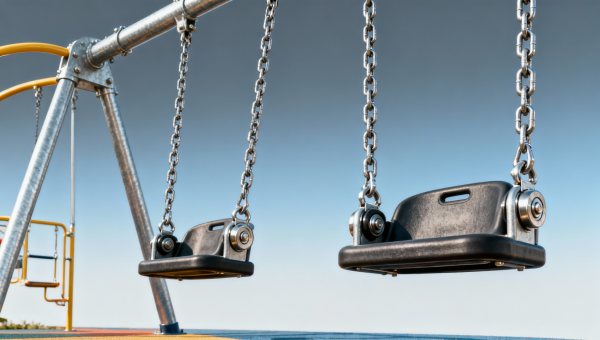
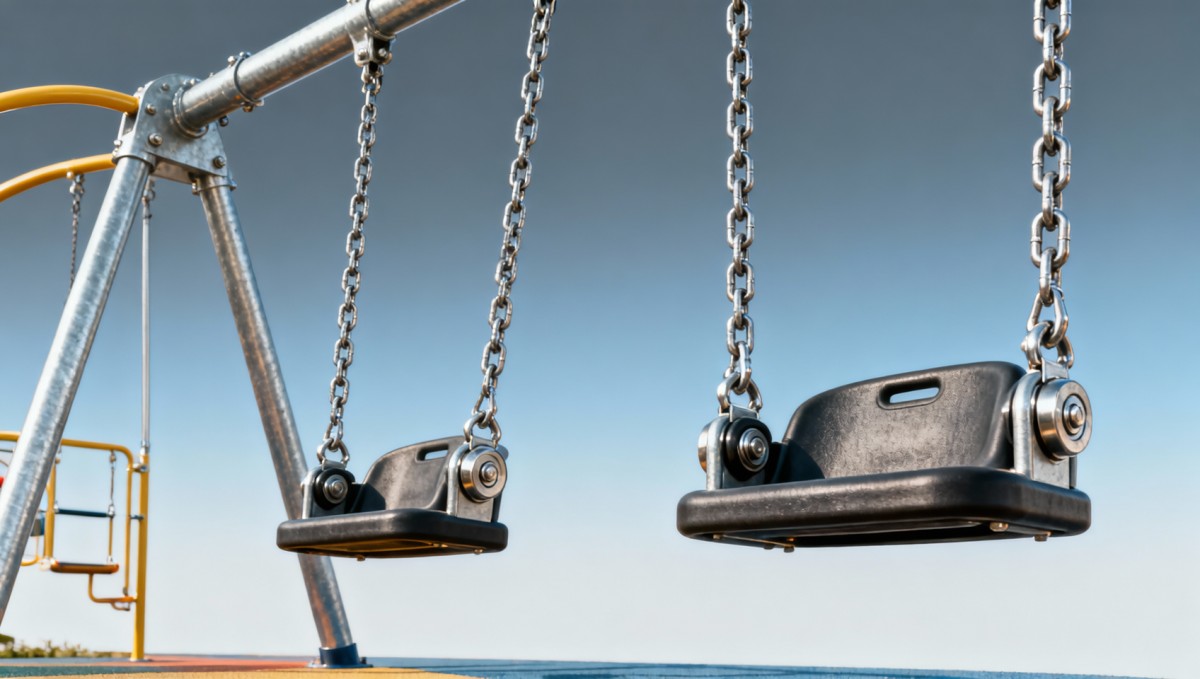
The most durable playground swings combine material selection with practical engineering. Galvanized or stainless steel hardware, UV-stabilized seats, reinforced connection points, and sealed bearing assemblies all contribute to lower maintenance. No single component guarantees performance; reliability comes from how the system is designed as a whole.
Frames intended for outdoor commercial use often perform better when made from heavy-duty steel with protective finishing suited to local climate. In mild inland settings, powder-coated galvanized steel may be sufficient. In coastal or high-moisture regions, buyers often favor higher corrosion resistance even if the initial budget increases by 8% to 20%.
Seat materials also influence maintenance frequency. Rubber seats with reinforced inserts can absorb impact well and remain comfortable, while molded polymer seats may offer easier cleaning for indoor playgrounds. For inclusive or basket swings, textile or net-based components should be checked for abrasion resistance, edge protection, and replacement simplicity.
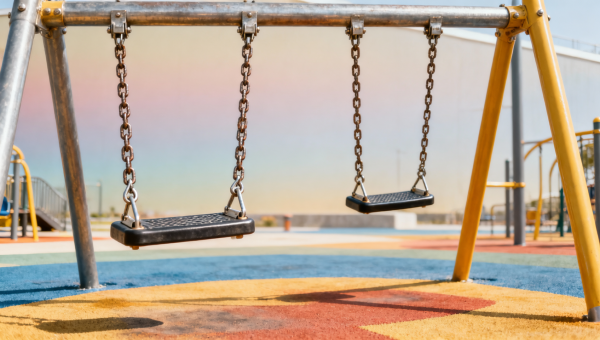
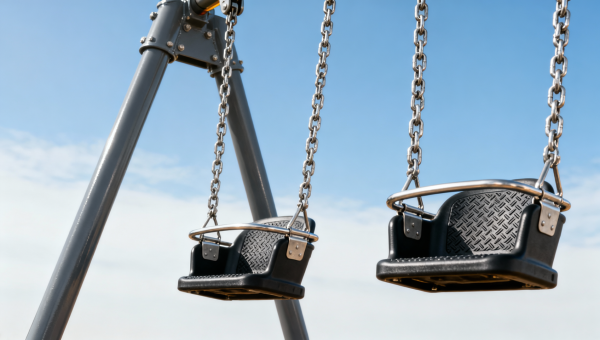
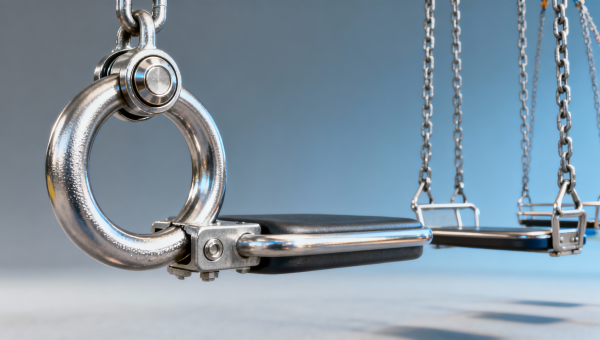
Suspension design is another major factor. Chain systems are familiar and strong, but coating quality matters. Rope-based suspension can improve aesthetics and touch comfort, yet it must be specified for tensile strength, fray resistance, and connector quality. For high-cycle environments, buyers should ask how many motion cycles the joint system is intended to withstand under normal commercial use.
Comparing common swing construction options
The table below summarizes how common material and design choices affect maintenance planning in outdoor and indoor recreation projects.
The key takeaway is that maintenance savings usually come from upgraded wear components rather than cosmetic features. Buyers should prioritize hanger assemblies, finish protection, and replacement-friendly seat connections before considering decorative upgrades.
Specification checkpoints for procurement teams
- Confirm the recommended age range and per-seat load design, especially for public-use installations with mixed user behavior.
- Request details on hardware composition, coating type, and whether replacement parts can be ordered individually.
- Ask whether inspection intervals are monthly, quarterly, or semi-annually under normal commercial use.
- Review whether the supplier provides installation drawings, torque guidelines, and spare-part lists within the quotation pack.
These checkpoints make supplier comparison more objective and reduce the risk of buying a swing system that looks robust but becomes costly after the first operating year.
How to evaluate suppliers for long-term reliability and serviceability
Supplier capability matters as much as product design. Two swing systems with similar dimensions can perform very differently depending on welding consistency, coating process control, packaging protection, documentation quality, and spare-part support. This is especially relevant for distributors, agents, and project buyers sourcing for multiple commercial sites.
A dependable supplier should be able to explain where wear usually occurs, what parts are designed for field replacement, and how quickly service components can be shipped. In practical terms, a 7 to 15 day spare-part lead time is far easier to manage than an undefined replenishment cycle that disrupts operations.
Documentation should also be reviewed early. Buyers benefit from installation manuals, inspection checklists, exploded part diagrams, and recommended maintenance intervals. When this information is missing, service teams often improvise, which can shorten component life or create non-compliant repairs.
For OEM or ODM projects, consistency across batches is critical. If you plan to deploy 30, 50, or 100 units over time, ask how the supplier manages component standardization, hardware continuity, and finish matching. A low-maintenance strategy only works when replacement parts remain compatible across future orders.
Supplier evaluation matrix for commercial swing procurement
The following matrix can help procurement and business assessment teams compare vendors on factors that influence maintenance calls over time.
This type of comparison helps buyers move away from price-only negotiations. Vendors who support field maintenance and standardized replacement parts often create better total value for operators, distributors, and project developers.
Common sourcing mistakes
- Choosing the lowest quotation without checking whether high-wear parts are replaceable as stand-alone items.
- Approving samples for visual design only, without testing hardware movement, noise, and connector finish.
- Ignoring climate fit, especially for seaside parks, shaded wet zones, or indoor sites with aggressive cleaning chemicals.
- Overlooking installation requirements, which can turn a good product into a recurring maintenance problem.
A disciplined supplier review process is one of the most effective ways to reduce maintenance calls before the swings are even installed.
Installation, inspection, and maintenance planning for fewer service calls
Even durable playground swings will underperform if installation and inspection are inconsistent. Commercial buyers should treat commissioning as part of lifecycle management, not as a one-time contractor task. Incorrect anchoring depth, uneven frame alignment, or poorly torqued hardware can create noise, abnormal wear, and early failure within the first 3 to 6 months.
A practical maintenance plan begins with tiered inspections. Many operators use a 3-level structure: visual checks daily or weekly depending on traffic, functional checks monthly, and detailed mechanical reviews quarterly or semi-annually. High-use venues such as entertainment centers and destination parks may tighten the frequency during peak seasons.
Maintenance teams should monitor specific wear indicators rather than relying on general impressions. These include chain elongation, coating breakdown, visible connector wear, seat edge cracking, hanger noise, and any change in swing travel symmetry. Small deviations are easier and cheaper to correct before they become downtime events.
Spare-part planning is equally important. Keeping a minimum stock of high-wear items such as hangers, connectors, seats, and fasteners can reduce repair delays from weeks to hours. For operators with 10 or more swing bays across sites, a simple maintenance kit strategy often delivers better service continuity than ad hoc ordering.
Recommended maintenance workflow
- Check visual condition of seats, chains, ropes, and frame surfaces at the start of each operating day or at least once per week.
- Perform monthly functional checks for noise, joint smoothness, fastener tightness, and wear at pivot points.
- Schedule quarterly or semi-annual mechanical review with documented measurements and part replacement decisions.
- Record every repair and component change to identify recurring failure patterns across locations.
- Adjust part stocking levels every 6 to 12 months based on actual consumption and seasonal traffic.
This workflow improves predictability. Instead of reacting to breakdowns, operators can shift to planned maintenance and keep visitor-facing equipment available for longer operating windows.
Inspection priorities by venue type
Different sports and entertainment environments create different wear patterns. Outdoor municipal sites face UV, rain, dirt, and seasonal temperature shifts. Indoor playgrounds deal more with intensive repeat cycles, cleaning chemicals, and fast turnaround between sessions. Trampoline and hybrid play parks often require closer attention to supervision-related stress events and accidental misuse.
Matching inspection focus to venue conditions is often more effective than applying one universal checklist. That is especially useful for distributors and facility groups managing mixed portfolios.
Choosing the right swing configuration for different recreation projects
Not every low-maintenance swing solution looks the same. The right configuration depends on traffic volume, user age, climate, maintenance resources, and design intent. A school playground may prioritize rugged simplicity, while a resort or destination leisure project may need a more design-led specification without sacrificing serviceability.
For many buyers, the best starting point is to define expected use intensity. Light to moderate use may support standard commercial configurations with routine monthly checks. Heavy public use, however, generally justifies upgraded hangers, more corrosion-resistant hardware, and higher spare-part availability from day one.
Accessibility and age mix also affect configuration. Inclusive basket swings, toddler seats, and standard belt seats create different maintenance profiles. The more specialized the seat, the more important it is to verify replacement lead time, field-installation difficulty, and compatibility with the selected frame system.
Buyers should also consider operational aesthetics. In commercial hospitality and entertainment projects, the swing must fit brand image while staying practical to maintain. This means selecting finishes and colors that conceal normal wear reasonably well, rather than choosing only visually striking options that show scratches or fading too quickly.
Application-based selection guide
The table below can help buyers align swing design with operating conditions and maintenance capacity.
This comparison shows that low-maintenance procurement is highly context-dependent. The same swing model may work well in one venue and underperform in another if usage intensity, climate exposure, or service capability are not matched correctly.
FAQ for buyers and distributors
How long should commercial playground swings last before major replacement?
Service life depends on environment, traffic, and maintenance quality, but many commercial components are evaluated over multi-year use cycles. Seats, chains, or bearings may need replacement earlier than the frame. Buyers should ask for component-specific maintenance expectations rather than a single lifespan claim.
What should distributors prioritize when building a swing product line?
Focus on standardized spare parts, clear documentation, and flexible configurations that cover outdoor, indoor, and inclusive play scenarios. A product line that is easy to service across different customers usually creates stronger repeat business than one built only around appearance or price.
Are inclusive swings harder to maintain?
They can be, because basket or group seats typically involve more material area, more connection points, and higher replacement cost. However, if the frame, connectors, and seat materials are chosen carefully, maintenance can remain manageable and predictable.
For commercial buyers, the most reliable playground swings are usually the ones designed for serviceability as much as for play value. Lower maintenance calls come from the right combination of durable materials, replaceable wear parts, robust hanger assemblies, correct installation, and a supplier that can support long-term operation with documentation and spare parts.
For procurement teams, business evaluators, and distribution partners working across the sports and entertainment sector, a disciplined sourcing process can reduce downtime, protect safety performance, and improve total ownership value over 24 to 60 months. If you are comparing swing solutions for an outdoor playground, indoor playground, or leisure park project, now is the right time to review specifications, maintenance expectations, and supplier service capability in detail.
To explore sourcing options aligned with commercial durability and long-term service efficiency, contact GCT for tailored product comparisons, supplier evaluation support, and project-specific playground solutions.
Search News
Hot Articles
Popular Tags
Need ExpertConsultation?
Connect with our specialized leisureengineering team for procurementstrategies.
Recommended News
 Apr 17, 2026Popular Badminton AI Protocol Launched in ChengduPopular Badminton AI protocol launched in Chengdu — a game-changer for smart sports hardware, VR simulators & outdoor ride manufacturers targeting Asian youth academies.● Theme Park Strategist
 Apr 17, 2026EN 1176-7:2026 Enforced: AI Behavior Recognition Required for EU Outdoor Interactive Play EquipmentEN 1176-7:2026 is now enforced — AI behavior recognition is mandatory for EU outdoor interactive play equipment. Ensure CE compliance now.● Theme Park Strategist
 Apr 16, 2026EN 1176-7:2026 Enforces AI Safety Rules for EU Outdoor Interactive Play EquipmentEN 1176-7:2026 enforces AI safety rules for EU outdoor interactive play equipment — mandatory false-trigger ≤0.3% & local-only data processing. Act now to comply.● Theme Park Strategist
 Apr 13, 20262026 CKC China Karting Championship in Macau Sparks Export Interest for Domestic Racing GearThe 2026 CKC China Karting Championship in Macau showcased FIA-compliant racing gear, sparking export interest for domestic timing systems, carbon fiber kits & sustainable tires. Discover how this event opens global opportunities.● Theme Park Strategist
 Apr 13, 2026Japan Revises Sports Equipment Safety Standards: Mandatory Multilingual E-Manuals for Imported Fitness Gear from April 2026Japan's new Sports Equipment Safety Standards mandate multilingual e-manuals for imported fitness gear from 2026. Learn how this impacts global exporters and key compliance strategies for smooth market entry.● Theme Park Strategist
 Apr 10, 2026Middle East Tensions Raise Shipping Risks in Hormuz Strait, Air Freight Costs for Sports Equipment Surge 12%Middle East tensions escalate shipping risks in Hormuz Strait, causing a 12% surge in air freight costs for sports equipment. Learn how this impacts supply chains and strategies to mitigate delays.● Theme Park Strategist
 Apr 18, 20262026 Shanghai Sailing Open Adopts Domestic Smart Timing System2026 Shanghai Sailing Open adopts China's first ITU-R M.2412–certified smart timing system — a game-changer for marine sports exporters, integrators & event organizers worldwide.● Theme Park Strategist
 Apr 18, 2026EN 1176-7:2026 Enforced: AI Behavior Recognition Mandatory for EU Outdoor Play EquipmentEN 1176-7:2026 is now mandatory — AI behavior recognition required for EU outdoor play equipment. Ensure CE compliance, low-latency certification & market access before shipment.● Theme Park Strategist
 Apr 19, 2026Park benches built for coastal climates—what actually worksDiscover coastal-proof park benches, luxury furniture & custom hotel furniture built to last 25+ years in salt, sun & humidity—engineered for resorts, hotels & commercial spaces.● Theme Park Strategist
 Apr 19, 2026Why park benches fail after two seasons of outdoor usePark benches failing in 2 seasons? Discover why luxury furniture, hotel furniture, and commercial furniture specs matter—and how to choose resilient park benches, hotel chairs, and hotel tables.● Theme Park Strategist
 Apr 19, 2026Outdoor playground shade planning affects more than comfortOutdoor playground shade planning improves safety, durability, and visitor flow for outdoor playground, indoor playground, and trampoline park projects—explore smarter sourcing for swings and more.● Theme Park Strategist
 Apr 19, 2026Why playground swings fail early at busy public sitesPlayground swings at busy public sites fail early due to heavy traffic, weak materials, and poor maintenance. Compare outdoor playground, indoor playground, and trampoline park solutions for safer, longer-lasting performance.● Theme Park Strategist
 Apr 19, 2026Playground swings with fewer maintenance calls over timePlayground swings built for fewer maintenance calls: compare durable options for outdoor playground, indoor playground, and trampoline park projects with smarter lifecycle value.● Theme Park Strategist
 Apr 19, 2026How weather exposure changes outdoor playground safety plansOutdoor playground safety starts with weather planning. Learn how trampoline park, indoor playground, and playground swings buyers reduce risk, protect value, and choose climate-smart equipment.● Theme Park Strategist
 Apr 19, 2026Outdoor playground surfaces that hide higher lifetime costsOutdoor playground surface choices can raise hidden lifetime costs for trampoline park and indoor playground projects. Compare safer, longer-lasting options around playground swings.● Theme Park Strategist
 Apr 18, 2026Playground structures with integrated solar lighting: Is battery life consistent across seasons?Playground structures with integrated solar lighting: Discover seasonal battery performance data for leisure parks, theme park rides & inclusive playgrounds—backed by real-world climate testing and OEM validation.● Theme Park Strategist
 Apr 18, 2026Theme park rides using recycled steel: How does material origin affect fatigue testing?Theme park rides, playground swings & inclusive playground structures using recycled steel demand origin-aware fatigue testing—discover how material provenance impacts safety, durability & compliance.● Theme Park Strategist
 Apr 18, 2026Leisure park shade structures that fade unevenly—UV resistance vs. pigment qualityLeisure park shade structures fading unevenly? Discover why pigment quality—not just UV resistance—dictates longevity, brand integrity & ROI for playground structures, theme park rides & inclusive playgrounds.● Theme Park Strategist
 Apr 18, 2026Playground swings rated for 300kg: Does weight capacity include dynamic load?Playground swings rated for 300kg—do they handle real dynamic loads? Discover certified, inclusive playground structures for leisure parks, theme park rides & more.● Theme Park Strategist
 Apr 18, 2026Playground structures built for coastal climates—do salt-spray tests matter?Playground structures, inclusive playgrounds & theme park rides built for coastal climates—discover why ASTM B117 salt-spray testing matters for safety, compliance & TCO.● Theme Park Strategist
 Apr 18, 2026Theme park rides and service intervals: Why ‘5-year maintenance’ rarely holds upTheme park rides, playground swings & inclusive playground systems demand real-world maintenance—not '5-year' myths. Discover evidence-based service intervals, compliance benchmarks, and smarter sourcing strategies.● Theme Park Strategist
 Apr 18, 2026Leisure park flooring that wears faster than expected—here’s whyLeisure park flooring failing early? Discover why—linked to playground structures, inclusive playground specs, theme park rides & material science. Get data-backed solutions.● Theme Park Strategist
 Apr 18, 2026Playground swings with rust-resistant hardware—what’s actually tested?Playground swings with verified rust-resistant hardware—tested to ASTM F1487 & 2,000h salt spray. Also sourcing hotel beds, custom furniture, catering equipment, soundproofing materials, and instrument cables.● Theme Park Strategist
 Apr 18, 2026Custom furniture for leisure parks: When 'bespoke' means longer lead timesCustom furniture for leisure parks—covering playground swings, inclusive playgrounds, theme park rides & soundproofing materials. Discover how to balance bespoke quality with realistic lead times.● Theme Park Strategist