Outdoor playground surfaces that hide higher lifetime costs
Choosing an outdoor playground surface based on upfront price alone can create hidden long-term expenses for operators of outdoor playground, indoor playground, and trampoline park projects. From maintenance and safety compliance to replacement cycles around playground swings, the wrong material can erode ROI over time. This guide helps procurement teams, distributors, and commercial buyers identify surface options that balance durability, performance, and lifetime value.
For B2B buyers in the sports and entertainment sector, surface selection is not a cosmetic detail. It affects injury risk, inspection outcomes, downtime, replacement frequency, labor cost, and even whether a site remains attractive to schools, municipalities, family entertainment centers, resorts, and developers. A surface that looks economical in year 1 can become expensive by year 3 if it compacts, cracks, fades, holds water, or fails around high-impact zones such as slide exits and playground swings.
The most reliable sourcing decisions are made by comparing lifetime cost, not only purchase price per square meter. That means evaluating expected service life, critical fall height performance, maintenance cycles, drainage behavior, local climate fit, accessibility, and the availability of replacement materials in 12–36 months. For distributors, agents, and procurement teams, these factors directly influence resale reputation and long-term account value.
Why low upfront pricing can distort real playground surface economics
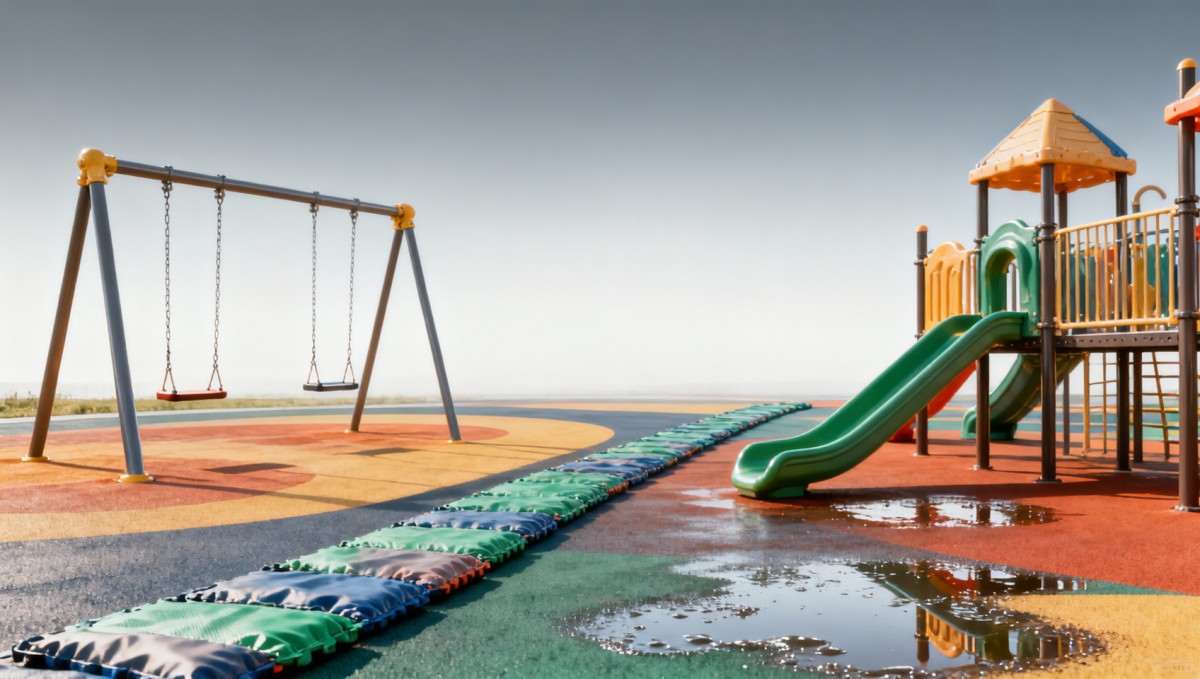
Many outdoor playground projects are budgeted under tight capital constraints, especially in public recreation, hospitality, education, and mixed-use commercial developments. In these cases, buyers often compare only the initial installed cost of poured-in-place rubber, rubber tiles, synthetic turf, engineered wood fiber, bonded rubber mulch, and loose-fill systems. The problem is that two options with a 15% price gap at installation can produce a 40%–70% difference in total ownership cost over a 5–8 year period.
The hidden cost pattern usually appears in four areas. First, maintenance intensity varies widely. Loose-fill surfaces may need topping up every 3–12 months depending on traffic and weather. Second, safety consistency changes over time, particularly around heavy-use zones. Third, replacement can be partial or total, and partial repair is not always visually or technically seamless. Fourth, operational interruptions matter. A venue that closes a play zone for 2–5 days during repairs may lose revenue, visitor satisfaction, or scheduled programming.
For commercial buyers, the real question is not “Which surface is cheapest today?” but “Which surface protects compliance, user experience, and maintenance budgets over the next 60–96 months?” This is especially important for projects with playground swings, climbing towers, and multi-age activity zones, where wear is concentrated and impact attenuation must remain stable despite repeated use.
A practical review should include installation cost, annual upkeep, expected resurfacing cycle, labor intensity, cleaning needs, and weather-related degradation. Buyers who skip this lifecycle review may underestimate the true cost of ownership by a meaningful margin, particularly in sites exposed to UV, rainfall, freeze-thaw cycles, or high footfall above 300 users per day.
The most common hidden cost triggers
- Frequent top-up requirements in loose-fill systems after displacement under swings and at slide exits.
- Poor drainage that leads to puddling, microbial growth, and temporary shutdowns after rain.
- UV fading and binder degradation that shorten the service life of lower-grade rubber systems.
- Patch repairs that create uneven surfaces and visible color mismatch, reducing site appeal.
- Inspection failures when impact performance drops below target levels in high-wear zones.
A buyer’s first filter
Before requesting quotations, define 4 basic thresholds: expected daily traffic, climate exposure, cleaning frequency, and minimum replacement horizon. If the project targets fewer than 3 years of use before renovation, some lower-cost options may be acceptable. If the target horizon is 7–10 years, durable systems with lower maintenance burden usually offer better financial control.
Surface types that often look affordable but cost more over time
Not every low-cost surface becomes expensive, but some categories repeatedly generate higher lifetime costs when used in demanding outdoor playground conditions. The gap becomes more visible when the site includes heavy traffic, hospitality-grade aesthetic expectations, or safety audits tied to institutional procurement standards. Buyers should compare not only price per square meter but also performance retention after 12, 24, and 48 months.
Loose-fill materials such as engineered wood fiber and rubber mulch can be suitable in certain budgets, but they are highly dependent on maintenance discipline. If a site team cannot rake, redistribute, inspect depth, and replenish material at regular intervals, initial savings can disappear quickly. Synthetic turf can also appear cost-efficient, yet when paired with an unsuitable shock pad or insufficient infill management, wear paths and compaction may increase repair needs.
Rubber tiles are another example. They can be attractive for modular installation and targeted repairs, but seams, edge curl, adhesive failure, and base movement can raise service calls if sub-base preparation is weak. In contrast, premium poured-in-place systems usually require higher initial spending, but when properly specified, they may reduce maintenance complexity and provide more uniform performance over a longer service interval.
The table below compares common commercial playground surface options from a lifetime cost perspective rather than a simple procurement-price view.
The key takeaway is that maintenance burden and performance stability often matter more than initial price. For institutional and commercial recreation buyers, a surface that needs re-leveling every few weeks or patching every season can consume labor budgets and create service disruptions that are not visible in the first quotation.
Where these costs usually appear first
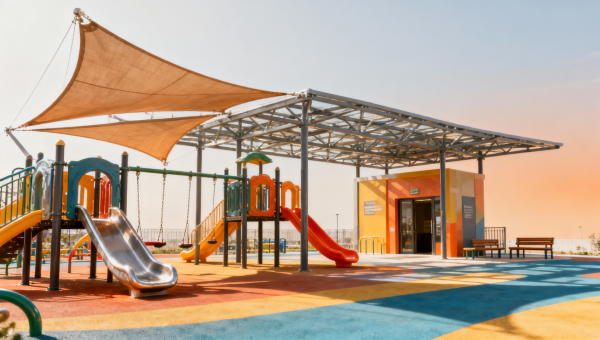
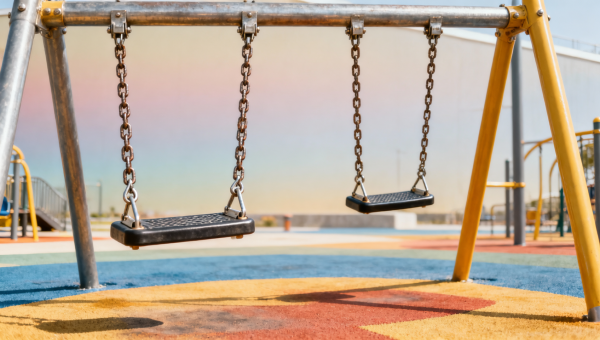
The first failure points are rarely uniform across the whole play area. They usually emerge in 5 specific zones: under playground swings, slide exits, merry-go-round perimeters, climbing wall landings, and circulation routes linking multiple play elements. Procurement teams should ask suppliers how each surface behaves in those concentrated impact areas after 6–18 months of use.
How to evaluate lifetime value: safety, maintenance, drainage, and replacement cycles
A strong sourcing decision uses a multi-factor scorecard instead of a single price comparison. In practice, most commercial buyers should review at least 6 dimensions: impact attenuation, accessibility, drainage rate, cleaning demand, repair complexity, and expected service life. If the project serves schools, public venues, hospitality properties, or branded entertainment spaces, aesthetics and color retention should be added as a seventh criterion.
Safety performance should be evaluated over time, not only at handover. A surface that tests well on day 1 may lose effectiveness if the material compacts, shifts, or hardens. This matters around equipment with higher fall risk. Even when the play area is modest in size, repeated use can create uneven performance zones within 12–24 months. Buyers should ask how the surface is maintained to preserve its impact protection rather than assuming compliance is permanent.
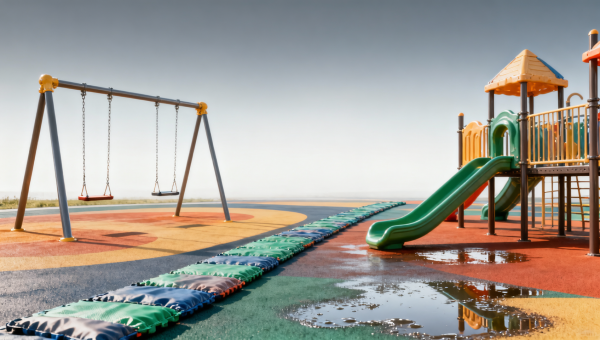
Drainage is another underpriced variable. In climates with frequent rainfall or irrigation runoff, poor water management increases downtime and surface degradation. A system that drains efficiently after light to moderate rain can reopen faster and reduce cleaning labor. Where puddling persists for 12–24 hours, operators may face slip hazards, odor issues, and accelerated wear. For resorts, parks, and family entertainment venues, every closure window affects visitor experience.
Replacement strategy also changes lifetime cost. Some surfaces allow localized repair within 1–3 square meters, while others require larger visual-field replacement to avoid seam mismatch or color inconsistency. For procurement teams managing multiple sites, supply continuity is critical. If the same color blend, granule composition, or turf style is not available 18 months later, even a small repair can become a broader resurfacing project.
Recommended B2B evaluation framework
The table below provides a practical framework for comparing surface options during commercial procurement and distributor review.
This framework helps buyers move from a product conversation to a financial-risk conversation. A surface that costs more upfront but reduces maintenance events from 12 visits per year to 3 or 4 may be the stronger commercial choice, especially across multi-site portfolios.
Four questions every buyer should ask suppliers
- What is the expected maintenance frequency in a site with medium or heavy use?
- How does the surface perform in wet climates, strong UV, or freeze-thaw conditions?
- Can high-wear zones be repaired without replacing a large surrounding area?
- Will matching materials still be available after 12–24 months?
Selecting the right surface for different commercial recreation scenarios
Different venues carry different cost priorities. A municipal playground may prioritize budget discipline and maintenance practicality. A resort or hotel family zone may place equal value on appearance, barefoot comfort, and rapid reopening after rain. A trampoline park with connected outdoor activity areas may need surface continuity between indoor and outdoor visitor expectations. For this reason, surface selection should start with use-case mapping rather than generic product preference.
Outdoor playground projects with children under 12 often experience repeated wear around slides, swings, and climbing structures. In these spaces, consistent impact performance and easy visual inspection matter more than decorative complexity. In hospitality and branded entertainment settings, buyers may also require custom color zoning, thematic design, and cleaner edge detailing, which can make modular systems less attractive if seams are likely to open over time.
School and institutional buyers usually need a surface that supports predictable maintenance budgets across 3–5 fiscal years. In those cases, a slightly higher installation cost may be justified if it lowers the need for weekly labor intervention. Distributors and agents should also consider how easily the product can be specified by architects, landscape teams, and general contractors, because complicated installation sequences can increase project risk.
A scenario-based approach reduces mismatch. The goal is not to identify one “best” material for all sites, but to avoid selecting an option whose weaknesses are amplified by the actual operating environment.
Scenario mapping for procurement teams
This type of mapping is useful for procurement reviews because it converts general surface claims into operational relevance. It also helps distributors and sourcing teams recommend products that align with the client’s staffing model, maintenance capability, and brand expectations.
Typical warning signs of a poor surface fit
- The supplier emphasizes installation price but provides little detail on upkeep over 24–60 months.
- No clear answer is given for repairs under playground swings or slide exits.
- Drainage discussion focuses on the top layer only and ignores the base system.
- Replacement material availability is uncertain for future color or texture matching.
Implementation, inspection, and maintenance planning that protects ROI
Even the right product can become a poor investment if installation quality, inspection routines, and maintenance planning are weak. Commercial buyers should treat surface procurement as a 3-stage process: pre-installation assessment, installation control, and post-installation care. Errors at stage 1 or 2 often create the “hidden costs” that are later blamed on the material itself.
Pre-installation review should confirm slope, drainage design, base stability, edge transitions, and usage zoning. During installation, buyers should check weather conditions, curing windows, seam treatment, and thickness consistency in high-impact areas. After handover, the operator should follow a documented routine that includes inspection frequency, cleaning method, seasonal checks, and repair escalation criteria. A commercial site without this plan usually experiences avoidable deterioration within the first 6–18 months.
Maintenance does not need to be complicated, but it must be realistic. For example, a venue with more than 200 daily users may need weekly visual checks and monthly condition reviews in high-wear zones. Lower-traffic sites may function well with monthly inspections and seasonal deep maintenance. The correct interval depends on surface type, climate, and equipment layout. Procurement teams should request these intervals before final selection, not after project handover.
For distributors and agents, after-sales support is also a commercial differentiator. Offering guidance on cleaning schedules, repair thresholds, and spare material planning helps reduce claims and improve customer retention. In many cases, buyers remember service responsiveness more than the product brochure.
A practical 5-step control plan
- Define project use profile: age group, peak daily traffic, weather exposure, and equipment risk zones.
- Compare surfaces by 5-year operating cost, not just installed price.
- Verify drainage, base construction, and repair method before order confirmation.
- Document inspection frequency for weeks 1–12, months 3–12, and annual review cycles.
- Secure a spare-material or future-match plan for color and texture continuity.
FAQ for buyers and specifiers
How long should a commercial playground surface last?
It depends on material type, climate, traffic, and maintenance discipline. In commercial conditions, some systems may require frequent topping up within the first year, while others can provide a longer service interval of 5–8 years before major resurfacing. Buyers should request a realistic maintenance and refresh timeline for their usage profile rather than relying on a single headline lifespan.
Which areas fail first in outdoor playgrounds?
The highest-risk zones are usually under playground swings, at slide exits, beneath spinning elements, and along repeated circulation paths. These areas should receive special thickness, reinforcement, drainage, or maintenance attention. If a quotation treats all zones identically, the budget may not reflect actual wear patterns.
Is a low-maintenance surface always the most cost-effective?
Not always. Some low-maintenance systems have higher initial cost, and some lower-cost systems can work well if the site has strong maintenance capacity. The best choice depends on whether the operator can support the required labor, inspection frequency, and repair response time over the next 3–7 years.
For commercial recreation buyers, the smartest outdoor playground surface is rarely the one with the lowest day-one price. It is the one that preserves safety performance, controls maintenance labor, handles weather well, and avoids premature replacement in high-wear areas. When the sourcing process accounts for drainage, repairability, inspection needs, and long-term material availability, lifetime value becomes clearer and procurement risk falls.
Global Commercial Trade supports buyers, distributors, and project teams seeking practical sourcing insight across amusement and leisure environments. If you are evaluating outdoor playground, indoor playground, or trampoline park surface options, contact us to discuss product-fit criteria, compare commercial surface strategies, and get a tailored sourcing approach for your next project.
Search News
Hot Articles
Popular Tags
Need ExpertConsultation?
Connect with our specialized leisureengineering team for procurementstrategies.
Recommended News
 Apr 17, 2026Popular Badminton AI Protocol Launched in ChengduPopular Badminton AI protocol launched in Chengdu — a game-changer for smart sports hardware, VR simulators & outdoor ride manufacturers targeting Asian youth academies.● Theme Park Strategist
 Apr 17, 2026EN 1176-7:2026 Enforced: AI Behavior Recognition Required for EU Outdoor Interactive Play EquipmentEN 1176-7:2026 is now enforced — AI behavior recognition is mandatory for EU outdoor interactive play equipment. Ensure CE compliance now.● Theme Park Strategist
 Apr 16, 2026EN 1176-7:2026 Enforces AI Safety Rules for EU Outdoor Interactive Play EquipmentEN 1176-7:2026 enforces AI safety rules for EU outdoor interactive play equipment — mandatory false-trigger ≤0.3% & local-only data processing. Act now to comply.● Theme Park Strategist
 Apr 13, 20262026 CKC China Karting Championship in Macau Sparks Export Interest for Domestic Racing GearThe 2026 CKC China Karting Championship in Macau showcased FIA-compliant racing gear, sparking export interest for domestic timing systems, carbon fiber kits & sustainable tires. Discover how this event opens global opportunities.● Theme Park Strategist
 Apr 13, 2026Japan Revises Sports Equipment Safety Standards: Mandatory Multilingual E-Manuals for Imported Fitness Gear from April 2026Japan's new Sports Equipment Safety Standards mandate multilingual e-manuals for imported fitness gear from 2026. Learn how this impacts global exporters and key compliance strategies for smooth market entry.● Theme Park Strategist
 Apr 10, 2026Middle East Tensions Raise Shipping Risks in Hormuz Strait, Air Freight Costs for Sports Equipment Surge 12%Middle East tensions escalate shipping risks in Hormuz Strait, causing a 12% surge in air freight costs for sports equipment. Learn how this impacts supply chains and strategies to mitigate delays.● Theme Park Strategist
 Apr 18, 20262026 Shanghai Sailing Open Adopts Domestic Smart Timing System2026 Shanghai Sailing Open adopts China's first ITU-R M.2412–certified smart timing system — a game-changer for marine sports exporters, integrators & event organizers worldwide.● Theme Park Strategist
 Apr 18, 2026EN 1176-7:2026 Enforced: AI Behavior Recognition Mandatory for EU Outdoor Play EquipmentEN 1176-7:2026 is now mandatory — AI behavior recognition required for EU outdoor play equipment. Ensure CE compliance, low-latency certification & market access before shipment.● Theme Park Strategist
 Apr 19, 2026Park benches built for coastal climates—what actually worksDiscover coastal-proof park benches, luxury furniture & custom hotel furniture built to last 25+ years in salt, sun & humidity—engineered for resorts, hotels & commercial spaces.● Theme Park Strategist
 Apr 19, 2026Why park benches fail after two seasons of outdoor usePark benches failing in 2 seasons? Discover why luxury furniture, hotel furniture, and commercial furniture specs matter—and how to choose resilient park benches, hotel chairs, and hotel tables.● Theme Park Strategist
 Apr 19, 2026Outdoor playground shade planning affects more than comfortOutdoor playground shade planning improves safety, durability, and visitor flow for outdoor playground, indoor playground, and trampoline park projects—explore smarter sourcing for swings and more.● Theme Park Strategist
 Apr 19, 2026Why playground swings fail early at busy public sitesPlayground swings at busy public sites fail early due to heavy traffic, weak materials, and poor maintenance. Compare outdoor playground, indoor playground, and trampoline park solutions for safer, longer-lasting performance.● Theme Park Strategist
 Apr 19, 2026Playground swings with fewer maintenance calls over timePlayground swings built for fewer maintenance calls: compare durable options for outdoor playground, indoor playground, and trampoline park projects with smarter lifecycle value.● Theme Park Strategist
 Apr 19, 2026How weather exposure changes outdoor playground safety plansOutdoor playground safety starts with weather planning. Learn how trampoline park, indoor playground, and playground swings buyers reduce risk, protect value, and choose climate-smart equipment.● Theme Park Strategist
 Apr 19, 2026Outdoor playground surfaces that hide higher lifetime costsOutdoor playground surface choices can raise hidden lifetime costs for trampoline park and indoor playground projects. Compare safer, longer-lasting options around playground swings.● Theme Park Strategist
 Apr 18, 2026Playground structures with integrated solar lighting: Is battery life consistent across seasons?Playground structures with integrated solar lighting: Discover seasonal battery performance data for leisure parks, theme park rides & inclusive playgrounds—backed by real-world climate testing and OEM validation.● Theme Park Strategist
 Apr 18, 2026Theme park rides using recycled steel: How does material origin affect fatigue testing?Theme park rides, playground swings & inclusive playground structures using recycled steel demand origin-aware fatigue testing—discover how material provenance impacts safety, durability & compliance.● Theme Park Strategist
 Apr 18, 2026Leisure park shade structures that fade unevenly—UV resistance vs. pigment qualityLeisure park shade structures fading unevenly? Discover why pigment quality—not just UV resistance—dictates longevity, brand integrity & ROI for playground structures, theme park rides & inclusive playgrounds.● Theme Park Strategist
 Apr 18, 2026Playground swings rated for 300kg: Does weight capacity include dynamic load?Playground swings rated for 300kg—do they handle real dynamic loads? Discover certified, inclusive playground structures for leisure parks, theme park rides & more.● Theme Park Strategist
 Apr 18, 2026Playground structures built for coastal climates—do salt-spray tests matter?Playground structures, inclusive playgrounds & theme park rides built for coastal climates—discover why ASTM B117 salt-spray testing matters for safety, compliance & TCO.● Theme Park Strategist
 Apr 18, 2026Theme park rides and service intervals: Why ‘5-year maintenance’ rarely holds upTheme park rides, playground swings & inclusive playground systems demand real-world maintenance—not '5-year' myths. Discover evidence-based service intervals, compliance benchmarks, and smarter sourcing strategies.● Theme Park Strategist
 Apr 18, 2026Leisure park flooring that wears faster than expected—here’s whyLeisure park flooring failing early? Discover why—linked to playground structures, inclusive playground specs, theme park rides & material science. Get data-backed solutions.● Theme Park Strategist
 Apr 18, 2026Playground swings with rust-resistant hardware—what’s actually tested?Playground swings with verified rust-resistant hardware—tested to ASTM F1487 & 2,000h salt spray. Also sourcing hotel beds, custom furniture, catering equipment, soundproofing materials, and instrument cables.● Theme Park Strategist
 Apr 18, 2026Custom furniture for leisure parks: When 'bespoke' means longer lead timesCustom furniture for leisure parks—covering playground swings, inclusive playgrounds, theme park rides & soundproofing materials. Discover how to balance bespoke quality with realistic lead times.● Theme Park Strategist