2026 Shanghai Smart Campus Expo: VR EdTech Gains ITU & ISO/IEC Dual Certification
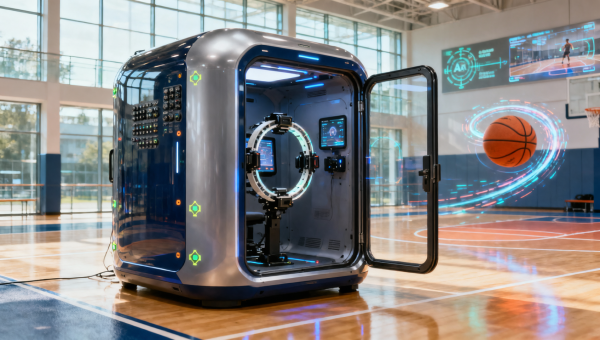
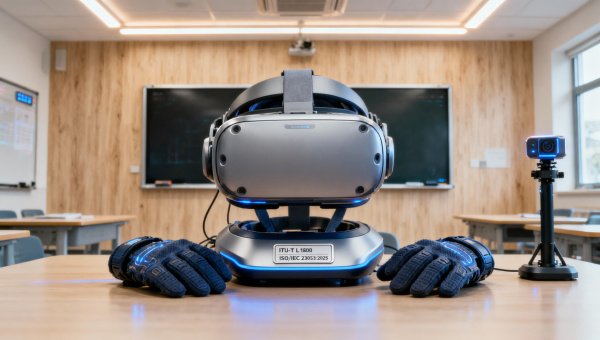
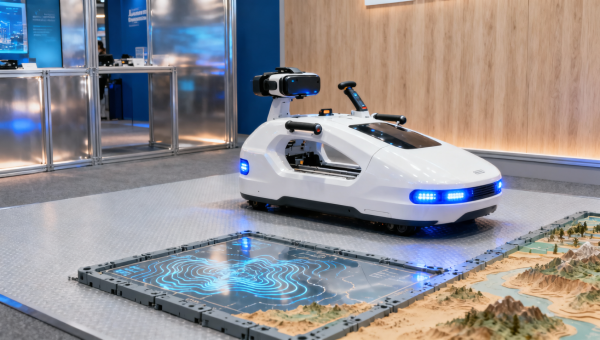
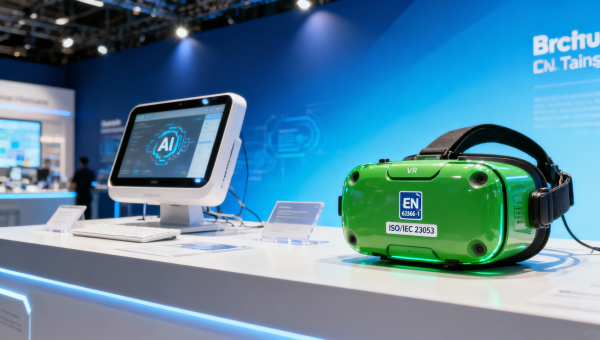
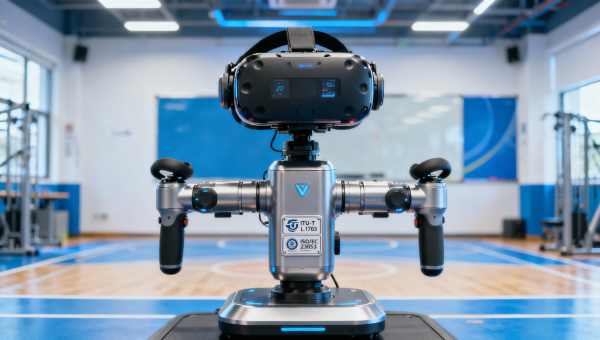
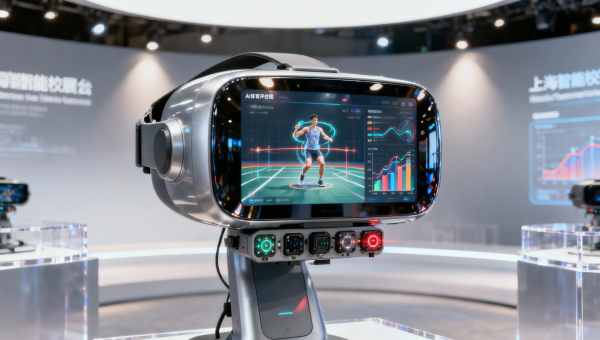
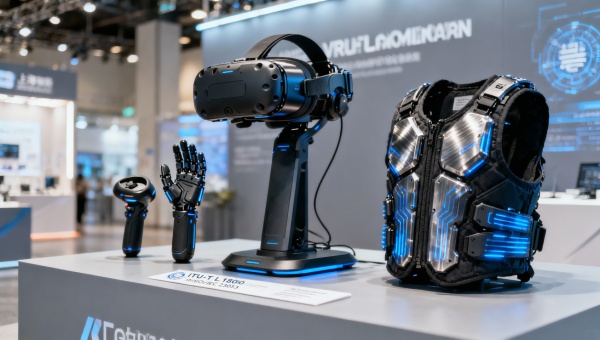
At the 2026 Shanghai International Smart Campus Exhibition (April 15–17), six Chinese Smart Campus Tech enterprises unveiled VR haptic teaching devices—including physics experiment simulators, AI-powered sports assessment mirrors, and immersive language training stations—all certified to both ITU-T Y.3507 and ISO/IEC 23053:2025. This marks the first global batch of educational AI devices compliant with international interoperability standards for smart education infrastructure—making it highly relevant for edtech hardware manufacturers, export-focused OEMs, education procurement agencies, and standards-compliance service providers.
Event Overview
The 2026 Shanghai International Smart Campus Exhibition took place from April 15 to 17, 2026. During the event, six China-based Smart Campus Tech companies demonstrated VR haptic teaching equipment. All exhibited units—including physics experiment simulation cabins, AI sports evaluation mirrors, and immersive language practice terminals—were confirmed to have achieved dual certification under ITU-T Y.3507 and ISO/IEC 23053:2025. According to publicly available information, this certification is now listed as a prerequisite for inclusion in the 2026–2027 academic year smart classroom procurement shortlists of the UAE Ministry of Education and the Polish Ministry of Education and Science.
Industries Affected
EdTech Hardware Exporters
These companies face direct implications for market access in jurisdictions adopting ITU/ISO-aligned procurement rules. The UAE and Poland’s explicit use of the dual certification as a white-listing condition means compliance is no longer optional for tender eligibility in those markets.
OEM/ODM Manufacturers Serving EdTech Brands
Manufacturers supplying core components (e.g., motion-tracking sensors, low-latency display modules, or haptic feedback actuators) may see revised specification demands. Buyers are likely to require traceable conformity evidence aligned with Y.3507’s architecture requirements and ISO/IEC 23053’s data exchange protocols—not just final-device certification.
Education Procurement Agencies & Public Sector Integrators
Agencies responsible for smart classroom deployment must now assess vendor submissions against verifiable certification status. Unlike prior self-declared conformance, this dual standard mandates third-party validation tied to interoperability test reports and documented interface specifications.
Standards Compliance & Certification Support Providers
Firms offering testing, documentation, or gap analysis services for ITU/ISO education device standards may experience increased demand—particularly for support covering the integration of AI inference modules, real-time biometric feedback loops, and cross-platform content portability as required by ISO/IEC 23053:2025.
What Enterprises and Practitioners Should Monitor and Do Now
Track official updates from ITU and ISO/IEC on implementation guidance
While the certifications were awarded, formal technical reports, test methodology annexes, and national adoption timelines remain pending publication. Entities preparing for tenders in UAE or Poland should monitor ITU-T Study Group 16 and ISO/IEC JTC 1/SC 42 for clarifications on scope boundaries and conformance claim formats.
Verify certification scope for specific product models—not company-wide claims
The announcement confirms certification for the six exhibited devices only. Buyers and integrators should request individual test reports referencing the exact model numbers and firmware versions validated—since ISO/IEC 23053:2025 requires version-specific interoperability assertions.
Distinguish between policy signal and procurement reality
Although UAE and Poland have named the certification as a white-listing condition, actual tender documents issued to date have not yet mandated it. Stakeholders should treat this as an emerging requirement—not yet enforced—but one requiring readiness by Q3 2026 given typical public procurement lead times.
Prepare documentation and supply chain traceability for key subcomponents
Manufacturers and exporters should begin compiling evidence for critical subsystems (e.g., sensor calibration logs, API schema definitions, and secure boot attestation records), as future audits may extend beyond end-device testing to include upstream interoperability assurance.
Editorial Perspective / Industry Observation
From an industry perspective, this development is best understood as a strong regulatory signal—not yet a de facto global benchmark. The dual certification reflects growing alignment between telecom (ITU) and ICT standardization (ISO/IEC) bodies on foundational requirements for AI-integrated education devices, particularly around data fidelity, real-time interaction latency, and cross-vendor content portability. However, its current adoption remains jurisdictionally limited to two national education ministries’ procurement frameworks. Analysis来看, its near-term impact lies less in immediate market shifts and more in accelerating convergence among regional certification schemes—especially where smart education infrastructure intersects with national digital strategy goals. Observation来看, vendors treating this solely as a ‘check-the-box’ compliance item may overlook deeper architectural implications: Y.3507 emphasizes network-aware device behavior, while ISO/IEC 23053:2025 embeds pedagogical workflow constraints into technical interfaces. Current more appropriate interpretation is that this represents the first operationalized intersection of AI device governance and education interoperability—a precedent likely to inform upcoming EU AI Act annexes and APAC digital learning framework consultations.
Ultimately, this milestone signals a structural shift: education technology is moving from feature-driven differentiation toward standards-governed interoperability. For stakeholders, the priority is not whether the standard applies broadly today—but whether their current R&D, sourcing, and documentation practices position them to respond efficiently when similar requirements emerge in other high-priority markets. A measured, evidence-based approach—grounded in verified certification scope and documented traceability—is more effective than broad-scale re-engineering at this stage.
Source: Official exhibition announcements from the 2026 Shanghai International Smart Campus Exhibition; public statements issued by the UAE Ministry of Education and the Polish Ministry of Education and Science (as cited in exhibition press materials, April 2026).
Note: Implementation timelines, tender document revisions, and broader national adoptions remain under observation and are not yet confirmed.
Search News
Hot Articles
Popular Tags
Need ExpertConsultation?
Connect with our specialized leisureengineering team for procurementstrategies.
Recommended News
 Apr 20, 20262026 Shanghai Smart Campus Expo: VR EdTech Gains ITU & ISO/IEC Dual CertificationVR EdTech gains ITU & ISO/IEC dual certification at 2026 Shanghai Smart Campus Expo—key for global edtech exporters, procurement agencies & VR integrators.● Institutional Buyer
 Apr 17, 20262026 Shanghai Smart Campus Expo: VR Teaching Devices Gain ITU & ISO/IEC Dual CertificationVR teaching devices with ITU & ISO/IEC dual certification headline the 2026 Shanghai Smart Campus Expo—unlock global edtech tenders now.● Institutional Buyer
 Apr 16, 20262026 Shanghai Smart Campus Expo Highlights VR EdTech ExportVR EdTech Export takes center stage at 2026 Shanghai Smart Campus Expo — discover VR learning rides, AR sand tables & global procurement opportunities.● Institutional Buyer
 Apr 13, 20262026 China International Education Tour: AI and Green Training Equipment in SpotlightExplore AI education platforms & green training equipment at 2026 China International Education Tour. 242 global exhibitors showcase ISO-certified VR tools & low-carbon solutions for international buyers.● Institutional Buyer
 Apr 11, 20262026 China Intl Education Expo: AI & Green Tech in SpotlightExplore AI & green tech trends at 2026 China Intl Education Expo: 242 global institutions showcase smart classrooms & sustainable training solutions. Discover export opportunities for EdTech and eco-friendly equipment.● Institutional Buyer
 Apr 11, 2026China-Russia Vocational Education Week Launches with Bilingual Textbook ReleaseThe China-Russia Vocational Education Week 2026 launched with bilingual textbook releases, boosting cross-border collaboration in electromechanics, healthcare & digital commerce. Explore new SCO education standards & partnership opportunities.● Institutional Buyer
 Apr 11, 2026China's Smart Education Platform Upgrade Spurs Global AI Teaching Tool DemandChina's AI-powered education platform upgrade boosts global demand for smart teaching tools, featuring multilingual assistants and API integration. Discover how this impacts EdTech exporters and vocational training providers.● Institutional Buyer
 Apr 09, 2026Chengdu Implements Spring Break for Schools, Boosting Study Tour and Camp Equipment ExportsChengdu's new spring break policy boosts study tour & camp equipment exports, creating a $200M opportunity for manufacturers. Learn how to capitalize on this demand surge now.● Institutional Buyer
 Apr 09, 2026China-Russia Vocational Education Week Launches with Bilingual Textbook ReleaseChina-Russia Vocational Education Week launches bilingual textbooks for智能制造 and新能源汽车 sectors, creating export opportunities for vocational training providers. Discover how this impacts edtech and curriculum localization markets.● Institutional Buyer
 Apr 09, 2026Vocational Health Education Collaboration Expands Global Reach with New StandardsVocational health education reaches new global standards with China's 2026 initiative, featuring Luban Workshop standards and cross-border cloud platforms. Explore opportunities for healthcare training, edtech, and equipment exports in emerging markets.● Institutional Buyer
 Apr 09, 2026China's Education Ministry Launches Sunshine Enrollment Campaign, Impacting International School ProgramsChina's Sunshine Enrollment Campaign tightens regulations on international school programs, impacting A-Level/IB/AP providers with new localization requirements. Learn how this affects curriculum partnerships and compliance strategies.● Institutional Buyer
 Apr 09, 2026China's Smart Education Platform Upgrade Sparks Global Demand for AI ToolsChina's AI education platform upgrade drives global demand for smart teaching tools, creating export opportunities in Southeast Asia and beyond. Discover how edtech exporters can capitalize on this trend.● Institutional Buyer
 Apr 21, 2026FSAE China 2026: Domestic Timing System Gains ITU CertificationFSAE China 2026: Domestic timing system wins ITU certification — first education-level motorsport solution compliant with ITU-T G.9972. Discover implications for timing tech, AI integration & standards adoption.● Institutional Buyer
 Apr 21, 20262026 Shanghai Smart Campus Expo: VR EdTech Gains ITU & ISO/IEC 23053 Dual CertificationVR EdTech gains ITU & ISO/IEC 23053 dual certification at 2026 Shanghai Smart Campus Expo—key for exporters, integrators & procurement pros.● Institutional Buyer
 Apr 19, 20262026 Shanghai Smart Campus Expo: VR EdTech Gains ITU & ISO/IEC Dual CertificationVR EdTech hits a milestone: 2026 Shanghai Smart Campus Expo unveils ITU & ISO/IEC dual-certified haptic teaching devices—game-changing for global edtech exporters, OEMs, and procurement agencies.● Institutional Buyer
 Apr 18, 20262026 Shanghai Smart Campus Expo: VR Teaching Devices Gain ITU & ISO/IEC Dual CertificationVR teaching devices gain ITU & ISO/IEC dual certification at 2026 Shanghai Smart Campus Expo — a must-have for edtech exporters targeting Saudi, Mexico & Poland.● Institutional Buyer
 Apr 17, 2026Smart campus tech integrations that break when you add new educational suppliesDiscover why commercial furniture, sensory playgrounds & educational supplies break smart campus tech—and how to ensure playground safety, interoperability & future-proof amusement equipment.● Institutional Buyer
 Apr 15, 2026Smart campus tech integrations that break when firmware updates dropDiscover firmware-resilient commercial furniture, sensory playgrounds, amusement equipment & hotel tables—engineered to stay safe, synced, and operational post-update.● Institutional Buyer
 Apr 15, 2026Educational supplies that teachers quietly replace after one semesterDiscover high-wear educational supplies, sensory playgrounds, playground climbers & commercial furniture—strategically replaced by teachers. Optimize procurement with GCT’s wear analytics and compliance insights.● Institutional Buyer
 Apr 12, 2026Educational supplies built for actual classroom chaos — not idealized lesson plansEducational supplies, office supplies & commercial furniture engineered for real classrooms—soundproofing materials, custom fabrication, luxury furniture & supply chain solutions.● Institutional Buyer
 Apr 07, 2026China's National Smart Education Platform Upgraded, Boosting AI EdTech ExportsChina's upgraded National Smart Education Platform boosts AI EdTech exports with new AI-driven features and international accessibility, creating opportunities for EdTech providers and localization services worldwide.● Institutional Buyer
 Apr 07, 2026China's 2026 School Admissions Policy Impacts International Education ProvidersChina's 2026 school admissions policy reshapes international education landscape, impacting IB, AP & A-Level providers with new compliance requirements. Learn how global education stakeholders can adapt.● Institutional Buyer
 Apr 04, 2026Smart Campus Tech Procurement Is Pulling From Office Supplies Manufacturers — Here’s WhyOffice supplies manufacturer? Smart campuses now choose trusted office supplies suppliers, OEM manufacturers & B2B exporters for integrated infrastructure—discover why.● Institutional Buyer
 Mar 31, 2026Nature Spotlights Tianli Education's AGI Path: AI+Education Export Model Gains Global Academic RecognitionNature highlights Tianli Education's AI+Education model, recognized globally for transforming teaching with AGI. Discover how this scalable, data-driven approach is reshaping EdTech and smart campuses worldwide.● Institutional Buyer